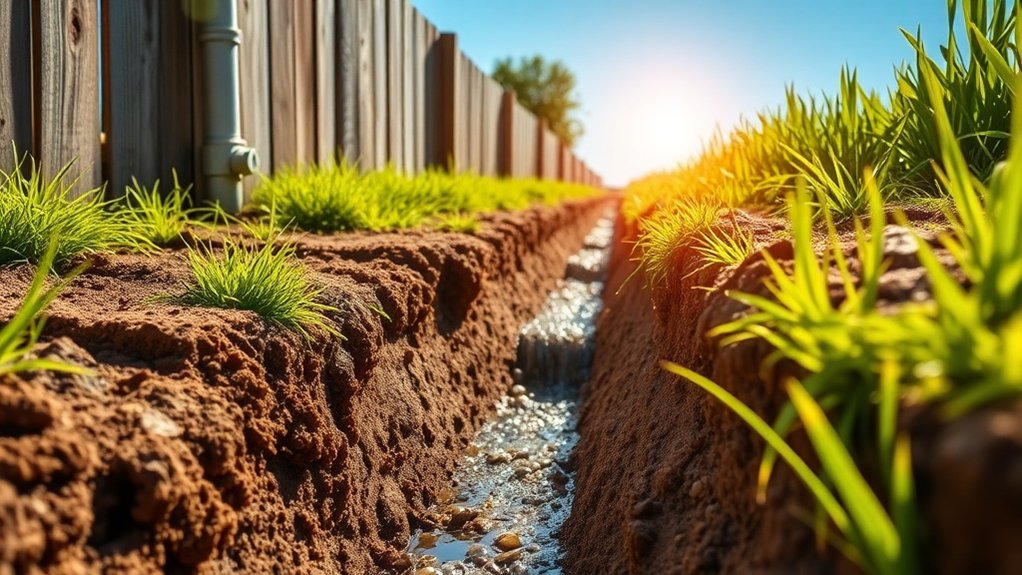
To reduce moisture problems around your fence, adding drainage systems is key. Start by grading your landscape with a 3% slope away from your structures to direct water away. Install French drains with perforated pipes to efficiently channel excess water. Using geotextile fabric can help prevent soil from clogging the drains and maintain proper airflow. Regularly check and maintain these systems to catch any issues early. By implementing these strategies, you’ll improve your fence’s durability and overall effectiveness against moisture.
Key Takeaways
- Grade the landscape with a 3% slope away from the fence to prevent water pooling.
- Install French drains with perforated pipes to effectively manage excess water.
- Use weather-resistant barriers and ventilated rainscreens to control moisture around the fence.
- Regularly inspect and maintain drainage systems to prevent blockages.
- Address moisture damage, like sagging boards or mold, quickly to keep the fence in good shape.
Importance of Proper Drainage for Fence Moisture Control
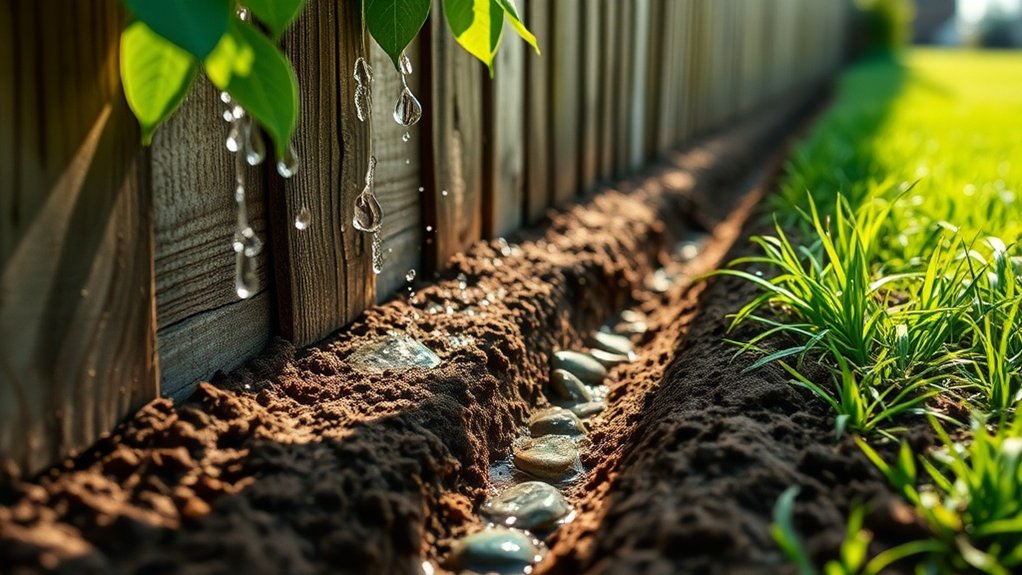
Proper drainage around your fence is crucial to prevent moisture-related problems that can weaken it.
By using techniques like drainable weather-resistive barriers, you can direct water away from your fence, keeping it dry and allowing for better air circulation. This helps the fence dry faster and reduces the risk of rot and mold. For effective performance, moisture barriers should achieve 75-90% drainage efficiency, as confirmed by ASTM E2273 testing. Additionally, installing systems like ventilated rainscreens and footing drains can further protect your fence. Implementing proper drainage systems is essential for minimizing moisture levels and preventing rot. In short, good drainage is key to extending the life of your fence and keeping it looking great, and implementing a proprietary moisture control system like HYDRODRY® can significantly enhance drainage efficiency.
Landscape Grading and Soil Management Near Fences
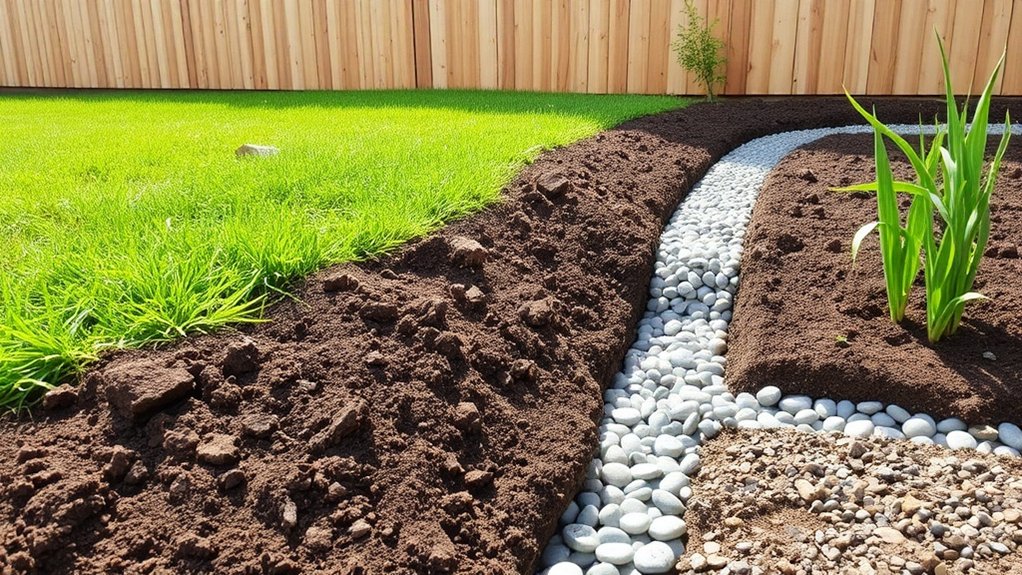
Proper landscape grading and soil management near fences are crucial for effective drainage and moisture control. Aim for a yard slope of at least 3% away from structures to prevent water pooling. Proper grading redirects water flow away from your fence, helping to avoid excess moisture accumulation. Additionally, ensuring that fence posts are buried at least 3 feet deep can enhance stability and reduce moisture-related issues.
While you can do grading yourself, plan carefully to avoid overgrading, which can compact soil and create drainage issues. Using gravel for soil stabilization can improve drainage and keep soil porous.
Additionally, planting water-absorbing plants can help manage moisture. Regularly check your soil and fence materials to prevent moisture-related problems and protect your fence from water damage.
Installation of Drainage Systems to Manage Excess Water
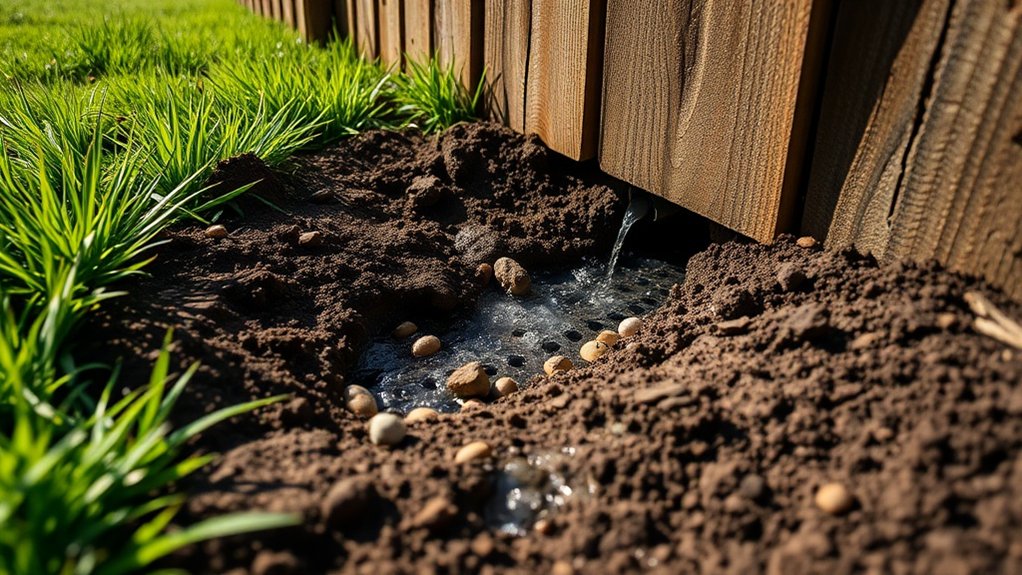
To manage excess water around your property and avoid moisture issues with your fence, installing a drainage system is essential.
Start by choosing effective drainage options like French drains, which need a 1% slope for proper water flow. Place perforated pipes at the bottom of the trench and surround them with compacted gravel for support. Additionally, consider a dual pipe French drain system to efficiently direct both roof and yard water away from your fence.
Use geotextile fabric to keep soil from clogging the system. Make sure to secure the pipes with clips and tape.
By implementing these strategies, you’ll improve your property’s drainage, directing excess water away from your fence and reducing moisture-related problems.
This proactive step will help protect your investment and extend the life of your fencing.
Surface Drainage and Water Diversion Techniques
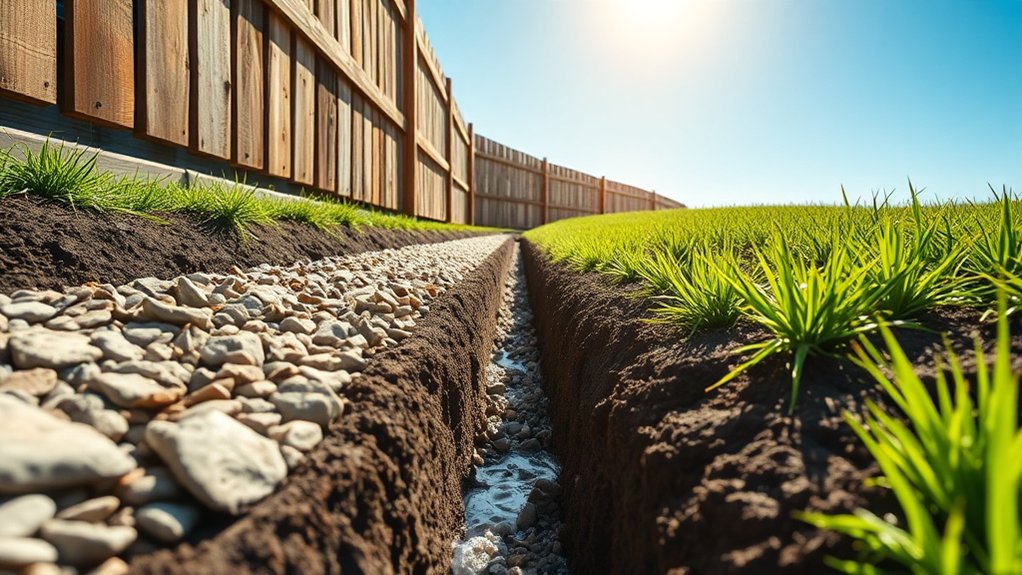
To manage surface water around your fence, use gutter downspout extensions and surface drains.
These direct water away from critical areas, helping prevent moisture buildup and damage.
Regularly clear debris from these systems to ensure they work effectively and avoid clogs that can block drainage.
Gutter Downspout Extensions
Gutter downspout extensions are crucial for managing surface drainage and directing water away from your home’s foundation. By redirecting rainwater, they help prevent foundation erosion and basement flooding.
Materials like PVC are durable and flexible, making them a popular choice. Ensure your extensions are long enough and properly aligned with the terrain for optimal performance. Regularly check for debris buildup to keep them functioning well.
Investing in downspout extensions protects your foundation and landscaping, boosting your property’s value and curb appeal while creating a healthier outdoor space.
Surface Drain Installation
Proper surface drain installation is crucial for keeping water away from your fence and avoiding moisture damage.
Here are four straightforward steps to follow:
- Choose the right drain type for your yard, like French drains or channel drains.
- Grade your yard to ensure water flows away from the fence.
- Place catch basins in low areas to gather excess water effectively.
- Use landscape fabric under gravel paths to reduce soil infiltration and improve drainage.
Debris Removal Benefits
Once your surface drains are installed, the next key step to protect your fence is regular debris removal. Clearing away leaves and twigs helps keep drainage systems clear, allowing water to flow freely and reducing the risk of clogs. This not only lowers moisture buildup but also prevents soil erosion, which is crucial for maintaining the integrity of your fence.
| Benefit | Description | Impact |
|---|---|---|
| Clog Prevention | Removes leaves and twigs | Keeps drainage pathways clear |
| Soil Stability | Reduces moisture retention | Prevents fence post movement |
| Erosion Control | Limits sediment movement | Maintains fence alignment |
| Hazard Mitigation | Reduces fire and mold risks | Improves safety around fences |
| Landscape Health | Enhances drainage system lifespan | Ensures even water distribution |
Regular debris removal is essential for fence longevity and safety.
Materials and Elevation Strategies to Limit Fence Moisture
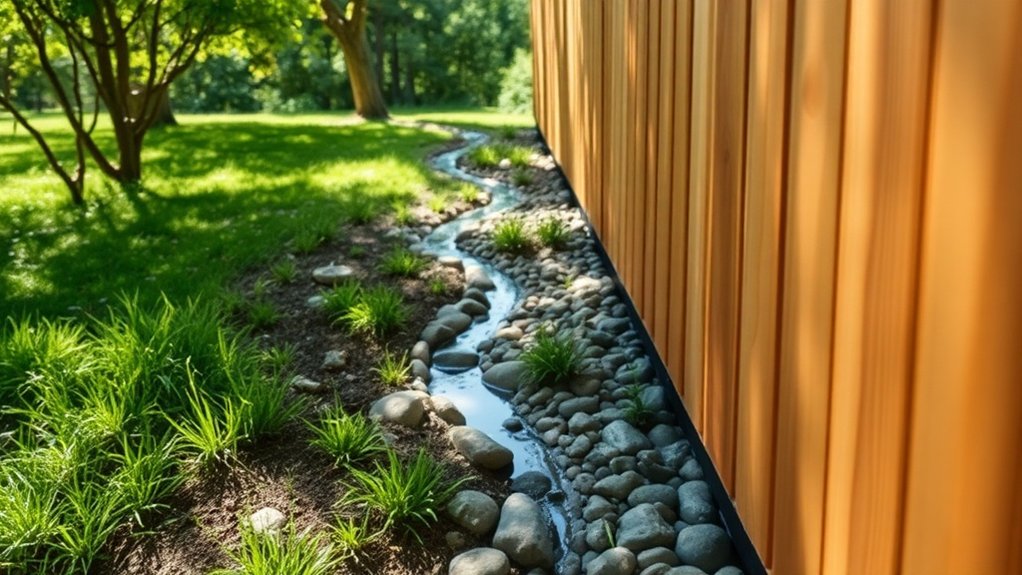
To limit moisture around your fence, it’s essential to choose the right materials and elevation methods. Here are four practical strategies:
- Gravel and Rock: Use these in French drains to help water flow away from your fence naturally.
- Slope Adjustment: Ensure the ground slopes away from the fence to prevent water from pooling.
- Perforated Pipes: Install these pipes to collect excess water, using geotextile fabric for filtration.
- Ditches and Swales: Create shallow ditches to channel and filter rainwater effectively.
Implementing these strategies can significantly increase your fence’s durability.
Monitoring and Maintenance Practices for Sustained Drainage
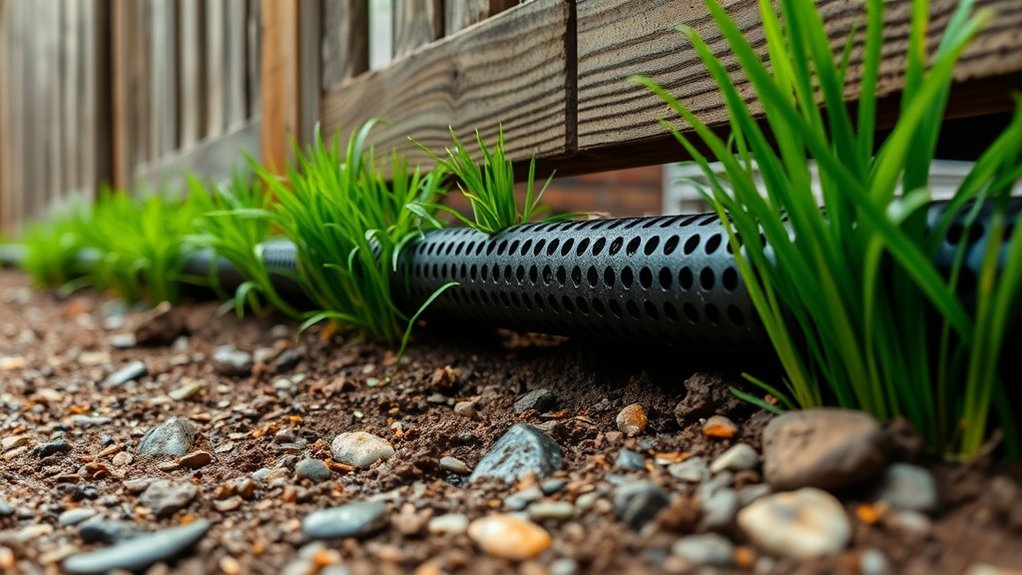
To keep your drainage system working well, check moisture levels regularly and schedule inspections.
Look for signs of wear and be prepared to make repairs quickly.
Also, adjust your maintenance based on the season to handle different weather and debris buildup.
For example, clear leaves in the fall to prevent clogs.
Regular Moisture Level Checks
Regular moisture level checks are crucial for effective drainage around fence structures.
Here’s how to optimize your monitoring:
- Check moisture levels more frequently during heavy rain or snowmelt.
- Increase checks after storms or irrigation to catch quick changes.
- Schedule quarterly inspections during dry seasons for baseline data.
- Measure at consistent times for better comparison.
By integrating these practices into your routine, you can spot trends and potential drainage issues, ensuring your fence remains stable and lasts longer. Additionally, monitoring vegetation and drainage can help reduce moisture retention around your fence.
Keep a record of your findings for smarter decision-making.
Scheduled Inspections and Repairs
Monitoring moisture levels is key to effective drainage management, but regular inspections and quick repairs are essential to prevent issues.
Conduct weekly visual checks after heavy rain to spot blockages or sediment buildup. Use a garden hose to clear minor debris and check the condition of your fence fabric and posts.
Act promptly to repair damaged components and remove sediment to keep your drainage system working well. Adjust your inspection frequency based on weather, paying extra attention during wetter seasons.
Seasonal Maintenance Adjustments
As seasons change, it’s important to adjust your maintenance practices to keep drainage around your fence effective.
Here are four essential tips:
- Inspect More Often: Check for sediment and drainage flow weekly during rainy seasons.
- Remove Debris: Clear leaves and twigs from gutters and drainage paths to prevent blockages.
- Adjust Soil Grading: Ensure soil slopes away from fence posts, especially in low areas, to direct water flow.
- Check Infrastructure: Inspect downspout extensions and drainage pipes for blockages to ensure they work properly.
Recommended Drainage Solutions for Residential Fences
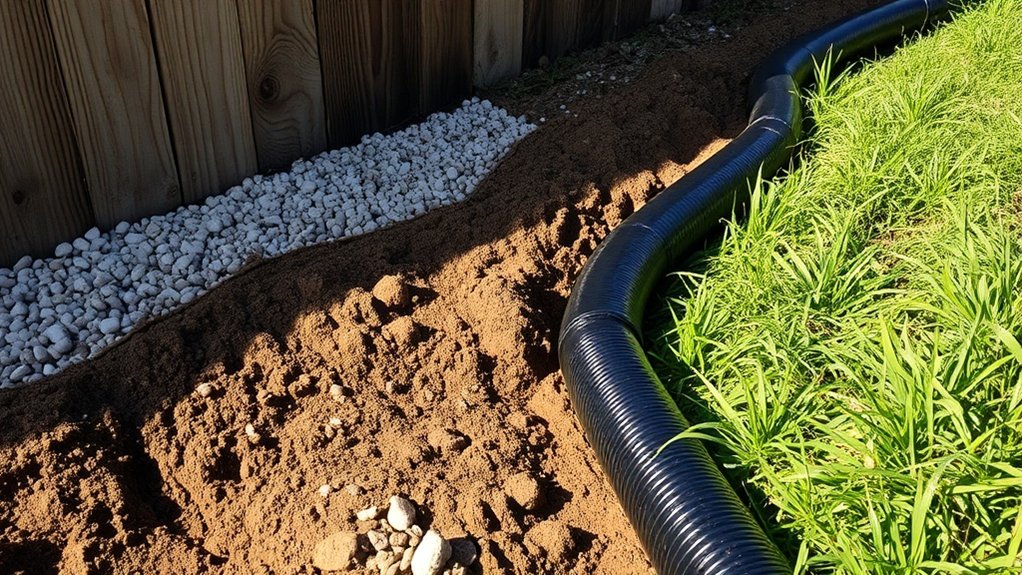
To tackle moisture issues around your residential fence, effective drainage solutions are essential.
Consider installing French drains to manage excess water and prevent soil erosion. You can also create gravel or rock trenches alongside your fence to redirect water away. Adding perforated pipes will improve water collection.
Downspout extensions are useful for directing runoff away from your fence and home. Additionally, ensure your yard is graded properly to avoid water pooling near your fence.
Signs of Moisture Problems Around Fences
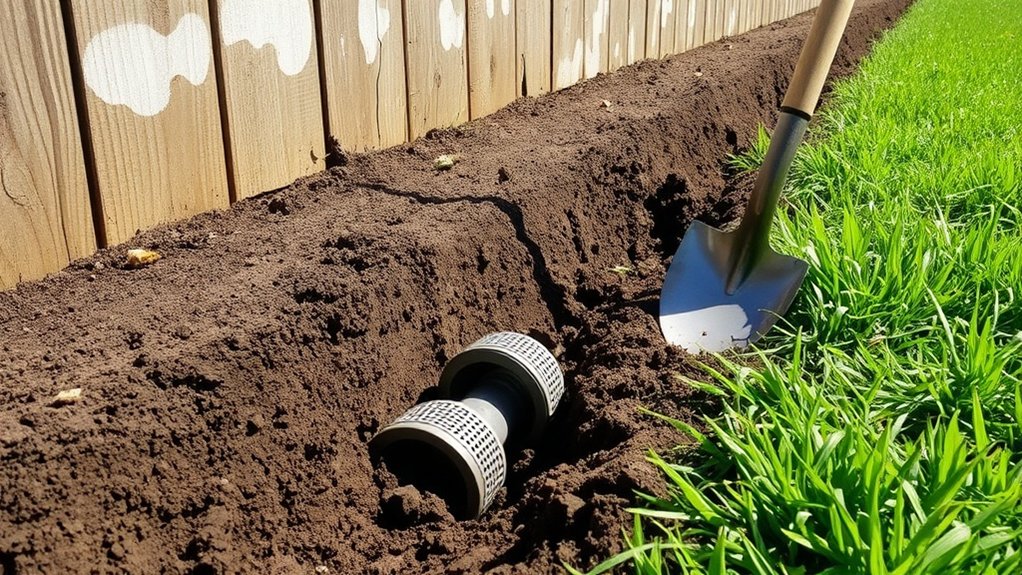
Moisture issues around fences can lead to serious problems if not addressed. Here are the main signs to look for:
- Discoloration: Watch for gray or black stains, which indicate water damage or mildew.
- Warping: Look for twisted or sagging boards that weaken the fence.
- Mold Growth: Green or brown patches are a sign of mold, which can be harmful to health.
- Soft Spots: Check for areas that feel soft or spongy, suggesting rot that could compromise the fence’s stability.
Addressing these signs promptly will help maintain your fence and prevent further damage.
Long-Term Benefits of Effective Drainage Systems
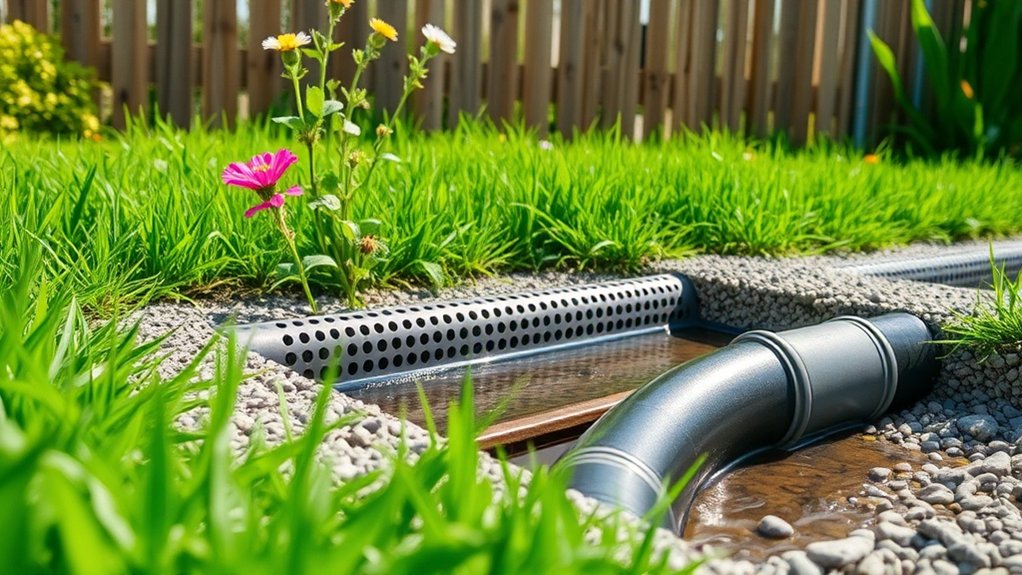
Effective drainage systems are crucial for maintaining your property’s value and integrity. They prevent water damage, which can save you significant repair costs and prolong the lifespan of your buildings.
For instance, a well-drained deck will last longer and require less upkeep, while your landscape will flourish with the right moisture balance, reducing your maintenance tasks.
Additionally, good drainage helps prevent soil erosion, makes outdoor areas safer by minimizing slippery spots, and creates more usable space.
Ultimately, investing in a quality drainage system not only increases your property’s resale value but also promotes a healthier environment, enhancing your overall living experience.
Frequently Asked Questions
How Do I Know if My Fence Needs Drainage Improvements?
To find out if your fence needs drainage improvements, inspect it closely. Check for signs of moisture such as sagging boards, mold, or dark stains. If you see these issues repeatedly, it’s time to consider drainage solutions to maintain your fence’s integrity.
Can I Install Drainage Systems Myself?
Yes, you can install drainage systems yourself! With proper planning and these tips, you’ll be able to dig trenches and lay pipes effectively, turning your yard into a well-drained space.
What Are the Costs Associated With Drainage Installation?
Drainage installation costs can vary widely. Typically, materials account for about 14% of the total expenses. Professional installation fees usually range from $600 to $7,200, depending on the complexity of the project, the labor involved, and the specific site conditions. For example, a simple residential drainage system may cost less, while a more complex setup in a challenging area could be at the higher end of the range.
How Long Does Drainage Installation Typically Take?
How long does drainage installation take? Generally, the process takes about 1 to 3 days. This timeframe can vary based on factors like the size of your property, the complexity of the terrain, and the soil conditions. Each of these elements plays a role in ensuring that your drainage system effectively manages water on your property.
Will Drainage Solutions Affect My Landscaping Design?
Yes, drainage solutions will require changes to your landscaping design, which might impact how your fence looks. With proper planning, you can ensure that the drainage system blends in with your landscape, maintaining its beauty while effectively managing water flow and protecting your property. For example, incorporating rain gardens or swales can enhance your yard’s appearance while addressing drainage needs.
Conclusion
Just like a tree needs the right amount of sunlight and water, your fence requires proper drainage to combat moisture. By adding effective drainage solutions, you protect your wood or vinyl fence and maintain the integrity of your outdoor space. Watch for signs of moisture-related issues and invest in maintenance to ensure your fence remains strong and durable, safeguarding your home for years to come.