To restore faded paint and stain on older fencing, start by checking for damage or rot. Clean the surface with a pressure washer and an eco-friendly cleaner. Use a paint stripper to remove old paint and lightly sand the wood. Revive it with oil-based stains or clear sealants. Finally, apply a water-repellent finish for protection. Regular maintenance will keep your fence looking great. It’s a straightforward process that can make a big difference!
Key Takeaways
- Check the fence for issues like cracks, rot, and discoloration before you start.
- Clean it well with a pressure washer or a stiff-bristle brush to get rid of dirt and old paint.
- Apply a paint stripper to remove fading paint, then lightly sand the surface for the new stain.
- Pick a stain color that matches your yard and apply it along the wood grain for a smooth finish.
- Reapply protective coatings every 2-3 years to keep the color vibrant and prevent fading.
Assessing the Condition of Your Fence
How can you tell if your fence needs repair? Start by inspecting it closely.
Look for cracks, warps, or discoloration on the posts and panels. Check for signs of rot or insect damage, especially at the base where moisture gathers. Regular fence inspections help in identifying issues before they escalate. Additionally, ensure you assess for moisture damage as it can lead to more severe problems if not addressed promptly.
For metal fences, look for rust or corrosion at joints and welds. Test the stability of the posts by shaking them gently; any wobbling means they’re not anchored well.
Check if the panels are sagging or cracking. Don’t forget to test the gate; it should open smoothly and latch securely.
Take notes on any damage to help you decide if you can fix it yourself or if you need a professional.
Cleaning Preparation for Restoration
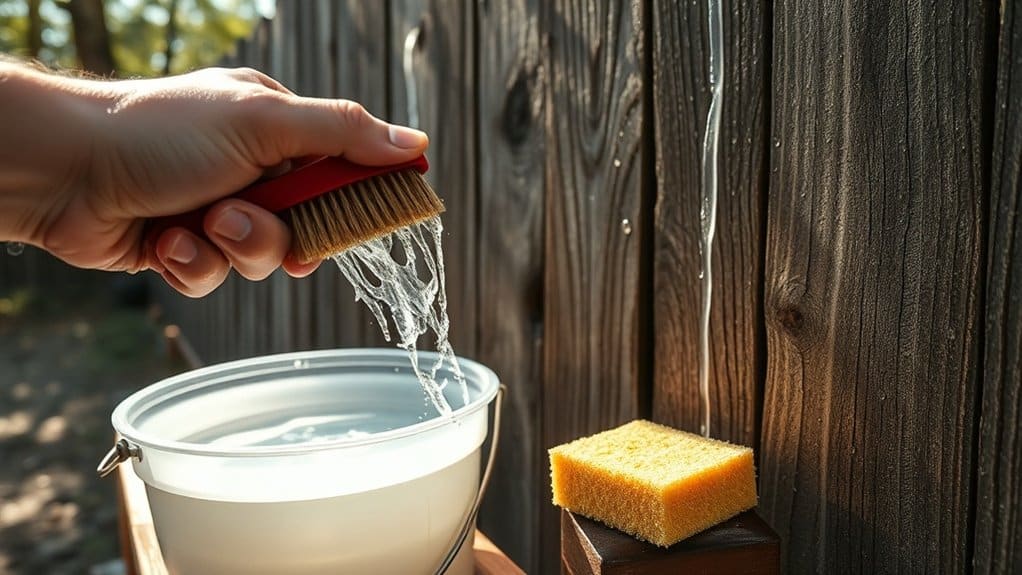
Before restoring your fence, pick the right cleaning solutions and methods. Use a pressure washer on a low setting to clean dirt and old coatings without harming the wood. Additionally, regular maintenance can help prevent future issues with your fence. It’s beneficial to conduct regular inspections to catch any potential problems early. Let the fence dry completely afterward. Also, protect nearby areas from overspray and chemicals.
Choosing Cleaning Solutions
Choosing the right cleaning solution is key to restoring faded paint on your fencing. Eco-friendly options like sodium percarbonate and sodium metasilicate are biodegradable and safe for both your fence and the plants around it. Always check if your cleaner is compatible with wood to avoid damage. Sodium hypochlorite can effectively tackle mold and mildew, but be careful as it can harm nearby plants.
Ready-to-use commercial cleaners can save you time and effort. Remember to pre-wet the surface, apply the cleaner evenly, and let it sit before rinsing. This way, you protect your fence and the environment. Additionally, using a specialised cleaner is essential for removing dirt and mould effectively, as this creates a clean base for restoration (cleaning base).
Pressure Washing Techniques
Before pressure washing your fence, ensure you wear protective gear and clear the area. Shield nearby plants and check for dry weather.
Refer to the table below for pressure settings based on your fence material:
| Fence Material | Recommended PSI |
|---|---|
| Softwood | 500-800 |
| Hardwood | 1,200-1,500 |
| Vinyl/Plastic | 1,000-1,300 |
| Composite | 1,500-3,100 |
| Test Hidden Sections | Adjust as Needed |
Maintain a safe distance, use the appropriate nozzle, and follow the wood grain for optimal results. Remember to prioritize safety throughout the process. Regular cleaning and inspections can significantly extend the fence’s lifespan and enhance its appearance.
Drying and Protection Steps
To effectively restore your fence, ensure it dries completely after cleaning. Allow 24–48 hours for drying in low humidity and temperatures above 50°F (10°C).
Check that the wood feels dry before applying stain, and cover it with a tarp if rain is expected within a day. Make sure the ground around the fence drains well to stop moisture from seeping into the wood.
Trim any nearby vegetation to minimize moisture retention and avoid working when dew is present.
After drying, inspect for damage and make any necessary repairs before continuing with your restoration.
Removing Old Paint and Stain
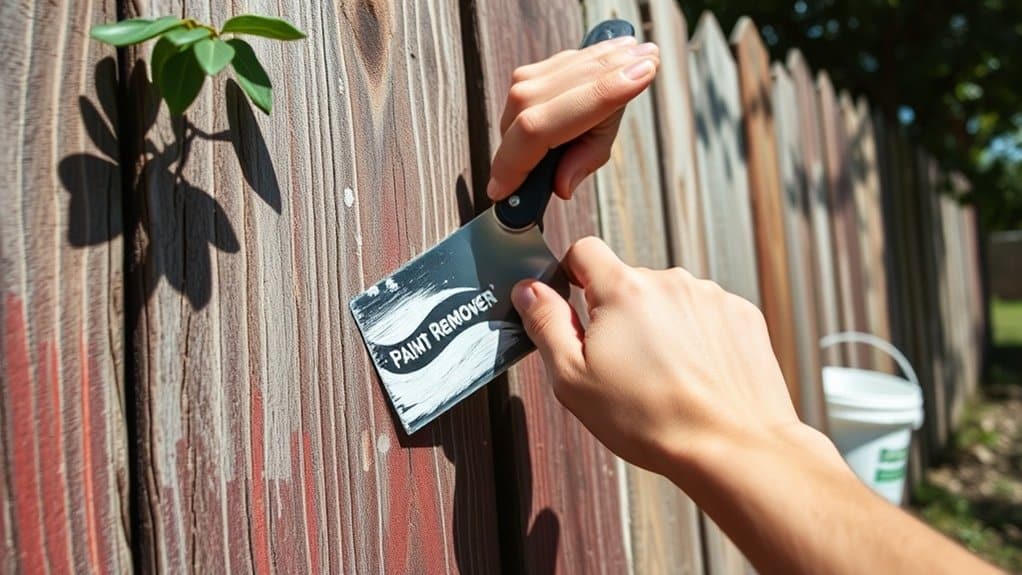
To refresh your fence and ensure new paint sticks well, follow these simple steps to remove old paint and stain:
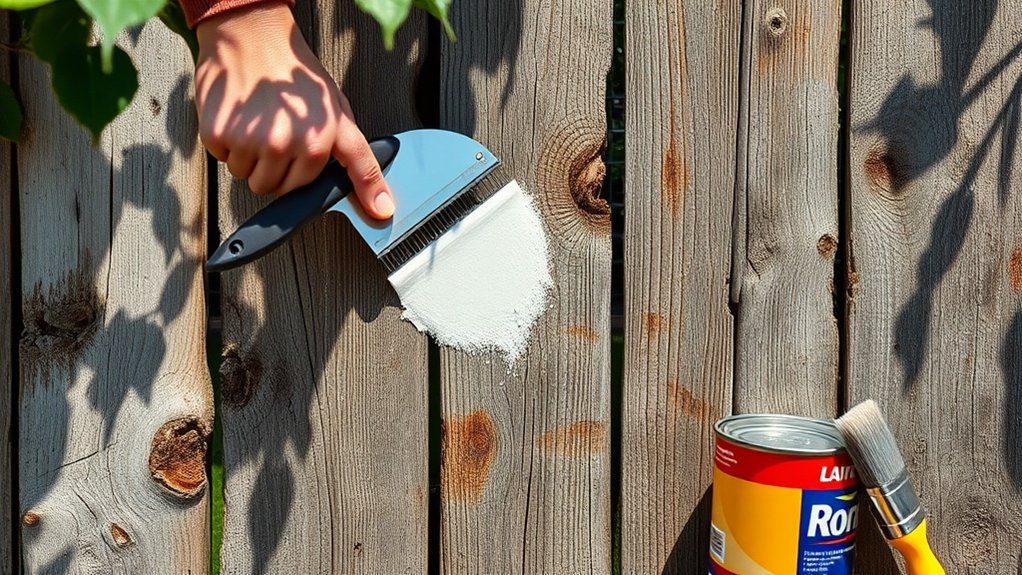
- Select a suitable paint stripper—gel or liquid—based on the type of paint.
- Clean the wood using sodium metasilicate to remove grease without causing damage.
- Apply the paint stripper evenly and let it sit for the recommended time.
- Lightly sand the surface to eliminate any remaining residue.
Don’t forget to wear gloves and protective gear for safety.
Reviving and Restoring Wood Condition
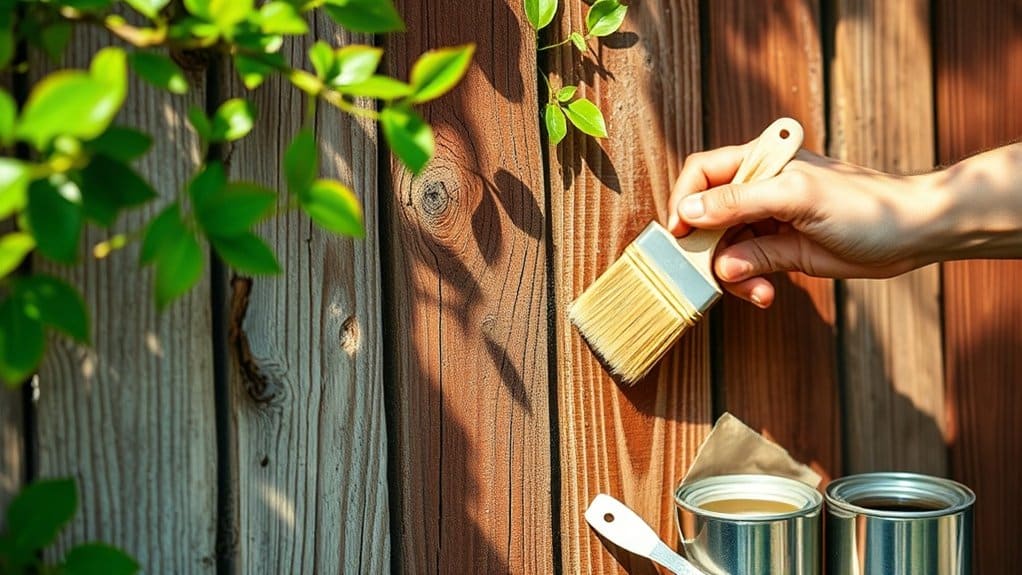
To restore your fencing wood, first tackle UV damage that causes fading and wear.
Start with sanding and cleaning to prep the surface.
These steps will improve the wood’s look and extend its lifespan.
UV Damage Repair
Prolonged UV exposure can harm your fence’s wood, so assessing the damage is crucial. Check for:
- Grayed or faded paint, which signals a weakened protective layer
- Cracks or splintering, indicating fiber damage
- Reduced strength from years in the sun
- Severe damage on south and west-facing sides
To protect against UV damage, use penetrating oil-based stains or water-repellent sealers with UV blockers.
These products restore moisture and shield your fence. Apply them in dry, mild weather for the best results, and remember to reapply every 2-3 years to keep your fence looking good and lasting longer.
Surface Preparation Techniques
Effective surface preparation is key to restoring your wood fence. Start by using a stiff brush to scrub away dirt, debris, and moss. For tougher grime, a pressure washer or wood cleaner can help, followed by a thorough rinse.
Check the wood’s moisture content with a moisture meter; aim for 12% or lower. Sand the surface starting with coarse grit sandpaper for rough areas, then switch to finer grit for a smooth finish—be careful not to over-sand, as you want to keep the wood’s pores open for better stain absorption.
Look for any damage, replacing rotten boards and filling in cracks as needed. Finally, ensure the fence is completely dry before applying primer or stain for the best results.
Priming and Filling Imperfections
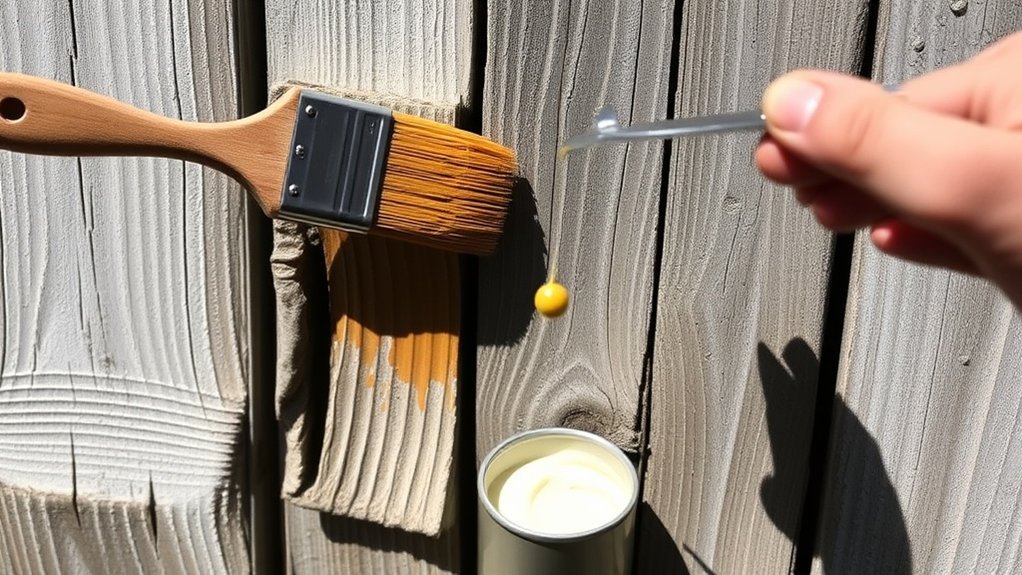
Before priming your fence, make sure the surface is well-prepared for the best results.
Here’s a straightforward guide:
- Clean the wood to remove dirt and mildew; use a bleach-water solution if necessary.
- Sand any rough spots with 80–120 grit sandpaper for a smooth finish.
- Select the appropriate primer and mix it well for good adhesion.
- Use synthetic brushes for edges and medium-nap rollers for larger areas, applying it in even layers.
Follow these steps for a professional-looking result!
Choosing the Right Stain
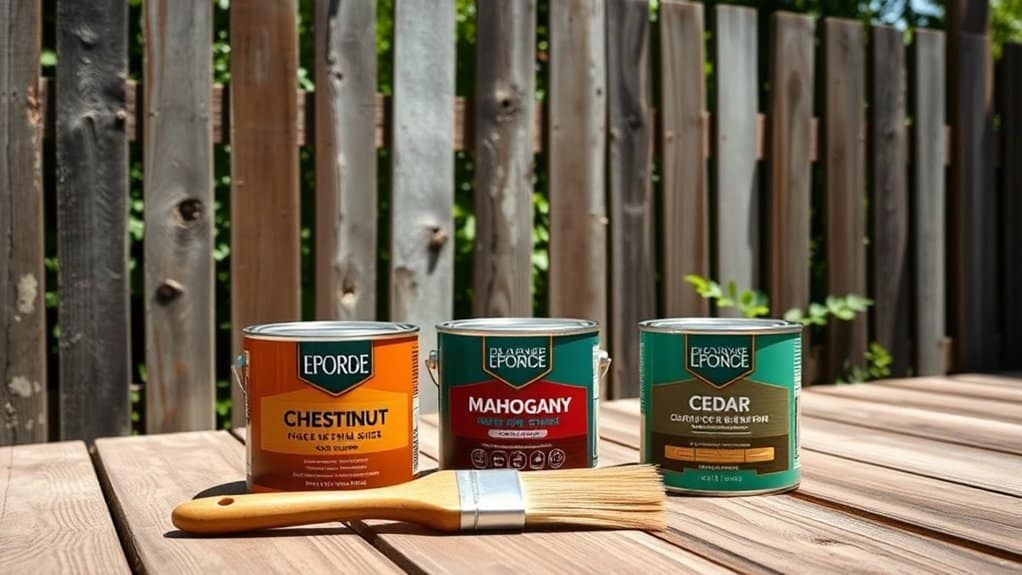
When choosing a stain for your fence, consider the wood type and its condition.
Semi-transparent stains highlight the wood grain, while solid stains offer full coverage.
Also, think about color—this not only boosts your fence’s look but also provides lasting protection.
Stain Types Comparison
Choosing the right stain for your fence is crucial for its look and durability. Here are the main options to consider:
- Transparent Stains: Highlight the natural wood grain, ideal for new or high-quality fences.
- Semi-Transparent Stains: Offer a mix of color and grain visibility; usually require two coats.
- Solid Stains: Fully cover the grain, great for hiding flaws and providing strong protection.
- Oil-Based vs Water-Based: Oil-based stains penetrate deeply for long-lasting results, while water-based stains dry quickly and are easier to clean.
Select the stain based on your wood type and desired finish for the best outcome.
Color Selection Tips
Choosing the right stain color for your fence involves a few key considerations. First, make sure the color matches elements in your yard, like sheds and patio stones, and complements your home’s exterior.
Darker stains, such as charcoal gray, offer better UV protection and durability, while lighter shades tend to fade more quickly.
Consider the wood type too; semi-transparent stains showcase the wood grain, while solid stains focus more on color.
If you live in a humid area, opt for shades that can conceal algae and mildew.
Lastly, think about your neighborhood—bold colors can be eye-catching but should still blend well with the overall look.
Balancing aesthetic appeal with maintenance needs will help you find the perfect stain color for your fence.
Stain Application Techniques
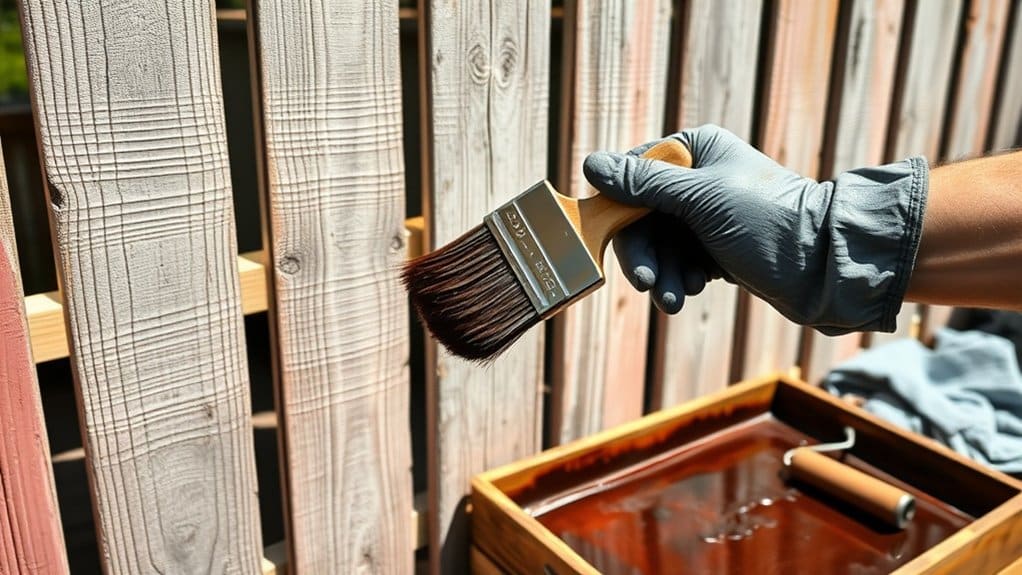
To get a professional finish on your fence, follow these essential stain application techniques:
- Prep the surface: Make sure the wood is clean, dry, and free of debris.
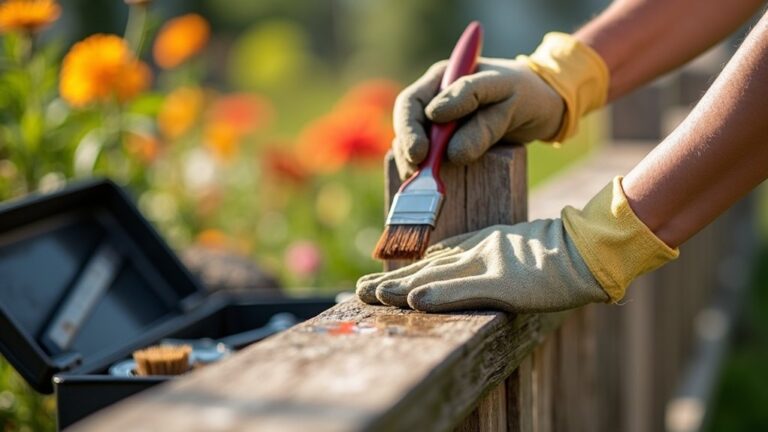
- Select the right tool: Use brushes for detailed areas, rollers for large spaces, and sprayers for quick coverage.
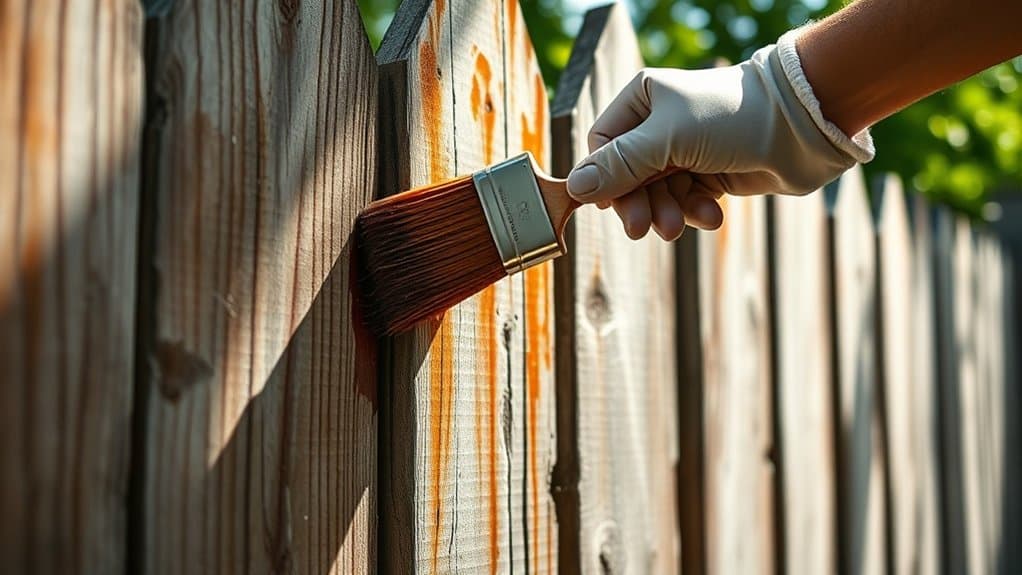
- Stain with the grain: Apply the stain in the direction of the wood grain to avoid runs and ensure an even look.
- Saturate properly: Apply enough stain until the wood rejects it for optimal protection.
These steps will help you achieve a great-looking fence!
Protecting and Maintaining the Finish
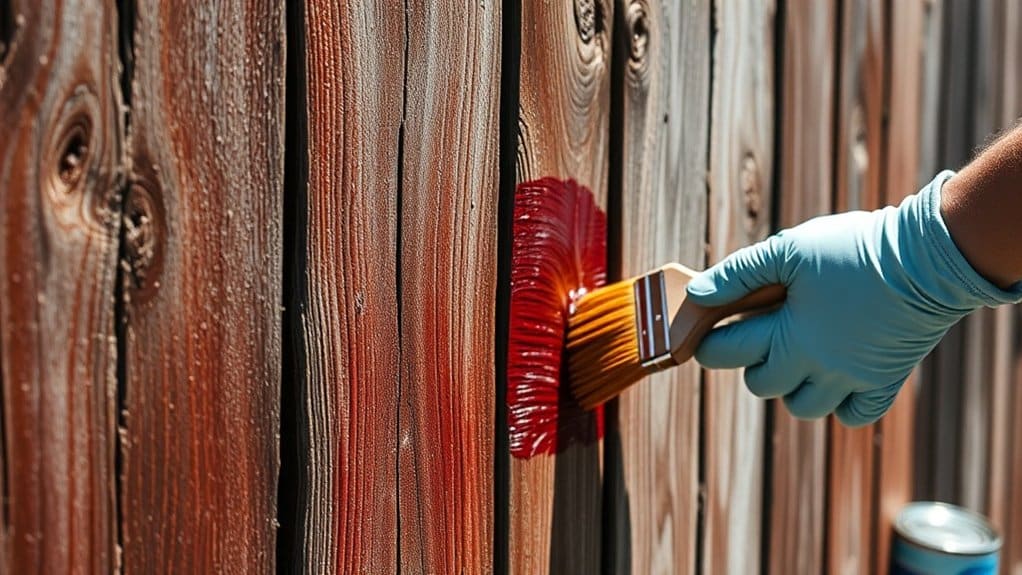
To keep your fence looking great and lasting longer, regular maintenance is essential. Check your fence at least twice a year for signs of damage, like peeling or fading. This helps you catch problems early.
Clean your fence once a year using a stiff-bristle brush and mild detergent, and consider a pressure washer for tough spots. Every 2–3 years, apply a water-repellent sealant or clear topcoat to protect the finish. Make sure the products you choose are compatible for the best results.
If your fence is in a sunny or humid area, increase maintenance frequency. Remember that seasonal changes can affect drying times, so always follow the manufacturer’s instructions.
Keeping up with these simple steps will help extend your fence’s life.
Tips for Working With Different Wood Types
To maintain your fence’s finish, it’s essential to understand the specific traits of the wood type you’re dealing with. Each wood has its own durability, which affects how you should restore paint or stain:
- Cedar: Naturally rot-resistant; a light sanding helps keep its protective oils.
- Redwood: Highly durable; use oil-based stains to highlight its grain.
- Pine: A softer wood; clean thoroughly and use a pre-stain conditioner for even absorption.
- Spruce: Affordable but requires preservatives and regular maintenance to avoid decay.
Knowing these characteristics allows you to select the right treatment, ensuring your fence stays attractive and protected.
Always prep the surface well before applying any finishes.
Preventing Future Fading and Damage
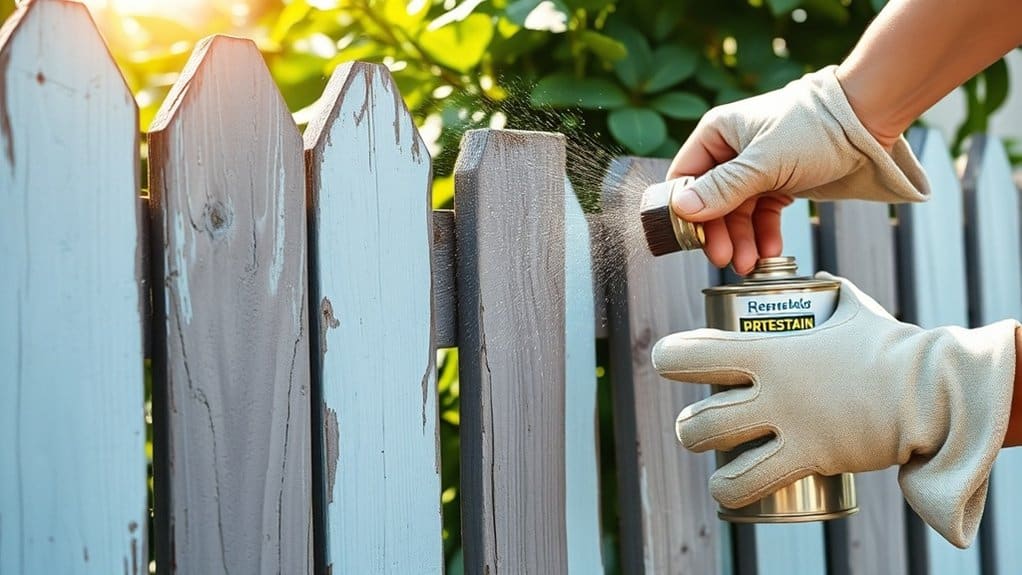
To keep your fence looking good and lasting longer, take some simple steps.
Apply a clear wood preservative every year to prevent splits and cracks. Choose solid body stains with high pigmentation to help maintain color and prevent fading.
When staining, use transparent or semi-transparent options and apply them using a wet-on-wet technique for even coverage. Avoid staining in direct sunlight to prevent uneven drying.
Regularly clean your fence to get rid of dirt and mold, and check for any damage. Reapply protective finishes every few years to keep your fence looking fresh and resilient against the elements.
Regular Maintenance for Longevity
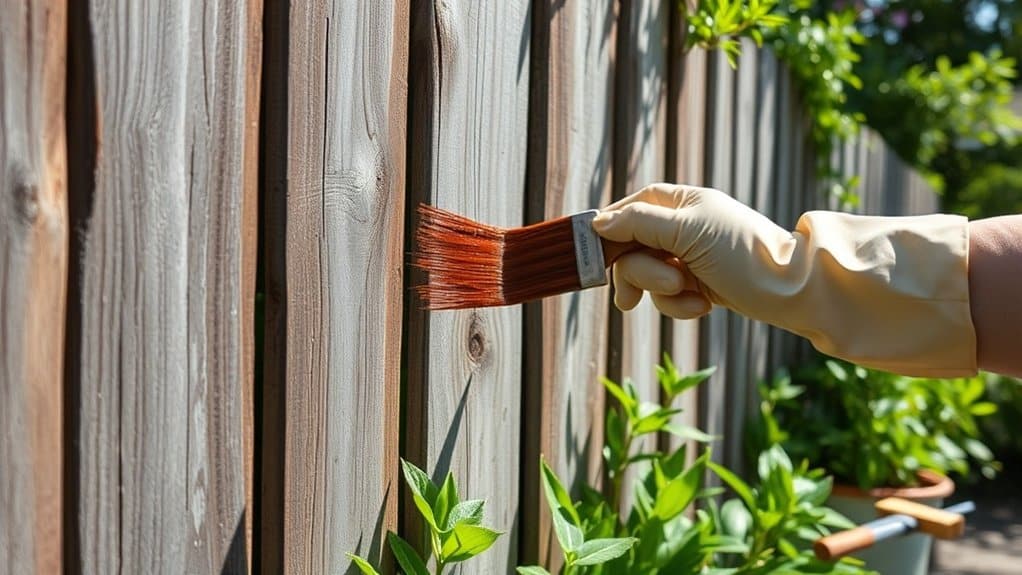
To keep your fence looking great and lasting longer, follow this simple maintenance routine:
- Clean it once a year with mild soap and water to remove dirt and mildew.
- Check every few months for signs of rot or insect damage, and replace any damaged boards right away.
- Reapply stain or sealant every 2-3 years to shield against UV rays and moisture.
- Trim surrounding plants and ensure proper drainage to prevent moisture buildup.
Frequently Asked Questions
How Often Should I Restain My Fence?
Restaining your fence is like giving your favorite book a fresh cover. Aim to do it every 2 to 3 years for best results. Consider your local climate and the type of wood to adjust your schedule. This keeps your fence looking its best.
Can I Use Leftover Paint for My Fence?
Yes, you can use leftover paint on your fence, but ensure it’s exterior grade. Check if it’s compatible with your fence material for better adhesion, and assess its condition to keep your fence looking good while protecting it from the weather.
Is It Safe to Use Bleach on Wood?
Using bleach on wood can weaken the fibers and cause discoloration. Instead, opt for alternatives like oxygen bleach, which cleans effectively without damaging the wood or harming the environment.
What Tools Are Best for Applying Stain?
For applying stain, use natural bristle brushes for oil-based stains and synthetic brushes for water-based stains. Rollers are great for covering large areas quickly, and sprayers offer efficiency. Combining these tools can improve your application and give you a professional finish.
How Can I Tell if the Wood Is Dry Enough?
To check if wood is dry enough, use a moisture meter for precise readings. You can also look at the wood; if it appears dark or water soaks in quickly, it’s ready for staining or sealing.
Conclusion
Restoring a faded fence is a rewarding project that can enhance your home’s appeal. With the right tools and techniques, you can bring your worn wood back to life. Start by cleaning the surface to remove dirt and mildew, then sand any rough spots. Apply a high-quality stain or paint to protect the wood and give it a fresh look. Regular maintenance will keep your fence looking great for years, ensuring your yard stands out in the neighborhood.