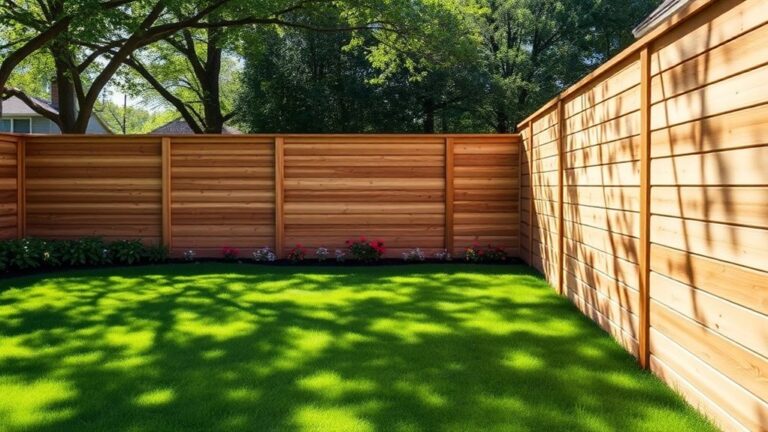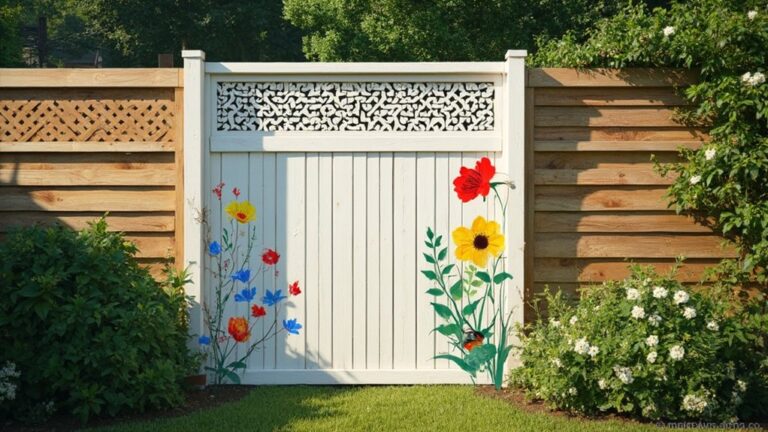

To create an attractive and functional fence layout, start by checking your property lines and natural features. Choose a fence height that provides privacy and security while aligning with neighborhood norms. Use durable materials that look good and ensure posts are spaced correctly for stability. Consider wind protection and easy access, and make sure to follow local regulations. Careful planning is essential, and there are more tips to help you refine your project.
Key Takeaways
- Confirm property lines with a land surveyor to ensure your fence is correctly placed and meets local regulations.
- Evaluate the land’s natural features, like slopes and drainage, to avoid water issues and improve functionality.
- Select materials that are both visually appealing and durable, such as low-maintenance aluminum or elegant wrought iron.
- Space posts correctly—6-8 feet apart for decorative fences and 6 feet for security—to ensure stability and enhance appearance.
- Have a decision-maker on-site to quickly address issues and keep communication flowing throughout the project.
Assessing Property Lines and Natural Features
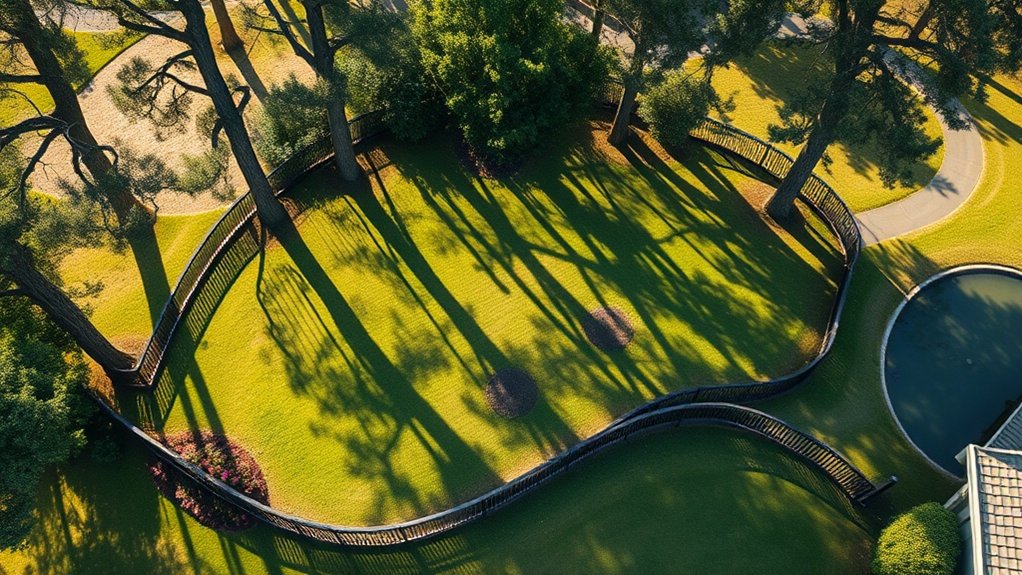
When planning your fence, it’s essential to understand property lines and natural features. Start by verifying your property lines—hiring a licensed land surveyor ensures accurate boundaries and helps avoid disputes. While local government offices can provide information, a professional survey offers the most reliable details. Additionally, consulting your local building department can help clarify any permit requirements specific to your area.
Next, consider natural features like slopes, drainage paths, and existing trees in your design. Ensure your fence won’t block water flow, which can cause ponding issues. Adapting your layout to the terrain not only looks better but also reduces environmental impact. By thoughtfully assessing property lines and natural features, you’ll create a functional and attractive fence that complements your land. Additionally, ensure that your fence complies with maximum height restrictions to maintain aesthetic appeal and avoid potential fines.
Choosing the Right Fence Height for Privacy and Security
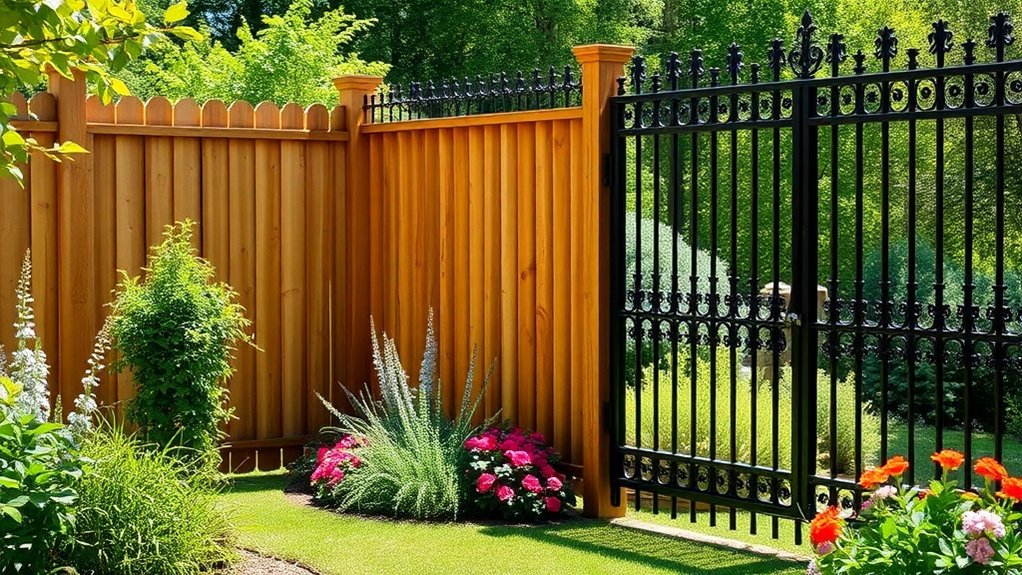
Choosing the right fence height is crucial for ensuring privacy and security. A standard 6-foot fence usually meets most privacy needs while looking good. For higher security, consider a 7 to 8-foot fence with features like pointed tops or anti-climb panels. This not only boosts security but often aligns with local regulations in high-risk areas. Additionally, checking local zoning laws can prevent potential fines and ensure compliance with regulations. It’s important to assess threat levels to determine if a taller fence is necessary for your property. On the other hand, a 3 to 4-foot fence can enhance your yard’s appearance but may not provide the privacy or security you want. Be aware of neighborhood standards and HOA rules that may affect your options. Ultimately, select a fence height that fits your needs and complements your home’s design.
Material Selection for Aesthetic Appeal and Durability
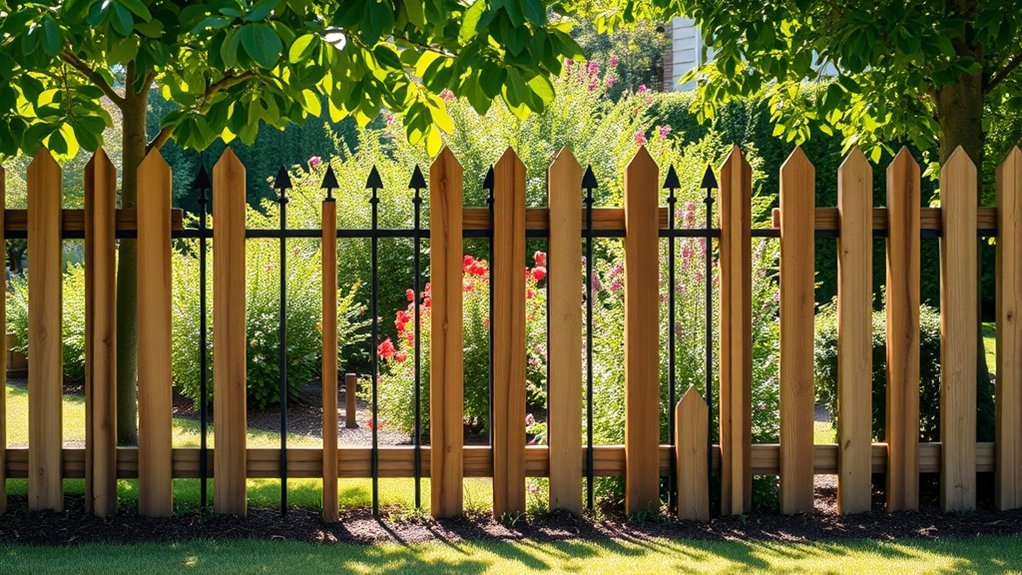
Choosing the right fence height is just the start; the materials you pick greatly affect both appearance and functionality.
For a low-maintenance option that looks great, aluminum or vinyl are excellent choices—they come in various colors and can resemble wood. Vinyl fences offer minimal maintenance needed after installation, making them a practical choice.
If you want something classic, wrought iron provides strength and elegance.
For a natural look, redwood and teak are beautiful but require more upkeep.
Masonry is durable and timeless but can be costly. Stone and masonry fencing provides minimal maintenance and offers significant value to properties.
Each material has its maintenance needs, so balance aesthetic appeal with durability to find the best fit for your property.
Your fence should enhance your home while lasting for years.
Strategic Post Spacing for Stability and Visual Harmony
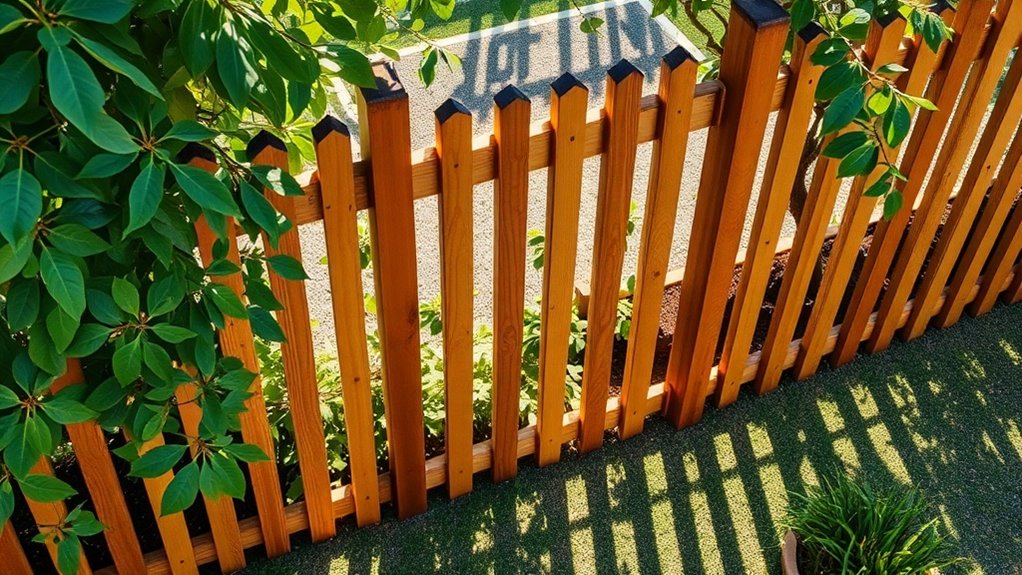
Strategic post spacing is crucial for a stable and visually pleasing fence. For decorative wood and vinyl fences, space posts 6 to 8 feet apart. Livestock fences need 8 to 12 feet between posts.
If security is a priority, opt for 6-foot spacing to enhance strength. Adjust spacing based on fence height and terrain. To ensure posts are aligned properly, use a string line, which helps prevent sagging or leaning.
Dig post holes at least 30–36 inches deep for better stability. By following these spacing tips, you can create a straight, attractive fence and potentially save up to 30% on materials.
Designing for Wind Protection and Weather Resilience
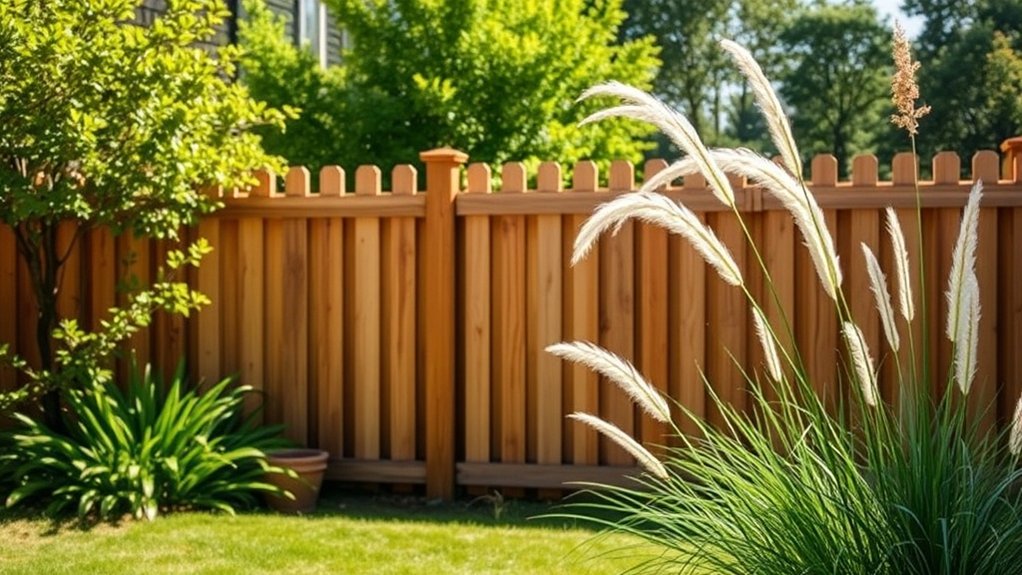
When building a fence, it’s crucial to ensure it can handle wind and weather. Here are some practical tips for resilience:
- Choose wind-resistant designs like picket or shadowbox styles that let air flow through.
- Use deep post anchoring with concrete for better stability against strong winds.
- Add horizontal and diagonal bracing to help distribute wind pressure evenly.
- Select durable materials like metal or reinforced vinyl to keep your fence looking good and standing strong against the elements.
Incorporating Pathways and Accessibility in Fence Layout
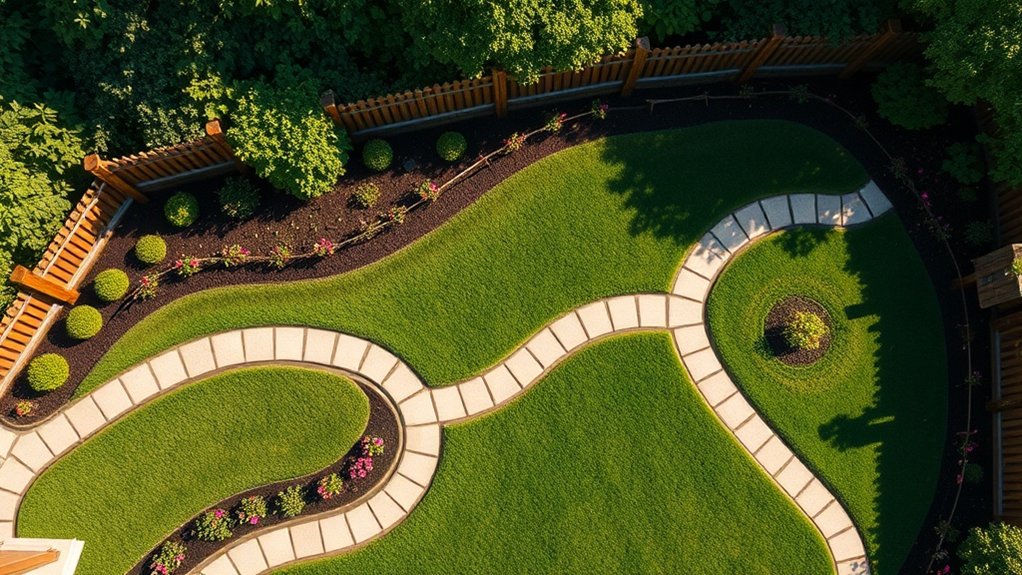
Incorporating pathways and accessibility into your fence layout boosts both beauty and usability. Aim for a clear width of at least 36 inches for easy access, particularly for wheelchair users.
For turns, allow at least 48 inches to ensure smooth navigation. Use firm, slip-resistant surfaces for better traction, and steer clear of loose materials that can hinder movement.
Gates should have a minimum clear opening of 36 inches for straightforward passage. Keep the ground clear of obstacles to maintain safety.
Compliance With Safety Standards and Local Regulations
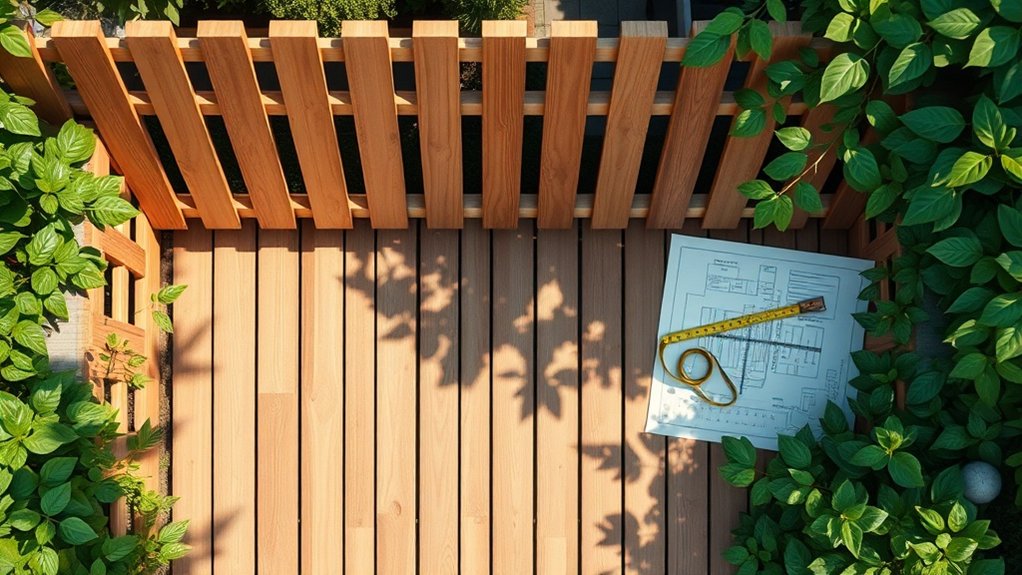
Creating an inviting outdoor space involves more than just aesthetics; you must ensure your fence meets safety standards and local regulations to avoid costly mistakes.
Here are key points to consider:
- Height Restrictions: Check the maximum allowed height for fences in your area.
- Permit Requirements: Submit detailed plans for approval before starting your project.
- Material Choices: Select materials that comply with local safety and aesthetic guidelines.
- Property Setbacks: Ensure your fence is positioned correctly to prevent disputes with neighbors.
Staying informed on these aspects will save you time and money in the long run.
Budgeting and Planning for Efficient Fence Installation
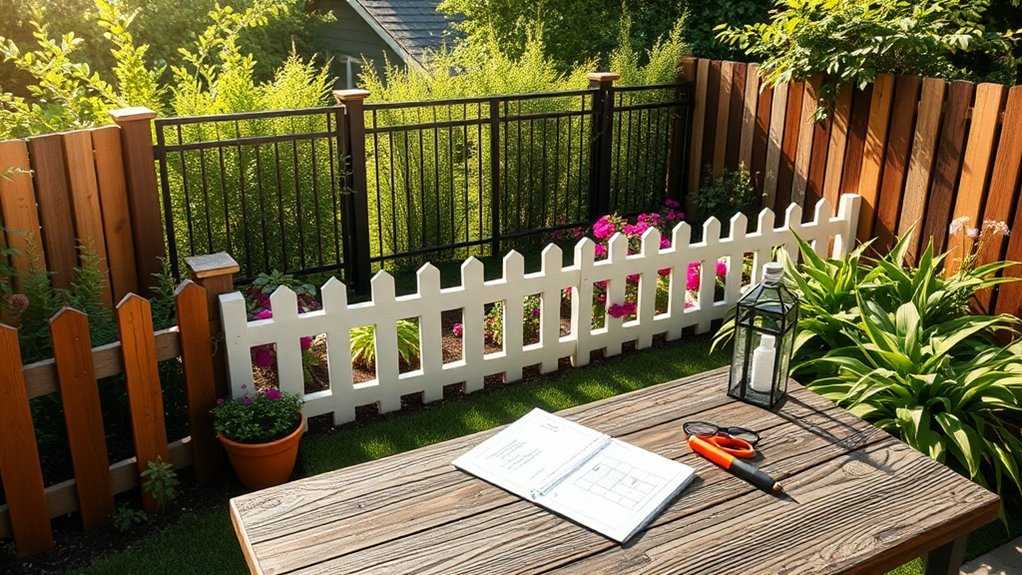
When budgeting for your fence installation, accurately estimating costs is crucial.
Consider both materials and labor. For example, choosing wood over vinyl might save money upfront but could lead to higher maintenance costs down the line.
Also, research local labor rates and the complexity of your project to avoid unexpected costs.
Cost Estimation Techniques
When estimating costs for your fence installation, focus on these key factors to manage your budget effectively:
- Material Costs: Prices can vary significantly based on the type of fencing you choose, like wood versus vinyl.
- Labor Costs: Regional labor rates and the complexity of the installation can affect overall costs.
- Overhead Expenses: Be aware of both fixed costs (like permits) and variable costs (like tool rentals).
- Waste Allowance: Add 10–15% to your material budget to cover unexpected waste and avoid project delays.
Material Selection Strategies
Choosing the right materials for your fence can impact your budget and your property’s look.
Wood fencing has a classic appeal but needs regular upkeep.
Vinyl fencing is durable, comes in various colors, and requires minimal maintenance.
Aluminum is lightweight and rust-resistant, making it great for decorative purposes.
For an eco-friendly choice, composite fencing offers sustainability and durability, though it can be pricier.
If you’re on a tight budget, galvanized wire fencing is affordable and strong, perfect for agricultural use.
Labor Planning Insights
After selecting the right materials for your fence, the next step is planning your labor for installation. Labor makes up about 50% of your total project cost, so efficient budgeting is crucial.
Here are some key tips to boost labor efficiency and scheduling:
- Measure Accurately: Double-check your perimeter measurements to avoid delays and extra costs.
- Get Permits Early: Secure any necessary permits in advance to keep the project on track.
- Designate a Leader: Have a decision-maker on-site to address issues quickly and reduce downtime.
- Watch the Weather: Schedule installation during favorable weather to ensure steady progress.
Frequently Asked Questions
How Can I Enhance My Fence’s Visual Appeal With Landscaping?
To enhance your fence’s appeal, add plants like evergreens and seasonal flowers. Consider incorporating decorative elements such as trellises or sculptures for added interest. Layering plants can create depth, making your landscape more inviting and visually appealing.
What Styles of Fences Complement Different Architectural Designs?
Modern minimalism pairs well with sleek metal fences, enhancing contemporary homes. In contrast, wooden picket fences add a nostalgic touch to traditional designs. Each style complements your property’s character, fitting naturally with your architectural theme.
What Are the Best Practices for Winterizing My Fence?
To winterize your fence, start with maintenance. Check for any damage, like broken boards or loose nails, and fix them. Apply weatherproof sealants to protect against the elements. Regularly clear away snow and debris to prevent buildup. Taking these steps now can save you from expensive repairs in the spring.
How Do I Choose Fencing Colors That Match My Property?
To choose fencing colors that enhance your property, think about color psychology and how the materials work together. Pick shades that match your home’s style and complement your landscape. For example, a classic white fence can brighten a traditional home, while a dark brown fence can add warmth and contrast to a modern design. Aim for a cohesive look that feels inviting and well thought out.
Can I Install a Fence on a Slope Effectively?
Yes, you can effectively install a fence on a slope. For a smooth look, consider racked fencing, which follows the slope’s angle. If you prefer a classic style, stepped panels can work well, creating flat sections at different heights. Both options ensure your fence is stable and functional.
Conclusion
Your fence is more than just a boundary; it’s part of your home’s overall look. Like a thoughtfully designed garden, each feature should enhance both beauty and function. Just as you choose plants for their appearance and durability, select materials and designs that match your style and needs. Take time to plan your space, and your fence will not only provide security but also enhance your yard’s appeal.