To use temporary fencing in emergencies, ensure it meets safety standards and local regulations. Use strong materials like galvanized steel to create secure perimeters that can withstand the elements. Mark access points and pathways clearly to manage crowds and facilitate evacuations. Regular inspections and maintenance are crucial for reliability. Choosing the right fencing boosts security and efficiency. For more insights on best practices and adaptability in emergency situations, keep exploring.
Key Takeaways
- Use strong temporary fencing, like chain-link or welded wire panels, to create secure barriers during emergencies.
- Check local fencing regulations to avoid fines and keep everyone safe.
- Clearly mark access points to guide evacuations and manage crowd flow.
- Regularly inspect and maintain fencing to ensure it remains stable and reliable.
- Opt for durable materials and security features to prevent unauthorized access and protect the site.
Importance of Compliance With Safety Standards
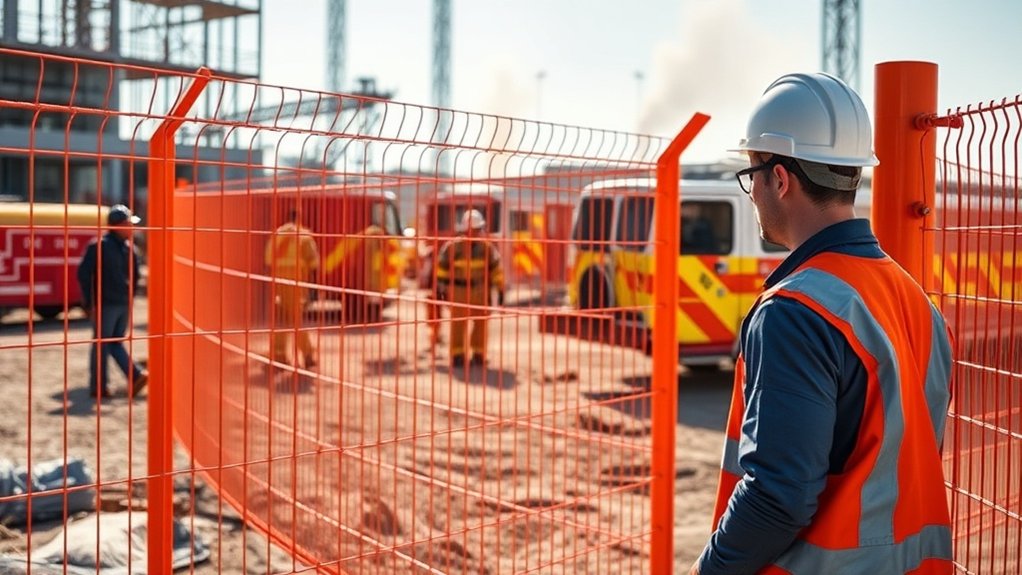
Compliance with safety standards for temporary fencing is essential—not just for legal reasons, but to protect workers and the public. Familiarizing yourself with OSHA regulations and local codes can help avoid fines and project delays. Ensuring your fencing meets height and material requirements enhances safety and blocks unauthorized access to dangerous areas. Regular inspections and proper training for staff are key to maintaining compliance and reducing legal risks. Safety standards must be adhered to in order to ensure the fencing can withstand environmental factors and remain effective in emergency situations. Additionally, it is crucial to understand height restrictions to prevent potential disputes and ensure safety. Well-secured fencing with emergency exits and clear signage keeps everyone safe and informed. Prioritizing compliance not only protects your project but also enhances your reputation in the industry.
Establishing Secure Perimeters in Emergencies
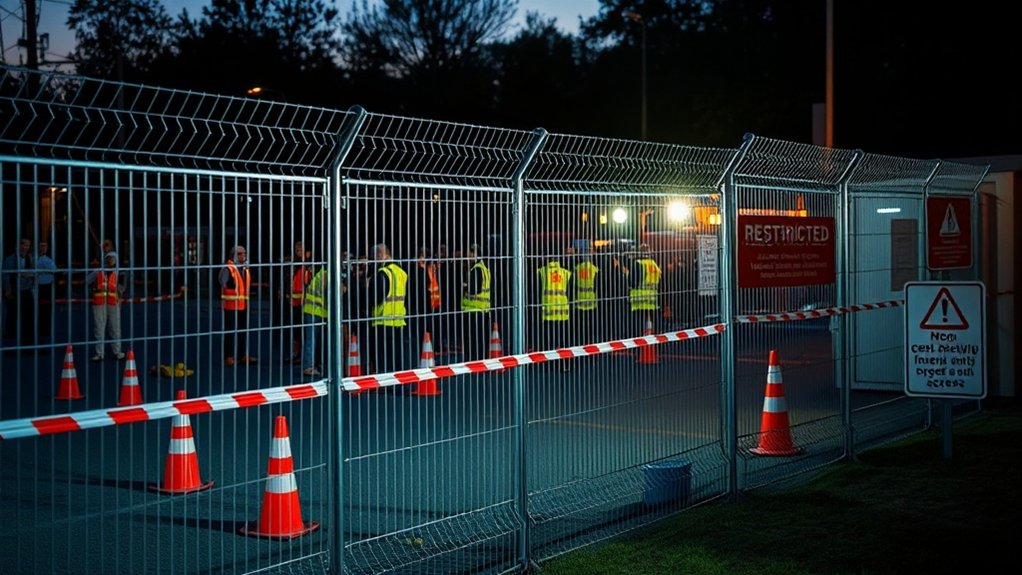
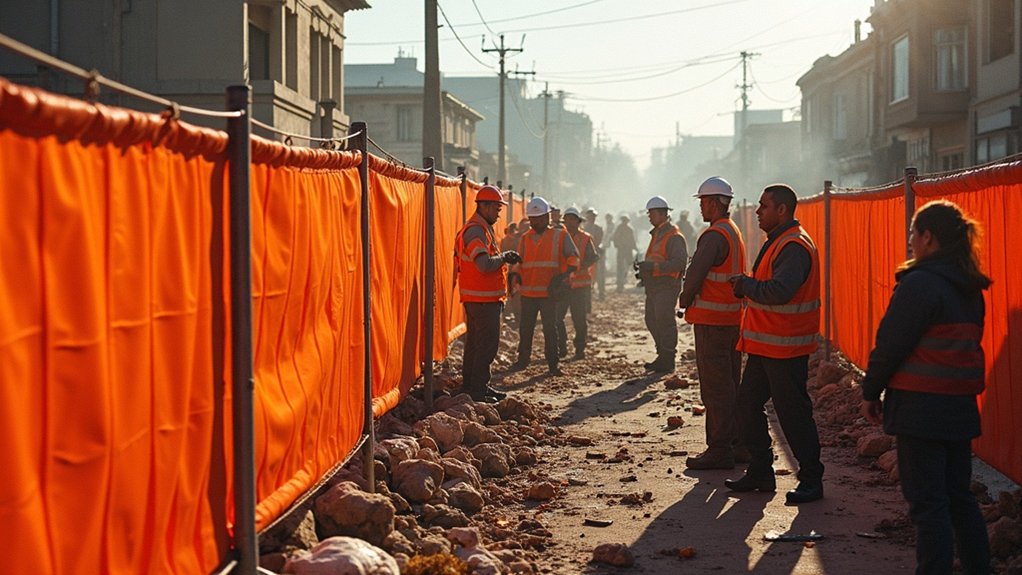
Establishing secure perimeters during emergencies is crucial for protecting people and property. Use strong temporary fencing options like chain-link or welded wire panels to create a solid barrier around hazardous areas. It’s important to ensure compliance with local fencing regulations to avoid fines and ensure safety. Additionally, using galvanized steel for fencing increases durability and rust resistance, ensuring that the barriers remain effective throughout the emergency. Make sure the fencing respects property lines and public pathways. Set up clear access points for authorized personnel and ensure emergency exits are easily accessible for quick evacuations. Use secure anchoring systems to keep the fencing stable and regularly check for any damage. Clearly mark and simplify controlled access points to enhance safety and improve management during emergencies.
Guiding Evacuations and Managing Crowds
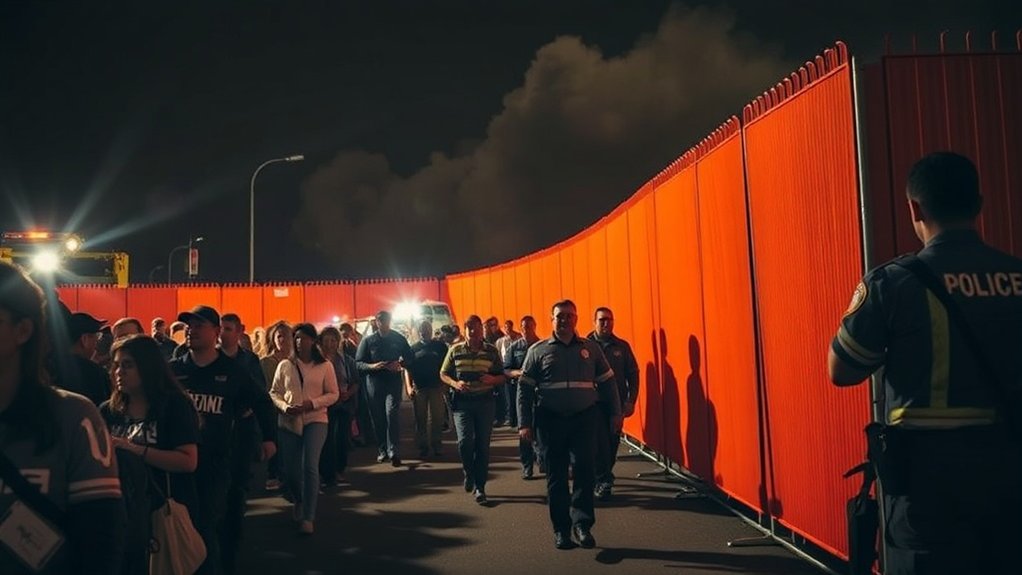
Clear visual pathways marked by temporary fencing are essential for guiding evacuations. Controlled access points help direct crowd flow and reduce confusion in emergencies. This method improves safety and ensures an orderly evacuation process, as temporary fencing establishes clear boundaries that minimize risks during chaotic situations.
Visual Pathway Marking
Effective visual pathway marking is crucial for safe evacuations and crowd management during emergencies. Use clear indicators like floor tape arrows or footprint decals to direct people to exits.
Color-coded markings can match your emergency action plan for better navigation. Consider using glow-in-the-dark materials on handrails for visibility in low light.
Anti-skid tape is important for safety on slippery surfaces, especially when sprinklers are activated. Ensure exit signs are reflective or illuminated and at eye level for easy visibility.
Continuously mark egress pathways, including corners and decision points, to minimize confusion and speed up evacuations, enhancing your emergency response.
Controlled Access Points
Controlled access points (CAPs) are crucial for managing evacuations and crowd control during emergencies.
Here are some effective strategies to improve safety and efficiency:
- Mark CAPs clearly at all entry and exit points.
- Use sturdy temporary fencing to create secure perimeters for authorized access only.
- Place CAPs on natural egress paths to make evacuations smoother and reduce crowding.
- Design CAPs flexibly to adjust to changing conditions and crowd behavior.
These practices can significantly enhance emergency response efforts.
Best Practices for Installing Temporary Fencing
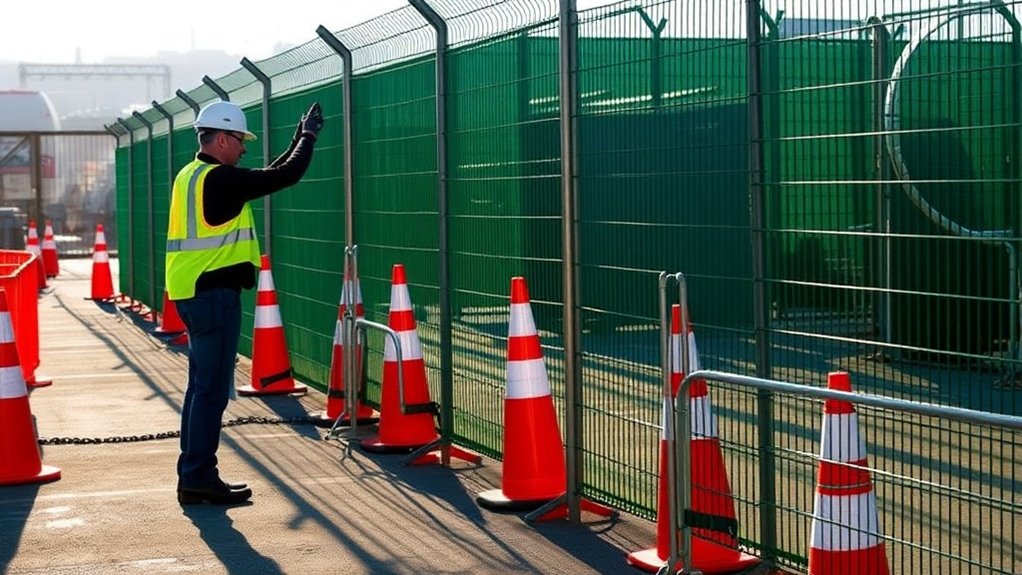
To install temporary fencing successfully, start by preparing the site. Clear away debris and obstacles, and mark the boundaries with string or spray paint.
Check for underground utilities to avoid any risks. Gather your materials, including panels, posts, and tools like post drivers and measuring tapes.
Begin with the corner posts for stability, ensuring all connections are secure. Add bracing every 25-30 meters for extra strength.
Continuously check that everything is level and straight. Finally, secure your fencing with concrete blocks or sandbags to keep it in place, creating a reliable barrier for any situation.
Adaptability for Various Emergency Scenarios
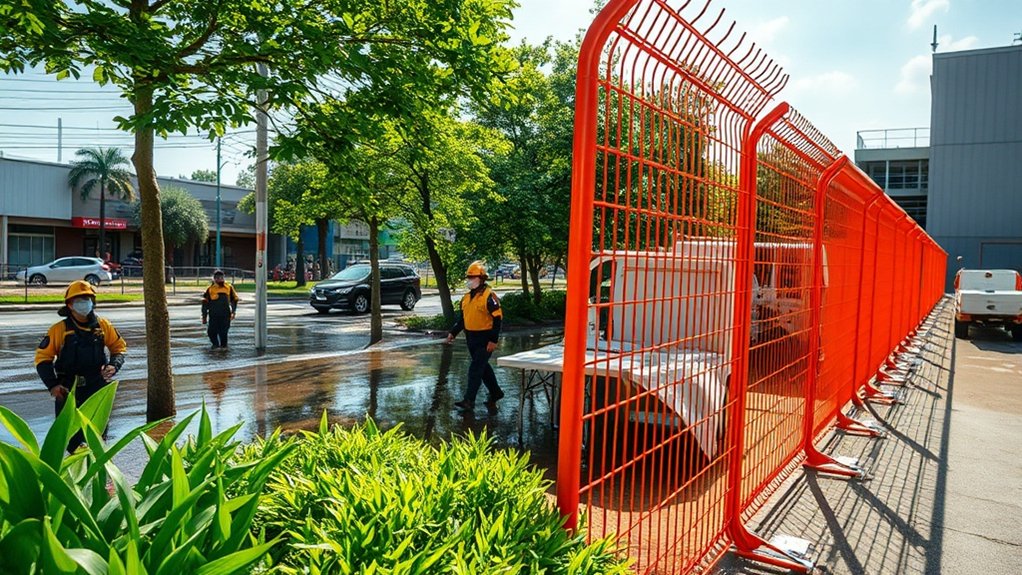
In an emergency, having adaptable temporary fencing is essential for effective management.
Its flexible and modular design allows for quick adjustments to suit changing needs. This means you can:
- Quickly set up secure perimeters around dangerous areas.
- Control access for authorized personnel only.
- Create designated spaces for triage, aid distribution, and equipment storage.
- Safely direct crowds and guide evacuation routes.
This adaptability helps ensure a smoother response during critical situations.
Regulatory Considerations for Temporary Fencing
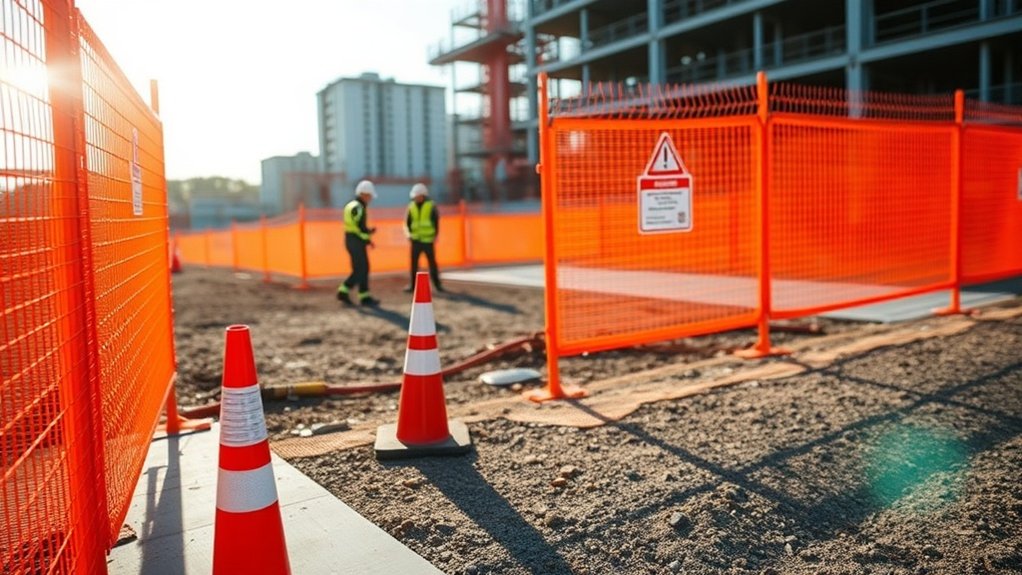
Managing temporary fencing during emergencies requires a solid grasp of regulatory requirements. You’ll need to navigate different regulations concerning safety, security, and environmental impact. This often involves obtaining permits that specify details like fence type, height, and location. Local authorities will conduct compliance inspections to ensure you meet these standards during installation. Keep in mind that permits may have limited durations, so you might need to renew them for extended projects. Consultation with local building department can provide essential guidance on specific regulations for your area. Zoning laws could also dictate where you can place fencing, often based on community aesthetics. Ensure your fencing complies with OSHA guidelines regarding height and materials, and consider environmental regulations to protect sensitive areas. Staying compliant not only reduces risks but also ensures your temporary fencing is safe and effective.
The Role of Training in Emergency Preparedness
To prepare for emergencies, compliance training is crucial for grasping regulations and protocols.
Practicing emergency procedures reinforces these ideas, so you’re ready to act when it counts.
Importance of Compliance Training
Understanding compliance training in emergency preparedness is crucial for your organization’s safety and readiness. It ensures that staff are well-prepared and confident in their roles during emergencies.
Here are key focus areas for effective compliance training:
- Learn the core principles and terminology of emergency preparedness.
- Understand regulatory requirements, such as those from CMS and TJC.
- Participate in full-scale drills to assess plans and staff readiness.
- Maintain documentation for compliance audits and ongoing improvement.
Regular training keeps everyone informed and enhances overall emergency response capabilities.
Emergency Procedure Simulations
Engaging in emergency procedure simulations is crucial for sharpening your response skills. These practices improve crisis management and ensure your team is prepared for real situations. Here’s a quick overview of the different simulation methods you can utilize:
| Type of Simulation | Description |
|---|---|
| Tabletop Exercises | Discuss strategies for imagined emergencies. |
| Live Drills | Practice procedures in real-time situations. |
| Virtual Simulations | Use computer-generated environments for training. |
| Immersive Environments | Employ VR to replicate stress and unpredictability. |
| Full-Scale Exercises | Conduct comprehensive drills covering all aspects. |
Utilizing these methods can significantly enhance your team’s readiness.
Enhancing Security With Effective Fencing Solutions
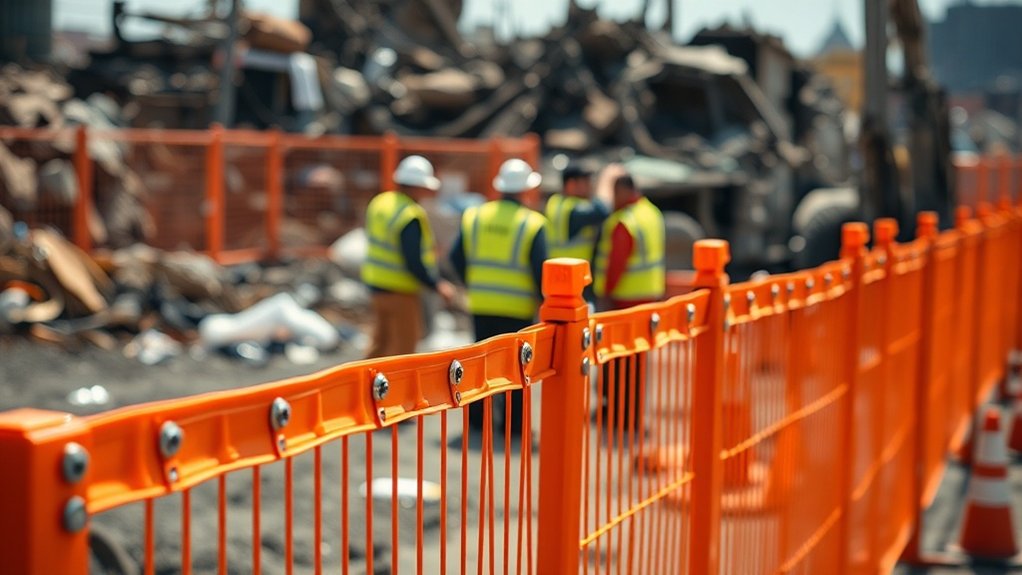
Effective fencing solutions are crucial for preventing theft and unauthorized access.
By combining advanced security features with durable materials, you can significantly improve your site’s safety.
Here are some practical strategies:
- Choose anti-climb mesh designs to effectively deter intruders.
- Increase fence height to at least 8 feet; this can reduce unauthorized entries by 73%.
- Use privacy screens and windbreaks to decrease opportunistic theft by 45%.
- Install anti-lift locking systems to cut tampering incidents by 58%.
Implementing these measures not only enhances security but can also lower insurance costs and improve operational efficiency.
With the right fencing, you create a strong barrier against potential threats.
Frequently Asked Questions
What Types of Materials Are Best for Temporary Fencing?
For temporary fencing, wooden barriers offer strength and an attractive look, while plastic mesh is great for quick setups and lightweight needs. Both are effective options that cater to different situations.
How Quickly Can Temporary Fencing Be Set up in an Emergency?
In an emergency, temporary fencing can typically be set up within 2 to 6 hours, especially when handled by a professional team. If the site is prepared and planning is in place, the response time improves, allowing for quick safety and access.
Can Temporary Fencing Be Reused After an Event?
Yes, temporary fencing can be reused after an event. To ensure it’s safe and functional for next time, just clean it, check for any damage, and replace any worn parts. This way, you can keep using it effectively for future events.
What Are the Costs Associated With Renting Temporary Fencing?
Renting temporary fencing typically costs between $125 and $450. This price varies based on factors like length, material, and rental duration. Remember to account for extra charges such as delivery, setup, and potential damage, which can raise your total cost.
How Do I Choose the Right Fencing Height for My Needs?
To choose the right fencing height, remember that 70% of regulations recommend a height of 6 to 8 feet for security. Assess your specific needs and local rules to avoid fines and ensure safety. For instance, if you have a pool, a taller fence is essential for child safety. Keep it simple and compliant!
Conclusion
In emergencies, temporary fencing provides essential security, helping to maintain order. Adhere to safety standards to ensure a safe environment for everyone. Installation and flexibility are crucial for effective crisis management. Equip yourself with the right tools and training to enhance your preparedness. When uncertainty strikes, let your fencing solutions create a protective barrier.