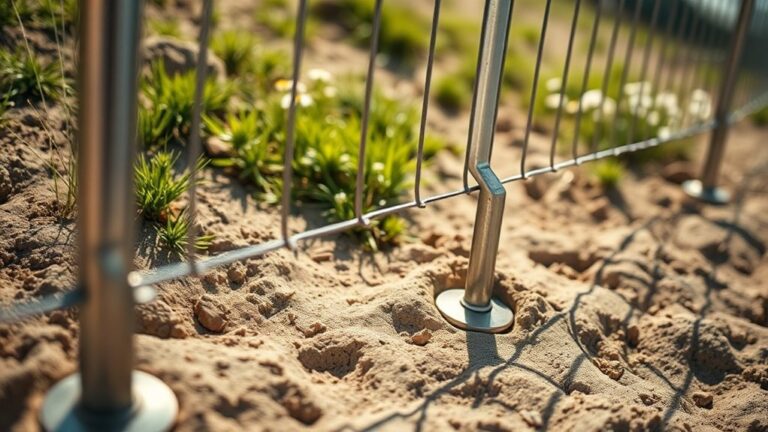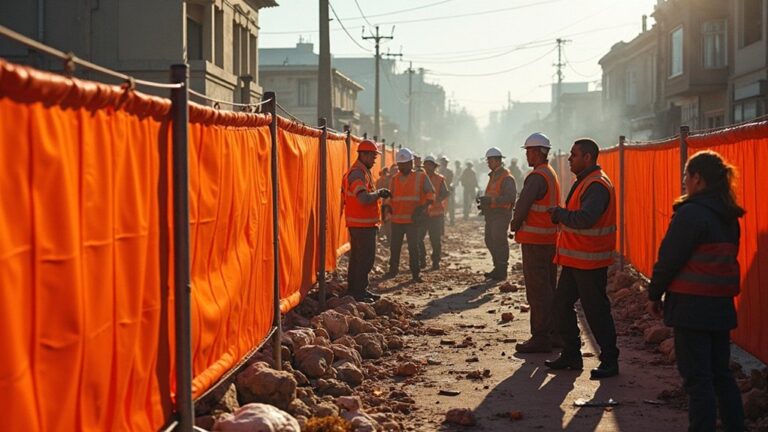

When selecting lightweight temporary fencing, choose panels that weigh between 20-40 lbs for easy transport. Go for durable materials like galvanized steel or heavy-duty plastic to ensure they meet safety standards. Look for modular designs that can be quickly assembled and disassembled without tools. This allows you to secure areas efficiently, saving both time and money. Consider how different types of fencing can best meet your specific needs.
Key Takeaways
- Choose fencing panels that weigh between 20-40 lbs for easy transport and solo setup.
- Look for modular designs that can be easily taken apart, stored, and moved.
- Consider portable fencing with weighted bases for quick setup at events.
- Use lightweight materials like heavy-duty plastic or galvanized steel for strength without the bulk.
- Optional wheel kits can help you easily move assembled fencing sections.
Benefits of Lightweight Temporary Fencing
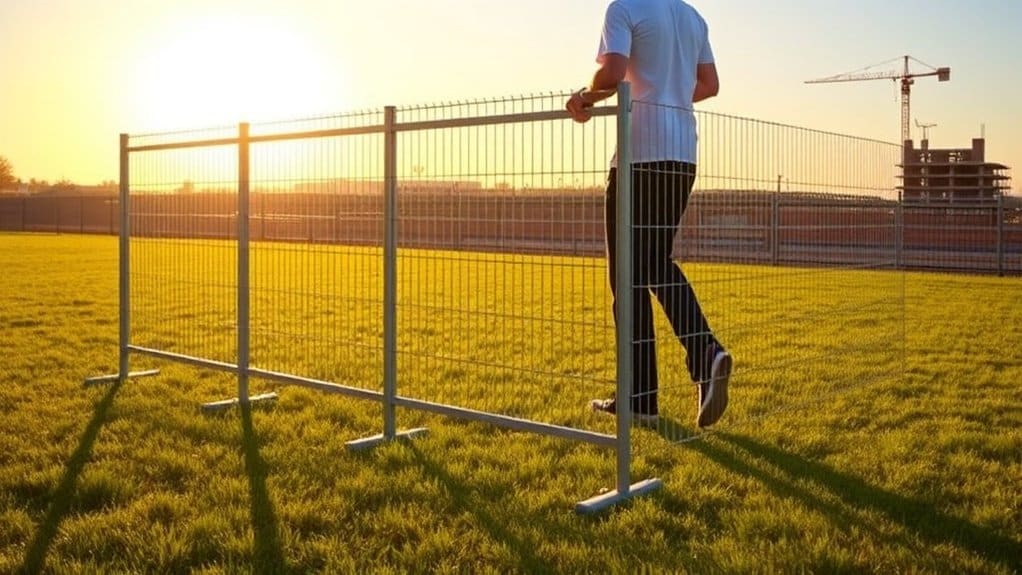
Choosing lightweight temporary fencing offers numerous advantages that boost project efficiency.
These panels, weighing just 20-40 lbs, are easy to transport, allowing you to fit more panels in a single load and potentially cut costs by up to 30%. Their quick installation and removal require minimal tools, saving valuable time on site—especially important for tight schedules. Additionally, this type of fencing is designed for temporary use, making it suitable for various scenarios. This fencing type promotes safety compliance by ensuring that it meets essential regulations.
The flexible design allows for simple reconfiguration to match different site layouts.
Moreover, lightweight fencing is cost-effective, helping to lower labor and transportation expenses, which maximizes your budget.
It also has a smaller environmental footprint, supporting sustainable practices by reducing waste and carbon emissions.
Types of Lightweight Fencing Solutions
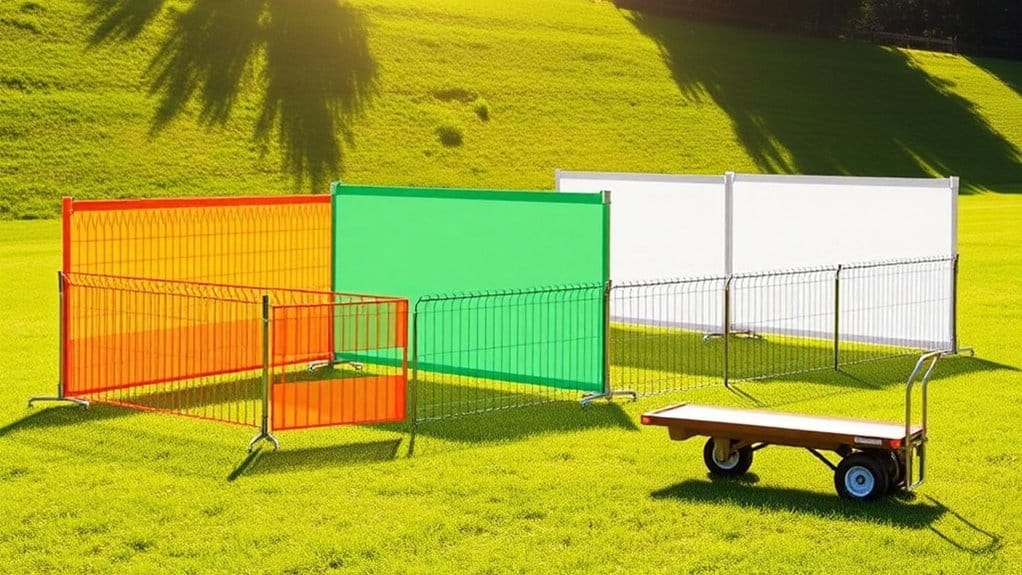
When considering lightweight fencing solutions, there are several effective choices to fit your project needs. Here’s a quick comparison of popular types and their advantages:
| Fencing Type | Key Features | Best For |
|---|---|---|
| Plastic Temporary Fencing | Lightweight and customizable | Low-security areas |
| Mesh Fencing Solutions | Strong, flexible, and easy to set up | Crowd control and visibility |
| Portable Panel Fencing | Quick to assemble with weighted bases | Events and temporary enclosures |
| Interlocking Barrier Systems | Continuous runs and portable | Festivals and sports events |
| Lightweight Wire Mesh Fencing | Cost-effective and adaptable | Construction and event setups |
This overview highlights the unique benefits of each type, helping you select the best fencing solution for your needs. The global market size for temporary fencing is expected to reach USD 9.4 billion by 2025, reflecting the growing demand across various sectors. Additionally, using galvanized steel in your temporary fencing can significantly enhance durability and rust resistance, making it suitable for various environments.
Key Features to Consider

When choosing lightweight temporary fencing, focus on key features that boost performance. Start with durable materials like galvanized steel or heavy-duty plastic, which are both resilient and easy to transport. Look for panels that weigh as little as 17 pounds for easy movement and stacking. Security is crucial, so opt for features like anti-climb welded wire mesh and lightweight fasteners that ensure safety without adding bulk. Consider modular designs that can be customized to fit your aesthetic and site requirements. Lastly, think about costs—using reusable components can help save money across multiple projects. Additionally, a quick and reusable temporary fencing kit is an excellent option for various applications.
Installation and Transport Ease
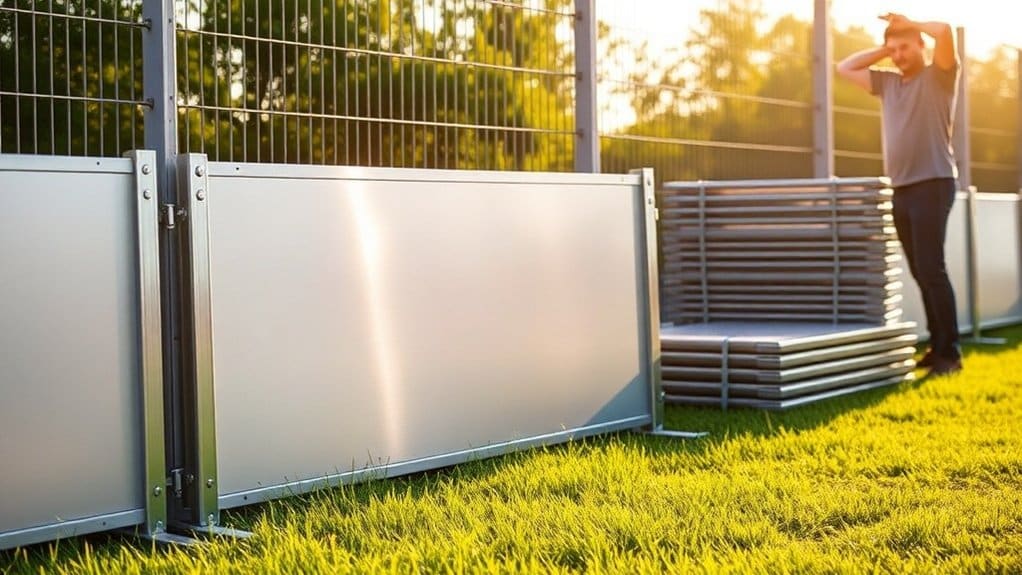
Lightweight temporary fencing makes installation and transport a breeze for any project. Here’s why:
- Easy Solo Setup: Each panel weighs about 30 pounds, so you can handle installation alone without needing special tools.
- Fast Assembly: These free-standing systems require no drilling, allowing quick setups on concrete, soil, or grass.
- Adjustable Panels: Loose connections let you tweak panel positions during setup, speeding up the process and reducing rework.
- Simple Transport: The modular design means you can take it apart easily for storage, and optional wheel kits help move assembled sections.
Additionally, the use of modular systems enhances flexibility, making it easier to adapt the fencing layout as project needs change. With these features, managing installation and transport is hassle-free.
Applications for Temporary Fencing
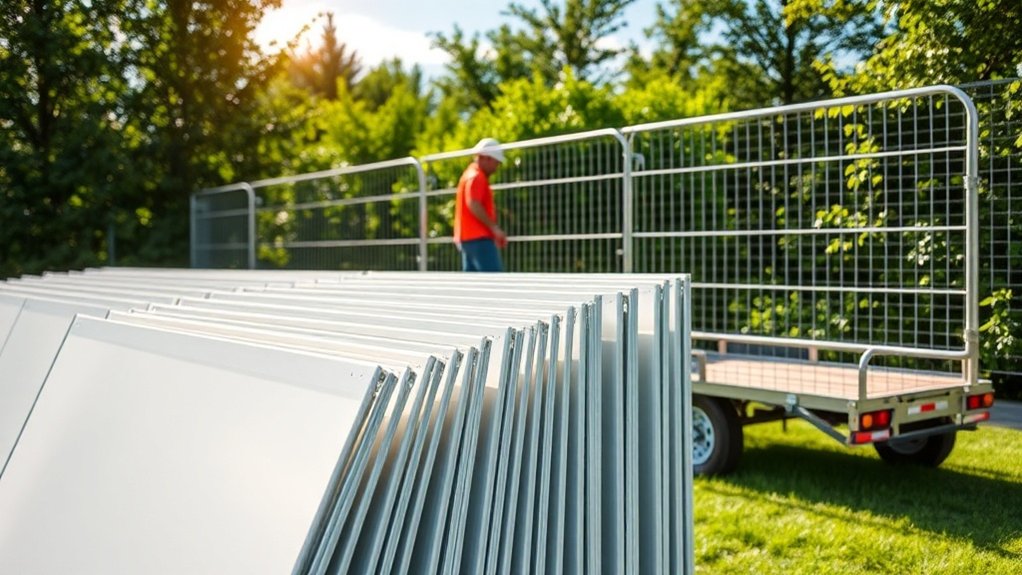
Lightweight temporary fencing is highly versatile and useful in various situations.
At construction sites, it secures dangerous areas to prevent unauthorized access and injuries, while also protecting tools and materials from theft.
At public events like concerts and festivals, this fencing helps manage crowds by marking safe pathways and restricted zones.
It also aids in creating emergency exits and guiding attendee movement, which boosts overall safety.
Whether for controlling access to VIP sections or maintaining order, temporary fencing is crucial for safety and efficiency in both construction and event settings.
Maintenance and Durability Factors
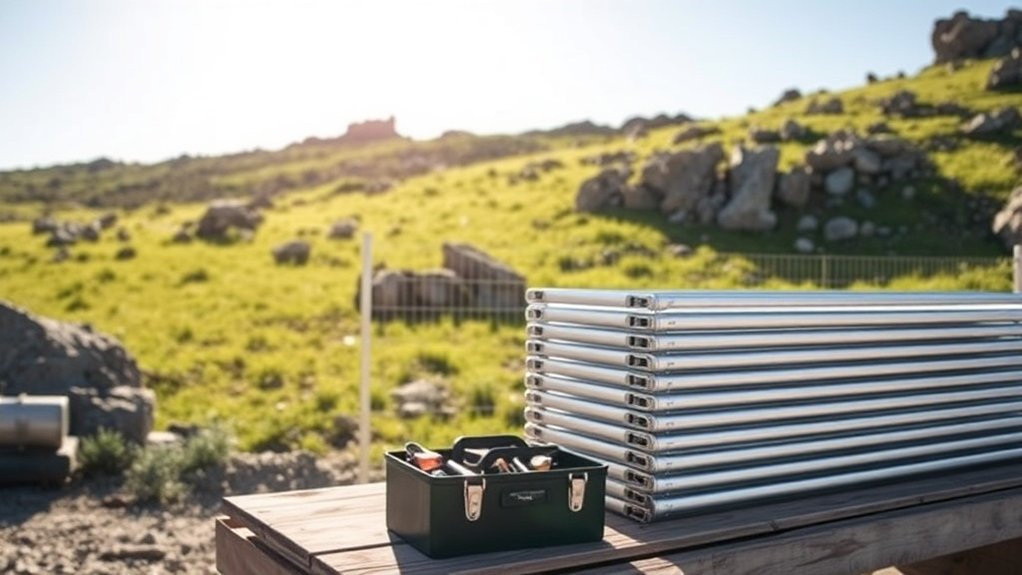
To keep lightweight temporary fencing safe and functional, focus on regular inspections and quick repairs. This not only boosts durability but also ensures it lasts longer. Here are some important tips:
- Check for wear, rust, and stability every day.
- Fix minor issues yourself, but call in experts for major damage.
- Use protective items like windscreens to shield against weather effects.
- After bad weather, inspect the fencing immediately for any safety concerns.
By following these steps, your fencing will stay effective, compliant, and ready to use again. Taking care of it also saves you money in the long run.
Always choose high-quality materials and have it professionally installed to meet safety standards.
Frequently Asked Questions
Can Lightweight Fencing Be Used for Long-Term Projects?
Yes, lightweight fencing is suitable for long-term projects because it’s durable and versatile. For example, it can hold up well in different weather conditions and can be easily adjusted for various site needs, making it a reliable option for ongoing use.
What Is the Maximum Height Available for Temporary Fencing?
Temporary fencing usually stands between 6 to 8 feet tall, but this can vary depending on local regulations and specific project needs. Always check local codes to ensure compliance.
Are There Any Specific Weight Limits for Portable Fencing?
There are no specific weight limits for portable fencing, but stability requirements often depend on wind resistance and environmental conditions. For example, if you’re setting up fencing at an outdoor event, choose materials that can withstand gusty winds. It’s important to find a balance between portability and stability to ensure safety and effectiveness.
How Does Weather Affect Different Types of Lightweight Fencing?
Think of your fence like a ship navigating rough seas. Wind and rain can impact its strength. Lightweight options, such as galvanized steel, are tough against storms, while plastic may struggle. Choose your fencing wisely to ensure it stands strong in bad weather.
Can Lightweight Fencing Be Easily Customized for Events?
Yes, lightweight fencing is highly customizable for events. You can use different materials, colors, and graphics to match your theme. For example, if you’re hosting a beach party, you might choose bright colors and wave patterns. This flexibility ensures your setup is both attractive and functional.
Conclusion
Lightweight temporary fencing is a practical choice for easy transport and quick setup. It’s perfect for events or construction sites, allowing you to secure areas without the hassle of bulky materials. With various options available, you can find the right fit for your needs. This type of fencing offers convenience and adaptability, making it an essential tool for any project. You’ll appreciate how much simpler it makes the process!