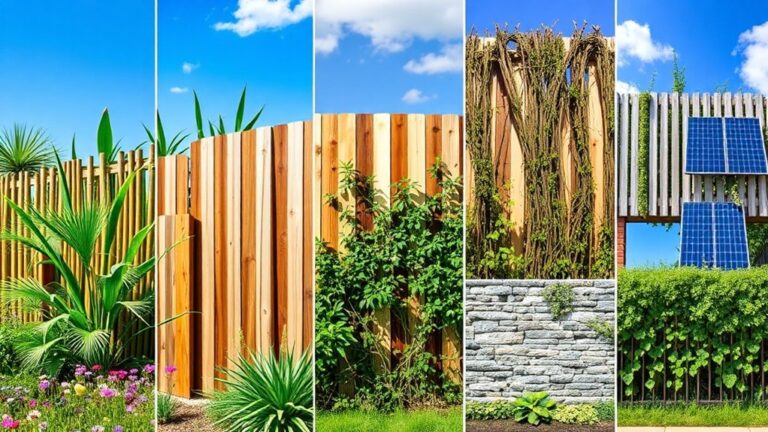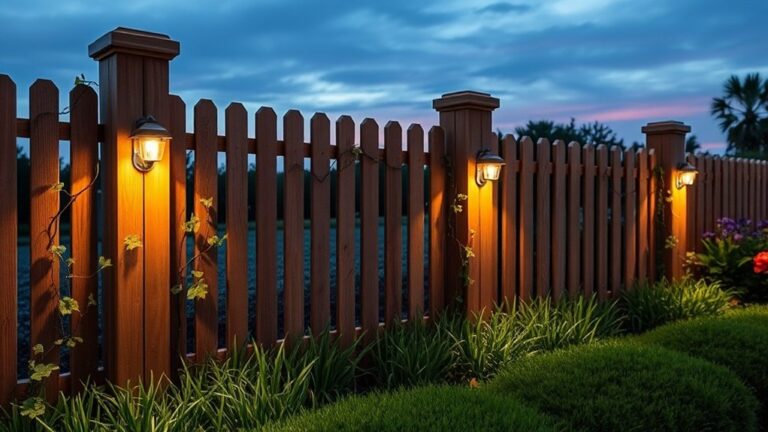

For budget-conscious buyers looking for affordable green fencing options, consider bamboo, composite materials, and reclaimed wood. Bamboo is durable and cost-effective. Composite fencing offers a stylish look with low maintenance. Reclaimed wood adds charm while helping the environment by reducing waste. Living fences not only enhance biodiversity but also serve as natural barriers. Lastly, metal fencing is sturdy, recyclable, and environmentally friendly. To find the best choice for your property and budget, take a closer look at the features of each option.
Key Takeaways
- Bamboo fencing is a budget-friendly, eco-friendly option priced between $10 to $20 per linear foot, lasting 15 to 20 years.
- Composite and biocomposite fencing is durable and sustainable, with a lifespan of 25 to 30 years and requires little upkeep.
- Reclaimed and recycled wood fencing not only looks unique but also helps reduce waste, often costing less than new wood.
- Metal fencing is very durable, lasting 30 to 50 years, resistant to corrosion, and can be recycled endlessly, making it a green choice.
- Living fences boost biodiversity, provide natural beauty, stabilize soil, and absorb carbon, contributing to a healthier environment.
Bamboo Fencing: Sustainable Strength and Affordability
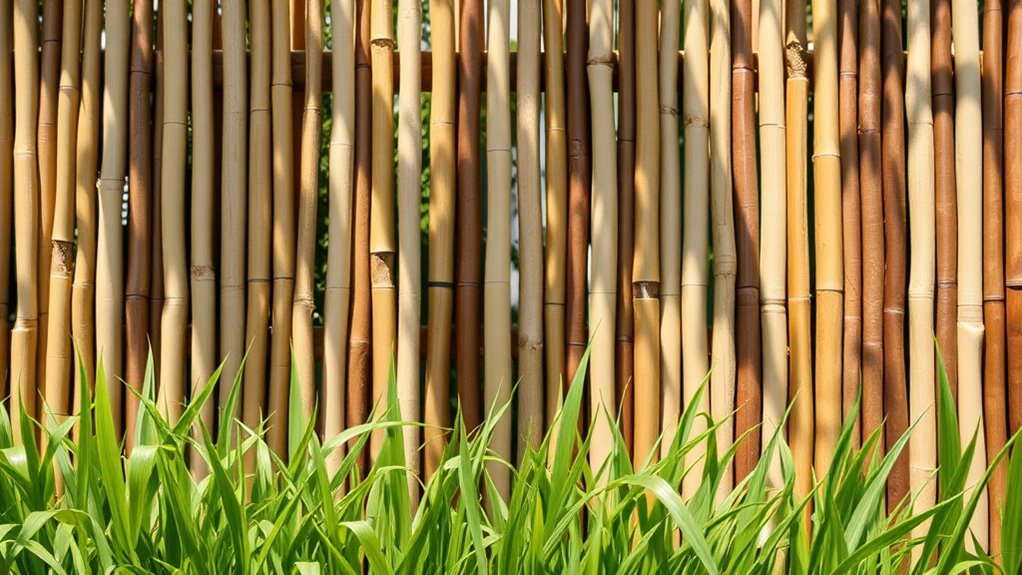
If you’re after an affordable and eco-friendly fencing option, bamboo fencing is a great choice. It typically costs between $10 and $20 per linear foot, making it cheaper than hardwood and vinyl.
Bamboo is durable, lasting 15 to 20 years, which helps save on replacement costs. Installing bamboo is easy for DIY enthusiasts—minimal tools are needed, and you don’t require special skills. Additionally, bamboo is a fast-growing plant that provides quick privacy solutions for your outdoor space. This remarkable material is also known for its natural silica content, which makes it resistant to pests and rot.
Just apply varnish once a year for maintenance. By choosing bamboo, you enhance your outdoor space while supporting sustainable practices, making it an excellent option for budget-conscious buyers.
Composite and Biocomposite Fencing: Durable and Low Maintenance
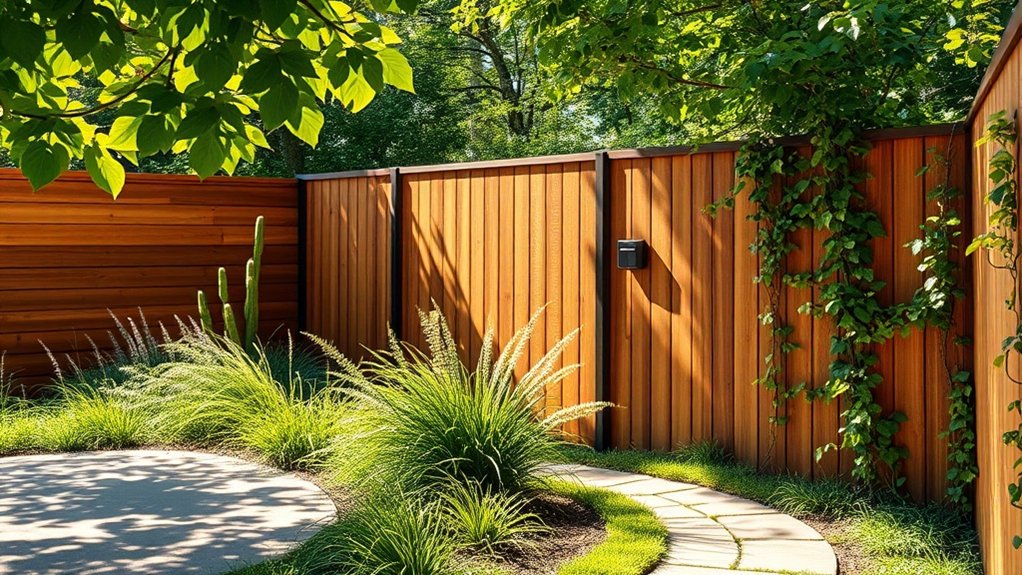
Choosing composite or biocomposite fencing means opting for an eco-friendly, durable solution. Made from recycled materials, these fences resist rot and pests, requiring very little maintenance. You’ll save time and money with a lifespan of 25 to 30 years, allowing you to enjoy a stylish barrier without the frequent upkeep hassle. Additionally, they are made from 100% recycled biocomposite boards, which further enhances their environmental appeal. This aligns with the growing trend of eco-friendly options in the fencing market, attracting eco-conscious buyers looking for sustainable solutions.
Eco-Friendly Material Composition
When considering eco-friendly fencing, composite and biocomposite materials are excellent choices due to their durability and low maintenance. Made from sustainably sourced wood fibers and recycled plastics, they represent a significant advancement in sustainable materials. Additionally, composite fencing combines the natural beauty of wood with the durability of synthetic materials, making it a popular choice for homeowners. PVC fences, known for their durability of PVC fences, also provide a long-lasting option that is resistant to common damage.
| Feature | Composite Fencing | Biocomposite Fencing |
|---|---|---|
| Material | 50% wood fibers, 50% recycled plastics | Natural, biodegradable materials |
| Production | Minimal chemicals used | Eco-friendly manufacturing |
| Maintenance | No need for painting/staining | Generally low upkeep |
| Durability | Resistant to moisture and rot | Strong yet biodegradable |
| Recycling | Recyclable at end of life | Fully ecological options available |
With these fencing options, you can create a beautiful, eco-friendly boundary that benefits both your budget and the environment.
Long-Lasting Durability Benefits
When exploring fencing options, consider the impressive durability of composite and biocomposite materials.
These options can last 25 to 30 years, significantly outlasting traditional wood. They resist moisture, UV damage, and pests, ensuring they stay strong and attractive over time.
Plus, they require minimal maintenance—no need for staining or sealing like with wood. This longevity not only saves you money on replacements but also benefits the environment.
Opting for composite or biocomposite fencing is a smart, eco-friendly choice that pays off over time.
Minimal Maintenance Requirements
Composite and biocomposite fencing is built for durability and low maintenance, making it a smart choice for budget-conscious buyers.
Clean it just once or twice a year with mild soap and water, using a gentle brush or sponge to avoid scratches. Skip harsh chemicals to protect its surface.
Regularly clear debris and check for minor damages to prevent mold and deterioration, keeping maintenance to just a few hours annually.
Plus, there’s no need for staining or sealing, ensuring your fence stays attractive for over 20 years.
It’s a practical and eco-friendly investment.
Reclaimed and Recycled Wood Fencing: Unique Character and Eco-Friendliness
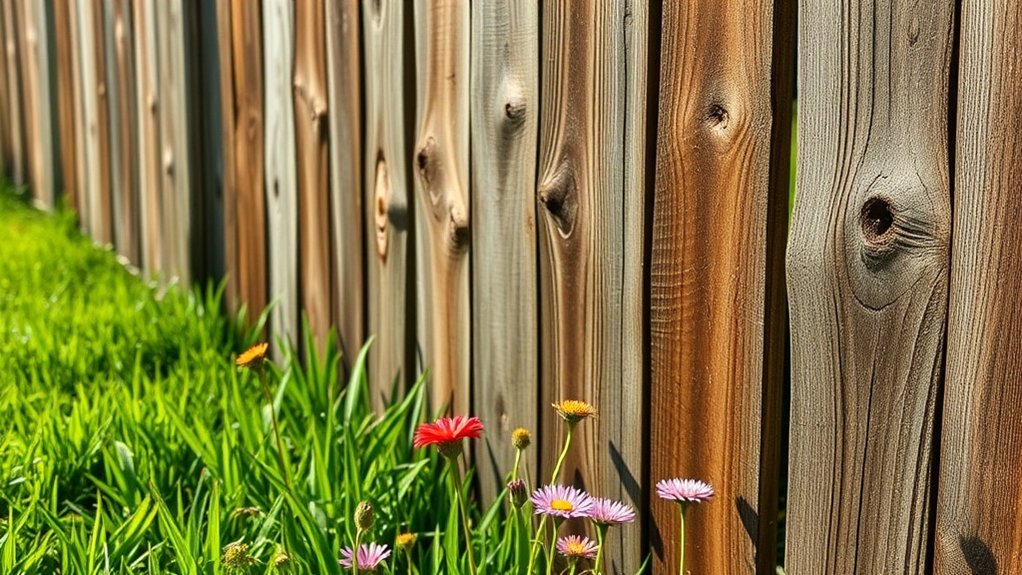
Choosing reclaimed and recycled wood fencing is both eco-friendly and unique. The distinct grain patterns, nail holes, and weathered textures give your outdoor space a rustic charm that stands out.
By using salvaged timber, you help reduce waste and lessen the need for new lumber, which protects natural habitats. This type of fencing is often more affordable than new wood and has fewer chemical treatments, making it safer for the environment.
You can enhance its beauty and durability with natural oils or stains. Make a sustainable choice that enhances your home’s appeal.
Living Fences: Natural Barriers With Environmental Benefits
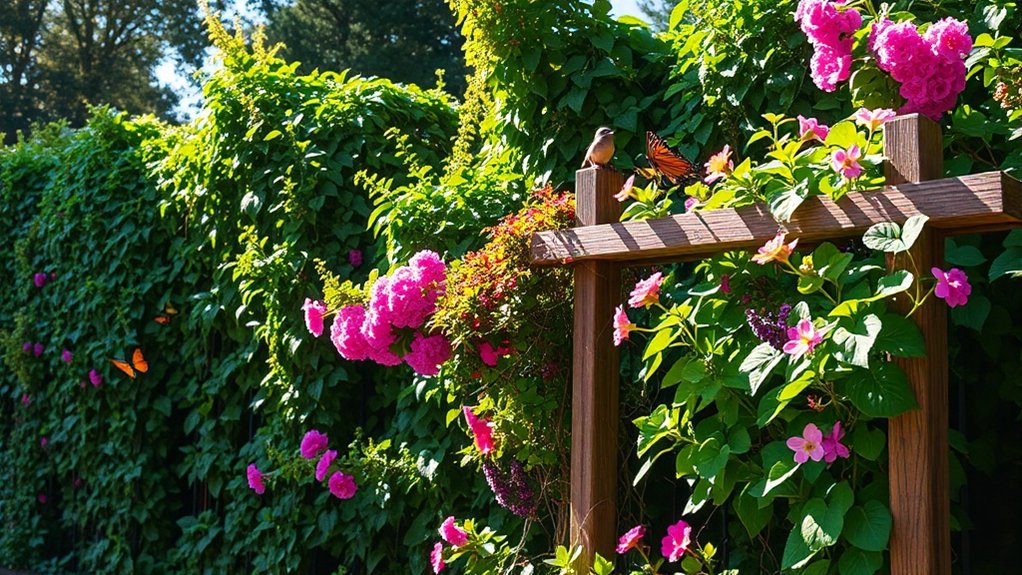
Consider living fences as an eco-friendly fencing option that enhances your landscape while providing environmental benefits.
These natural barriers support biodiversity and help stabilize soil, making them a smart choice for property owners. Here are some key advantages:
- They create habitats for wildlife, supporting local ecosystems.
- Their roots stabilize soil, reducing erosion and retaining moisture.
- Living fences serve as windbreaks, protecting crops from wind damage.
- They absorb carbon, helping to fight climate change.
Metal Fencing: Long-Lasting and Recyclable Options
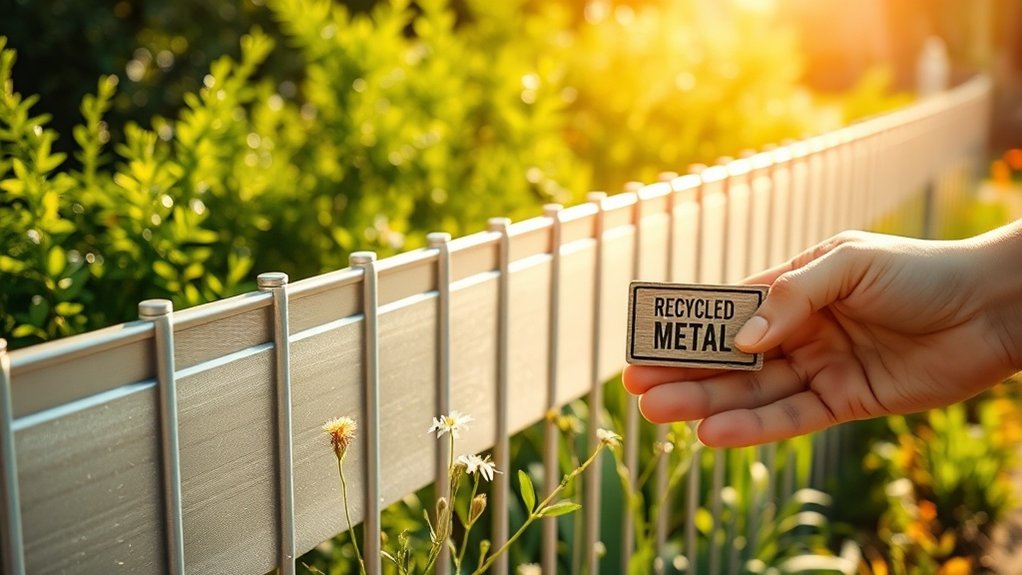
Metal fencing is a durable and low-maintenance option for enhancing your landscape.
With a lifespan of 30-50 years, it outlasts wood, minimizing the need for replacements and conserving resources. Its resistance to corrosion, pests, and weather means fewer repairs over time.
When it’s time to replace your fence, metal materials like steel and aluminum can be recycled indefinitely without losing quality, supporting a circular economy and reducing your carbon footprint.
Choosing metal fencing not only boosts your property’s appeal but also promotes sustainability.
Eco-Friendly Concrete Fencing: Durable and Resource-Conscious
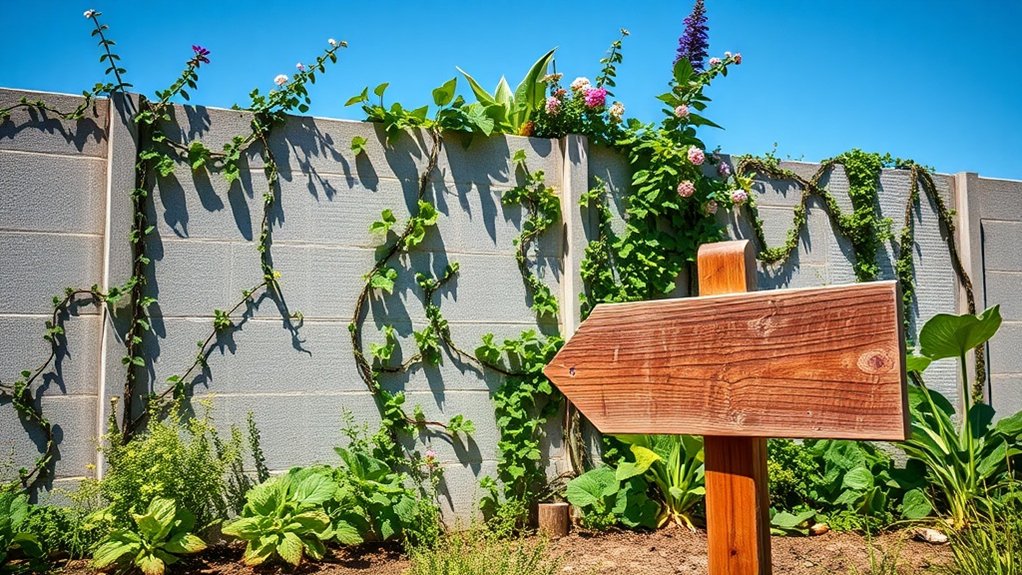
When choosing eco-friendly fencing, consider eco-friendly concrete.
It’s durable and cost-effective, meaning you won’t have to replace it often, saving you money.
Plus, by opting for this material, you’re helping to conserve resources and support a healthier planet.
It’s a strong barrier that benefits both your wallet and the environment.
Sustainable Material Benefits
Eco-friendly concrete fencing is a smart, sustainable choice that helps reduce your environmental impact while providing lasting durability. Here’s why it’s beneficial:
- Reduced Waste: Made from recycled materials, precast concrete minimizes landfill waste.
- Lower Carbon Footprint: Advances in cement production have significantly decreased CO2 emissions.
- Resource Conservation: Using locally sourced aggregates cuts down on transportation emissions and promotes sustainable practices.
- Enhanced Durability: This fencing withstands weather and pests, reducing the need for harmful chemicals.
Long-Term Cost Savings
Choosing concrete fencing enhances your property’s look and provides long-term cost savings. This durable option can last 50 to 75 years or more with minimal maintenance. Unlike wood, you won’t incur costs for sealing, painting, or pest damage repairs.
| Benefit | Concrete Fencing |
|---|---|
| Lifespan | 50-75 years |
| Maintenance | Minimal |
| Pest Resistance | Yes |
| Fireproof | Yes |
| Environmental Impact | Low |
With its durability and low upkeep, concrete fencing leads to fewer replacements and less waste. You can invest confidently, knowing it’s built to last and is eco-friendly.
Wire Fencing: Lightweight and Cost-Effective Solutions
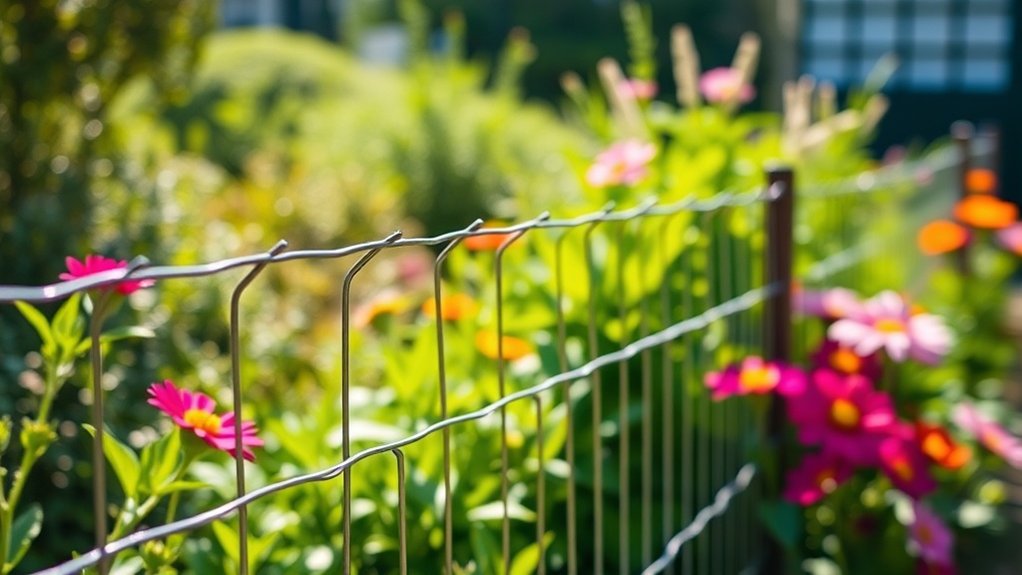
Wire fencing is a budget-friendly and lightweight option that offers several advantages:
- Cost-Effective: Wire is generally cheaper than wood or vinyl, making it ideal for those on a budget.
- Simple Installation: With fewer posts required, you can save both time and labor costs.
- Low Maintenance: Unlike wood, wire won’t warp or crack, reducing repair needs.
- Versatile Use: Whether for keeping livestock in or protecting gardens, wire fencing meets various needs.
For the best results, ensure proper tension and spacing during installation.
With wire fencing, you can enjoy durable, eco-friendly options without overspending!
Comparing Initial Costs and Long-Term Savings
When investing in fencing, it’s crucial to weigh initial costs against long-term savings. The materials you choose will significantly affect your budget.
For example, wood pallet fencing may be inexpensive at first, but with a lifespan of only 5-10 years, you’ll need to replace it often, increasing overall costs.
Vinyl fencing, while more expensive initially, lasts 20-30 years and requires no maintenance, leading to substantial savings over time.
Chain link fencing strikes a balance, lasting around 15-20 years at a moderate cost.
Installation and Maintenance Considerations
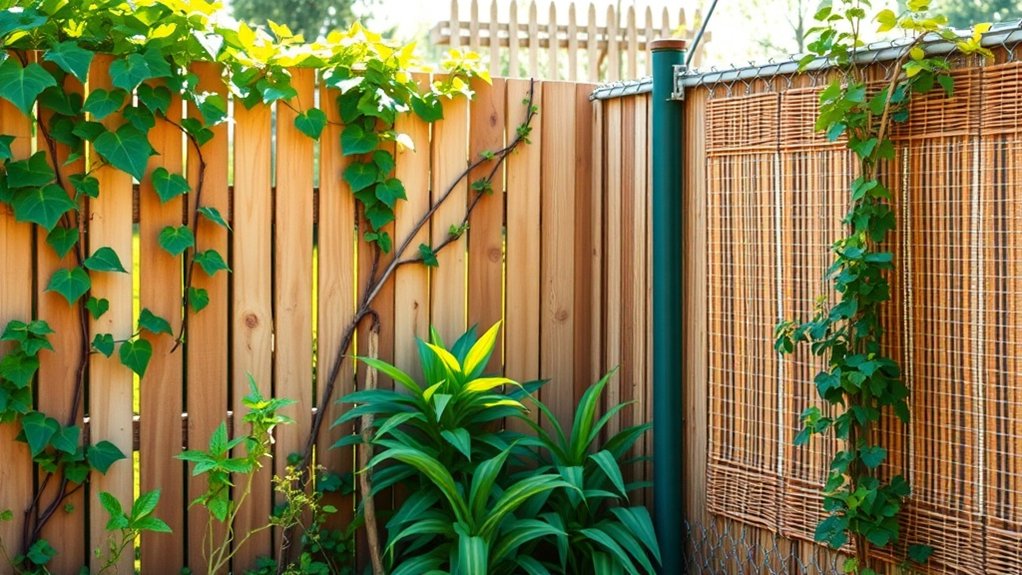
When choosing green fencing options, prioritize ease of installation and long-term maintenance.
For instance, some materials like composite wood can be set up quickly and require less upkeep over time.
Installation Ease and Speed
When it comes to choosing eco-friendly fencing, installation ease and speed are key for budget-conscious buyers.
Here are some important factors to consider:
- Material Choice: Vinyl and chain link fences can be installed quickly, often within just 1-2 days.
- Installation Techniques: Utilizing power tools for post driving can significantly speed up the installation process.
- Site Preparation: A well-prepared site with clear markings helps ensure that posts are set accurately, minimizing delays.
- Crew Experience: Experienced installers can complete the job faster, making the entire process more efficient.
Keep these tips in mind to streamline your fencing project!
Long-Term Maintenance Requirements
To ensure your eco-friendly fence lasts for years, regular maintenance is crucial. Conduct bi-annual inspections to spot issues like mold, rust, and structural damage, particularly at joints and fasteners.
For wooden fences, apply preservatives once a year to prevent decay. Metal fences should have rust-resistant coatings and be repainted as needed.
Seasonal cleaning is essential to avoid moisture buildup. Additionally, lubricate moving parts and replace any rusted hardware.
Aesthetic Appeal: Enhancing Your Property’s Look
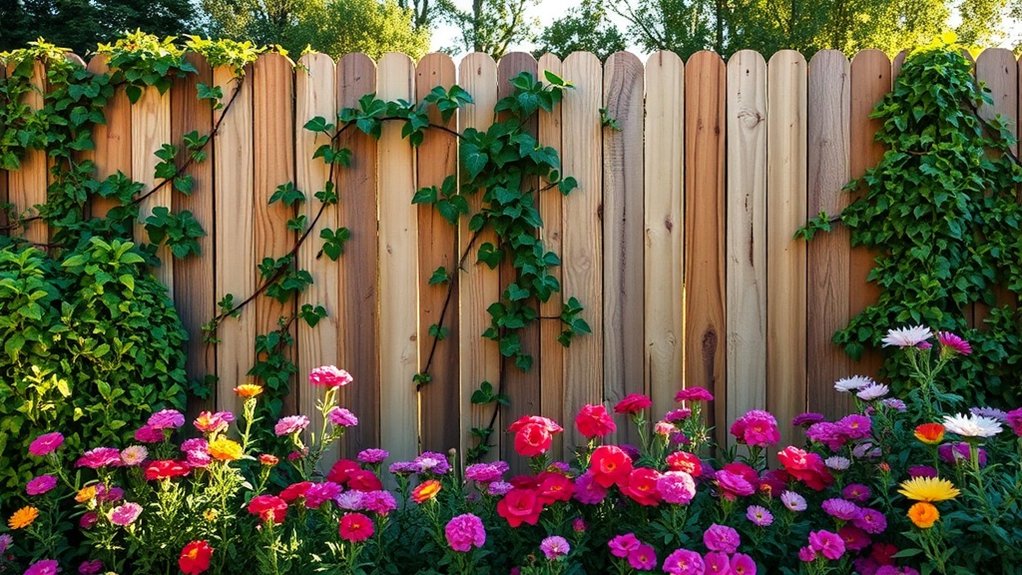
Looking to boost your property’s aesthetic without breaking the bank? Eco-friendly fencing can enhance your home’s appearance while blending in with your landscape.
Here are some budget-friendly options:
- Bamboo: Offers a natural look that fits both modern and rustic styles.
- Wood Fences: When well-kept, these versatile fences can increase your curb appeal by up to 10%.
- Living Fences: Use hedges and shrubs for organic borders that blend beautifully with your landscaping.
- Recycled Materials: Composite fences mimic natural textures and are better for the environment.
Choose any of these options to elevate your property’s style sustainably!
Making the Right Choice for Your Budget and Environment
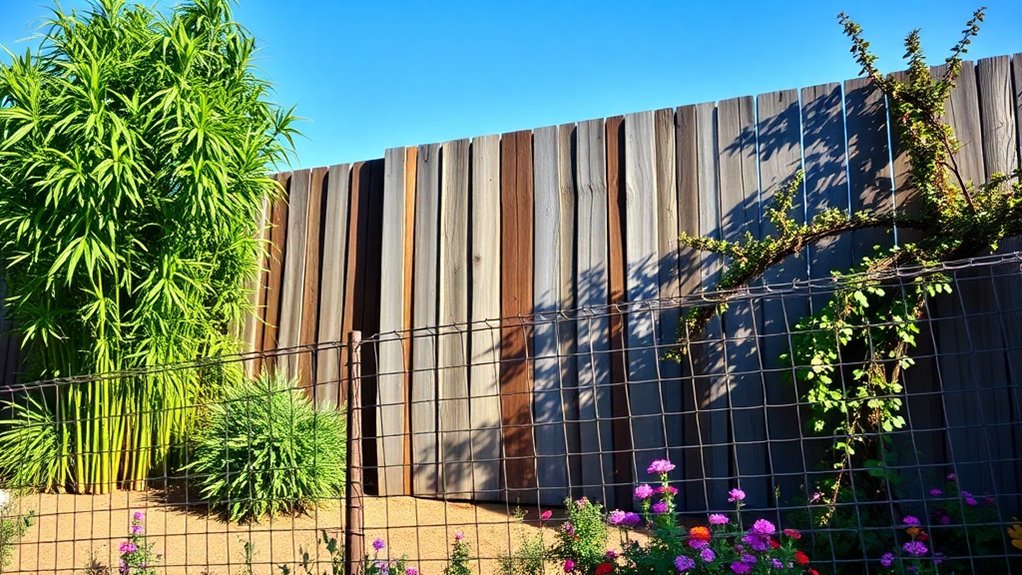
When choosing fencing that fits your budget and is environmentally friendly, consider both cost and sustainability. Options like wood pallet fences and woven hurdles are affordable and eco-conscious.
Bamboo is durable and cost-effective. Composite fencing may have a higher upfront cost, but its low maintenance and long lifespan save money in the long run.
Natural materials like reed fencing can add charm but might need more frequent replacements. By opting for eco-friendly materials, you help the planet while keeping costs manageable.
Striking a balance between your budget and sustainable choices ensures a smart decision for both your finances and the environment.
Frequently Asked Questions
What Is the Average Lifespan of Each Fencing Option?
Wood fences can last anywhere from 4 to 30 years, depending on how well they are treated. Vinyl fences usually last around 20 years with proper maintenance. When selecting your fencing, think about these lifespans to ensure you choose a durable and eco-friendly option for your property.
How Do I Choose the Right Fencing for My Climate?
To pick the right fencing for your climate, choose materials that can handle local weather. In humid areas, go for vinyl or treated wood, as they resist moisture well. For cold climates, flexible metals or composites are great options for durability.
Are There Any Hidden Costs Associated With Installation?
Yes, there can be hidden costs with installation. These might include permits, site preparation, and unexpected expenses due to terrain issues. It’s wise to budget for these extras to avoid surprises and ensure a smoother installation process.
Can I Install These Fences Myself, or Do I Need a Professional?
You can install a fence yourself if you have basic skills, but if your yard has uneven ground or other challenges, you might want to hire a pro. Consider your comfort level and the complexity of the project before deciding.
What Are the Best Practices for Maintaining Eco-Friendly Fences?
To keep your eco-friendly fence in good shape, use sustainable materials like bamboo or reclaimed wood. Regularly check for any damage and clean it with biodegradable products. Make timely repairs and perform seasonal maintenance to prolong its life and reduce environmental impact.
Conclusion
When selecting green fencing options, consider that sustainable materials can be a smart investment. For example, bamboo is a fast-growing resource, reaching up to three feet daily. Choosing eco-friendly fencing not only boosts your property’s look but also benefits the environment. By balancing your budget with long-term gains, you can create an attractive and sustainable space that reflects your values.