Drought-tolerant landscaping with integrated fencing is an effective way to create a sustainable outdoor space that saves water. By choosing native and drought-resistant plants along with durable fencing materials, you can improve both privacy and appearance. Grouping plants by their water needs helps optimize irrigation, promoting healthy growth. Using permeable hardscaping can also effectively manage water runoff. This approach lowers maintenance costs and supports local ecosystems. Explore how these methods can turn your yard into a resilient and attractive environment.
Key Takeaways
- Plant drought-resistant options like lavender and California poppies near fences for beauty and to attract wildlife.
- Choose strong fencing materials, like composite or treated bamboo, to reduce upkeep costs over time.
- Organize plants by their water needs near fences to improve watering efficiency and promote healthy growth.
- Match fence colors and textures with drought-tolerant plants for a cohesive look.
- Use permeable materials in your hardscaping to manage water runoff and support plant health.
Understanding Drought-Tolerant Landscaping
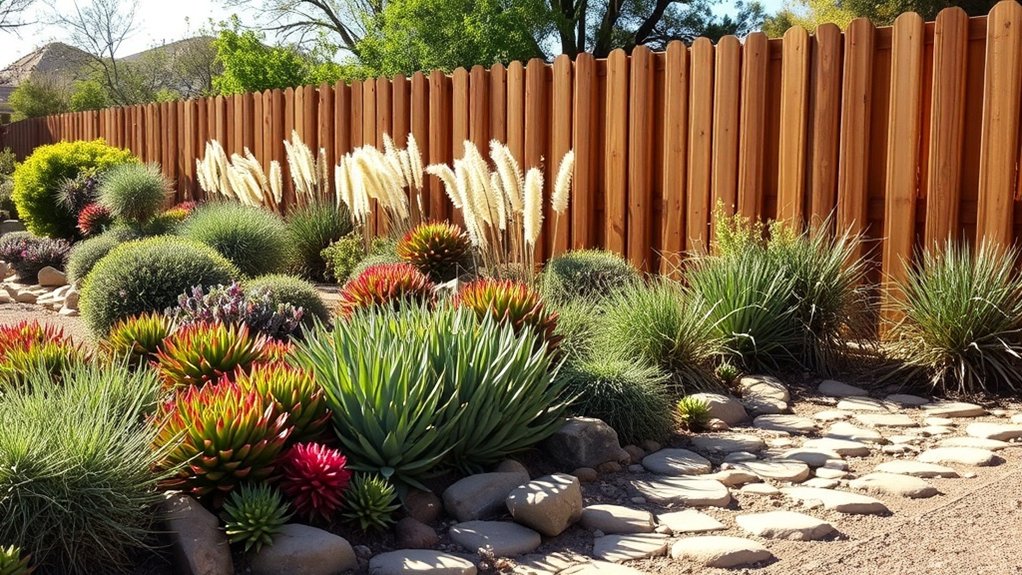
Drought-tolerant landscaping is about more than saving water; it’s about creating strong, sustainable outdoor spaces.
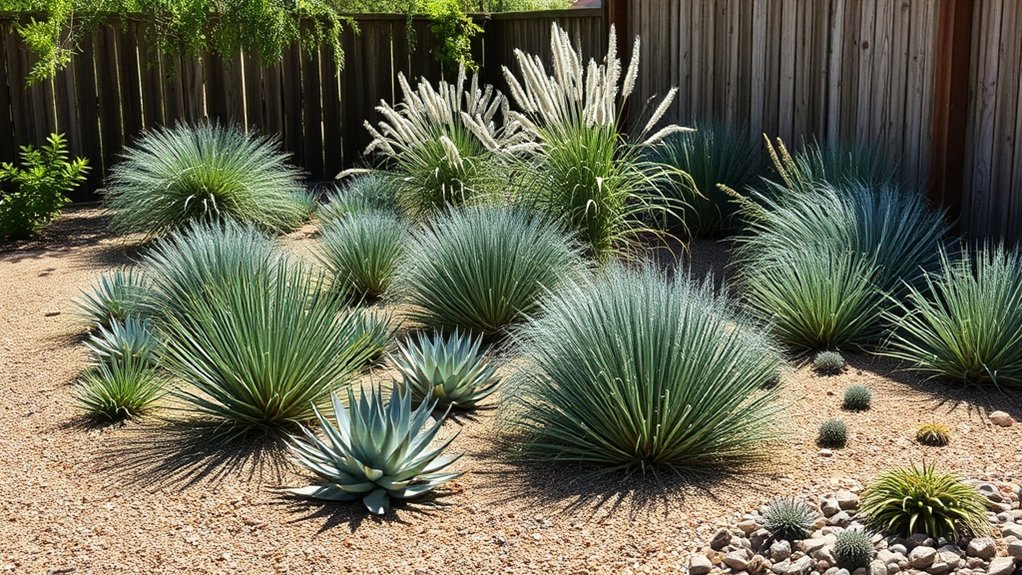
By choosing a mix of native and drought-resistant plants like lavender and California poppies, you not only support local ecosystems but also create visually appealing gardens. These plants thrive with minimal water, contributing to a lush landscape rather than a dry one. To help them grow, use efficient irrigation, improve soil quality, and add mulch. This approach works in various climates, proving that beautiful gardens can be both resilient and eco-friendly. Drought-tolerant landscaping also promotes healthier ecosystems by reducing chemical use and enhancing soil health.
Importance of Water Conservation
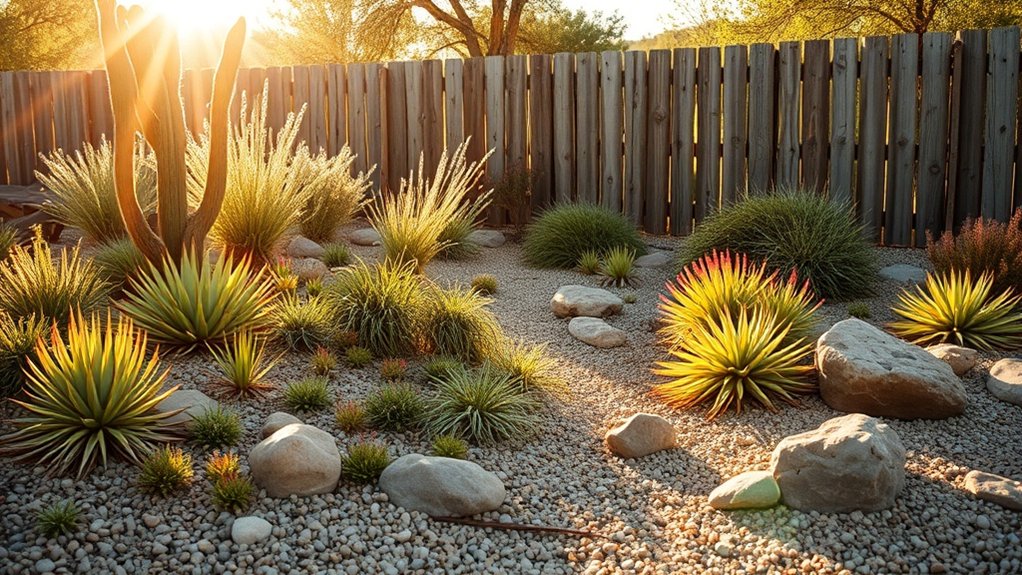
Water conservation is crucial for maintaining sustainable landscapes, especially during droughts. By using smart landscaping techniques, you can cut outdoor water use, which can be as high as 60% of household water in some regions. For example, drip irrigation can save 25–50% more water compared to traditional sprinklers. Additionally, incorporating at least 33% water-efficient plants not only strengthens your garden but also supports local ecosystems. Landscape irrigation represents about 50% of annual residential water consumption, highlighting the importance of efficient water use. Prioritizing water conservation helps you save money and promotes healthy plants that filter water and recharge groundwater. By following these strategies, you can keep your landscape lively and sustainable, even in dry times.
Selecting the Right Plants
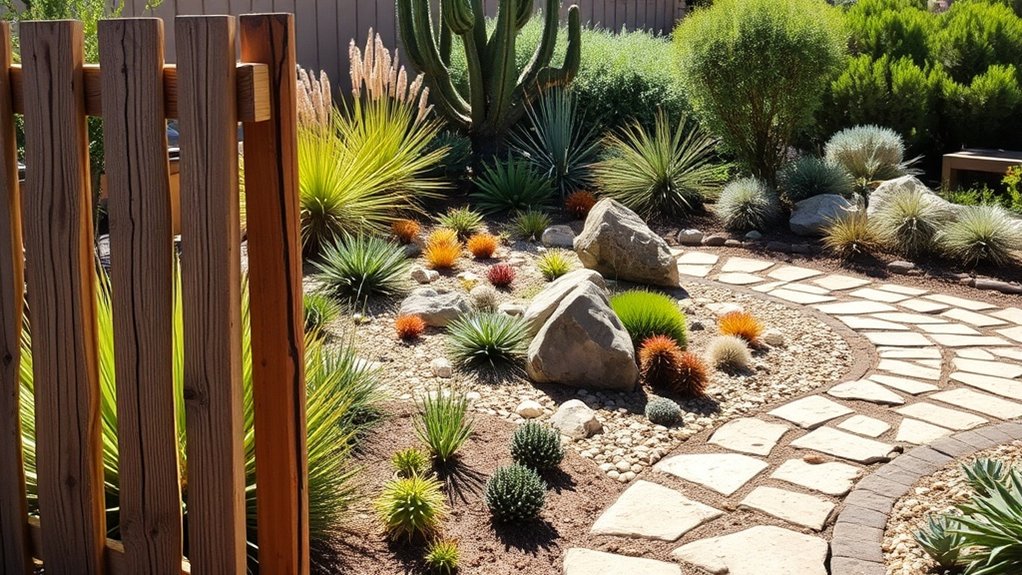
When choosing plants for a drought-tolerant landscape, opt for native species that are well-suited to your local climate and soil. This boosts their chances of survival and reduces the need for water and maintenance. Additionally, selecting drought-tolerant plants can significantly decrease the amount of water required for your garden once they are established. Also, group plants by their water needs—this is called hydrozone grouping. It helps with efficient irrigation and promotes healthy growth.
Native Plant Advantages
Choosing native plants for your landscape can turn your yard into a vibrant ecosystem and significantly lower your water usage. By growing native plants, you can enjoy less maintenance, increased biodiversity, and healthier soil. Plus, combining these plants with your fencing offers both practical and visual appeal.
| Advantages | Benefits | Key Features |
|---|---|---|
| Water Efficiency | Can cut water use by up to 85% | Needs little to no extra watering |
| Maintenance | Fewer fertilizers & pesticides | Naturally resists pests |
| Biodiversity | Attracts local wildlife | Provides food and shelter |
| Soil Health | Prevents erosion | Deep roots enhance soil structure |
Embracing native plants is a smart choice for both your garden and the environment.
Hydrozone Grouping Techniques
To create a drought-tolerant landscape, it’s crucial to use hydrozone grouping techniques.
Begin by mapping your garden into four zones: routine, reduced, limited, and non-irrigated. Each zone has different water needs—high-water plants like ferns and hydrangeas go in routine zones, while low-water options like lavender and succulents fit in reduced areas.
Install separate irrigation valves for each zone to customize watering schedules. Don’t forget to consider soil type and sun exposure when selecting plants.
Strategies for Effective Fencing Integration
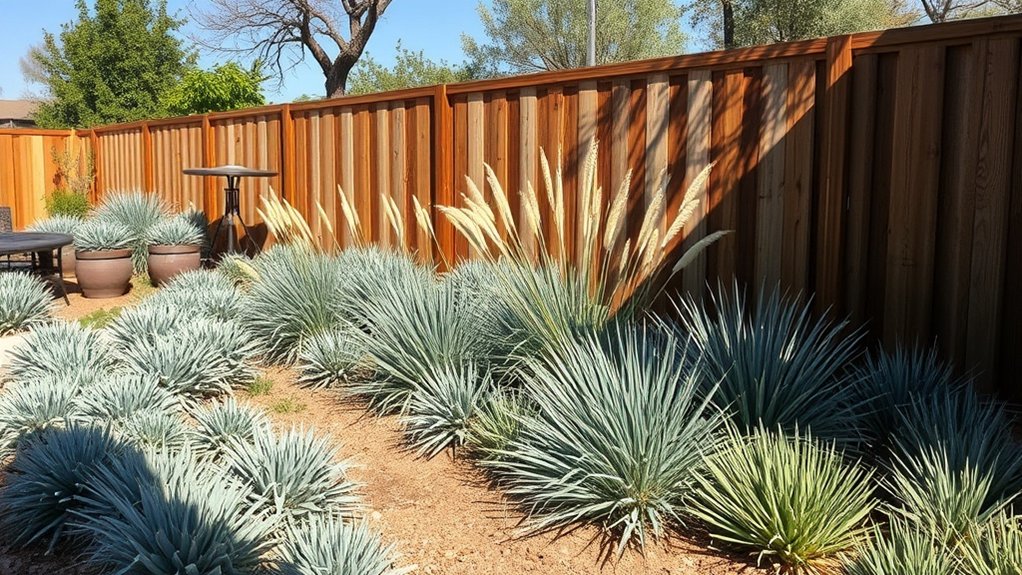
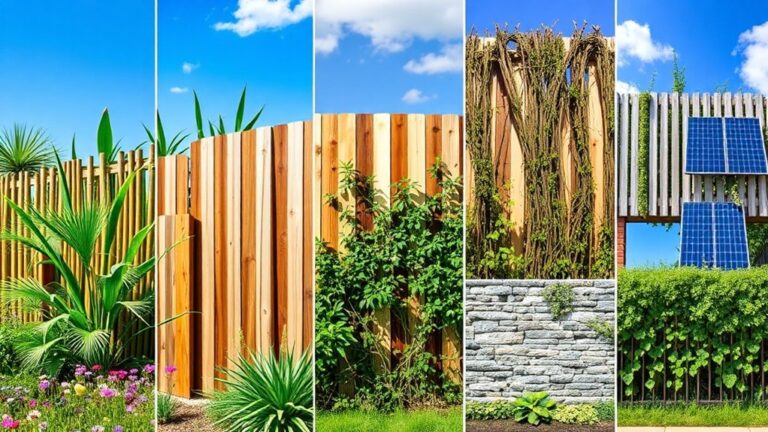
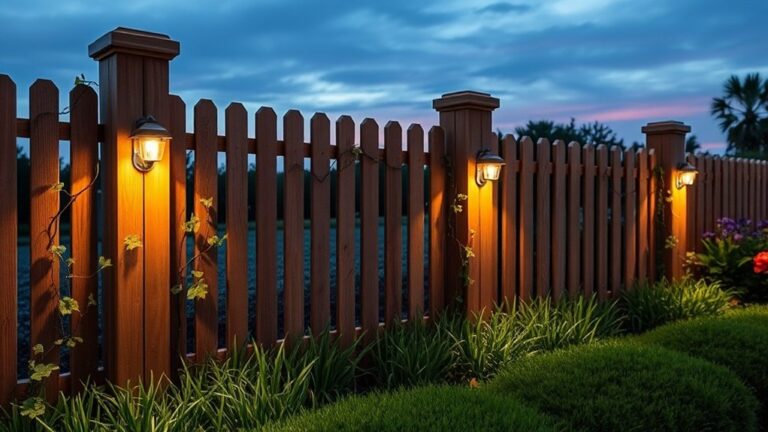
Integrating fencing into your drought-tolerant landscape can improve both aesthetics and sustainability. Choose durable materials like composite or treated bamboo that withstand dry conditions and require minimal upkeep.
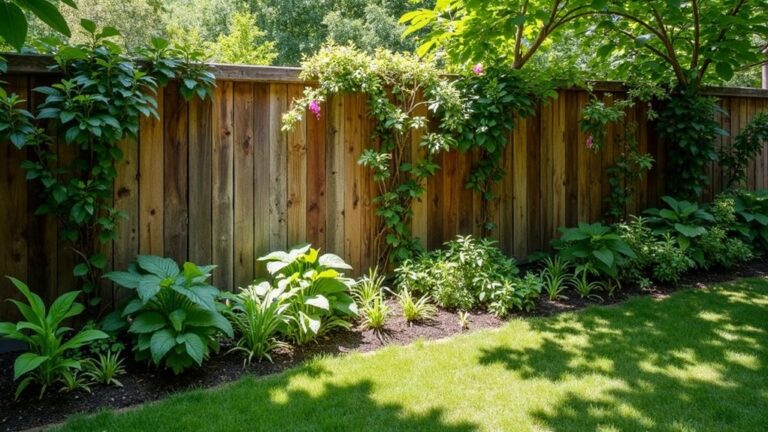
Plant drought-resistant species alongside your fence for natural wildlife barriers and added privacy. Match textures and colors, like pairing bamboo with agave, to create a cohesive look.
Consider slatted designs to allow airflow and reduce heat buildup. Use mulch and groundcovers to soften fence lines, conserve moisture, and suppress weeds. Incorporating recycled fencing materials can further enhance the eco-friendliness of your landscape.
These strategies will help you create a thriving, sustainable outdoor space.
Benefits of Hydrozone Grouping
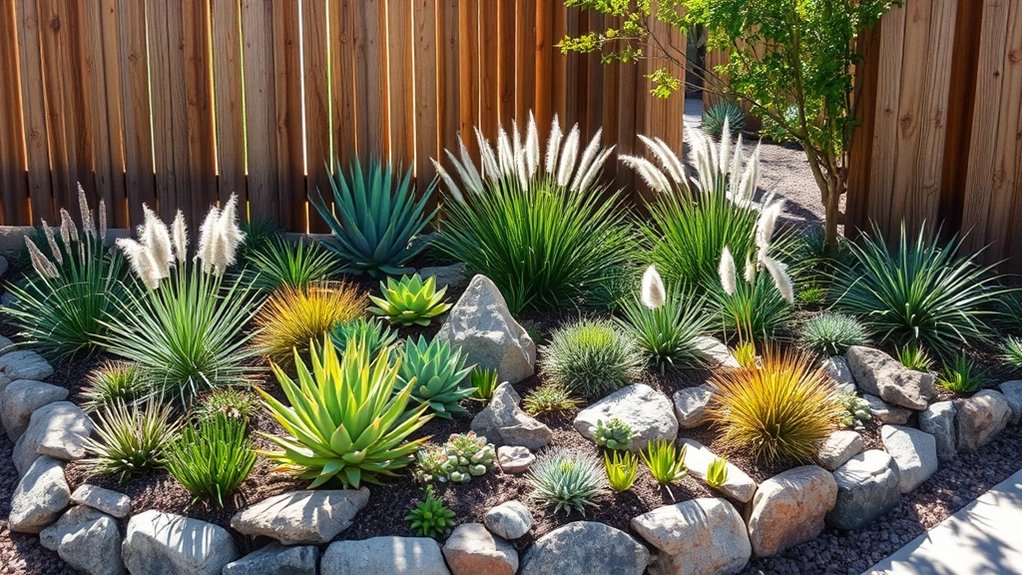
Implementing hydrozone grouping in your landscape significantly boosts water conservation and plant health. By aligning irrigation with specific plant needs, you can cut water usage by 20% to 50%.
This approach not only lowers your water bills but also promotes healthier plants, reducing the need for fertilizers and pesticides. Grouping plants based on moisture requirements ensures optimal growth and lessens disease risk.
Additionally, reducing turfgrass areas saves on mowing costs. Overall, hydrozone grouping creates a resilient landscape, supports local biodiversity, and conserves water resources, leading to a sustainable and efficient environment.
Maintenance Considerations for Drought-Tolerant Gardens
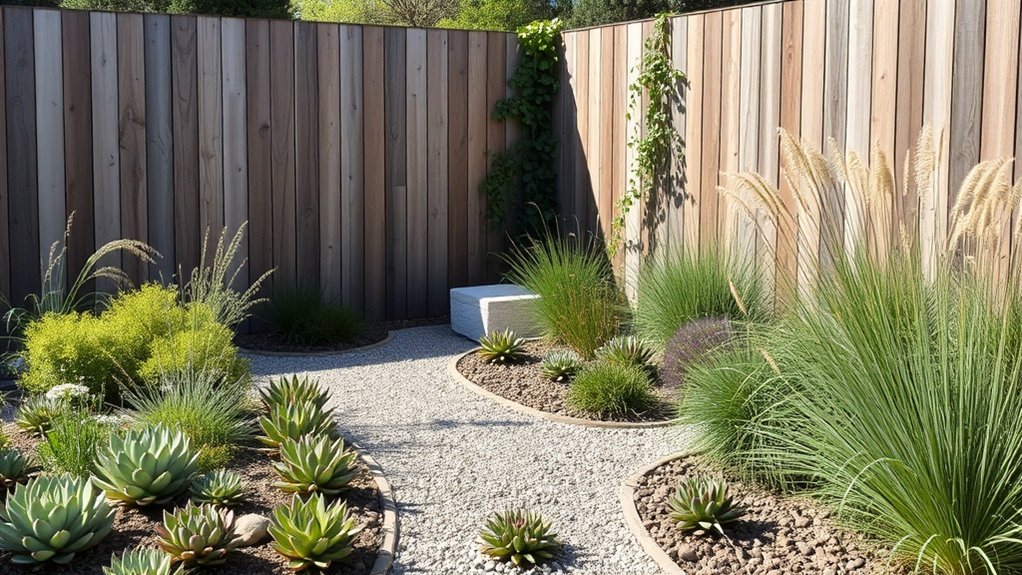
To keep your drought-tolerant garden healthy, focus on your watering schedule and adjust care according to the seasons.
Water deeply but less often to develop strong roots. Monitor your plants regularly to ensure they’ve the right care for their needs.
For example, during hot months, you might need to check soil moisture more frequently. This approach helps your plants thrive despite dry conditions.
Watering Schedule Optimization
To keep your drought-tolerant garden healthy and reduce water waste, optimize your watering schedule. Water 2-3 times a week in peak summer, ensuring deep watering of 4-6 inches to promote strong root growth.
Let the soil dry slightly between watering to avoid overwatering and prevent fungal issues. The best time to water is early morning, ideally between 4 AM and 8 AM, to minimize evaporation.
Avoid daily light watering; instead, use cycle and soak methods to improve water absorption in compacted soil.
Adjust your watering times seasonally, especially reducing them by 10-15% during drought conditions. Regularly check soil moisture to tailor your watering approach based on your specific soil type for efficient water use.
Seasonal Plant Care
To maintain a drought-tolerant garden year-round, focus on seasonal care.
Prune dead or damaged branches in late winter or early spring to promote healthy growth. Avoid heavy pruning during extreme heat to prevent stress on your plants.
Use a slow-release, low-nitrogen fertilizer in spring to support growth without encouraging too much foliage, and skip fertilizing during drought to reduce stress.
Keep an eye on your plants and adjust care based on the weather and any signs of distress. Healthy soil and proper plant spacing are key to a resilient garden.
Cost Efficiency and Long-Term Savings
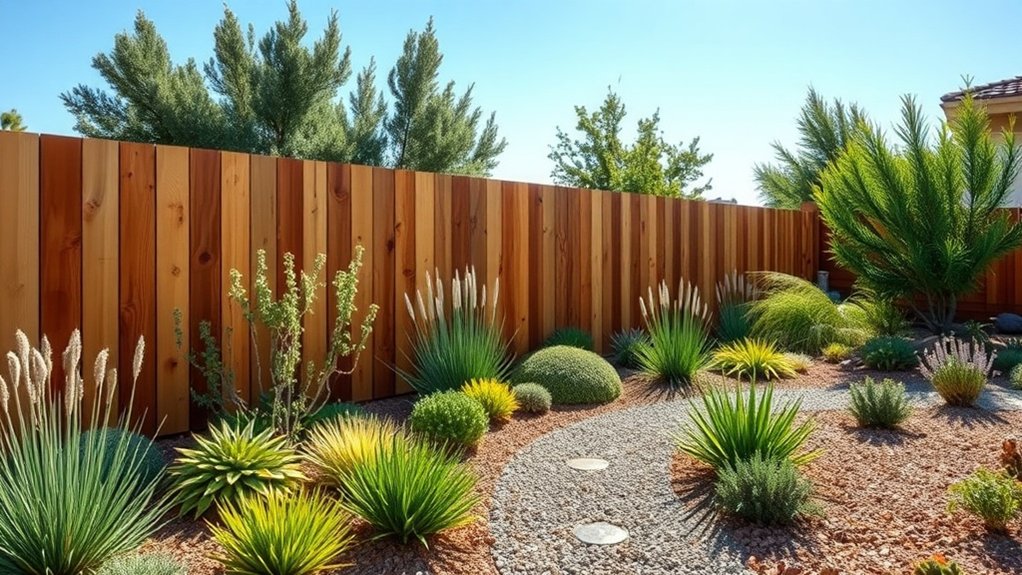
Investing in drought-tolerant landscaping not only beautifies your yard but also saves you money. A careful cost analysis shows that the initial investment—whether you do it yourself or hire a pro—can lead to annual savings of $300 to $800 on water bills.
Plus, you can get rebates of up to $4.00 per square foot for removing grass, speeding up your return on investment. For instance, converting a 15,000-square-foot lawn could save around 825,000 gallons of water each year.
Additionally, using durable materials for hardscaping reduces long-term maintenance costs. With drought-resistant plants and efficient irrigation systems, the financial benefits become clear, making this a smart choice in today’s economy.
Environmental Benefits of Sustainable Landscapes
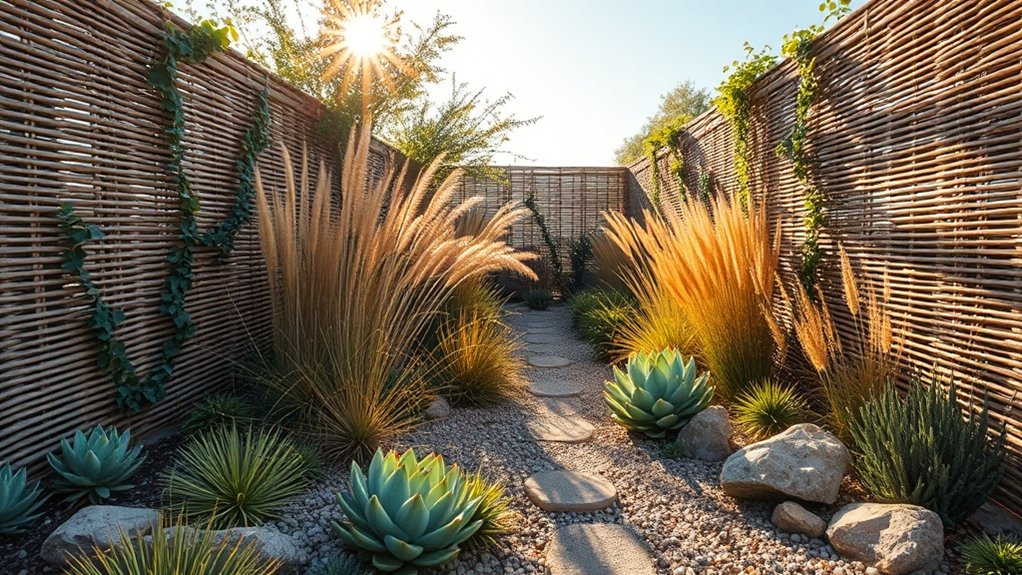
When designing landscapes, it’s important to consider not just looks but also the environmental benefits of sustainable landscaping. Choosing drought-tolerant and native plants boosts biodiversity and improves urban air quality. Sustainable landscapes help cut pollution, save water, and support local wildlife.
| Environmental Benefit | Impact | Sustainable Practices |
|---|---|---|
| Biodiversity Enhancement | Supports local ecosystems | Use native plants |
| Pollution Reduction | Minimizes chemical runoff | Apply organic mulch |
| Urban Air Quality Improvement | Cleans airborne pollutants | Plant a variety of vegetation |
| Water Conservation | Lowers irrigation needs | Use smart irrigation systems |
Enhancing Community Resilience Through Landscaping
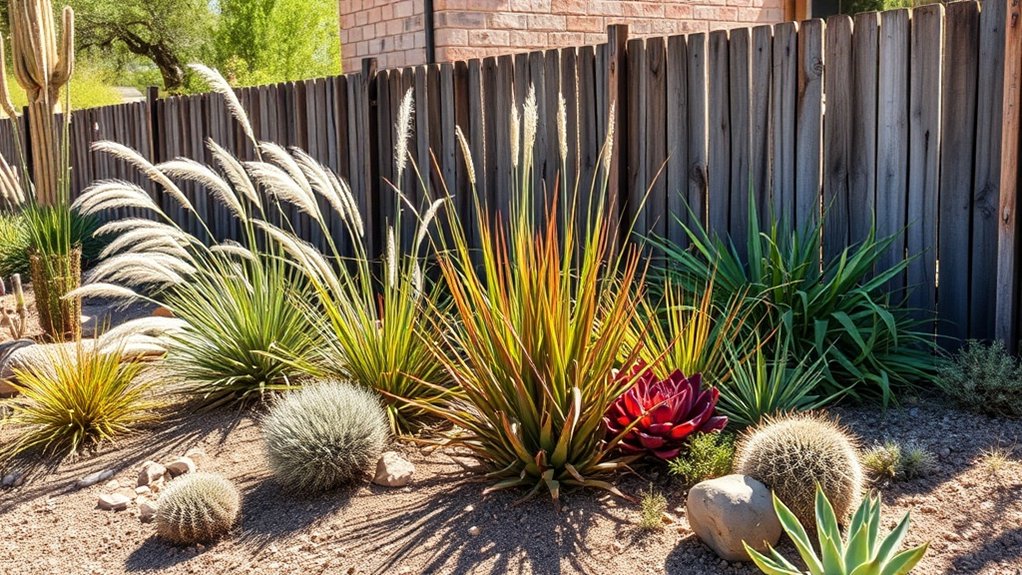
Communities that embrace sustainable landscaping can significantly boost resilience in urban life.
By involving residents in the creation of green spaces, you promote ownership and inclusivity, leading to better outcomes. Engaging the community helps identify overlooked needs, ensuring everyone has equitable access to nature.
Activities like community gardening build social connections and strengthen local networks, making neighborhoods more cohesive. These green spaces also provide mental health benefits, acting as buffers against stress.
Practical Tips for Implementing Drought-Tolerant Designs
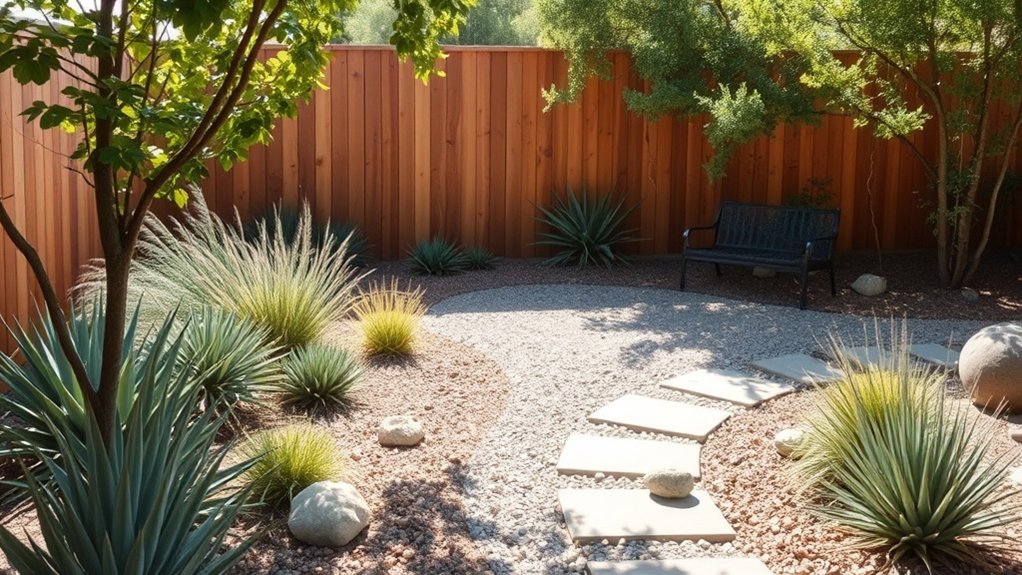
To create a drought-tolerant landscape, start with a site assessment. Check the sun exposure, soil type, and drainage to decide where to place your plants.
Group plants with similar water needs—this is called hydrozoning and helps with efficient watering. If you have sloped areas, consider terracing to help retain water and improve the look of your yard.
Enhance your soil with organic matter and use mulch to keep moisture in. Choose native, drought-resistant plants and mix different species for a resilient garden.
Install efficient irrigation systems, like drip irrigation, and use smart controllers that adjust based on weather.
Finally, incorporate hardscape elements and permeable surfaces to create a sustainable and beautiful outdoor space.
Frequently Asked Questions
What Is the Best Time of Year to Start a Drought-Tolerant Landscape?
The best time to start your drought-tolerant landscape is in the fall. This timing helps roots establish before the summer heat hits, ensuring your plants can thrive with less water. For example, planting in autumn allows your flowers and shrubs to settle in and grow strong, making them more resilient during dry spells.
How Can I Transition From a Traditional Lawn to Drought-Tolerant Landscaping?
To transition from a traditional lawn, start by removing the turf grass. Next, improve your soil, then choose drought-tolerant plants like succulents and native species. This not only conserves water but also creates a resilient landscape that thrives in dry conditions.
Are There Any Specific Fencing Materials That Work Best for Drought-Tolerant Gardens?
Using the right fencing materials can significantly impact water conservation. For drought-tolerant gardens, composite and vinyl fences are excellent choices. They not only look good but also require less maintenance, helping you save resources efficiently.
Can I Include Non-Native Plants in My Drought-Tolerant Landscape?
Yes, you can include non-native plants in your drought-tolerant landscape. They can add variety and adapt well to different conditions. However, native plants often provide more benefits to the local ecosystem. Choose non-natives carefully to ensure they work well with your area’s climate and wildlife. For example, if you live in a dry region, consider drought-resistant non-natives that won’t disrupt local species.
How Do I Assess My Soil for Drought-Tolerant Planting Suitability?
To ensure your soil is suitable for drought-tolerant plants, assess its texture and moisture retention. For instance, sandy soil drains quickly and may not hold enough moisture, while clay soil retains water better. Choose the right soil type to create a thriving, sustainable landscape.
Conclusion
Drought-tolerant landscaping with integrated fencing is a smart way to enhance your yard while promoting sustainability. Picture a vibrant garden that requires minimal water, paired with attractive fencing that adds both beauty and functionality. This approach not only strengthens your landscape but also encourages your community to adopt eco-friendly practices. It’s a simple yet effective way to contribute to a greener future.