To keep your metal fence lasting longer, inspect it at least once a year, especially the joints and painted areas for rust. Clean it regularly with gentle methods to prevent damage, and address any rust immediately using vinegar or rust removers. Ensure all fasteners are tight, and pick the right protective coatings for your fence material. Watch for signs of wear and learn more effective ways to extend your fence’s lifespan.
Key Takeaways
- Inspect your metal fence yearly and check seasonally for rust, loose panels, and wear to catch any problems early.
- Clean your fence regularly with gentle methods and suitable products to keep it looking good and prevent damage.
- Address rust quickly using vinegar, commercial removers, or sand, then apply protective coatings to extend your fence’s life.
- Apply silicone-based lubricants to moving parts on aluminum fences and dry steel fences after cleaning to stop rust from forming.
- Ensure proper drainage and use concrete or gravel bases for posts to avoid moisture issues.
Importance of Regular Inspections

Regular inspections of your metal fence are crucial for maintaining its looks and ensuring safety. Aim to check it at least once a year, or more often after severe weather.
Use a checklist to review all parts, including posts, panels, and hardware. Pay special attention to joints and painted areas, as these are more likely to corrode. Routine inspections help identify potential issues before they escalate, ultimately saving you time and money. Additionally, it’s important to check for loose boards and signs of wear promptly to prevent larger problems from developing.
Catching issues early, like rust or loose hardware, allows for cheaper repairs and prevents bigger problems later.
Effective Cleaning Practices

To maintain your metal fence, wash it regularly to remove dirt and debris. Use gentle methods and trim nearby plants to stop unwanted growth. Regular cleaning is essential to prevent corrosion and stains. Additionally, considering the durability and longevity of your fence can help you choose the right cleaning products and methods. These simple steps will help keep your fence looking good and lasting longer.
Routine Washing Techniques
To keep your metal fence clean and prevent corrosion, follow these simple steps.
Start by rinsing the fence with a garden hose or low-pressure washer to remove loose dirt—avoid high-pressure washing, as it can damage paint and coatings.
Next, mix warm water and mild dish detergent. Use a soft sponge or cloth to scrub the fence, focusing on dirty spots and working from top to bottom to prevent re-soiling.
For tough stains, let the soapy mixture sit for a bit before scrubbing. Regular cleaning of wrought iron fences is necessary to maintain curb appeal and prevent corrosion.
Incorporate these cleaning techniques into your regular maintenance routine to keep your fence in great shape and extend its lifespan.
Vegetation Management Tips
Managing vegetation around your metal fence is crucial for its durability and appearance. Regularly trim plants to prevent them from scratching the fence or causing rust.
Maintain a clearance to enhance airflow, which helps dry the fence and reduce moisture-related issues. Consider using landscape barriers at the base to stop invasive roots from destabilizing your fence posts.
Pair these barriers with mulch or gravel to deter regrowth. Check barriers for damage regularly, and use tools like weed-eaters to keep the area clear.
Good vegetation management keeps your fence looking sharp and extends its lifespan.
Rust and Corrosion Treatment Techniques

To maintain your metal fence, catch rust early to avoid damage. Use effective methods to remove rust spots, then apply protective coatings to guard against moisture. Staying proactive will help extend your fence’s lifespan, as regular rust checks enable early intervention and prevention.
Identifying Rust Early
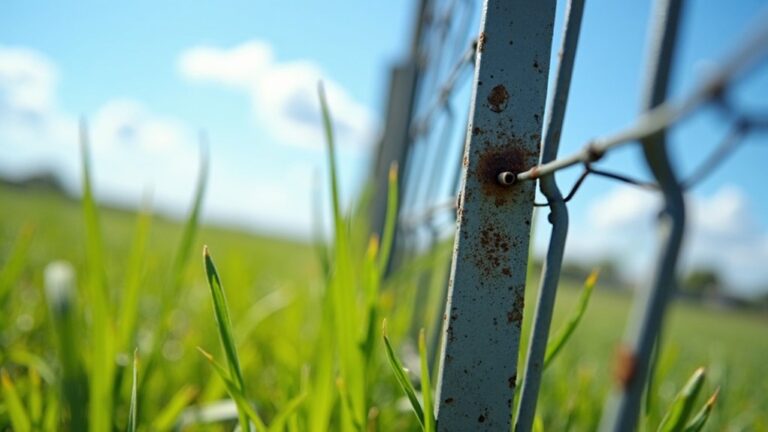
To spot rust early on your metal fence, regularly check for signs of corrosion. Look for common indicators like reddish-brown spots, peeling paint, or rough patches. Pay extra attention to joints, damaged paint, and low areas where moisture collects.
| Rust Indicators | Corrosion Signs |
|---|---|
| Reddish-brown spots | Peeling or bubbling paint |
| Rough surfaces | Dull or pitted metal |
| Dirt or moisture buildup | Blisters under paint layers |
Effective Removal Methods
To effectively remove rust from your metal fence, it’s important to maintain its look and durability.
For small rust spots, try using white vinegar or a paste made from lemon juice and baking soda. If the rust is tougher, commercial rust removers or products like naval jelly work well.
To boost the effectiveness, pair these chemical methods with mechanical tools like wire brushes or power tools. For heavily rusted areas, sanding or grinding will prepare the surface for better treatment.
Always remember to use a neutralizing agent afterward to prevent further rusting, and rinse thoroughly to remove any leftover chemicals.
These combined techniques will help keep your fence in great shape.
Protective Coating Application
After removing rust, applying a protective coating is crucial for your metal fence’s longevity. You might consider powder coating for its durability against chipping and corrosion.
E-coating is another option, especially good for intricate shapes due to its strong adhesion.
For better paint adhesion, use phosphating before your topcoat. If you prefer traditional methods, start with a rust-inhibiting primer and apply several thin layers of paint for even coverage.
If there’s any rust left, rust converters can help treat it, providing a solid base for your coatings.
Whichever method you choose, proper application is vital to keep your fence looking good and lasting longer.
Fastener and Hardware Maintenance

When maintaining your metal fence, focus on fasteners and hardware to ensure durability.
Regularly check screws, bolts, hinges, and latches for rust or damage. Tighten any loose fasteners right away to avoid structural problems, and replace rusted parts.
Consider upgrading to corrosion-resistant fasteners, like stainless steel, and keep spare hardware handy for quick fixes.
Lubricate moving parts, especially before rainy seasons, to prevent sticking and rust.
Make sure there’s proper drainage around your fence to stop water from pooling, which can speed up corrosion.
These steps will help keep your metal fence secure and functional.
Material-Specific Care Guidelines

To maintain your metal fence, it’s crucial to know the care requirements for each material: steel, aluminum, and iron.
Each type has its own maintenance needs to ensure durability and performance.
Steel Fence Maintenance Tips
To keep your steel fence looking good and lasting longer, regular maintenance is key. Here are some straightforward tips:
| Maintenance Task | Frequency |
|---|---|
| Remove debris with a soft brush | Monthly |
| Clean with mild soap and rinse | Every 3 months |
| Inspect for rust | Annually |
| Lubricate hardware | Every 6 months |
| Check for vegetation | Seasonal |
After cleaning, always dry the fence to prevent rust. If you find any rust, apply rust-inhibiting paint. Don’t forget to lubricate the gate hardware too. Keeping plants away from the fence helps reduce moisture and maintains its appearance and strength.
Aluminum Fence Care Essentials
To keep your aluminum fence looking sharp and lasting long, follow these simple care tips.
Clean it at least once a year using mild dish soap and warm water. Rinse from the bottom up to prevent streaks. If you live near the coast, rinse it every 2 to 3 weeks to remove salt and debris.
Regularly check for scratches or loose hardware, as these can lead to corrosion. Use a silicone-based lubricant on moving parts to ensure everything operates smoothly.
After cleaning, applying car wax can add extra shine and protection.
Conduct seasonal inspections to catch any wear from the environment. With a little effort, your aluminum fence can stay attractive and durable for years.
Iron Fence Preservation Techniques
To keep your iron fence in great shape, follow these straightforward preservation tips to prevent rust and wear:
- Check for rust regularly and touch up any protective coatings.
- Clean it using a power washer; skip harsh chemicals that can damage the finish.
- After cleaning, apply a thin layer of wax for extra protection.
- Trim back any plants nearby to reduce scratches and moisture buildup.
- Consider using powder coating or rust-inhibiting paints for better rust resistance.
These simple steps will help maintain both the look and durability of your iron fence.
Environmental and Seasonal Factors

Environmental factors like climate and seasonal changes significantly affect the lifespan of your metal fence, making maintenance crucial.
For instance, extreme heat can cause metal to expand and loosen joints, while freezing temperatures can make it brittle, increasing the risk of cracks. Rapid temperature changes can wear down welds and coatings, so it’s essential to inspect regularly.
In areas with heavy rainfall, moisture can cause rust if protective layers wear off. Coastal regions are even more vulnerable due to salt corrosion.
Strong winds can stress the structure, and overgrown plants can trap moisture, leading to rust. Choosing durable materials and managing vegetation can help you mitigate these effects effectively.
Preventing Moisture Damage

To prevent moisture damage to your metal fence, focus on proper drainage and soil management. Here are some practical steps:
- Use concrete or gravel bases for the fence posts to keep them elevated.
- Grade the soil to ensure it slopes away from the fence.
- Regularly check for standing water or muddy areas.
- Avoid placing thick mulch or dense plants right at the base of the fence.
- Implement drainage solutions to promote proper water flow.
Applying waterproof sealants can also help protect your fence.
Protective Coatings and Treatments

Protecting your metal fence is crucial for its durability and appearance. Here are some effective coatings and treatments:
| Coating Type | Key Benefits |
|---|---|
| Epoxy Powder Coating | Highly durable and UV resistant |
| Polyester Powder Coating | Affordable and customizable |
| Hot-Dip Galvanizing | Superior corrosion resistance |
| Dacromet Coating | Eco-friendly with strong protection |
For an attractive finish, consider powder coatings. If your fence is outdoors, hot-dip galvanizing offers excellent protection. Dacromet is ideal for industrial settings. Choosing the right coating will extend your fence’s life and keep it looking good.
Signs of Wear and Damage to Watch For

As you maintain your metal fence, watch for signs of wear and damage that could weaken it. Regular visual inspections are crucial.
Look for:
- Broken or crooked panels
- Rust spots or peeling paint
- Loose panels and fasteners
- Sagging gates or misaligned sections
- Gaps or holes in the fencing
Catching these issues early can prevent further damage and safety risks.
Regular checks ensure your fence stays sturdy and attractive, serving its purpose effectively for years.
Don’t ignore warning signs; they often point to bigger problems.
Tips for Long-Term Care and Maintenance

To keep your metal fence looking good and lasting longer, stick to a simple maintenance routine.
Clean it monthly by brushing off dirt and washing with mild soap and water. Rinse well and dry to prevent rust.
Check for rust regularly and treat any spots right away to avoid expensive repairs.
Repaint every few years with high-quality, rust-resistant paint to keep it looking fresh and protected.
Lubricate hinges and check hardware monthly to ensure everything is stable.
Trim nearby plants to reduce moisture and scratches.
Following these steps will help you save on maintenance costs while keeping your fence strong and attractive for years.
Frequently Asked Questions
How Often Should I Repaint My Metal Fence?
Repaint your metal fence every 3 to 5 years to prevent rust. Regularly check for wear to catch any needed touch-ups or full repainting early. This keeps your fence looking good and lasting longer.
Can I Use Vinegar to Clean My Metal Fence?
Yes, you can clean your metal fence with vinegar! For best results, mix it with dish soap. Just scrub the fence, rinse well, and see it shine, free from rust and dirt.
What Is the Best Time of Year for Inspections?
The ideal time for inspections is spring, as it lets you tackle any winter damage right away. Combine this with fall maintenance to get your fence ready for winter, helping it last longer and stay strong all year round.
Are There Specific Cleaning Products I Should Avoid?
Avoid strong cleaners like bleach, vinegar, and harsh chemicals. They can harm your fence’s protective coatings and lead to rust. Instead, use mild detergents for safe cleaning and rust prevention.
How Do I Choose the Right Protective Coating?
When selecting a protective coating, think about where it will be used and how it should look. For tough environments, hot-dip galvanizing is a great choice. If style matters more, consider powder coating. Don’t forget to weigh durability and cost to ensure the coating fits your needs.
Conclusion
To keep your metal fence in great shape, follow these simple maintenance tips. Regularly inspect it for damage, clean it to prevent dirt buildup, and treat any rust you find promptly. Make sure to check the fasteners and apply protective coatings to stop moisture from causing damage. With a bit of care, your fence will remain strong and attractive, enhancing your property for years.