

When selecting lightweight temporary fencing for easy transport, choose materials like aluminum or plastic. These options are lightweight yet durable and weather-resistant. Look for modular designs that enable quick setup and customization. Ensure the panels are stackable for efficient storage. Chain link panels can also be a cost-effective choice. Each option affects portability and performance, so take the time to find solutions that fit your specific needs.
Key Takeaways
- Choose lightweight materials like aluminum or plastic for easy handling and transport.
- Opt for stackable panels for simple storage and fitting in standard vehicles.
- Look for modular systems that can be customized while remaining portable.
- Select fencing that sets up and takes down easily without tools.
- Ensure it’s durable against weather to reduce replacements and maintenance during transport.
Benefits of Lightweight Temporary Fencing
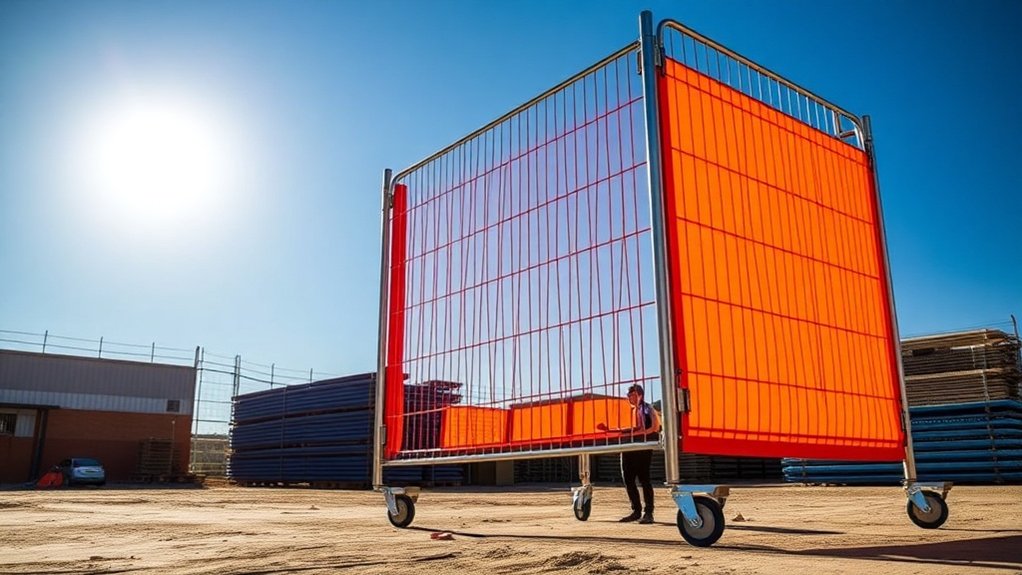
Choosing lightweight temporary fencing offers several clear benefits that improve the efficiency and cost-effectiveness of your projects.
These fences are easy to transport, reducing delivery trips and cutting transportation costs. Their modular design makes them suitable for various uses, from construction sites to events, allowing for quick setup and takedown.
With lower initial costs and reusable panels, you’ll save money over time. Additionally, these fencing solutions provide effective barriers that can be set up quickly, enhancing site safety and compliance with local regulations. Moreover, they are often made from weather-resistant materials that ensure durability in various climate conditions.
This flexibility lets you adapt to changing site needs without relying on heavy equipment, helping your operations run smoothly and sustainably.
Types of Lightweight Fencing Materials
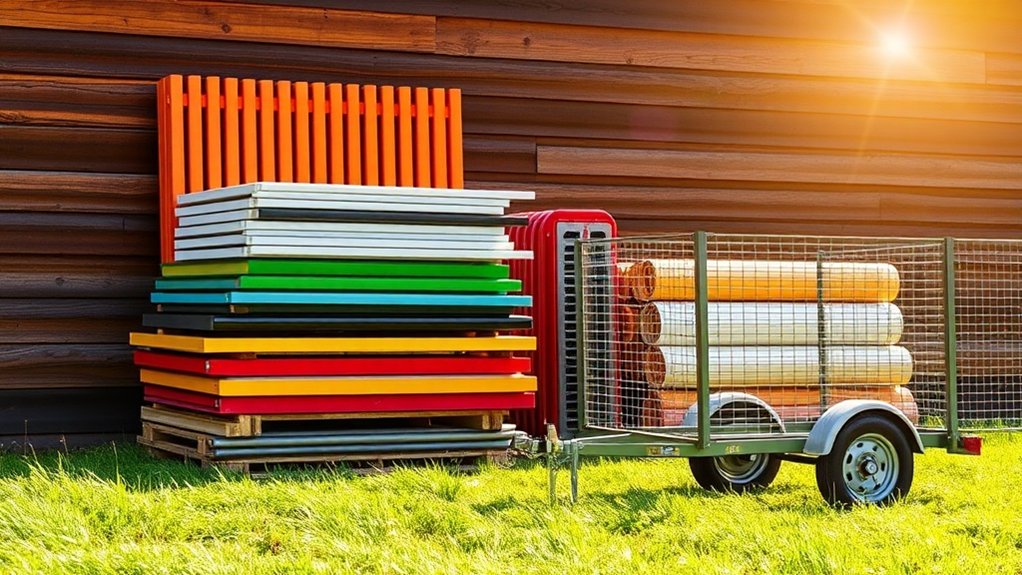
When selecting lightweight fencing materials for temporary solutions, consider the following options:
- Aluminum: It’s lightweight, corrosion-resistant, and reusable, making it a great choice for construction sites and events. Additionally, proper installation ensures stability and effectiveness in various conditions.
- Plastic: This material is flexible and impact-resistant, ideal for crowd control. It can also be customized for better visibility.
- Steel Chain Link: Though heavier, it offers durability and modularity, making it suitable for larger outdoor events. Additionally, galvanization prevents rust and corrosion, enhancing the lifespan of steel fences in demanding environments.
Each material serves different needs. Aluminum is preferred for its balance of strength and weight, while plastic excels in flexibility.
Steel chain link provides robust support in demanding environments. Choose wisely to ensure effective temporary fencing for your projects.
Mesh Fences: Portability and Customization
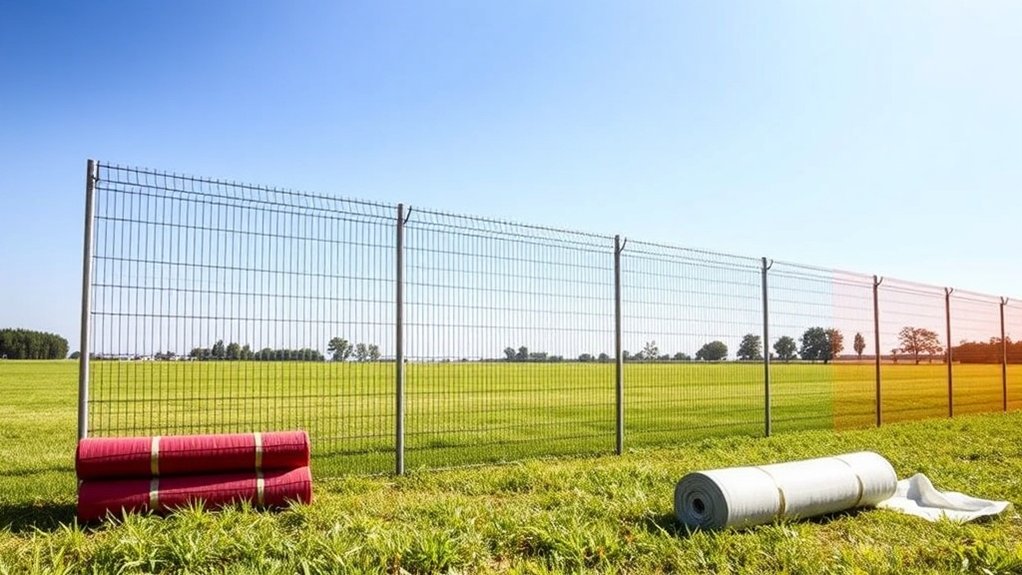
Mesh fences are ideal for temporary fencing due to their portability and customization. Weighing only 12–15kg per panel, they’re easy to carry and transport, even by one person.
Their stackable design and lifting points make storage and movement simple, and you can use dolly systems to move multiple panels at once.
Customization is straightforward—choose panel heights and mesh sizes that fit your needs. You can link panels to create various shapes and lengths, and add features like privacy screens or signage for added functionality. This flexibility ensures mesh fences can adapt to different site needs while remaining sturdy during frequent moves and minimizing ground impact, making them suitable for effective predator protection in various agricultural settings.
Chain Link Temporary Panels: Cost-Effective Solutions
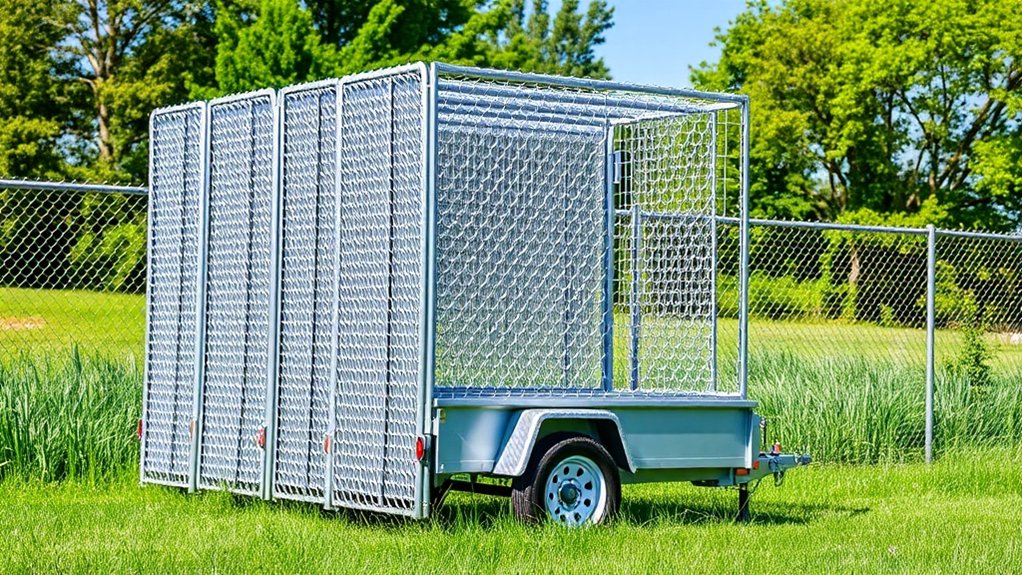
Chain link temporary panels provide an affordable and durable fencing solution for construction sites. They’re easy to set up, which means you can have them installed quickly, no matter the site layout. Plus, their flexible configurations let you customize the fencing to fit your specific needs effectively. Additionally, these panels are often made from galvanized steel, which increases their durability and rust resistance for long-term use.
Affordable Construction Options
Chain link temporary panels are an affordable option for construction and event fencing, whether you decide to rent or buy.
Here’s a quick breakdown:
- Renting costs between $20 and $50 per month, while purchasing panels is around $10 to $20 each.
- Buying in bulk can significantly lower the price per panel, making it budget-friendly for larger projects.
- Galvanized steel panels are durable, reducing the need for replacements.
Whether you rent or buy, chain link temporary fencing offers a good mix of security and cost-effectiveness, making it a smart choice for your needs.
Easy Setup Process
Setting up chain link temporary panels is simple and efficient. Start by mapping out your fence layout and clearing any obstacles. Clearly mark where the posts will go to ensure accurate panel alignment.
Use metal bases or weighted stands for stability without needing permanent fixtures. Slide the panels into the bases and secure them with clamps for a tight fit. Each panel is lightweight, typically around 30 pounds, making them easy to handle.
For added support, install tension wire and secure the mesh properly. With just basic tools and prefabricated components, you can quickly create a durable fence that boosts your project’s efficiency.
Versatile Panel Configurations
Versatile panel configurations are key for effective temporary fencing solutions. Chain link panels offer cost efficiency and flexibility, making it easy to adapt to different project needs.
- Modular setups allow for quick on-site adjustments.
- Standard sizes like 6×10 and 6×12 feet help reduce waste.
- Lightweight materials make transport and setup simple.
The galvanized steel frame boosts durability and requires minimal maintenance.
With adaptable designs, you can easily connect panels using basic connectors and bases, simplifying installation. This makes it easy to create a secure perimeter for construction sites, events, or any other specific needs.
Opt for versatile configurations to enhance functionality and save costs.
Advantages of Plastic Temporary Fencing
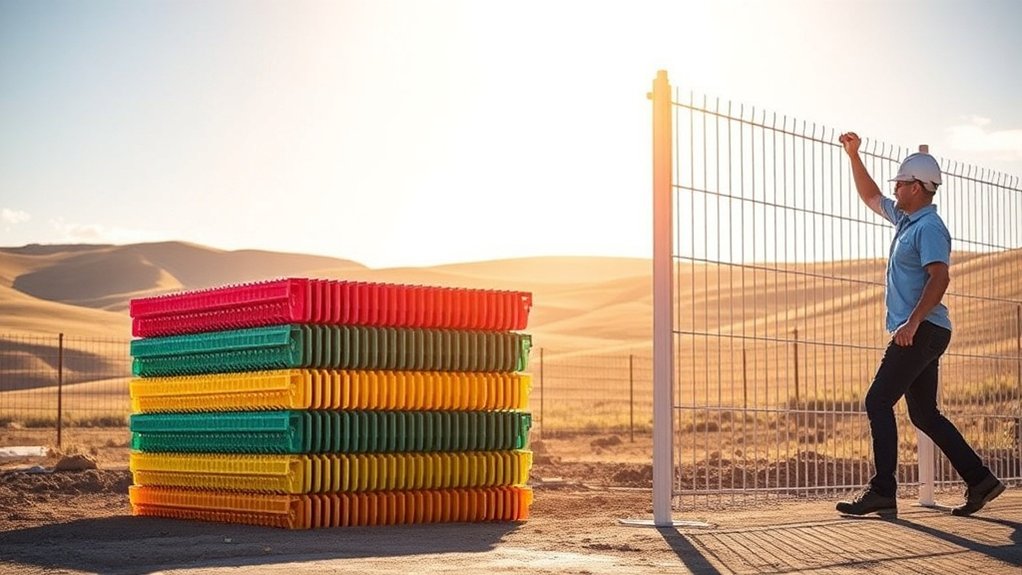
Plastic temporary fencing is lightweight and portable, making it easy to transport and set up at different locations.
You can quickly deploy it, which is ideal for events or construction sites. Plus, it withstands various weather conditions, ensuring it remains durable and reliable.
Lightweight and Portable Design
When managing temporary fencing, choosing a lightweight and portable design can boost your project’s efficiency.
Lightweight materials, such as high-density polyethylene (HDPE), make transport easier. Here are some key benefits:
- Easy to Move: Plastic fences are simple to relocate with just a few people, perfect for short-term projects.
- Space-Saving: Their stackable design allows for compact transport in standard vehicles.
- User-Friendly: Built-in handholds make handling easier and reduce strain on workers.
Quick Installation Process
Installing temporary fencing is quick and easy, especially with lightweight plastic materials. You won’t need any specialized tools; just use zip ties or plastic connectors to attach the panels, which means one person can handle the setup.
In just minutes, you can cover 100–200 feet of area. Minimal ground preparation is required since these fences can be placed on different surfaces without needing deep post holes.
They’re modular, so you can easily adjust them for gates or different layouts on-site. This efficiency saves you time and reduces labor, making your project simpler and more manageable.
Weather Resistance Features
Choosing lightweight temporary fencing makes installation easy and offers great weather resistance. Made from plastic materials, it’s built to last, even in tough conditions.
- UV Resistance: It won’t fade or degrade in the sun.
- Waterproof: No worries about rust or corrosion since it’s 100% waterproof.
- Temperature Stability: It can handle extreme temperature changes without cracking.
These features ensure your fencing stays strong and looks good, no matter the weather—be it rain, snow, or bright sunlight.
Lightweight temporary fencing is low maintenance and durable, performing well throughout different seasons and installations. You can rely on it to consistently deliver results.
Panel Fencing Systems for Events and Sites
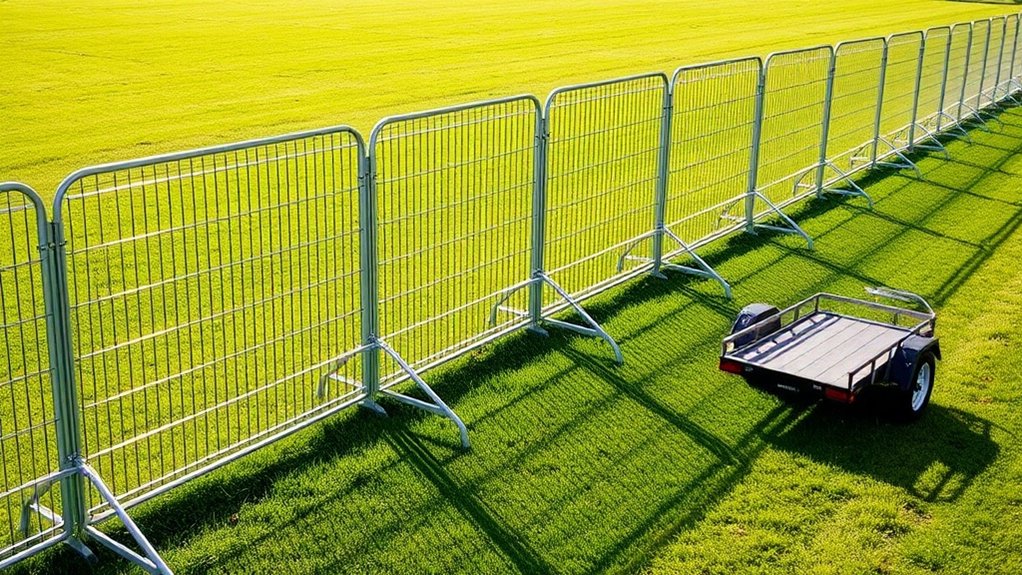
Panel fencing systems provide a quick and effective way to secure events and sites.
These panels are 6 feet wide and 3 feet 6 inches tall, allowing for easy, tool-free setup in just minutes. Made from durable PVC with UV inhibitors, they resist rotting, warping, and corrosion, ensuring long-lasting safety for your event.
The hook and loop connection system allows for flexible layouts, while powder-coated galvanized steel components add extra strength.
Lightweight anti-climb options with welded mesh designs prevent footholds, enhancing security.
Specialized Lightweight Solutions for Unique Needs
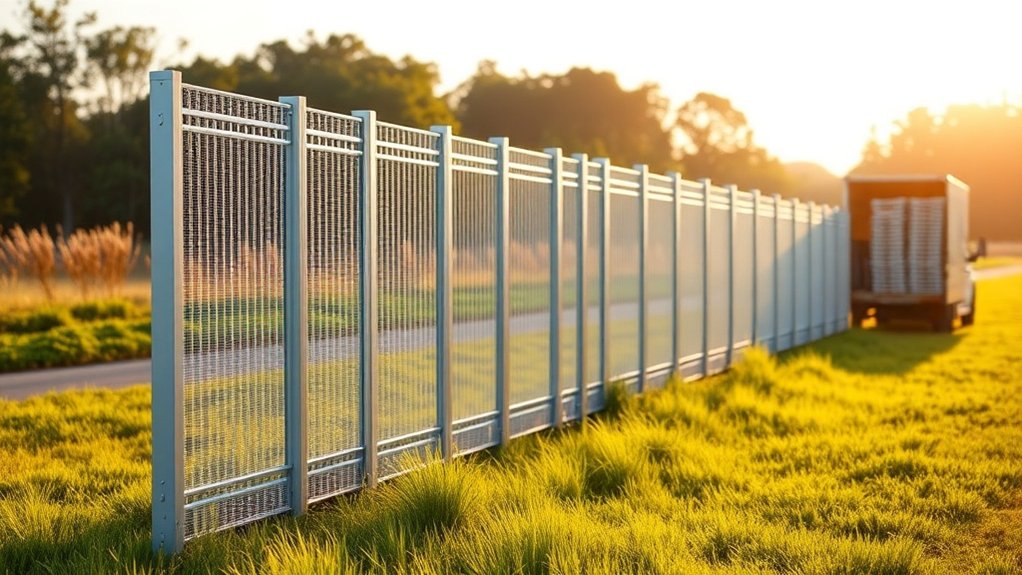
When securing temporary sites, lightweight solutions can boost efficiency and safety. Here are some effective options:
- Lightweight Anti-Climb Panels: These easy-to-handle panels enhance security with anti-climb features, saving on labor and transport costs.
- Plastic Mesh Fencing: Made from UV-treated polypropylene, this versatile fencing allows for quick, tool-free installation across various applications.
- Modular Temporary Fencing: These panels connect easily, offer aesthetic choices, and can be placed on different surfaces without needing extra ballast.
These fencing solutions and portable safety barriers improve security while ensuring quick setup and removal.
Customize your fencing to meet specific needs for optimal site functionality.
Material Selection for Efficient Transport and Storage
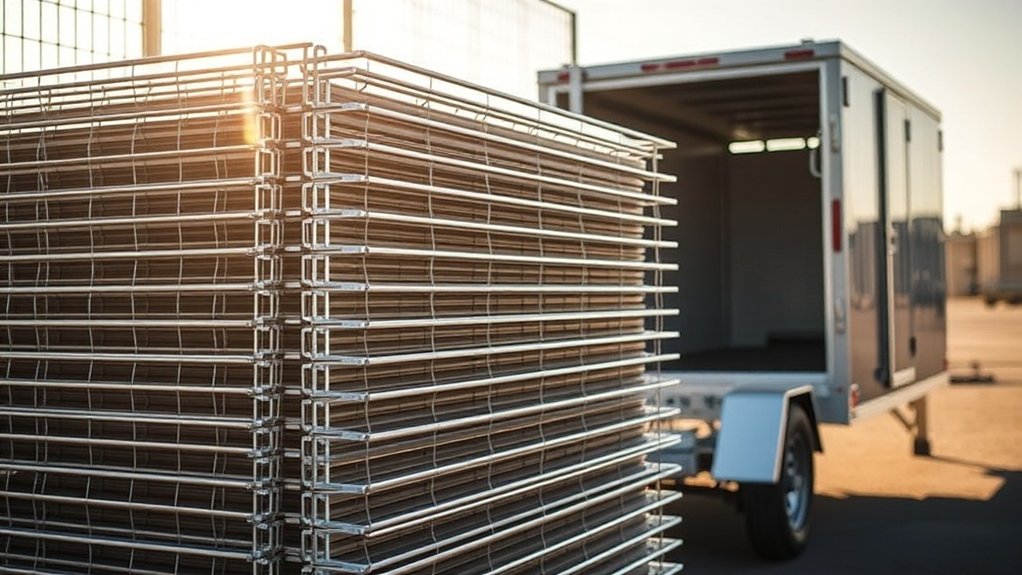
Choosing the right materials for temporary fencing is key to making transport and storage easier.
Lightweight aluminum is a great option due to its strength-to-weight ratio, allowing for easy transport without compromising durability. If you need extra strength, welded mesh fencing made from galvanized wire can be handled by two people comfortably.
High-density polyethylene (HDPE) plastic fencing is another excellent choice—it’s very lightweight and resistant to corrosion, perfect for quick setups.
Modular designs help with logistics by letting panels stack neatly, while standardized sizes ensure uniform packing.
Foldable options offer compact storage solutions. Striking a balance between weight and durability ensures your temporary fencing is easy to transport, store, and can withstand multiple uses.
Tips for Choosing the Right Temporary Fencing
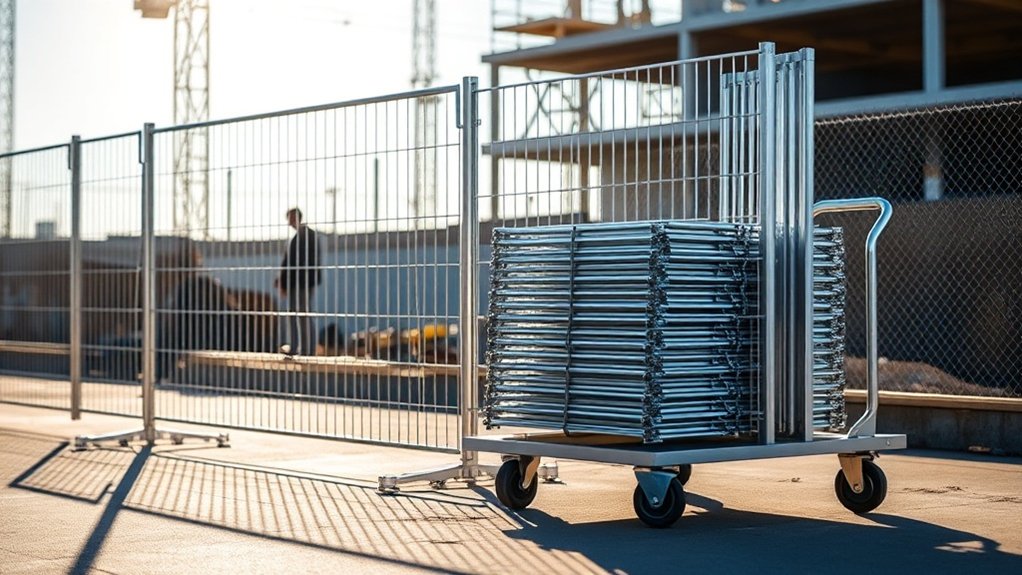
Choosing the right temporary fencing is crucial for your project. Here are some key factors to consider:
- Panel Customization: Look for modular systems that can be adjusted to fit your specific space.
- Weight and Size: Lightweight panels, ideally under 10 ft and weighing between 15–30 lbs, are easier to handle and transport.
- Installation Ease: Opt for systems that require no tools for assembly, using snap-in connectors to save time and effort.
Consider how many people you’ll need for setup and transport.
Also, ensure the fencing is durable enough to withstand various weather conditions.
Frequently Asked Questions
How Do I Determine the Right Height for Temporary Fencing?
To choose the right height for temporary fencing, consider the specific risks of your site, the need for visual privacy, and local laws. Typically, a height of 6 to 8 feet provides security while still allowing for visibility. This range helps balance safety with compliance effectively. For example, if you’re securing a construction site, an 8-foot fence might deter unwanted access, whereas a 6-foot fence could suffice for events needing privacy without obstructing views.
Can Lightweight Fencing Withstand High Winds or Extreme Weather?
Lightweight fencing can have difficulty in high winds and extreme weather because it offers less wind resistance. To improve its stability, use reinforced supports and place panels strategically. This will help the fencing endure gusty winds and stay intact during bad weather.
Are There Any Safety Regulations for Temporary Fencing Installation?
Yes, it’s important to adhere to temporary fencing guidelines and installation best practices. Ensure the fence is the correct height, securely anchored, and includes safety features. This helps meet local regulations, prevents unauthorized access, and protects workers from outside hazards. For example, using concrete blocks for anchoring can enhance stability.
How Do I Secure My Temporary Fence in Place?
To keep your temporary fence stable, use ground anchors. They provide strong security against wind and unauthorized entry, ensuring your area is well-protected. For example, if you’re setting up a fence for a construction site, anchoring it down will help prevent it from tipping over during strong winds.
What Is the Typical Lifespan of Lightweight Temporary Fencing Materials?
Lightweight temporary fencing materials generally last from a few days to several months, based on their durability and the materials used. For instance, PVC and high-density polyethylene are portable options, while galvanized steel is more durable and suited for longer-term use, like at construction sites.
Conclusion
When choosing lightweight temporary fencing, you’re opting for convenience and efficiency. Options like mesh, chain link, and plastic each have their own advantages. Think of how a smartphone is more versatile than a flip phone—having adaptable fencing solutions can simplify your setup. Keep transport and storage in mind, and ensure your choice meets your specific needs for easy assembly and disassembly.

In exploring the best temporary fencing options for construction sites, discover which solutions ensure security and compliance while enhancing site Read more
Learn essential tips for maintaining temporary fencing that can extend its lifespan and prevent costly repairs—discover the best practices for Read more

A guide to selecting lightweight temporary fencing that ensures easy transport and quick setup awaits, revealing options that perfectly suit Read more


