

Common weak points in fence security include false alarms, structural weaknesses, and inadequate access controls. To improve these issues, adjust sensor settings to reduce false alarms, perform regular inspections for any damage, and use strong materials for construction. Ensure sensors are correctly placed for better detection. Additionally, consider upgrading access controls with biometric options like fingerprint scanners for enhanced security. By addressing these areas, you can significantly boost your property’s protection.
Key Takeaways
- Regularly inspect your fence for issues like rot, decay, and missing boards. Fixing these promptly keeps your fence strong.
- Adjust sensor settings and assess the surrounding environment to cut down on false alarms and boost reliability.
- Opt for high-security materials like composite or precast concrete to better withstand threats and weather.
- Use advanced access control, such as biometric systems and mobile apps, to enhance security and monitor access effectively.
- Trim vegetation near your fence to ensure proper drainage and reduce pest habitats, which helps maintain security.
Understanding False Alarms in Fence Security
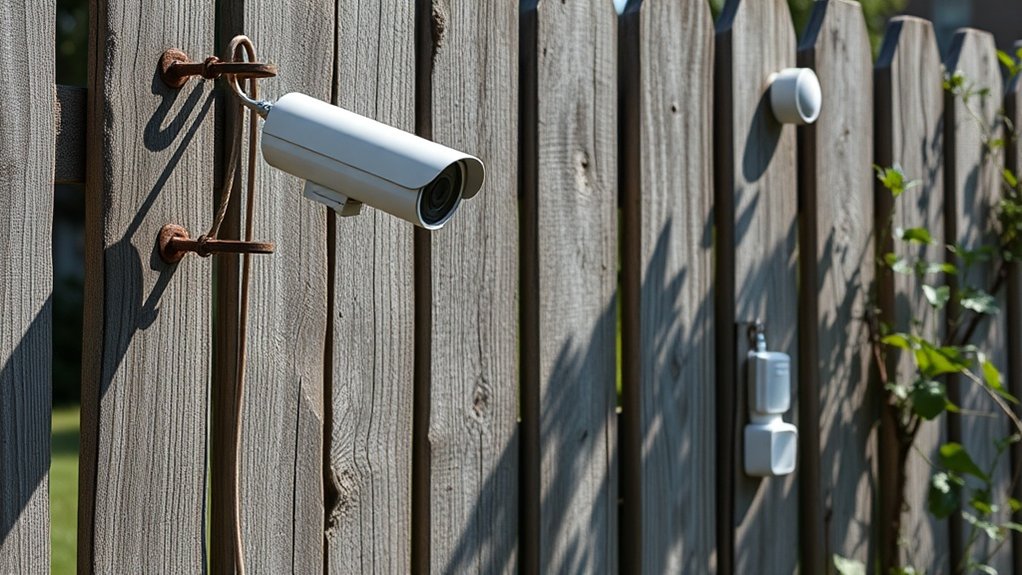
Understanding false alarms in fence security is crucial for effective monitoring. High false alarm rates can reduce the reliability of sensors and lead to alarm fatigue among operators. Environmental factors, wildlife, and misconfigured sensitivity settings often trigger these alarms. For example, strong winds or moving shadows can be mistaken for real threats, complicating alarm management. Frequent nuisance alarms waste resources and can diminish trust in your security systems. To reduce false positives, fine-tuning sensor settings and using advanced technologies like AI can help. Regular maintenance and environmental assessments are also key to ensuring your fence sensors work accurately, ultimately improving your property’s security. Implementing intelligent detection algorithms can further enhance the ability to differentiate between genuine threats and benign disturbances.
Identifying Structural Weaknesses in Fences
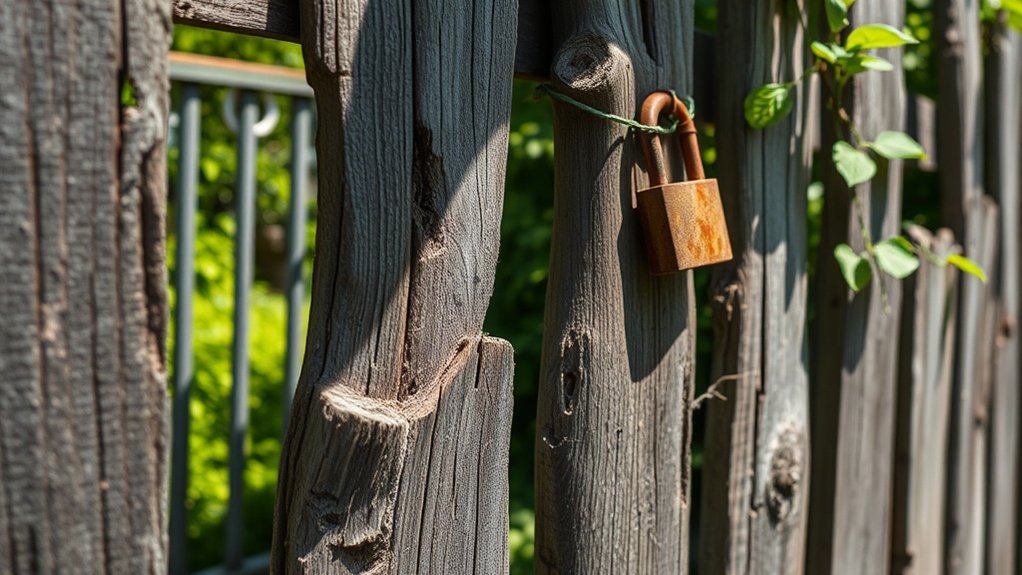
To spot weaknesses in your fence, check for common damage like rot and decay. Look for soft wood at the base or cracked boards—these issues can weaken your fence. Fixing them quickly can prevent further damage and keep your fence secure. Additionally, ensuring your fence is made of high-security materials can further enhance its durability against various threats. Regular inspections can help identify early signs of rot that may compromise the fence’s integrity.
Common Damage Types
Identifying common types of fence damage is crucial for maintaining its strength and security.
Catching these issues early allows for timely repairs and prevention. Here are four common damage types to look out for:
- Structural Damage and Post Failure: Cracked or leaning posts can make the fence unstable. Regular inspections can help identify early signs of damage that could lead to post failure.
- Corrosion and Rust Formation: Metal fences are prone to rust from moisture, weakening them over time.
- Animal and Pest Damage: Creatures like termites and raccoons can create holes and weak spots in the fence.
- Missing Boards and Fastener Failure: Weathering and aging can lead to broken boards, compromising the fence’s integrity.
Regular inspections can help you spot and resolve these problems before they worsen.
Rot and Decay
Rot and decay can seriously weaken your fence and compromise security. Look for signs like soft wood, gray discoloration, and crumbling sections—these indicate advanced decay often caused by prolonged moisture exposure, especially at post bases and joints.
To prevent decay, use pressure-treated wood and apply water-resistant sealants regularly. Ensure proper drainage around posts and maintain airflow between panels to reduce moisture buildup. Regular inspections can help catch early signs of rot, allowing you to fix issues before they worsen and keep your fence functional and secure. Additionally, incorporating fence post caps can shield vulnerable areas from moisture and extend the lifespan of your fence.
Recognizing Security Design Vulnerabilities
Identifying security design vulnerabilities is crucial for improving perimeter protection, as even small mistakes can lead to major breaches.
Here are some key points to consider:
- System Integration: Ensure all security components work together seamlessly to prevent communication gaps.
- Gate Security: Design gates with the same level of security as fencing, including strong access controls to keep unauthorized individuals out.
- Material Selection: Choose certified materials that prioritize security over looks to better deter intruders.
- Surveillance Coverage: Implement comprehensive 360° surveillance systems to remove blind spots and improve detection. Additionally, consider integrating advanced access control systems to enhance security management for your property.
Addressing Sensor Placement and Detection Issues
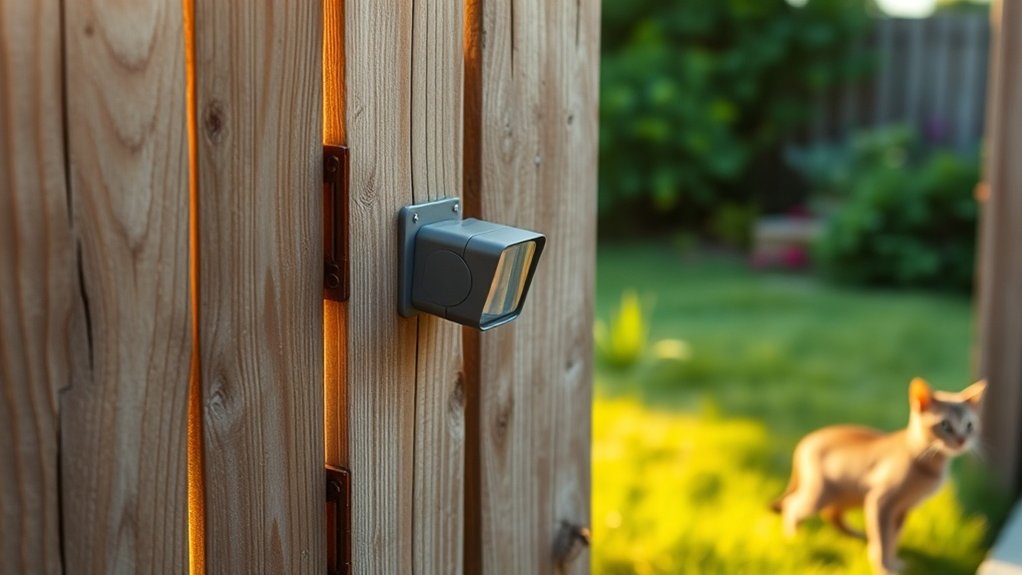
Proper sensor placement is crucial for effective security. To reduce vulnerabilities, position sensors on the fence, ideally over three feet high, to avoid ground clutter and minimize false alarms.
Align sensors to detect common intruder approaches, and choose the right type based on your fence material—like vibration sensors for metal fences. Make sure sensors are clear of large objects that could create blind spots.
Regularly review the environment and adjust sensor placement as necessary. Using overlapping sensor fields can also help fill in detection gaps, creating a stronger security perimeter.
Improving Maintenance and Access Control

To secure your property effectively, focus on regular maintenance and strong access control. Ignoring these can weaken your fence’s security.
Here are some straightforward tips:
- Inspect Regularly: Check your fence twice a year for any damage or instability.
- Clean and Protect: Give your fence an annual clean and apply sealants to prevent wear.
- Control Vegetation: Trim nearby plants and ensure proper drainage to avoid moisture and pests.
- Use Quality Hardware: Install rust-resistant locks and components to enhance security.
Evaluating Fence Material and Design Trade-offs
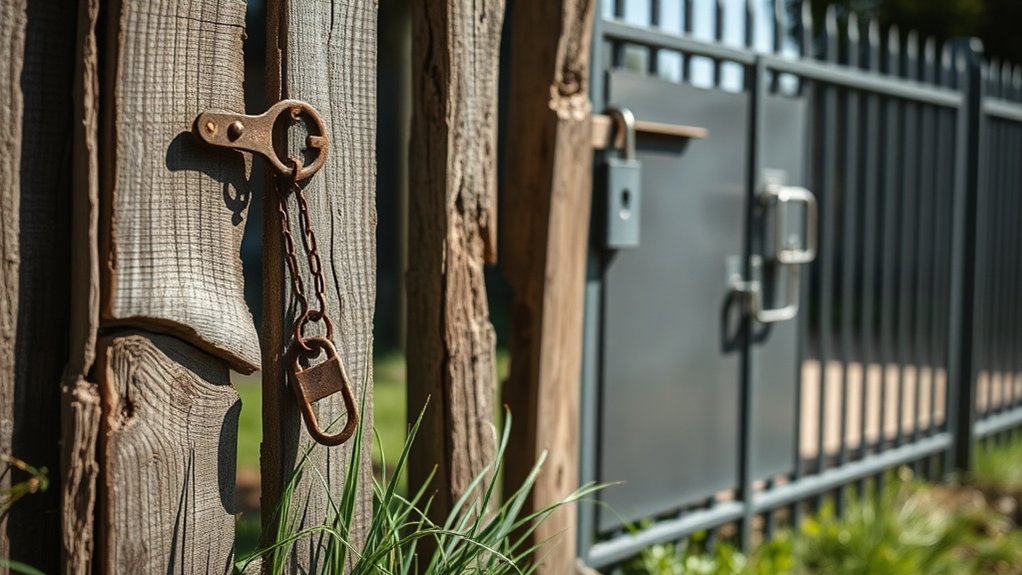
Choosing the right fence material and design is crucial for your property’s security and maintenance. For example, ornamental steel offers outstanding durability and can resist forced entry, lasting up to 40 years.
If you’re looking for a budget-friendly option, chain link fences provide decent security but may require more upkeep, especially if you choose a lower-quality version.
Think about design flexibility too. Metal fences can easily incorporate advanced security features, while vinyl and composite options look great but are less adaptable.
Remember to compare long-term costs with your initial investment; metal fences typically have lower maintenance costs over time. Balancing security, durability, and design will help you make the best choice for your property.
Mitigating Environmental Challenges
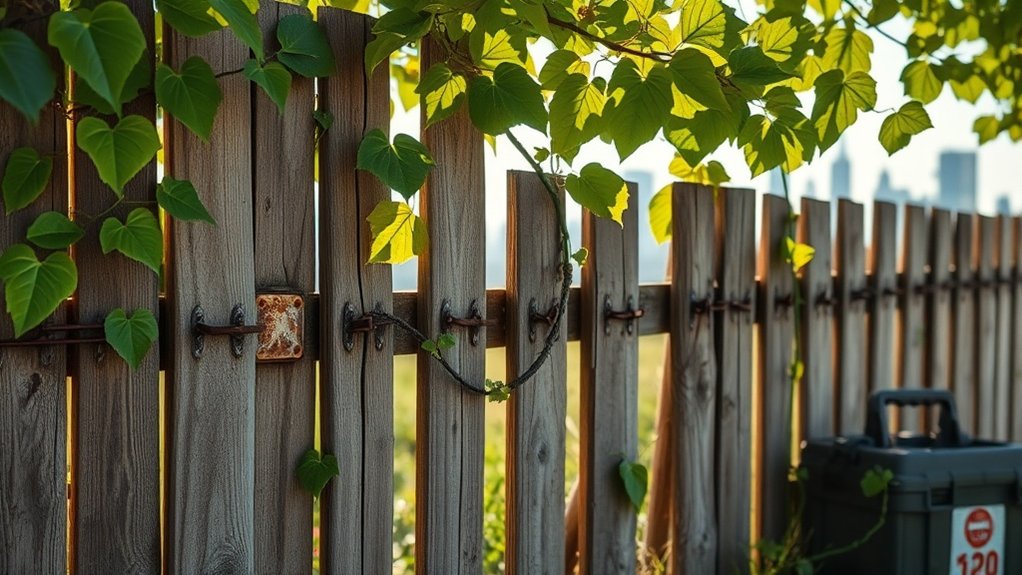
To effectively address environmental challenges, use sensor calibration methods that ensure accuracy even with temperature changes and moisture.
Regularly manage vegetation to prevent obstructions that can cause false alarms.
Choosing weather-resistant materials will improve the durability and performance of your fencing system in different weather conditions.
Sensor Calibration Techniques
Environmental factors like wind, rain, and ambient noise can complicate sensor calibration for fence security systems.
However, there are effective strategies to overcome these challenges:
- Sensitivity Adjustment: Adjust settings to focus on specific intrusion signals and filter out background noise.
- Calibration Methods: Use multi-point calibration and perform calibration walks to simulate intrusions and fine-tune detection thresholds.
- Testing Protocols: Regularly test and recalibrate sensors to adapt to changes in the environment and maintain optimal performance.
- Software Support: Employ specialized software for real-time monitoring of sensor activity, which helps in precise tuning and profiling potential intrusions.
Vegetation Management Strategies
Effective vegetation management is crucial for fence security. Overgrown plants can create safety risks, so regularly check fence lines for overgrowth and trim grasses and weeds as needed.
Removing invasive species helps protect native plants and reduces pest habitats since dense brush attracts rodents and insects. Set up a routine maintenance schedule, including seasonal landscaping, to keep wildlife from nesting near your property.
Dispose of cleared debris properly to prevent re-infestation. Using mulch can also help control weeds and retain soil moisture, enhancing your fence’s security and addressing environmental challenges.
Weather-Resistant Materials Usage
When choosing materials for your fence, prioritize weather resistance to boost durability and security.
Here are some solid options:
- Composite Fencing: Lasts 25-30 years, resists moisture, and requires little upkeep.
- Precast Concrete: Can last over 1,000 years, won’t suffer water damage, and is great for tough climates.
- Vinyl Fencing: Stands up to moisture and won’t rot, making it ideal for humid areas.
- Metal Fences: Galvanized steel and aluminum resist rust and corrosion, ensuring they last long with minimal maintenance.
Choose wisely to protect your investment!
Enhancing Intrusion Detection Systems
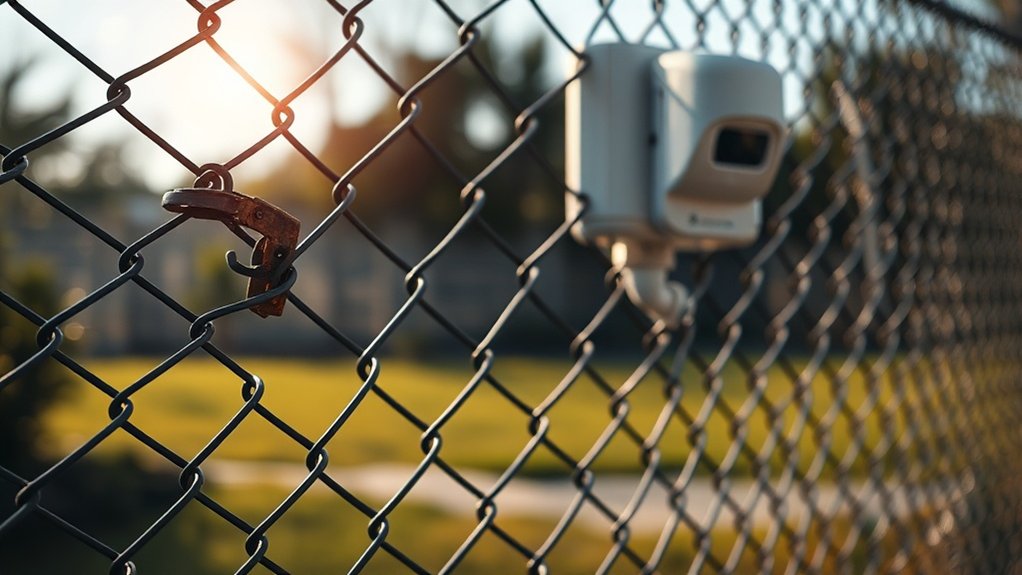
To strengthen security, it’s crucial to enhance intrusion detection systems for effective perimeter protection.
Using advanced sensor technology can significantly boost detection capabilities. For example, fiber optic systems can distinguish real threats from environmental noise, reducing false alarms. Vibration-sensitive linear sensors accurately pinpoint breaches, while smart sensors filter out irrelevant signals.
Integrating these systems with alarm and monitoring setups provides real-time notifications, improving response times. By calibrating detection zones through software, you can adapt without increasing hardware costs, ensuring optimal performance across different fences.
Implementing Effective Risk Assessments
To conduct effective risk assessments, start by identifying weak spots in your fence security.
Once you’ve found these vulnerabilities, rank your security measures by their potential impact and likelihood of happening.
Regularly scheduled assessments help you stay ahead of new threats and keep your protection strong.
For example, if you notice a gap in your fence, prioritize fixing it to prevent unauthorized access.
Identifying Vulnerability Areas
Identifying vulnerability areas in fence security involves a straightforward, methodical process. Here’s how to get started:
- Outline Key Areas: Identify the perimeter, access points, and any infrastructure that needs assessment.
- Conduct Inspections: Look for weaknesses, such as short fence heights or gates that aren’t secured properly.
- Review Documentation: Check existing plans and past incident reports for insights into vulnerabilities.
- Consult Stakeholders: Discuss security goals and acceptable levels of risk with relevant parties.
Prioritizing Security Measures
After identifying vulnerable areas in fence security, the next step is to prioritize security measures through risk assessments.
Start by categorizing threats and analyzing historical data, along with site-specific factors. Use frameworks like EBIOS RM or ISO 31000 to evaluate the likelihood and potential impact of each threat. This structured approach ensures consistency and reduces bias through reviews by diverse teams.
Rank threats by their risk level to allocate your security budget effectively, focusing on high-risk areas first.
Combine physical and electronic security measures to address both immediate threats and long-term vulnerabilities. By prioritizing risks, you can enhance your fence security, make informed decisions, and strengthen your overall defense strategy.
Regular Assessment Schedule
Having a regular assessment schedule is essential for effective fence security. Consistent evaluations help you spot and fix vulnerabilities before they escalate.
Here are four simple strategies to improve your assessment routine:
- Plan inspections every three to six months to keep an eye on security.
- Perform seasonal checks to catch issues caused by weather or plant growth.
- Do random spot checks to find new problems between scheduled inspections.
- Adjust how often you assess based on risk levels—check high-risk areas more frequently.
Strengthening Fence Integrity Against Weather Impact

To ensure your fence can handle tough weather, choose strong materials like pressure-treated wood, galvanized steel, or reinforced vinyl. These materials resist rot, rust, and storm damage, helping your fence last longer.
For wooden fences, use weather-resistant sealants and UV-protective stains to keep moisture at bay. Also, keep your yard’s drainage system clear to prevent water damage. Regular maintenance, like removing debris, is crucial.
Make sure your posts are set deep and use braces for added support against strong winds. By following these steps, you can effectively protect your fence from extreme weather.
Upgrading Access Control Technologies
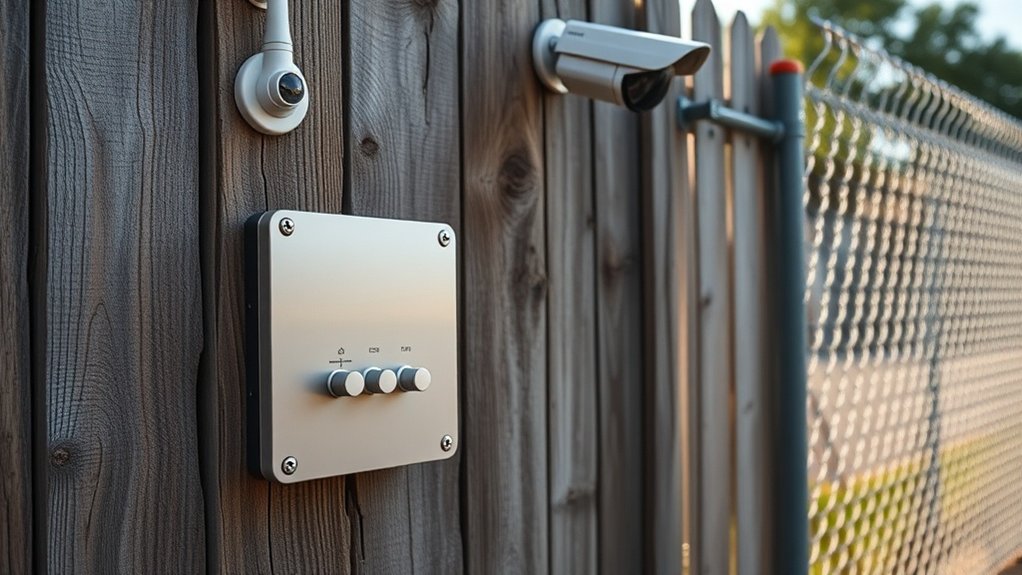
As security threats become more sophisticated, upgrading access control technologies is crucial for effective perimeter protection.
Here are some key upgrades to consider:
- Biometric Solutions: Use fingerprint or facial recognition for secure and easy access.
- Mobile Access: Implement apps for remote entry, alerts, and monitoring on the go.
- RFID Systems: Adopt touchless access with RFID tags to speed up entry while maintaining security.
- Emergency Lockdown: Include automated lockdown features to enhance safety during emergencies.
These upgrades can significantly improve security and streamline access management.
Frequently Asked Questions
What Are the Best Materials for High-Security Fences?
For high-security fences, opt for strong materials like ornamental steel, aluminum, and specialized composites. These options offer durability, long-lasting protection, and resistance to break-ins, making them ideal for safeguarding sensitive areas.
How Often Should I Inspect My Fence for Vulnerabilities?
Inspect your fence for vulnerabilities at least four times a year. Regular checks can catch problems early, like loose boards or rust, which helps keep your property secure and can save you money on repairs later.
Can I Install Security Cameras Along With My Fence?
Yes, you can install security cameras along your fence. This allows you to monitor your property effectively. For example, placing cameras at corners can provide a wider view of your yard, enhancing security and helping to protect your home.
What Is the Average Lifespan of Different Fence Types?
Wood fences last about 10 to 30 years, while vinyl fences generally last 20 to 30 years. Regular maintenance can significantly extend their lifespan, keeping them both functional and looking good.
How Do I Choose the Right Height for My Fence?
To pick the right fence height, check local regulations and think about your needs. For instance, if you want privacy, a taller fence might be better, while a shorter one could suit a decorative purpose. Always ensure your choice meets height restrictions for a practical and attractive boundary.
Conclusion
Securing your fence goes beyond just putting up a barrier; it’s about creating a strong defense against threats. By fixing common weaknesses, improving detection systems, and maintaining your fence regularly, you can significantly boost its security. Don’t let vulnerabilities make your property an easy target. Take proactive measures now to ensure your defenses are solid. Your safety depends on it.

Boost your home security with effective residential fencing solutions that not only protect your property but also enhance its appeal—discover Read more
Navigate the world of anti-climb fence options for high-security zones and discover why the right choice is crucial for protecting Read more

Find the perfect security fencing solutions for your property that combine style and strength; discover how to protect your space Read more


