
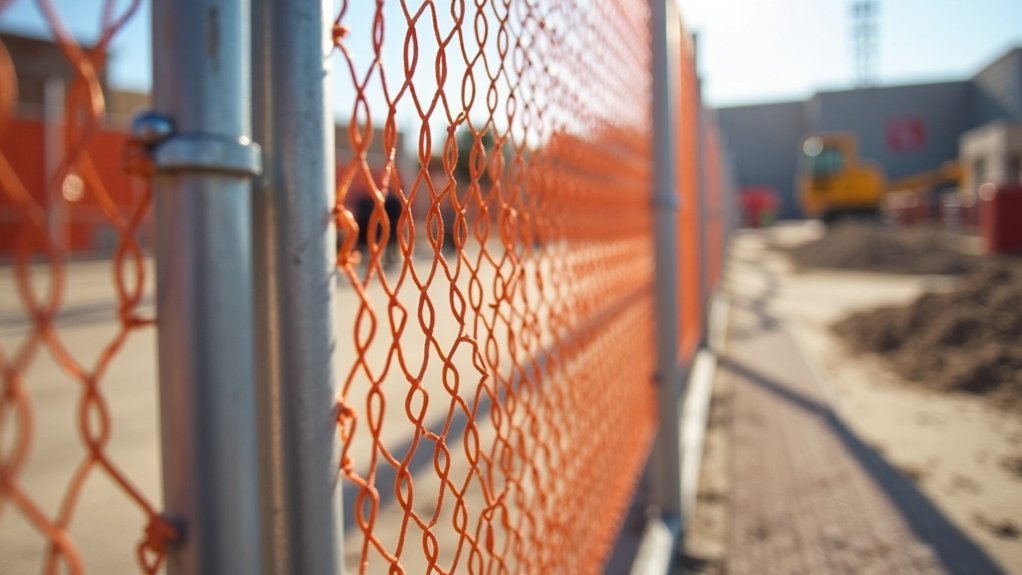
When selecting high-quality temporary fencing, make sure it meets local regulations and safety standards. Look for materials that are durable and weather-resistant, ensuring they can withstand the elements. Opt for stable anchoring systems for secure installation. Features like anti-climb designs enhance security, while controlled access points help manage who enters and exits the site. Choose adaptable systems to suit different site needs. By focusing on these essentials, you can ensure reliable protection and functionality for your investment.
Key Takeaways
- Check local regulations for fencing height, materials, and permits to steer clear of fines.
- Opt for weather-resistant materials like galvanized steel to withstand the elements and last longer.
- Add safety features like anti-climb designs and secure access points to boost security and deter unauthorized entry.
- Ensure a solid installation and anchoring system for stable and well-aligned fencing panels.
- Go for modular systems that allow for easy repositioning as site needs change.
Compliance With Regulations and Standards

When setting up temporary fencing, it’s crucial to follow local regulations for safety and security. Requirements can differ by location, so stay updated. Generally, fences should be at least 6 feet tall, with some areas requiring up to 8 feet for added security. Ensure the materials used meet local and federal standards for strength and durability. Additionally, be aware that permit requirements may vary, and obtaining the necessary permits is essential to avoid fines or delays. Proper installation is essential for stability and effectiveness to ensure the fence performs its intended role. Also, make sure the fence placement doesn’t block walkways or roads. Following these guidelines ensures your temporary fencing complies with legal and safety standards.
Safety and Hazard Prevention Features

Temporary fencing is crucial for safety on construction sites. It clearly marks hazardous areas and controls access, reducing unauthorized entry and the risk of accidents with heavy machinery. Temporary fencing acts as a physical barrier, further ensuring that only authorized personnel can access the site. Adding warning signs and reflective materials improves visibility, helping everyone identify dangers early. Shade cloths can also help by containing dust and debris, keeping the site clean and protecting nearby communities.
Material Durability and Stability

When choosing temporary fencing, consider weather resistance and structural integrity. For example, materials like galvanized steel can handle rain and wind without bending or breaking. Additionally, opting for metal fencing materials ensures that the fence can withstand various climate conditions over time. Chain link fences, made from galvanized steel wire, provide exceptional durability and strength, making them a reliable choice for temporary solutions.
Weather Resistance Features
Understanding the weather resistance features of temporary fencing is key to ensuring its durability in various conditions.
Choose galvanized steel panels, which resist rust due to their zinc coating—ideal for wet climates. PVC-coated steel offers extra corrosion protection, while polyethylene plastic is flexible and water-resistant.
Composite materials provide excellent moisture and UV resistance, preventing decay and color fading. For additional protection, vinyl tarps act as waterproof barriers.
Look for materials with UV inhibitors and waterproof coatings to extend your fencing’s life in both sun and rain. By focusing on these features, your temporary fencing will effectively withstand the elements. Additionally, utilizing recycled materials can enhance sustainability while providing robust weather resistance in your fencing solutions.
Structural Integrity Standards
Ensuring structural integrity in temporary fencing is crucial for safety and functionality. Using durable materials like steel and galvanized alloys provides excellent strength and resistance to impacts. Following OSHA and ASTM standards helps ensure that your fencing can endure environmental challenges.
| Feature | Importance |
|---|---|
| Material Strength | Ensures durability and safety |
| Welded Connections | Increases stability |
| Cross-Bracing | Resists lateral forces |
| Regular Inspections | Preserves long-term integrity |
Incorporating reinforced mesh panels and proper anchoring methods keeps your temporary fencing stable and secure, even in tough conditions. Regular maintenance is key to maintaining its structural integrity.
Installation and Anchoring Systems

Effective installation and anchoring systems are crucial for temporary fencing stability. Start by planning your fence layout: measure and mark the perimeter for accuracy.
Check the terrain for obstacles and clear any debris or vegetation to ensure strong panel support. If you’re dealing with soft soil, driven posts offer better anchoring; otherwise, use weighted stands.
Make sure your panels interlock securely with clamps or ties, and add extra bracing if needed. Depending on how long your fence will be up and the environmental conditions, concrete blocks, steel pins, or sandbags make great anchors.
Finally, do a thorough check to ensure everything is stable and aligned for safety and effectiveness.
Security and Access Control

High-quality temporary fencing is an effective way to secure construction sites and events from unauthorized access.
Here are key features that enhance security:
- Solid Construction: Made from durable steel panels, these fences resist tampering.
- Controlled Access Points: Designated entryways help manage personnel and vehicles effectively.
- Anti-Climb Features: Designs that prevent climbing enhance security.
- Modular Systems: Panels can be easily repositioned for flexible access management.
These features ensure reliable protection while keeping operations running smoothly.
Regulatory Training and Compliance Management

Temporary fencing provides security and access control, but it also demands strict compliance with regulations. To ensure compliance, stay informed about changes in permits and safety standards.
Conduct regular audits to confirm that your installation practices align with OSHA regulations and local laws.
Training should emphasize risk recognition and proper installation techniques to minimize hazards. This ongoing education helps your team stay updated on regulatory changes, reducing liability and the chances of project shutdowns.
Documenting inspections is crucial to avoid fines. By focusing on regulatory training, you foster a safer environment and ensure your temporary fencing meets all necessary standards.
Frequently Asked Questions
How Do I Choose the Right Temporary Fencing for My Project?
To choose the right temporary fencing for your project, start by assessing the types available based on their strength and ease of setup. Think about what your site specifically requires—like durability and security. For instance, if you’re securing a construction site, a sturdy chain-link fence may be best. If it’s for an outdoor event, lightweight mesh fencing could work well. Make sure the option you choose effectively manages the perimeter while meeting your project’s needs.
Can Temporary Fencing Be Customized for Specific Site Needs?
Yes, temporary fencing can be customized to meet your specific site needs. Whether you need it for crowd control at an event, securing a construction site, or enhancing security, there are tailored options available. Flexibility in design allows you to create the perfect solution for your situation.
What Is the Average Cost of High-Quality Temporary Fencing?
High-quality temporary fencing usually costs between $150 and $500 for 60 linear feet. Key factors that affect the price include the type of materials, how long you need the fence, the size of your project, and your location. For example, if you’re securing a construction site or a special event, these factors will play a significant role in your overall expenses.
How Long Can Temporary Fencing Remain in Place Legally?
Did you know that 75% of municipalities set specific time limits for temporary fencing? It’s crucial to know the regulations in your area, as these limits can differ significantly. For instance, some places may allow temporary fencing for only a few weeks, while others might permit it for several months. Always check the required permits to ensure compliance.
Are There Environmentally Friendly Options for Temporary Fencing Materials?
Yes, there are eco-friendly options for temporary fencing. Consider using materials like recycled plastics or metals. These options not only reduce waste but are also durable and reusable for various projects.
Conclusion
In summary, choosing high-quality temporary fencing means more than just securing an area; it’s about ensuring safety and compliance. Look for features like adherence to regulations, sturdy materials, and strong security options to provide peace of mind for your project. The right fencing can transform a chaotic environment into an orderly one, making it a worthwhile investment. Take the time to assess these features to make an informed decision.

In exploring the best temporary fencing options for construction sites, discover which solutions ensure security and compliance while enhancing site Read more
Learn essential tips for maintaining temporary fencing that can extend its lifespan and prevent costly repairs—discover the best practices for Read more

With the right combination of bollards, barriers, and fencing, you can elevate safety and security—discover how to create the ultimate Read more


