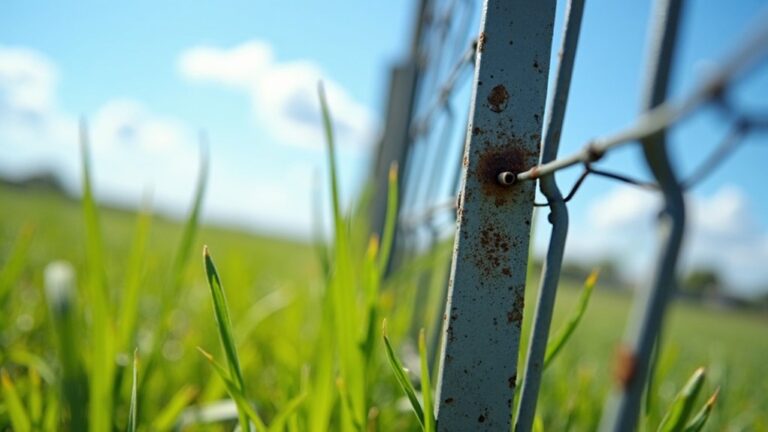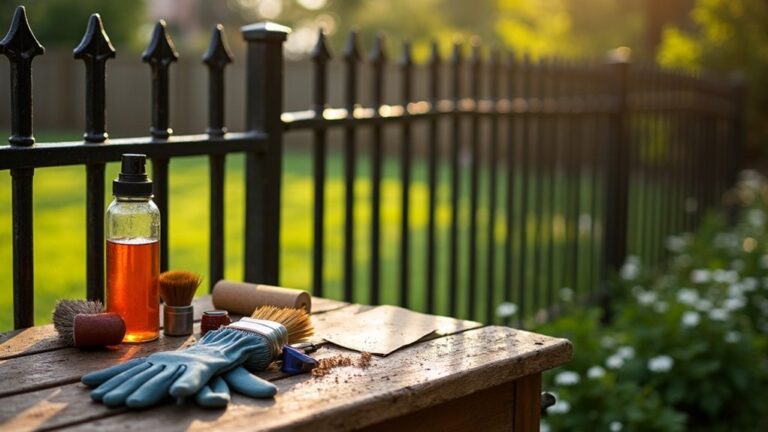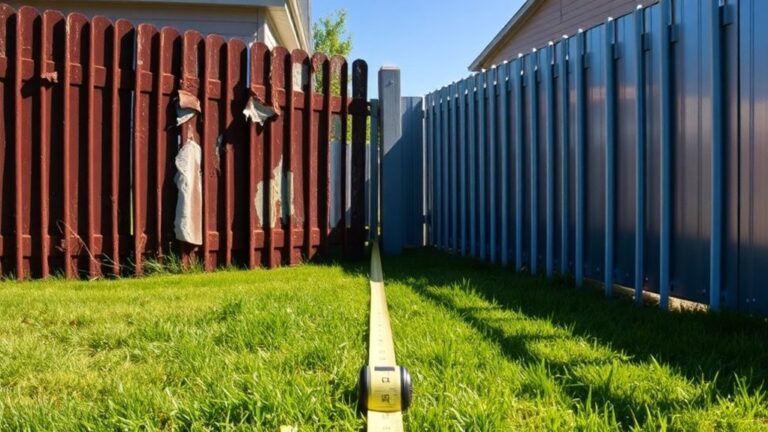

To weatherproof your metal fence, start with durable materials like aluminum or galvanized steel. Use protective coatings, such as epoxy or fluoropolymer, to prevent corrosion. Regularly check for rust, clean with mild soap, and lubricate moving parts. In winter, remove snow to prevent damage, and consider UV-resistant coatings for sun protection. These steps will help ensure your fence stays strong against the elements.
Key Takeaways
- In summer, apply UV-resistant coatings to prevent sun damage and fading on your metal fence.
- Clean the fence regularly with mild soap and water to keep dirt away and avoid moisture buildup.
- Check for cracks, peeling paint, or rust every six months to catch problems early.
- In fall, clear leaves and debris to prevent moisture accumulation that can cause corrosion.
- In winter, gently remove snow and ice with soft brushes to avoid damaging the fence.
Choosing the Right Metal Fence Material

Choosing the right metal fence material is crucial for durability and maintenance.
If you live in a coastal or humid area, aluminum is a great choice. It’s lightweight, rust-proof, and easy to install, requiring little upkeep. With a lifespan of 25-30 years, it can last even longer with proper care. Aluminum fences can last up to 50 years with proper maintenance, making them an excellent long-term investment. Additionally, many manufacturers offer maintenance-free options that further enhance the longevity of aluminum fencing.
If security is your main concern, steel is the way to go. It’s incredibly strong and resistant to bending or denting, making it suitable for high-impact use. While it does need more maintenance to prevent rust, it can last 20-40 years, especially with protective coatings.
Understanding Protective Coatings

To protect your metal fence, it’s important to know the different types of coatings available. Options like epoxy, polyester, and galvanized finishes each have unique benefits suited for various environments and styles. Selecting the right coating and application method can significantly improve your fence’s durability and lifespan against weather conditions. Additionally, powder coating enhances resistance to chemicals and corrosion, making it a preferred choice for many fencing experts. Regular application of rust-inhibiting coatings is essential to ensure long-lasting protection against the elements.
Types of Coatings
Choosing the right coating for your metal fence is crucial for its durability and appearance. Here’s a quick overview of popular options:
- Epoxy Powder Coating: Known for its strong adhesion and resistance to corrosion, this coating offers a durable finish.
- Polyester Powder Coating: Ideal for outdoor use, it has a smooth, glossy look and comes in a range of colors. Additionally, PVC fences are known for being resistant to fading, which can be a consideration when selecting a coating.
- Fluoropolymer Coatings: Great for UV protection, these coatings can significantly extend your fence’s life.
- Galvanized Coatings: Featuring a thick zinc layer, these provide long-lasting sacrificial protection against rust.
- Zinc-Rich or Vinyl Coatings: These options blend flexibility and durability, making them suitable for various conditions.
- Acrylic Coatings: A more affordable choice, though they offer moderate weather resistance. Additionally, powder coatings enhance the longevity of fences by protecting against corrosion and UV rays.
Each coating has its advantages, so consider your environment and style preferences when selecting the best one for your fence.
Application Methods
To ensure your metal fence is well-protected from the elements, it’s important to choose the right application method for protective coatings. Here are some effective techniques:
- Spray Techniques: Ideal for large areas, using paint sprayers ensures even coverage.
- Electrostatic Spray: Great for complex shapes, this method allows for thorough coating on hard-to-reach spots.
- Fluidized Bed Application: Best for thick coatings on bulky parts, providing robust protection.
- Brushes and Rollers: Perfect for detailed work, especially on joints and fasteners.
Regardless of the method, proper equipment is crucial for even layers.
Always prepare the surface by removing rust and ensuring it’s dry for optimal adhesion and weather resistance.
Benefits of Coatings
Protective coatings significantly improve the performance and lifespan of metal fences. One major benefit is rust prevention; coatings like powder and galvanized layers create barriers against moisture, reducing corrosion.
They also provide strong UV protection, keeping your fence’s color and finish intact, even in intense sunlight. This durability means less maintenance and lower costs over time, making coated fences a smart choice.
Additionally, these coatings protect against harsh weather, temperature changes, and pollutants. By opting for quality coatings, you not only preserve the fence’s strength but also boost its visual appeal, increasing your property value for years.
Proper Installation Techniques

Proper installation techniques are crucial for the durability and stability of your metal fence.
Begin by digging post holes at least 2 feet deep, adjusting for your local frost line, which can be between 24 and 42 inches. Use concrete to secure the posts, leaving the top 2 inches unfilled for compacted dirt. This approach helps prevent movement from soil erosion or frost heave.
Check that the posts are level on two sides before the concrete sets, ensuring they’re spaced 72.5 inches apart on-center.
Routine Maintenance Practices

Your metal fence is durable, but regular maintenance is key to ensuring it lasts. Inspect it every six months for signs of rust or structural issues. Clean it with mild soap and lukewarm water every three to six months—avoid harsh chemicals.
| Maintenance Task | Frequency |
|---|---|
| Routine Inspections | Every 6 months |
| Cleaning | Every 3-6 months |
| Rust Treatment | As needed |
Lubricate any moving parts and keep vegetation trimmed to prevent moisture buildup. Ensure proper drainage to further reduce the risk of corrosion. These simple steps will keep your fence looking good and functioning well for years.
Seasonal Weatherproofing Tips

As seasons change, your metal fence needs care to endure the weather.
In summer, apply a strong UV-resistant coating to shield it from sun damage.
In fall, regularly clear leaves and debris to prevent moisture from building up.
During winter, be cautious with snow; remove it gently to protect your fence’s structure and prolong its life.
Summer UV Protection
Summer sun can damage your metal fence if you don’t take proper care. Use UV-resistant stains or powder-coated finishes to protect against fading and corrosion.
Regularly clean your fence to remove dust and mildew. Check for cracks or peeling paint and fix them right away to avoid more damage.
Consider placing your fence in shaded areas or near trees to minimize UV exposure. Light-colored finishes can help reflect sunlight and keep your fence cooler.
Choosing high-quality materials, like aluminum or vinyl-coated options, ensures better protection against summer rays, thus extending your fence’s lifespan.
Fall Debris Removal
As the leaves change in fall, they can create challenges for your metal fence. To avoid rust, regularly clear leaves and debris using a soft brush or leaf blower.
Check joints for corrosion since trapped debris can cause damage. For tough debris, rinse with a garden hose and scrub with a nylon brush—avoid power washing to protect the finish.
Keep your yard tidy by trimming plants near the fence and placing debris bins away from it. This helps prevent moisture buildup and keeps insects at bay.
Winter Snow Management
When winter hits, it’s crucial to manage snow around your metal fence to keep it looking good and in shape.
Here are some practical tips:
- Remove light snow every few days to prevent heavy buildup.
- Use soft brushes or brooms to clear snow without scratching the metal.
- Try heat guns or warm water to melt any ice safely.
- Consider adding protective barriers, like fence netting, to reduce snow exposure.
Addressing Rust and Corrosion

Metal fences are strong but can rust and corrode without proper care. To prevent this, choose materials like galvanized or stainless steel that resist rust.
Regularly check for rust, especially at the base where moisture gathers. If you find corrosion, sand or wire brush the area to reach clean metal, then apply a rust-inhibiting primer.
Also, clean your fence with mild soap to remove dirt that holds moisture. Following these steps will help your fence last longer.
The Advantages of Aluminum Fencing

When selecting a fencing material, aluminum fencing is a top choice for its durability and low maintenance. Here are the key benefits:
- Durability: It won’t rust or corrode, making it perfect for tough weather conditions.
- Low Maintenance: No need for painting or staining; just a quick rinse keeps it clean.
- Lightweight Installation: It’s much lighter than wrought iron, so you can easily install it yourself.
- Aesthetic Versatility: Available in various styles and colors, it enhances your property’s look without fading.
Benefits of Vinyl Fencing

If you need a fencing option that’s strong, low-maintenance, and looks good, vinyl fencing is a great choice.
It’s built to last, resisting weather, rot, and pests, which means it will hold up well no matter where you live. With a lifespan often over 20 years and little upkeep required, it’s a practical investment.
Vinyl fencing also comes in various styles and colors, making it easy to find one that matches your home and boosts your curb appeal.
Plus, it provides solid privacy and security, creating a dependable barrier.
Choosing vinyl means you get an attractive, durable fence that can handle the elements.
Galvanized Steel: A Durable Option

Choosing galvanized steel for your fence means you get strong corrosion resistance, even in tough environments.
The zinc coating protects against rust and keeps your fence looking good for years.
To ensure it lasts, make sure to follow proper installation practices.
Corrosion Resistance Benefits
When looking for a durable fencing option, galvanized steel is an excellent choice due to its strong corrosion resistance. The zinc coating acts as a shield, protecting the steel from moisture and oxygen.
This means your fence will stay intact for many years, even in tough conditions. Key advantages include:
- A barrier that keeps corrosive elements away from the steel
- Zinc that corrodes first, protecting the underlying metal
- Longevity of over 50 years in typical environments
- Better performance in coastal and humid areas
Choosing galvanized steel means you’re getting a strong fence that can handle the elements with minimal upkeep.
Installation Best Practices
Proper installation is key to ensuring your galvanized steel fence lasts and performs well.
Start by digging post holes that are 60 to 90 cm deep and three times the diameter of the post. Add 10 to 15 cm of gravel at the bottom for drainage.
Set the posts upright using a bubble level before pouring concrete for stability. Attach the bottom rails first with galvanized fasteners to avoid rust, and use string and stakes to keep everything aligned.
If your terrain is uneven, use rackable panels to adjust. Remember to check your layout while the concrete cures.
Following these steps will help your fence withstand the elements effectively.
Wrought Iron Fencing Maintenance

To keep your wrought iron fencing looking good and lasting longer, regular maintenance is key.
Here are some straightforward tips:
- Clean the fence with mild soap and a soft cloth at least once a season to remove dirt and grime.
- Check for rust spots and address them quickly using steel wool or sandpaper.
- Apply rust-inhibiting paint to shield against moisture.
- Lubricate any moving parts every season to ensure they operate smoothly.
The Value of Stainless Steel Fences

When considering a long-term investment for your property, stainless steel fences offer great durability and aesthetic appeal.
Their impact and corrosion resistance ensure they last, even in tough weather. Unlike wood, stainless steel doesn’t warp or rot, which means lower maintenance costs.
Plus, it allows for design flexibility, so you can customize heights and styles to fit your property. Its sleek look enhances curb appeal and requires little upkeep, maintaining its appearance without frequent treatments.
Choosing stainless steel fencing combines security, longevity, and style, making it a smart choice for your investment.
Enhancing Protection With Powder Coating

One of the best ways to protect your metal fence is through powder coating. This method creates a tough barrier that resists chipping, peeling, and cracking, ensuring it lasts against harsh weather.
Here are some key benefits:
- Durability: It withstands environmental stresses and can last for decades.
- Corrosion resistance: It blocks moisture and oxygen, preventing rust.
- Low maintenance: It requires minimal upkeep, saving you time and money.
- Aesthetic options: Available in various colors and finishes for a personalized look.
With powder coating, your metal fence won’t only look great but also stay protected for years.
Frequently Asked Questions
How Long Does a Metal Fence Typically Last?
A metal fence usually lasts between 15 to 50 years, depending on the material and how well it’s maintained. Choosing options like galvanized steel or aluminum can significantly boost its durability and lifespan.
Can I Paint My Metal Fence Any Color?
Yes, you can paint your metal fence any color you like! Use durable metal-specific paint in colors like red or blue to make it stand out. This way, you’ll not only enhance its appearance but also protect it for years to come.
What Tools Do I Need for Fence Maintenance?
For proper fence maintenance, gather a claw hammer, wire cutters, and a soft brush for cleaning. To protect your metal fence from rust, have mild soap, water, and gloves handy.
Is It Necessary to Hire a Professional for Installation?
Hiring a professional for fence installation can cut errors by more than 40%. They ensure your fence meets local regulations and lasts longer. For example, if you live in an area with rocky soil, a pro knows how to handle it better than a DIYer. Overall, getting expert help is a smart choice for a hassle-free project.
How Do I Choose the Right Fence Height for My Property?
When choosing the right fence height, start by checking local zoning regulations, as they often dictate maximum heights. Think about your privacy needs; for example, a 6-foot fence can block the view from neighbors. Also, consider how it fits in with your neighborhood’s style and whether it meets safety requirements. Finally, remember that a well-chosen fence can enhance your property value while being considerate of your neighbors.
Conclusion
To weatherproof your metal fence effectively, follow these essential techniques. Choose durable materials, apply protective coatings, and perform regular maintenance to ensure your fence withstands the elements. For instance, using galvanized steel or aluminum can resist rust and corrosion better than untreated options. By taking these steps, you can enhance your fence’s lifespan and appearance, making it a long-lasting, attractive feature of your property. Don’t let weather wear down your investment—protect it properly!