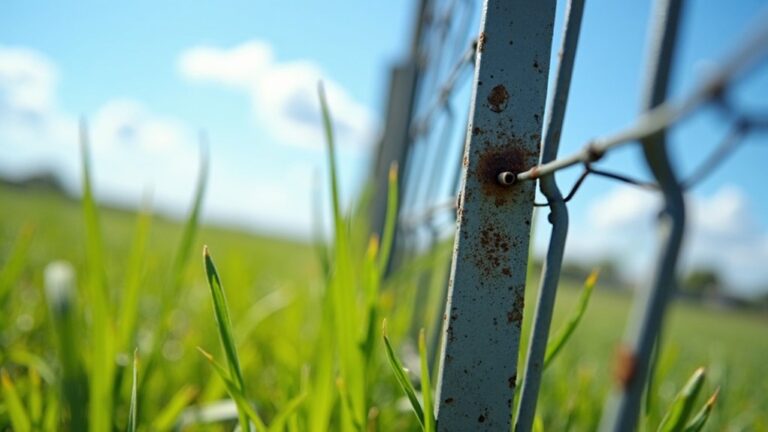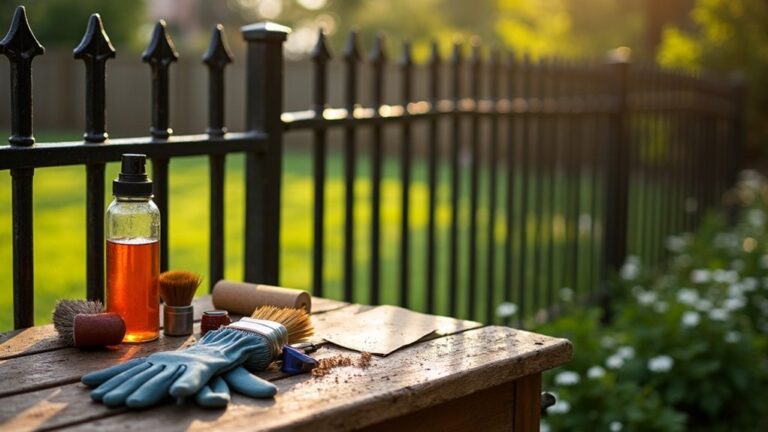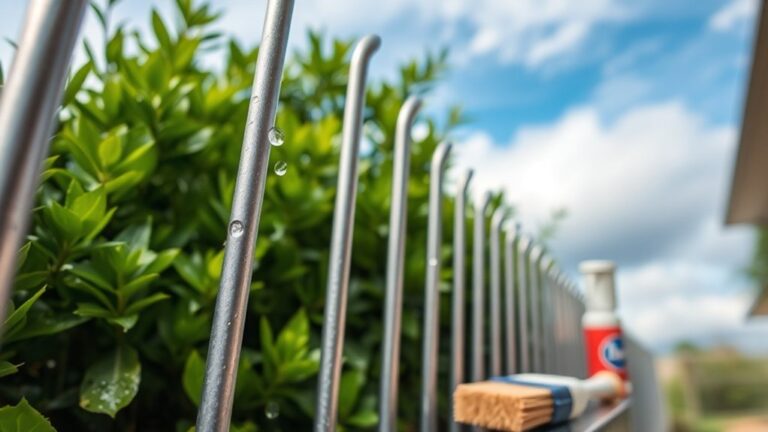
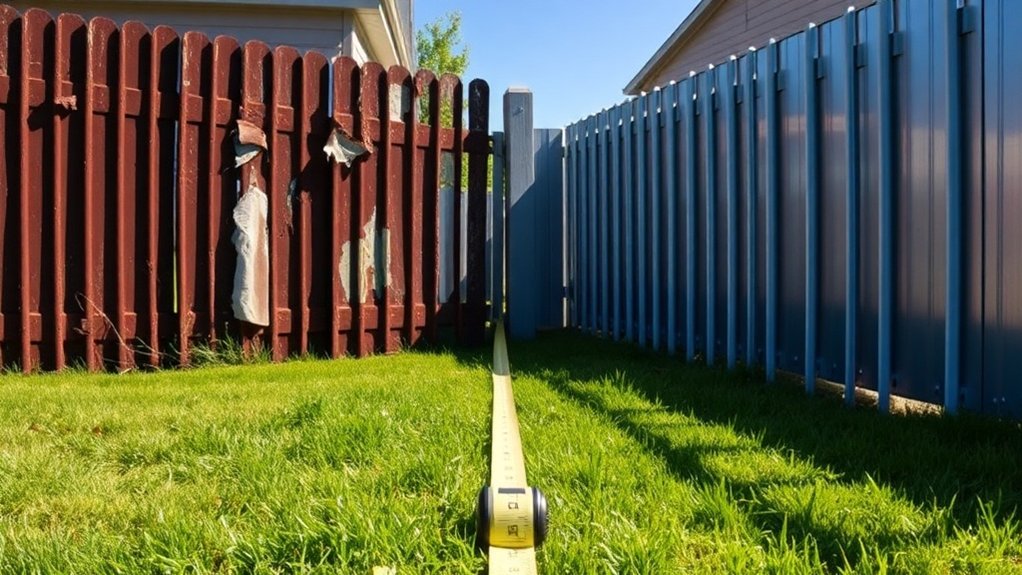
Maintaining old metal fences can cost anywhere from $300 to $2,500 every few years, mainly for rust prevention and painting. Repairs typically range from $250 to $1,200. In contrast, replacing a fence can cost between $15 and $90 per linear foot, depending on the material. If your repair costs exceed 50% of what a replacement would cost, it’s time to consider a new fence. Knowing these costs can help you make a smart decision about your fencing needs.
Key Takeaways
- Maintaining metal fences typically costs between $300 and $2,500 every few years, which can add up over time.
- If repair costs exceed 50% of what it would cost to replace the fence, it might be time for a new one.
- Aluminum repairs generally range from $200 to $500 per section, while steel and wrought iron repairs are pricier.
- If you’re frequently needing to replace panels or treat rust, those expenses can quickly surpass the cost of a full replacement.
- It’s important to assess the fence’s age and structural condition to determine if maintenance or replacement is the better option.
Understanding Metal Fence Materials

Aluminum is a great choice, especially in coastal or humid areas, because it’s lightweight and rust-resistant. This makes it easy to install and maintain. Plus, aluminum fences come in various styles and colors. Additionally, aluminum’s maintenance-free nature makes it an attractive option for those looking to minimize long-term upkeep. Furthermore, its cost-effectiveness contributes to its popularity among homeowners seeking budget-friendly solutions.
In contrast, steel offers excellent strength for security but has downsides. It’s heavier, making installation more challenging, and it’s not as rust-resistant as aluminum. When deciding, think about whether aluminum’s low maintenance and aesthetic appeal suit your needs.
Typical Repair Costs for Metal Fences

Repair costs for metal fences can vary based on material and damage level.
For aluminum, repairs typically cost between $200 and $500 per section. Steel repairs generally range from $300 to $700. Wrought iron tends to be more expensive, with costs between $400 and $1,200 due to the complexity involved. Regular inspections for structural issues can help identify problems early and potentially save on repair costs.
Specific tasks like welding can cost $100 to $500, while replacing a panel runs about $8 to $20 per linear foot. Minor repairs might set you back $150 to $300, but structural damage can exceed $1,000. Repair costs become uneconomical when they exceed 40-50% of the replacement value.
If you’re handy, DIY fixes can save you 50-70% on simple jobs, but for major repairs, it’s best to hire a professional for quality and safety.
Replacement Costs for Metal Fences

Replacing a metal fence can be a significant expense, but knowing the costs helps you plan better. Typically, metal fences cost between $15 and $90 per linear foot. For example, aluminum fences are the most budget-friendly, ranging from $15 to $45 per foot, while wrought iron can cost between $25 and $85. Cost per linear foot may vary depending on the type of material and installation complexity. Additionally, aluminum fencing often requires minimal maintenance, which can lead to long-term savings. If you have a larger project, you might save on the cost per foot. Keep in mind that adding features like gates or custom designs can increase your overall costs. Comparing different fence materials can help you find the best option that fits your quality needs and budget.
Long-term Maintenance Expenses

Understanding the long-term maintenance costs of metal fences is crucial for deciding whether to keep or replace your fence.
Here are three important factors to consider:
- Repair Costs: Expect to pay about $20 per linear foot for steel repairs and up to $30 for wrought iron, which can add up significantly over time.
- Routine Maintenance: Regular rust prevention and repainting can cost between $300 and $2,500 every few years.
- Preventative Measures: Investing in yearly inspections and rust-resistant coatings can save you thousands in future repairs.
Factors Influencing Repair Decisions

When deciding whether to repair or replace your metal fence, consider a few key factors.
First, evaluate the damage. If there are significant structural issues or deep corrosion, replacement may be the better choice.
Also, think about the age of your fence; older ones nearing the end of their lifespan are often better replaced.
If repair costs exceed 50% of the replacement cost, it’s time to opt for a new fence.
Lastly, take into account any environmental and foundational issues that could affect repairs, as these can heavily influence your decision.
Benefits of Repairing Metal Fences

Repairing your metal fence has several key benefits that can improve its lifespan and your property’s look.
Here’s why you should consider it:
- Cost Savings: Repairs can save you 30-50% compared to replacing the entire fence, helping you avoid unnecessary expenses on new materials.
- Strength and Stability: Proper repairs restore the fence’s strength without needing a full replacement, which helps prevent further damage.
- Boosted Curb Appeal: A well-maintained fence enhances your property’s appearance, potentially increasing its value and creating a positive impression in the neighborhood.
When to Consider Replacement

As your metal fence ages, there are clear signs that it may be time for a replacement instead of just a repair.
Look for indicators like leaning posts, significant rust, or severe warping. If multiple posts are unstable or rust covers more than 30% of the fence, these issues can weaken its structure.
Frequent repairs can also signal deeper problems; if those costs exceed 50% of a new fence, replacing it might be the better option.
Additionally, if you’re dealing with sticking gates or broken parts, it’s a strong sign that a complete replacement is necessary.
Opting for a new fence can enhance safety and aesthetics while preserving your property’s value.
Don’t wait for further damage—invest in a new fence for lasting peace of mind.
Lifespan Comparisons: Metal vs. Wood Fences

When deciding between metal and wood fences, consider their lifespans and maintenance.
Metal fences can last over 50 years with little upkeep, while wood fences typically last 5 to 40 years, depending on the type and care.
If you prefer a durable option that needs less maintenance, metal is likely the better choice.
Longevity of Materials
When deciding between metal and wood fences, longevity plays a key role in your investment. Metal fences can last 20 to 50 years with little maintenance, thanks to their resistance to corrosion.
On the other hand, wood fences typically last only 10 to 20 years, even with regular care.
Here are some important points to consider:
- Metal options like galvanized steel and aluminum stand up well to tough weather, ensuring they last longer.
- Wrought iron can last over 50 years if properly maintained and kept away from harsh conditions.
- Untreated wood fences are vulnerable to rot and decay, especially in wet climates.
Choosing a metal fence gives you the assurance of a longer lifespan compared to wood, making it a smart investment.
Maintenance Requirements Differences
Understanding the maintenance needs of metal and wood fences is crucial for your investment. Metal fences require specific upkeep to ensure they last. You should clean them every 3-6 months, using soft brushes and oil-based primer. On the other hand, wood fences need more frequent checks and treatments to prevent rot and insect damage, typically every 6-12 months with sealants and wood preservatives.
Here’s a quick comparison:
| Fence Type | Cleaning Frequency | Maintenance Techniques |
|---|---|---|
| Metal | Every 3-6 months | Soft brushes, oil-based primer |
| Wood | Every 6-12 months | Sealants, wood preservative |
| Wrought Iron | Semiannually | Soap and water wash |
| Ferrous Metal | Annual inspections | Rust treatment, corrosion-resistant coats |
| Both | Seasonal checks | Clear debris, inspect hardware |
Regular maintenance ensures both types of fences remain durable and visually appealing.
Labor and Material Cost Influences

When it comes to maintaining or replacing your metal fence, labor costs can vary significantly depending on the metal type and necessary repairs.
For example, aluminum might be cheaper to work with than wrought iron. Additionally, finding materials for older or unique fence styles can be tricky, which can increase both time and costs.
Being aware of these factors can help you decide whether to repair or replace your fence.
Labor Rate Variability
Labor rates for fence repair can vary widely, depending on several factors.
Here’s what to consider:
- Location: Expect to pay 20-40% more in urban areas compared to rural ones.
- Complexity: Structural repairs need specialized skills, which increases costs.
- Season: Rates usually rise in spring and summer due to high demand.
Understanding these factors will help you budget effectively for your fence repair project.
Material Availability Challenges
Repairing an old metal fence can be tricky due to material availability issues that affect both cost and timelines. Specialty metals, like wrought iron, are often hard to find locally, leading to delays and higher prices.
On the other hand, aluminum panels are usually more accessible because they’re mass-produced. However, if you need custom or decorative parts, be prepared for longer wait times and increased costs.
Supply chain disruptions can also cause delays, especially for non-standard sizes. If matching materials aren’t available, you might’ve to use substitutes, which can raise your overall expenses.
Understanding these challenges can help you plan and budget more effectively for your fence repair or replacement.
Assessing Damage Severity

To maintain your metal fence, start by assessing any damage. This helps you decide if you can repair it or if a replacement is needed. Here’s how to evaluate the situation:
- Visual Inspection: Walk around your fence and look for cracks, rust, or corrosion.
- Structural Integrity: Check if the posts are stable and if any panels are sagging or gates are misaligned—these could indicate bigger problems.
- Hardware Condition: Look at fasteners and brackets for rust or looseness, as these affect the fence’s overall stability.
Cost-Effective Maintenance Tips

Maintaining a metal fence doesn’t have to be overwhelming. By following some simple, cost-effective tips, you can enhance its longevity and save money. Here’s what you need to do:
- Routine Inspections: Check your fence monthly to catch any issues early.
- Cleaning: Wash your fence once a year with mild soap and water. If you live in a humid area, consider cleaning it more often to prevent corrosion.
- Address Rust: Treat rust spots right away and use rust-inhibiting primer to protect your fence.
- Maintain Airflow: Keep the area around your fence clear to improve air circulation and reduce moisture buildup.
- Lubrication: Lubricate moving parts annually to ensure everything operates smoothly. Replace any damaged hardware promptly.
| Task | Frequency | Cost-Effective Solutions |
|---|---|---|
| Routine Inspections | Monthly | Catch problems early |
| Cleaning | Annually | Prevents rust and corrosion |
| Lubrication | Annually | Ensures smooth operation |
Impact of Aging on Metal Fences

As your metal fence ages, it may become weaker and more prone to collapse.
This can lead to higher maintenance costs due to more frequent repairs and replacements.
Recognizing these issues can help you decide whether to maintain or replace your aging fence for better long-term reliability.
Structural Integrity Deterioration
To maintain the safety and functionality of metal fences, it’s crucial to understand how aging affects their structural integrity. Factors like moisture and UV exposure can cause significant deterioration over time.
Here are some key points to consider:
- Prevent rust, especially for wrought iron, which needs regular upkeep.
- Corrosion resistance differs by material; galvanized steel can last 20-50 years, but aluminum may not hold up well in coastal areas.
- Look out for early signs like discoloration to catch issues before they worsen.
Increased Maintenance Costs
As metal fences age, maintenance costs can escalate significantly. Repair bills for rust and corrosion can range from $250 to $500 each time.
To mitigate these costs, applying a rust-resistant coating annually is a smart move. However, if your fence is older, expect to repaint every 3–5 years, costing between $1,200 and $2,500.
Frequent panel replacements, averaging $150 to $300 each, can also add up quickly. It’s crucial to analyze these costs; often, the total repair expenses can surpass the cost of a full replacement, making replacement a more cost-effective choice in the long run.
Frequently Asked Questions
How Often Should I Inspect My Metal Fence?
Inspect your metal fence every 3–6 months to ensure it lasts longer. Regular checks help identify problems early, keeping it strong and preventing costly repairs. Stay proactive and keep your fence in top shape!
Can I Paint Over Rust on My Fence?
Yes, you can paint over rust! Just make sure to treat the rust first. Use a rust converter or a high-quality primer, then apply a paint that’s designed for direct application on rust. This will help keep your fence looking great and protected for years!
What Tools Are Needed for Minor Fence Repairs?
For minor fence repairs, you’ll need a few basic tools: a hammer, pliers, wire cutters, and a screwdriver. Knowing how to use these tools will help keep your fence strong and looking good without breaking the bank.
How Can I Prevent Rust on My Metal Fence?
To prevent rust on your metal fence, regularly apply protective coatings such as high-quality paint or powder coatings. These coatings act as a barrier against moisture, helping your fence last longer and reducing maintenance costs. For example, think of it like putting a raincoat on a person to keep them dry.
Are There Eco-Friendly Options for Metal Fence Maintenance?
Yes, you can maintain your metal fence with eco-friendly options. Use biodegradable soaps for cleaning and choose low-VOC paints or powder coatings for protection. These choices are better for the environment and help extend your fence’s life.
Conclusion
When deciding between maintaining or replacing your old metal fence, it’s crucial to consider the costs involved. Understanding repair expenses and ongoing maintenance can help you stay within budget. Think of your fence as a reliable guardian; with proper care, it can last a long time. Before opting for a replacement, consider giving it some TLC—it could save you from a more expensive replacement later.