
To add solar lights to your eco-friendly fence, choose lights that fit your style and brightness needs. Place them where they can soak up sunlight, facing south for optimal charging. Use a cordless drill and tape measure for accurate placement, spacing lights 6-8 feet apart for consistent lighting. Regularly clean the panels and check the batteries to keep them working well. With these tips, you can enhance your outdoor space effortlessly.
Key Takeaways
- Select solar lights with brightness levels between 10 to 300 lumens to effectively light your eco-friendly fence while conserving energy.
- Choose solar lights that match the style and color of your fence and landscape for a harmonious look.
- Install lights in sunny spots, positioning the panels southward and tilted for maximum sunlight exposure.
- Add motion sensors to your solar lights to save energy by activating only when movement is detected, minimizing light pollution.
- Keep your solar lights in top shape by regularly cleaning the panels and checking the batteries for efficient, sustainable performance.
Selecting the Right Solar Lights for Your Fence

When enhancing your fence with solar lights, it’s important to choose the right options for your needs.
Start by looking at brightness levels, which range from 10 to 300 lumens. For security, consider lights with motion sensors that turn on when they detect movement, helping to save energy. Additionally, solar lights are an eco-friendly solution since they harness sunlight for automatic, energy-efficient lighting.
You can opt for solar post lights for a warm ambiance, wall-mounted lights for targeted illumination, or decorative string lights for a gentle glow. If you like a vintage look, solar lantern-style lights are a great choice.
Each type has its own advantages, so think about your style and practical needs to make an eco-friendly decision.
Installation Best Practices for Solar Lighting

To install solar lights on your fence, first clean the area thoroughly. Then, find spots that get plenty of sunlight throughout the day. Assessing sunlight exposure will help you identify the best locations for your solar lights. Lastly, make sure to attach the lights securely so they stay in place and illuminate your space effectively at night.
Surface Preparation Techniques
Proper surface preparation is crucial for installing solar lights on your fence, ensuring they stay secure and work well over time.
Start by cleaning the surface to remove dirt, grease, and loose paint—this helps the mounting hardware stick better. Check for any damage; if your fence is wooden, fix splinters or replace rotten sections for a stable base. Additionally, a thorough assessment of local weather conditions can help you choose fixtures that will perform well throughout varying climates.
For metal fences, get rid of rust and apply a rust-inhibiting primer. Use sandpaper to smooth out uneven spots, ensuring the mounting brackets align properly. Additionally, consider selecting high-quality solar fence lights that will withstand various weather conditions for enhanced durability.
Finally, make sure the surface is completely dry before installation. Following these steps will give you a strong foundation for your solar lights, enhancing their performance and lifespan.
Optimal Placement Strategies
To get the most out of your solar lights, place them wisely to maximize sunlight and improve your outdoor area. Here are some simple strategies:
1. Panel Orientation: In the Northern Hemisphere, point your solar panels south to soak up 6-8 hours of direct sunlight a day.
Tilt them at an angle between 20-50 degrees based on your latitude for better performance.
2. Shadow Management: Keep your lights away from shady spots under trees or buildings.
Ensure they’re at least 12 inches from tall plants to avoid energy blockage.
3. Spacing: For pathway lights, space them 6-8 feet apart to ensure even lighting.
Staggering them helps create a natural look and eliminates dark spots.
Secure Installation Methods
When installing solar lights, choose methods that ensure durability and are easy to use.
Start by cleaning the surface to ensure strong adhesion for adhesive options or a better grip for screws. Use weather-resistant screws for durability, and pre-drill holes to avoid splitting.
If you prefer not to drill, heavy-duty double-sided tape or flat steel straps can provide quick and secure mounting. Make sure the surface is dry and smooth before applying tape.
After installation, always test the lights to confirm they work.
Preparing the Installation Area Properly

Before installing your solar lights, it’s crucial to prepare the area for optimal performance and stability.
Follow these steps to get ready:
- Clear the Area: Remove any rocks, weeds, and debris to ensure nothing obstructs your lights.
- Improve the Soil: Loosen the soil and mix in some compost to boost drainage and soil quality, helping your lights stay securely in place.
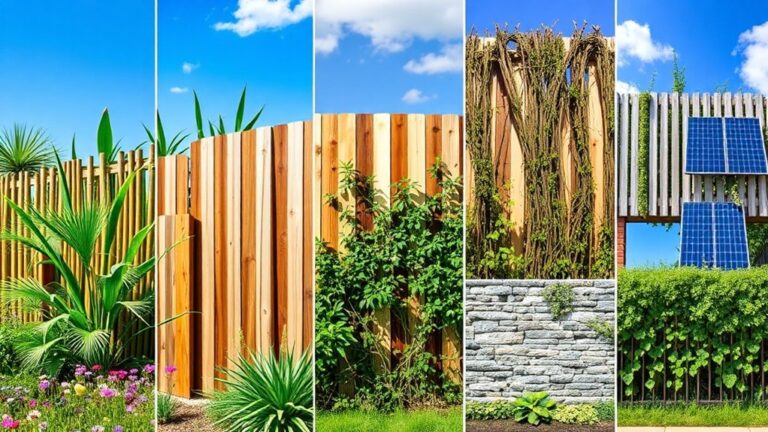
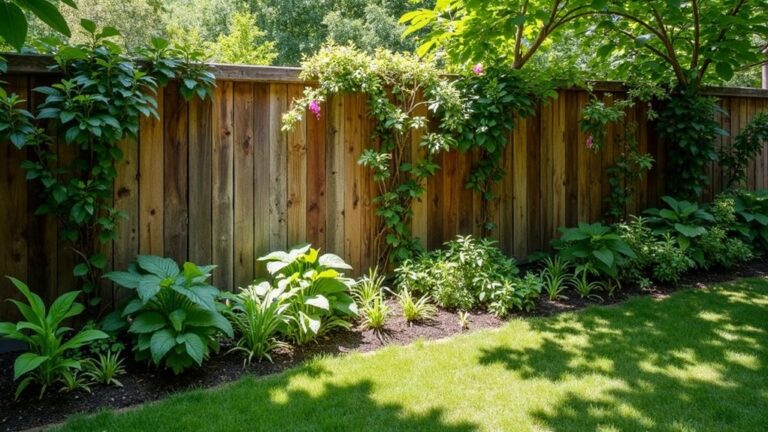
- Mark Positions: Use stakes or flags to pinpoint where each light will go, keeping them evenly spaced along your fence. Additionally, consider how fencing materials can enhance the overall look of your solar lights, as the right choice can complement your garden’s aesthetics.
Tools Required for Efficient Installation

For a smooth solar light installation, having the right tools is essential.
Start with a Philips head screwdriver, cordless drill, and tape measure for accurate measurements. You’ll also need screws, anchors, and double-sided adhesive strips for secure mounting.
For alignment, a laser level or bubble level is helpful. Don’t forget wire strippers for any wiring tasks and gloves for safety. Additionally, ensure that the posts are set 2-3 feet deep to provide a sturdy base for your lights.
With these tools, your installation will be efficient, making your eco-friendly fence both stylish and sustainable.
Happy installing!
Ensuring Energy Efficiency in Solar Lights

To ensure your solar lights work efficiently, focus on optimizing energy usage with these straightforward strategies:
- Optimal Placement: Position solar panels to face south (if you’re in the Northern Hemisphere) and avoid shading from trees or fences. This setup helps capture maximum sunlight throughout the day.
- Use High-Efficiency LEDs: Swap out traditional bulbs for LEDs. They convert more energy into light, last longer, and produce less heat, making them a sustainable choice.
- Incorporate Smart Controls: Install motion sensors and timers to turn on lights only when needed, significantly reducing energy use during downtime.
These simple steps can greatly enhance the performance of your solar lights.
Maintaining Your Solar Fence Lights

Maintaining your solar fence lights is key to keeping them efficient and reliable. Clean the solar panels every two months with a soft cloth and mild soap to ensure they charge properly.
Check the battery voltage regularly and replace the batteries every one to three years if they start to underperform. Also, inspect the terminals for corrosion and look for any signs of damage.
Don’t forget to test and clean the light sensors to ensure they detect ambient light effectively.
Adjust the panel angles for optimal sunlight exposure and remove any obstructions around the lights.
Environmental and Safety Advantages of Solar Lighting

Using solar lighting in your outdoor areas improves both your property’s look and the environment. Here are three main benefits:
- Eco-Friendly: Solar lights use renewable energy, cutting down on fossil fuel use and producing no greenhouse gases. This helps fight climate change and saves natural resources.
- Enhanced Safety: With motion sensors, solar lights turn on when they detect movement, boosting security and deterring potential crime around your home.
- Less Light Pollution: These lights focus on essential areas, reducing light pollution and protecting local wildlife and ecosystems.
Design Tips for Aesthetic Integration of Solar Lights

When adding solar lights to your fence, choose styles that match your outdoor decor.
For instance, if you have a modern garden, select sleek, minimalist fixtures.
Coordinate color temperatures—warm whites for a cozy vibe or cool whites for a fresh look—to create a unified ambiance.
Fixture Style Variety
To improve your outdoor look, picking the right solar lights is key for matching your fence design. Here are some simple tips:
- Match the Style: Choose solar lights that go well with your fence’s style. For modern homes, sleek fixtures work best; for traditional designs, classic lanterns are a great fit.
- Post Cap Lights: These lights sit on top of fence posts, adding both style and soft lighting, giving your fence a custom feel.
- String Lights: Hang string solar lights along your fence for a fun, creative touch. They can create unique patterns and set a cozy mood.
With the right choices, your solar lights can turn your fence into a standout feature while being eco-friendly.
Color Temperature Coordination
Choosing solar lights for your fence is about more than just style; color temperature is key to setting the right mood.
For wooden fences, warm white tones (2200K-3000K) create a cozy vibe. If you have a modern metal or composite fence, cooler lights (5000K-6500K) can highlight its sleek design, but be careful not to make the space feel too harsh.
To keep everything looking cohesive, match your lights with nearby plants or structures. Consider dimmable lights to adjust brightness for safety and to reduce light pollution.
Frequently Asked Questions
Can Solar Lights Operate in Cloudy or Rainy Weather?
Yes, solar lights can work well in cloudy or rainy weather. Thanks to advanced technology, they can still capture enough sunlight to function effectively, even when the sky is overcast. For example, if you have solar garden lights, they will still provide illumination on a dreary day, making them a reliable option year-round.
How Long Do Solar Lights Typically Last?
Solar lights usually last between 2 to 10 years, depending on their quality and how well you maintain them. Good care can help ensure they continue to brighten your space effectively for longer.
Do Solar Lights Require Professional Installation?
No, solar lights don’t need professional installation. You can set them up yourself with ease! Just ensure they get enough sunlight, use basic tools if necessary, and enjoy the eco-friendly benefits while brightening your space.
Are Solar Lights Safe for Pets and Wildlife?
Solar lights are safe for pets and have minimal impact on wildlife. They provide a secure outdoor environment for your furry friends while being eco-friendly for nature. For instance, the soft glow of solar lights won’t startle your pets or disrupt nocturnal animals in your yard.
What Is the Average Cost of Solar Fence Lights?
Solar fence lights typically cost between $10 and $100, depending on their design and features. One of the great advantages is that they’re easy to install—no wiring or electrician needed—making them a convenient option for brightening up your outdoor space.
Conclusion
Imagine the glow of your solar lights enhancing your eco-friendly fence. They not only beautify your outdoor space but also support sustainability. Each light signifies your commitment to the environment. To ensure they last and work efficiently, focus on regular maintenance. This way, your illuminated fence will shine bright for years to come!