

Replace temporary fencing if you see visible damage like bent or torn mesh, or dented panels that compromise strength. Look for loose posts or misalignment, which can create gaps. If panels are shifting, your security is at risk. Check for rust or weather damage that could weaken the structure. Address these issues quickly to ensure safety and compliance. Keeping your fencing in good condition is essential.
Key Takeaways
- Look for bent or torn mesh that affects the fence’s security.
- Check for rust on metal parts, which can weaken over time.
- Ensure posts are stable; loose ones need immediate fixing.
- Watch for shifting panels that create gaps and risk unauthorized access.
- Be aware of UV damage or weather effects that can compromise material integrity.
Visual Damage and Structural Integrity

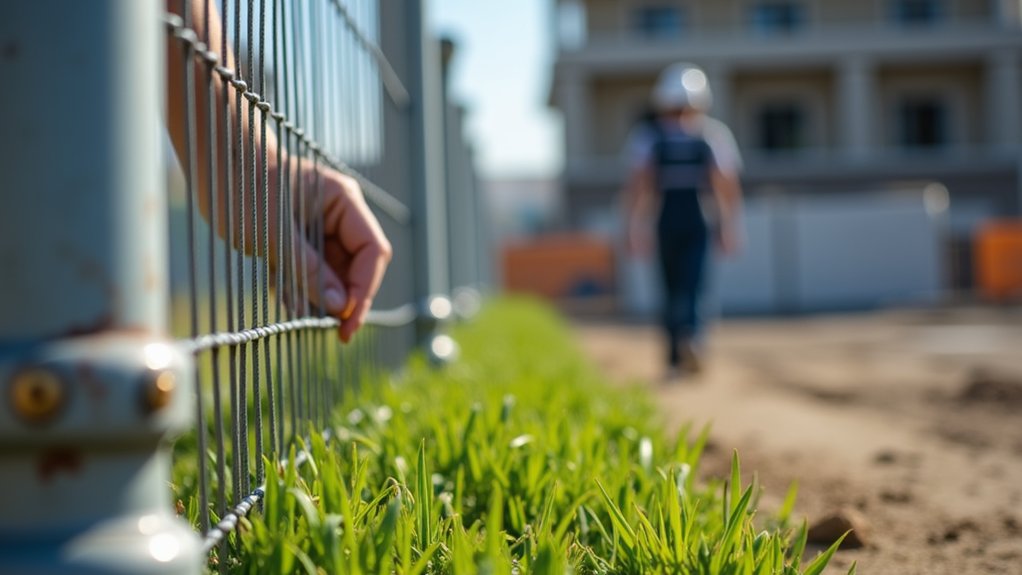
When assessing temporary fencing, it’s crucial to check for visual damage and structural integrity, as even small flaws can pose security risks. Look for issues like bent or torn mesh, which compromise the fence’s effectiveness and should be replaced immediately. Inspect panels for dents or warping; these reduce their strength. Missing mesh sections can allow unauthorized access, further weakening the fence. Additionally, rust on metal parts can lead to further damage, so replace any affected components promptly. Regular inspections are key to keeping your temporary fence safe and visually appealing. Compliance with regulations is essential for worker and public safety.
Post Stability and Alignment Issues

Post stability and alignment are crucial for the safety and functionality of temporary fencing. During inspections, check for loose or wobbly posts, as these can compromise stability. Ground settling and vibrations can cause posts to tilt or shift, making them more susceptible to lateral forces. Misaligned posts not only weaken the structure but can also create gaps or issues with fence panels. If you notice misalignment, it’s important to correct it quickly by resetting or repacking the post base. Ensuring that posts have adequate support and are vertically aligned will prevent weak points and improve the overall performance of the fence. Investing in stability solutions is essential to maintain the integrity of the temporary fencing over time.
Fence Movement and Security Lapses

Maintaining temporary fencing is crucial for site security, but when panels shift, it creates gaps that allow unauthorized access. Loose or detached panels not only make the fence unstable but can also collapse, posing risks to pedestrians and workers. Additionally, if the fence isn’t anchored properly in windy conditions, it becomes even more vulnerable. A compromised fence loses its deterrent effect, making it easier for tampering and vandalism. If you see any signs of movement, address them immediately. Stability solutions are essential for preventing such issues, as they help maintain the integrity of the fence in challenging conditions. Regular inspections and maintenance are necessary to ensure safety standards are met, further enhancing overall security. Replacing unstable fencing can help improve safety, reduce liability, and ensure strong perimeter security for your site.
Compliance and Regulatory Failure

Compliance and Regulatory Failure
How can compliance and regulatory failures affect your project timelines and costs? Ignoring local permits and zoning rules can result in fines, forced removals, and lawsuits, causing significant delays. Regular compliance inspections ensure your temporary fencing meets standards, helping you avoid expensive issues. Additionally, understanding local regulations is crucial to prevent disputes and protect your investment.
| Compliance Aspect | Consequences of Non-Compliance |
|---|---|
| Permits and Zoning Laws | Fines and legal actions |
| Material Standards | Safety hazards and violations |
| Training Requirements | Higher accident risk |
| Safety and Health Regulations | Work stoppages and penalties |
| Documentation and Verification | Project delays and extra costs |
Stay proactive about these regulatory matters to keep your project on schedule and budget.
Weather and Environmental Wear

When using temporary fencing, it’s essential to recognize how weather and environmental wear can affect its performance.
Here are four signs to look out for:
- Wind Damage: Strong winds can cause the fence to tilt or come loose.
- Rain and Flooding: Extended exposure to moisture can lead to rust and corrosion.
- UV Degradation: Constant sunlight can make materials brittle or crack.
- Temperature Extremes: Sudden temperature shifts can weaken the structure.
Stay aware of these weather influences to keep your temporary fencing effective and secure.
Regular checks and quick repairs will help address any issues before they become serious.
Frequently Asked Questions
How Often Should Temporary Fencing Be Inspected for Damage?
Inspect temporary fencing weekly for damage, looking for issues like bent panels or loose connections. After bad weather or major site activities, check more often to ensure it remains safe and secure.
What Materials Are Best for Temporary Fencing in Harsh Environments?
For temporary fencing in harsh environments, durable materials like galvanized steel and aluminum are key. These materials resist weather damage, ensuring your fencing remains strong against the elements. Choosing the right material protects your site and secures your investment effectively.
Can Temporary Fencing Be Repaired Instead of Replaced?
Yes, temporary fencing can often be repaired instead of replaced. Simple fixes, like patching holes or tightening loose sections, can extend its lifespan and save you money. Just make sure the damage isn’t too extensive or structural.
What Are the Costs Associated With Replacing Temporary Fencing?
Temporary fencing replacement costs can vary significantly. You’ll need to budget for panels, installation, and additional materials, so it’s crucial to plan ahead to avoid unexpected expenses. For example, if you’re replacing fencing for a large construction site, costs can add up quickly. A clear budget will help keep your project on track.
How Can I Properly Store Temporary Fencing to Prevent Damage?
To store temporary fencing properly, stack the panels flat to avoid bending, keep the storage area clean, and perform regular maintenance. This helps protect against moisture, UV damage, and wear from handling, ensuring your fencing lasts longer.
Conclusion
In summary, regularly check your temporary fencing for signs of wear and tear. Don’t wait for a major issue to arise; replace it when needed. Think of a weak fence like a guard with a broken shield—it won’t protect anything. Look for visible damage, check stability, and ensure it meets safety standards. By staying proactive, you safeguard both your property and the people who depend on it.

In exploring the best temporary fencing options for construction sites, discover which solutions ensure security and compliance while enhancing site Read more
Learn essential tips for maintaining temporary fencing that can extend its lifespan and prevent costly repairs—discover the best practices for Read more

A guide to selecting lightweight temporary fencing that ensures easy transport and quick setup awaits, revealing options that perfectly suit Read more


