

When choosing between pre-treated and untreated wooden fence panels, consider durability and maintenance. Pre-treated wood can resist moisture and pests and may last up to 40 years with proper care. In contrast, untreated wood typically lasts 15-30 years, relying on its natural oils. Pre-treated panels require less frequent maintenance, saving you time and money. However, untreated wood can develop a unique look as it ages. Don’t forget to think about long-term costs and environmental impact when making your decision.
Key Takeaways
Pre-treated wood is more resistant to moisture, which helps prevent rot, warping, and decay. In contrast, untreated wood, although it has some natural rot resistance, needs regular upkeep and might last less than 10 years without care.
Pressure-treated wood also repels pests like termites, while untreated wood is more vulnerable to infestations. Plus, pre-treated wood usually requires sealing less often, saving you time and money in maintenance over the years.
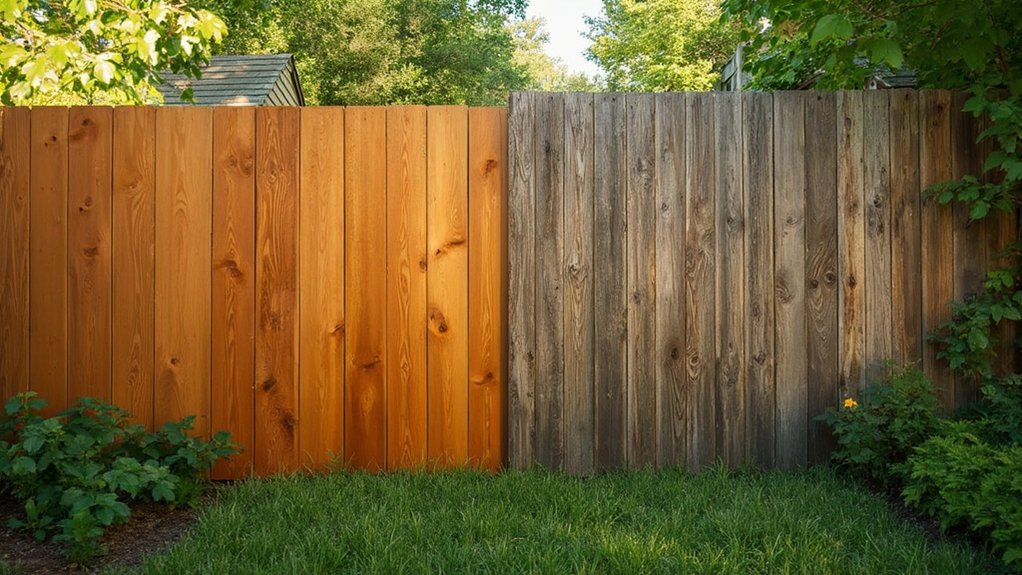
While some people prefer the rustic look of untreated wood with its natural aging and gray patina, pre-treated wood offers a more uniform appearance.
Understanding Pre-Treated Wood

When you select pre-treated wood for your projects, you’re choosing lumber that has undergone a special chemical treatment to make it more durable and resistant to the elements. The process involves sealing the wood in a cylinder, applying a vacuum, and then using high pressure to force preservatives deep into the fibers. These treatments, mostly copper-based, protect against moisture, decay, fungi, and insects. You can often spot treated wood by its greenish tint, which may change over time. Pre-treated wood is ideal for outdoor use, providing lasting strength and resilience in tough conditions. This pressure-treated wood is particularly suited for structural applications due to its enhanced durability, especially in moist climates where it resists rot effectively.
The Advantages of Pre-Treated Wood

Using pre-treated wood for your fencing projects comes with several clear benefits:
- Moisture Resistance: The chemical treatments help prevent water from soaking in, which reduces the chances of your wood swelling, warping, or decaying, especially in wet areas.
- Insect Protection: The treatment acts as a barrier against pests like termites and carpenter ants, helping your fence stay strong and look good without needing constant upkeep.
- Lower Maintenance: Pre-treated wood requires less sealing and staining, saving you both time and money while being more sustainable by reducing resource usage over its lifespan. Additionally, natural resistance to pests ensures that your fence remains durable and reliable over time.
Lifespan Comparison: Pre-Treated vs. Untreated

When comparing pre-treated and untreated wooden fence panels, their lifespans differ significantly, affecting your long-term investment.
Pre-treated wood can last 10 to 20 years, and with proper care, it may even reach up to 40 years. The preservatives in pre-treated wood help prevent decay and increase durability. This long lifespan is a key advantage for homeowners looking to minimize replacement costs over time. Additionally, using pressure treated wood for posts further enhances the structural integrity of the fence.
On the other hand, untreated panels usually last 10 to 20 years, but without regular maintenance, their lifespan can drop below 10 years, especially in harsh weather.
While untreated wood may look appealing, it’s more susceptible to rot and pests, requiring more upkeep.
Choosing pre-treated wood means less maintenance and a longer-lasting fence, making it a smart choice for your property.
Weather Resistance: Keeping Your Fence Strong

To ensure your fence stands strong against the weather, it’s crucial to understand weather resistance. The choice between treated and untreated wood can significantly affect its lifespan.
Here are three key points to consider:
- Moisture Resistance: Treated wood repels moisture, preventing issues like rot and warping. In contrast, untreated wood can quickly deteriorate when wet.
- UV Protection: Pressure-treated wood offers some UV resistance, but using protective stains can further shield it from cracking and fading.
- Soil Contact: Treated wood can handle direct contact with damp soil, while untreated wood will decay faster.
Investing in pre-treated wooden fence panels helps keep your fence strong against moisture and sunlight, maintaining its strength and appearance over time.
Pest Resistance in Wooden Fences

Pest resistance is crucial for the longevity of wooden fences. Choosing naturally pest-resistant woods like cedar or redwood can help repel insects such as termites and carpenter ants.
Cedar contains oils, while redwood has resins that protect the wood and reduce the need for chemicals. Alternatively, pressure-treated wood uses chemical preservatives to protect softer woods like pine or fir from pests, extending their lifespan.
Untreated wood, however, is more susceptible to infestations and rots faster, leading to expensive repairs. By investing in pest-resistant materials, you not only secure your fence but also lower long-term maintenance issues.
Maintenance Requirements for Longevity

Maintaining wooden fence panels requires different care for pre-treated and untreated wood.
Pre-treated wood needs sealing every 2–3 years to protect it from the elements.
In contrast, untreated wood requires more frequent inspections and maintenance due to its higher risk of damage.
Knowing these maintenance needs is crucial for prolonging your fence’s lifespan and avoiding costly repairs.
Pre-Treated Wood Maintenance
To keep your pre-treated wooden fence panels in top shape, regular maintenance is key. Here’s a simple schedule to follow:
- Clean and Brighten: After the first year, clean your panels to prevent mold.
- Annual Inspection: Look for wear and tear in high-traffic areas and spots that get a lot of sun.
- Re-treat Every 2-4 Years: Apply sealants or stains as needed to maintain protection.
Untreated Wood Requirements
Untreated wooden fence panels need regular maintenance to last. Since untreated wood can be affected by moisture and pests, follow this simple maintenance schedule:
| Task | Frequency | Notes |
|---|---|---|
| Cleaning | Annually | Use a soft brush; no abrasives. |
| Mildew Treatment | As needed | Apply bleach solution; scrub affected areas. |
| Sealant Application | Every 2-3 years | Use a sealant with UV protection; apply on dry wood. |
| Hardware Check | Annually | Replace any rusted or damaged parts. |
| Major Maintenance | Every 2-3 years | Inspect for decay and repair as needed. |
Sticking to this schedule helps ensure your fence stays in good shape.
Cost Analysis: Initial Investment vs. Long-Term Savings

When comparing pre-treated and untreated wooden fence panels, consider both initial costs and long-term savings.
Here’s a quick breakdown:
- Initial Costs: Pressure-treated pine costs $20–$27 per linear foot, while cedar is pricier at $25–$35. This affects your upfront budget.
- Maintenance: Pressure-treated wood needs sealing every 1–2 years, costing an extra $2–$5 per foot. Cedar, on the other hand, requires less maintenance, saving you money in the long run.
- Longevity: Cedar lasts 15–25 years, meaning fewer replacements, while pressure-treated wood may need to be replaced sooner, increasing your total expenses.
Environmental Impact of Wooden Fence Options

When choosing between pre-treated and untreated wooden fence panels, think about their environmental impact.
Pre-treated wood fights decay and insect issues, but it can release harmful chemicals into the soil and local ecosystems.
In contrast, untreated wood has a lower risk of contamination and can last longer with proper care and repurposing.
Chemical Treatment Concerns
Chemical treatment concerns with wooden fence panels present serious environmental issues.
Key risks include:
- Chemical Leaching: Dangerous preservatives can seep into soil and water, harming ecosystems.
- Wildlife Toxicity: These toxic substances can endanger local animals and disrupt food chains.
- Environmental Impact: The production of treated wood is energy-intensive, leading to air and soil pollution.
These factors reveal the hidden dangers of chemically treated fences.
The leaching of harmful substances not only impacts wildlife but also risks human health through contaminated water.
When choosing fencing options, consider the long-term effects of these chemicals on the environment and local wildlife.
Natural Durability Benefits
Choosing between treated and untreated wood for your fence? Consider the natural durability of species like cedar and cypress.
These woods have oils that resist rot and insects. Cedar can last 15-30 years without treatment, and cypress is ideal for humid areas.
Untreated oak and Douglas Fir can also last long but may need sealing. The beauty of untreated wood is that it develops a unique gray patina over time, enhancing its look without chemicals.
Frequently Asked Questions
Can I Paint Pre-Treated Wood Immediately After Installation?
You shouldn’t paint pre-treated wood right after installing it. It’s important to let it dry for about three to six months so moisture levels can drop. This ensures better paint adhesion and durability.
How Can I Tell if Wood Is Pre-Treated or Untreated?
To tell if wood is pre-treated or untreated, look for manufacturer stamps, color, and texture. Pre-treated wood often feels slightly oily and may have a chemical smell. In contrast, untreated wood has a natural scent and a smoother feel.
Is Pre-Treated Wood Safe for Vegetable Gardens?
Yes, pre-treated wood can be safe for vegetable gardens. Research indicates that modern treatments, like those using copper, do not significantly leach into the soil or affect plant growth. Just be cautious and steer clear of older lumber that may contain harmful chemicals.
Will Untreated Wood Warp in Dry Climates?
Yes, untreated wood can warp in dry climates. As it dries unevenly, you may see cracks and twists, which can weaken its structure and affect its appearance over time. For instance, a wooden chair left in a dry area may develop a wobbly leg or split seat.
Can I Use Untreated Wood for Ground Contact Applications?
Using untreated wood for ground contact applications is not advisable. It decays quickly when exposed to moisture and soil, resulting in frequent replacements and higher maintenance costs. For example, using untreated wood for a garden bed will likely lead to rotting within a season. It’s best to choose treated wood for durability and longevity.
Conclusion
When deciding between pre-treated and untreated wooden fence panels, pre-treated options clearly offer more benefits despite a higher initial cost. Picture your yard with a fence that withstands weather and pests, requiring less maintenance and lasting longer. Pre-treated wood is a smart investment that protects your home effectively. Why not choose a fence that can handle the elements?

Care for your residential fence with essential tips for longevity and style—discover the secrets to keeping it beautiful and durable Read more

Get ready to discover the crucial signs that indicate your residential fence needs replacing before it's too late.
Find out which fencing option offers superior longevity and durability, and discover how your choice can impact maintenance and costs Read more


