

To anchor temporary fencing on soft or uneven ground, start by checking the soil and clearing away any debris. For short-term support, use ground stakes; for more stability, try auger anchors; and for tough placements, T-bar anchors work well. If you’re on a slope, consider a stepped installation with triangle bracing for extra support. Essential tools include a sledgehammer for driving in posts and a level to keep everything straight. Always follow safety standards to ensure stability. Explore more anchoring techniques for the best results.
Key Takeaways
- Start by checking the soil type and ground conditions to choose the right anchoring method for your temporary fencing.
- For soft or uneven ground, use auger anchors or T-bar anchors for a secure hold.
- If you’re on a slope, consider a stepped installation technique for better stability.
- In high-traffic areas, combine concrete blocks with ground stakes for extra weight and support.
- Make it a habit to regularly inspect your fencing to ensure it meets safety standards and remains stable.
Assessing Ground Conditions for Fencing Installation
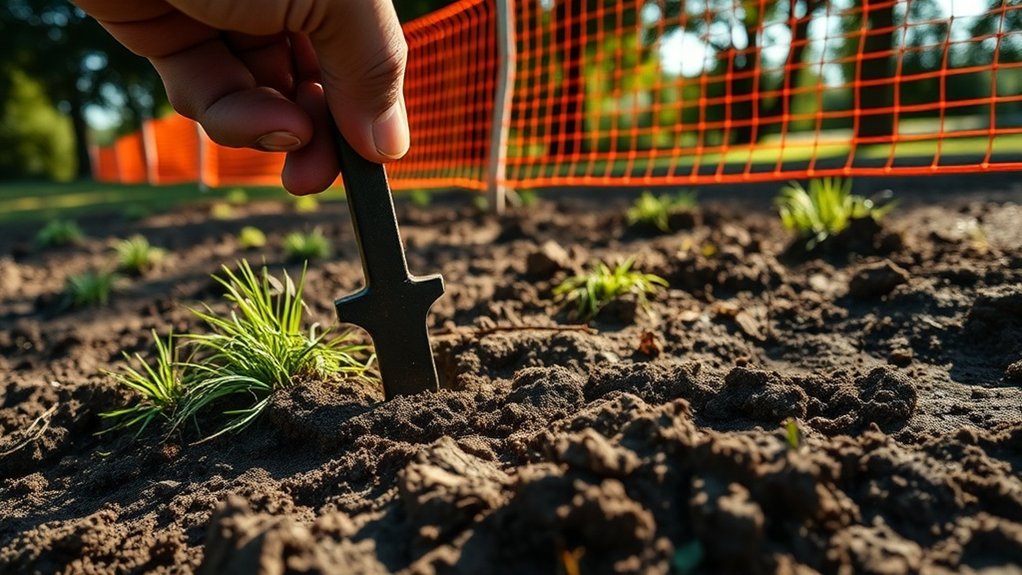
To assess ground conditions for fencing installation, start by examining the soil type. Soft soils like sand or mud can lead to instability, while rocky or hard-packed ground may require specialized tools for anchoring. Look for uneven surfaces—slopes and dips can cause the fence to shift. Clearing the area of debris and vegetation to create a stable foundation is essential, as is leveling the ground to reduce tripping hazards. Additionally, consider the installation tips for ensuring proper alignment and stability of the fence. Mark your fence line clearly and check for any underground utilities or environmental concerns. This careful evaluation will help you choose the right anchoring methods for your fencing project, ensuring that you have a level, sturdy ground for installation.
Recommended Anchoring Methods for Soft Ground
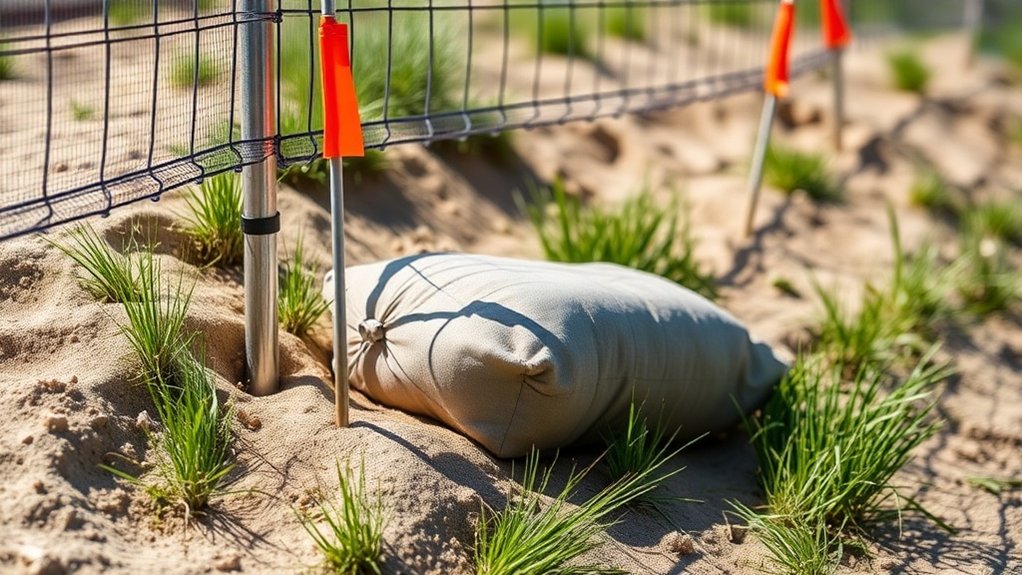
When setting up temporary fencing in soft ground, it’s crucial to select the right anchoring method to ensure stability. Here are some effective options:
| Anchoring Method | Description | Best Use Cases |
|---|---|---|
| Ground Stakes | Driven into soft soil for basic support | Short-term fences |
| Auger Anchors | Helical screws that dig into the ground | Varied soft terrains |
| T-Bar Anchors | Penetrate deeply for secure anchoring | Near curbs or uneven areas |
| Concrete Blocks | Heavy, non-invasive ballast anchors | High-traffic zones |
Additionally, using a combination of block bases and ground anchors can significantly improve stability at critical sites. Choose the method that best suits your fence type and the ground conditions for optimal results.
Anchoring Solutions for Uneven or Sloped Terrain
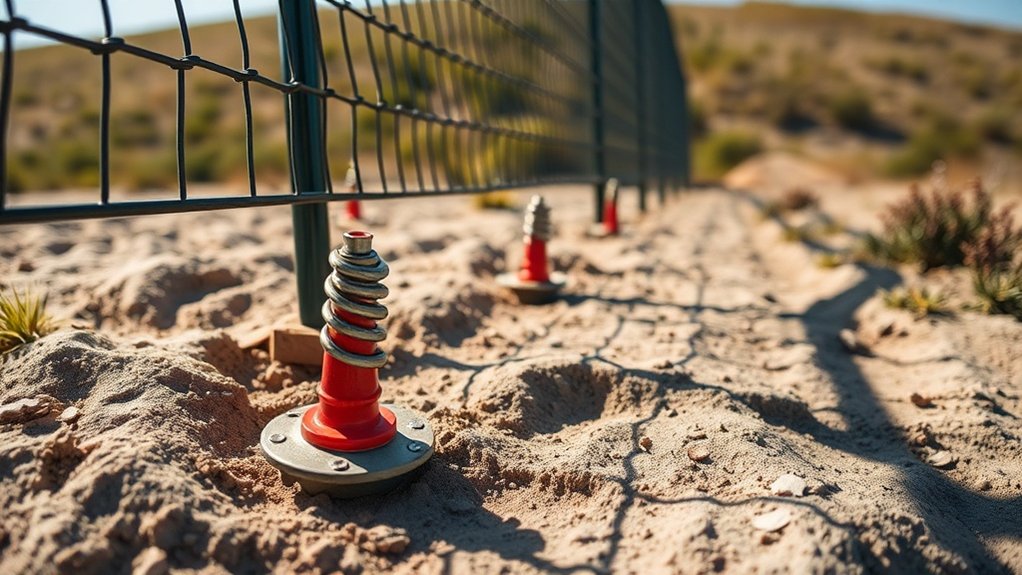
When dealing with uneven or sloped terrain, use a stepped installation for your temporary fencing to boost stability. Adding triangle bracing can help keep the panels secure against wind and movement. Always evaluate the slope and adjust your anchoring methods to ensure optimal performance. Implementing stability solutions is essential to mitigate risks associated with unstable fencing in challenging conditions.
Stepped Installation Technique
To securely anchor temporary fencing on uneven or sloped terrain, use the stepped installation technique for stability and a consistent layout. Here’s how:
- Measure and Mark: Check the slope with a level and mark the fence line with stakes and string for precise panel placement.
- Install Posts: Start at the highest point. Dig postholes at regular intervals, making sure they match the width of your panels.
- Attach Panels: Fix the pre-assembled stepped panels horizontally, adjusting them for alignment and leaving even gaps below to fit the ground shape.
This method ensures your fencing remains effective and visually appealing, even on challenging surfaces, while maintaining safety compliance throughout the installation process.
Bracing and Reinforcement Methods
Once you’ve set up your temporary fencing, it’s crucial to reinforce it, especially on uneven or sloped ground.
Use bracing techniques like triangle or V-bracing to boost stability against wind and other forces. Position fence panels in triangular shapes at regular intervals for added support.
Wind braces can also be bolted into the ground to keep panels secure during gusty conditions. For soft ground, ground anchors such as metal stakes or augers should be driven at least 12 inches deep for better stability.
Additionally, a concrete block ballast system can provide extra support, ensuring your temporary fencing stays strong in challenging conditions. Implementing bracing techniques can significantly enhance the durability of your installation against external forces.
Essential Tools and Equipment for Installation
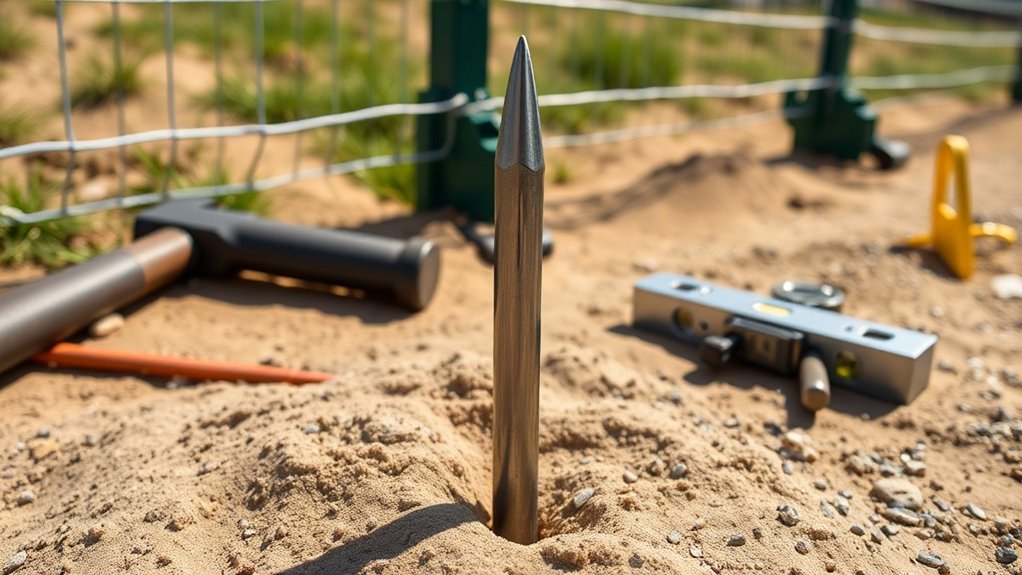
To install temporary fencing effectively, you’ll need some essential tools and equipment for a smooth process and stable results.
Here are three must-haves:
- Sledgehammer or Post Driver: Use this to drive posts into soft or uneven ground.
- Tape Measure: Essential for ensuring accurate spacing between posts and the correct fence length.
- Level: Helps you check that your fence is straight and posts are aligned vertically.
Having these tools will streamline your installation and ensure your temporary fencing is sturdy and reliable.
Techniques to Enhance Fence Stability
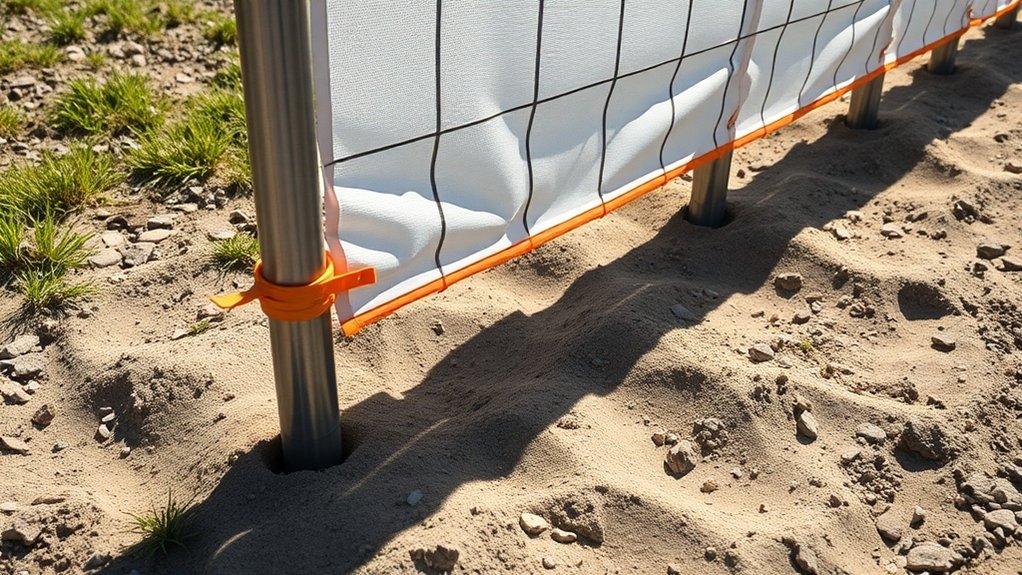
To enhance the stability of temporary fencing, it’s crucial to implement effective techniques. Here are some methods to consider:
| Technique | Description |
|---|---|
| Triangle Bracing | Uses triangular structures to strengthen fence panels. |
| Ground Anchors | T-bars and auger anchors secure the fence in soft ground. |
| Ballast Systems | Heavy concrete blocks prevent tipping, especially in windy conditions. |
| Cross Braces | Reinforce panels to reduce sway and increase stability. |
For optimal support, space bracing every 50 feet. By combining these techniques, your temporary fence will better withstand environmental challenges.
Compliance With Safety Standards and Regulations
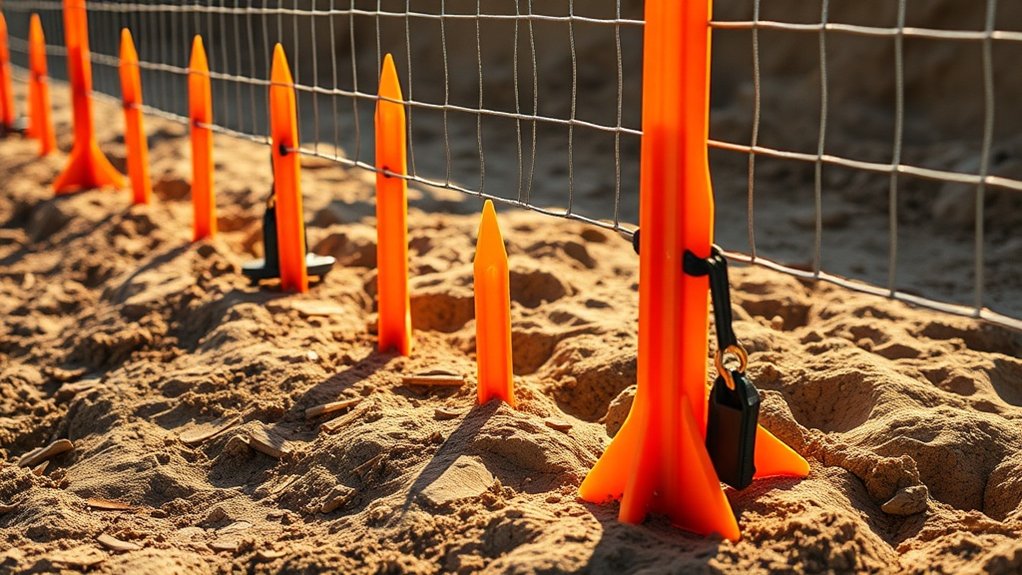
Ensuring compliance with safety standards when installing temporary fencing at construction sites is crucial.
Here are some key points to keep in mind:
- Height and Strength: Make sure your fencing is at least 6 feet tall and built to withstand weather conditions, following OSHA and ASTM guidelines.
- Visibility: Use bright panels and clear warning signs to keep workers and the public aware of potential hazards.
- Regular Checks: Inspect the fencing regularly to ensure it remains stable, well-maintained, and undamaged.
Staying compliant not only protects everyone involved but also helps you avoid fines.
Frequently Asked Questions
How Do Weather Conditions Affect Temporary Fencing Stability?
Weather conditions significantly affect the stability of temporary fencing. For instance, strong winds can easily knock over panels, while wet ground can cause the soil to weaken, leading to sinking or tilting of the fence. To prevent these issues, it’s important to regularly check the fence and use proper stabilization methods.
Can I Use Temporary Fencing on Rocky Terrain?
Yes, you can use temporary fencing on rocky terrain. To tackle the challenges of such surfaces, consider using pre-drilled holes, metal T-posts, or weighted bases. These options help ensure your fencing stays stable and anchored properly.
What Type of Temporary Fencing Is Best for Windy Areas?
For windy areas, opt for temporary fencing made from wind-resistant materials like mesh panels. Ensure the fencing is tall enough, as higher structures may need extra support to handle strong gusts effectively.
How Often Should I Check the Fence for Stability?
Check your fence for stability at least once a week, particularly during bad weather or unstable conditions. Studies show that 70% of fence failures happen due to missed problems, so regular inspections are crucial for safety and compliance.
Are There Specific Permits Required for Temporary Fencing Installation?
Yes, you need to check local regulations for temporary fencing. Often, permits are required based on height or location. For example, if you’re installing a fence for an event in a public park, you might need a permit. Always comply to avoid fines or having to remove the fence later.
Conclusion
In summary, anchoring temporary fencing on soft or uneven ground is crucial for stability and safety. Poorly anchored fences can shift significantly during strong winds—up to 30%! To improve your fence’s strength, assess the ground conditions and choose appropriate anchoring methods. Always use the right tools and follow safety regulations to ensure both the fence’s integrity and the safety of those nearby.

In exploring the best temporary fencing options for construction sites, discover which solutions ensure security and compliance while enhancing site Read more
Learn essential tips for maintaining temporary fencing that can extend its lifespan and prevent costly repairs—discover the best practices for Read more

A guide to selecting lightweight temporary fencing that ensures easy transport and quick setup awaits, revealing options that perfectly suit Read more


