

Installing a DIY vinyl fence can cut costs since you won’t pay for labor, and you can personalize the design to your liking. Vinyl is tough and requires minimal maintenance, needing just an occasional wash. However, you might face challenges with uneven ground and weather conditions during installation. Having the right tools and preparation is essential. Also, keep in mind the environmental impact of PVC materials. If you’re interested in more details about this home improvement project, there’s plenty to learn.
Key Takeaways
- Cost Savings: Installing your own vinyl fence can save you around $10 per foot on labor, making it a wallet-friendly choice.
- Skill Requirement: You’ll need basic carpentry skills and tools like a post-hole digger and drill to get the job done right.
- Time Investment: DIY projects often take longer than hiring pros, especially if you’re new to vinyl fencing.
- Site Preparation: If your yard isn’t level, you might face extra work getting the area ready for installation.
- Maintenance Knowledge: Knowing how to care for your fence—like regular cleaning and UV protection—is key to keeping it looking great and lasting long.
Cost Considerations of DIY Vinyl Fence Installation
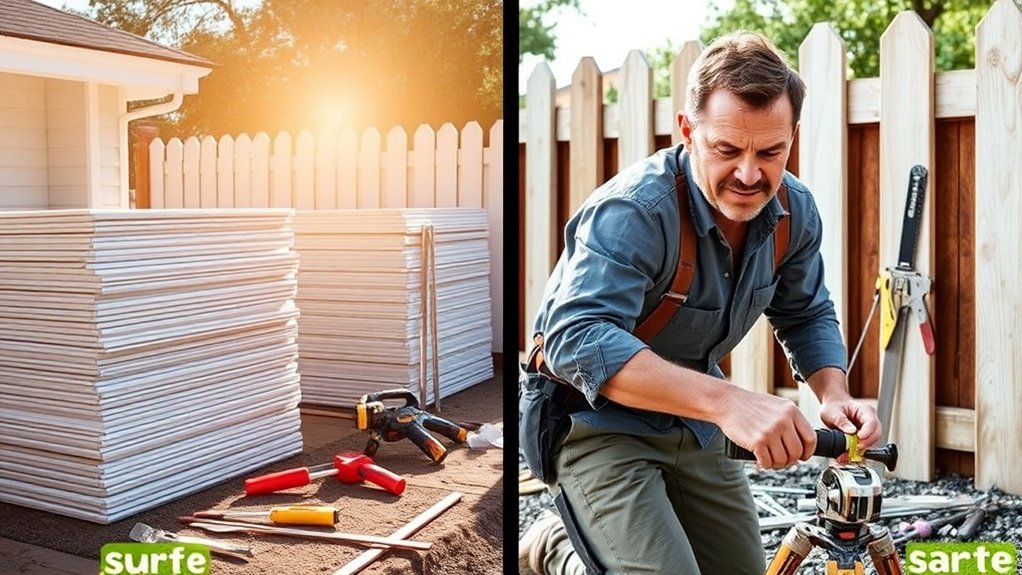
When planning a DIY vinyl fence installation, it’s important to consider the costs involved. Vinyl fencing usually costs between $10 and $30 per linear foot, depending on the type and quality. While basic panels are cheaper, specialized designs can raise the price. By doing it yourself, you can save on labor costs, which can be as high as $10 per foot if you hire someone. However, be mindful that site preparation may add extra expenses, especially if your land is uneven. Don’t forget to budget for tools and materials, as these can increase your overall costs if overlooked. Additionally, it’s essential to check local zoning regulations that may affect your installation. With careful planning, you can stay within budget and achieve great results. Additionally, keep in mind that vinyl fence repairs average $30 per foot, which can impact your long-term budgeting.
Maintenance and Durability of Vinyl Fences
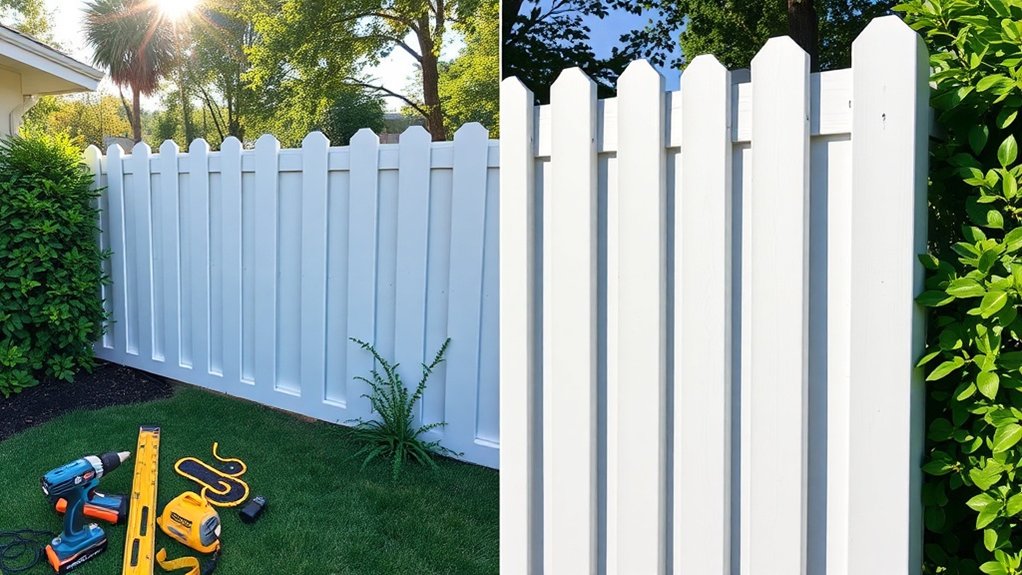
Vinyl fences are durable and low-maintenance, but they still need some care to stay looking great. To clean them, simply rinse with a garden hose and use mild detergent. For tougher stains, diluted vinegar is effective. Regularly check for cracks or loose panels and tighten any fasteners as needed. Trim nearby vegetation to prevent mold and mildew, and consider using a protective sealant. To guard against UV damage, apply a UV-protective spray each year. Additionally, their long-lasting durability ensures that with proper care, vinyl fences can maintain their appearance for many years. Also, be careful with lawn equipment to avoid physical damage. Ultimately, regular upkeep is essential to preserve the fence’s finish and extend its lifespan.
Installation Complexity and Requirements

Installing a vinyl fence can be a fulfilling project, but it does require some preparation. Here are three important things to consider:
- Tools: Have a post-hole digger, level, and drill on hand before you begin.
- Terrain: If your ground is uneven or rocky, be ready to make adjustments while digging and leveling. Weather conditions can also impact how smoothly this process goes, so keep an eye on the forecast.
- Site Prep: Clear away debris and mark any underground lines to prevent accidents.
By keeping these factors in mind, you can simplify the installation process.
Also, check local codes, ensure proper spacing, and regularly verify alignment to create a sturdy and attractive fence.
Aesthetic and Customization Options
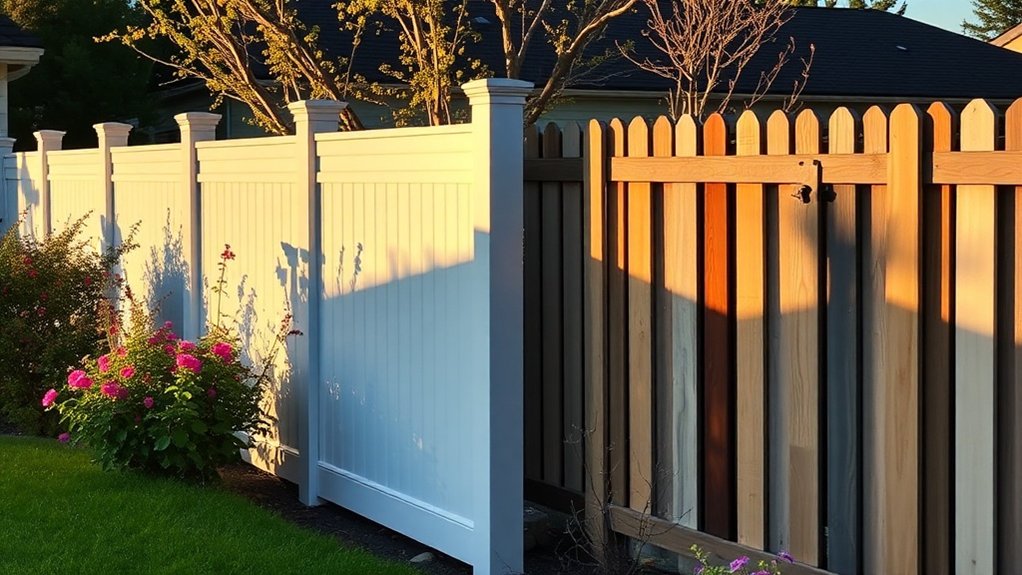
Vinyl fencing is not only durable but also offers a variety of aesthetic and customization options to boost your property’s appeal. You can choose from styles like classic picket, privacy, and ornamental designs. Popular colors include traditional white, earthy tones, and striking two-tone combinations.
Here’s a quick look at your options:
| Style/Feature | Color Options | Customization |
|---|---|---|
| Picket | White, Beige | Post caps, finials |
| Privacy | Gray, Tan | Decorative panel tops |
| Ornamental | Almond, Wood grain | Integrated lighting |
| Lattice | Custom colors | Latticework patterns |
| Two-tone | Contrasting colors | Multi-level sections |
These choices allow you to reflect your personal style while enhancing curb appeal. Additionally, choosing vinyl fencing provides low-maintenance solutions that can save you time and money in the long run.
Environmental and Health Aspects of Vinyl Fencing
When considering vinyl fencing, it’s important to think beyond its look and customization.
Here are some key environmental and health factors to keep in mind:
- Sustainability Issues: Vinyl is made from PVC, which comes from finite resources. Its production can release harmful pollutants that impact the environment.
- Health Concerns: The manufacturing process can produce toxic byproducts like dioxins and mercury, posing risks to both workers and surrounding communities.
- Recycling Difficulties: Although some vinyl can be recycled, it’s not as easily recyclable as metals.
This often leads to vinyl ending up in landfills, creating long-term waste problems.
Frequently Asked Questions
How Long Does a DIY Vinyl Fence Installation Typically Take?
Installing a DIY vinyl fence usually takes between 1 to 5 days. The time needed varies based on your yard’s size and complexity. For instance, rocky or uneven soil can slow you down, while features like gates or curves in the layout can add extra time. Keep these factors in mind when planning your project.
What Tools Are Needed for Installing a Vinyl Fence?
To install a vinyl fence, you’ll need a few essential tools: a post hole digger for digging the holes, saws for cutting the vinyl panels, measuring tools for accuracy, a drill for making holes, self-drilling screws for securing the panels, concrete for stabilizing the posts, and a level to ensure everything is straight. With these tools, you can create a sturdy and professional-looking fence.
Are There Specific Building Codes for Vinyl Fences?
Yes, there are specific building codes for vinyl fences, such as height limits and structural requirements. For taller fences, you may need a permit. Check your local regulations to ensure compliance and avoid issues.
Can Vinyl Fences Be Installed on Sloped Land?
Yes, vinyl fences can be installed on sloped land. It requires careful planning and leveling, but with the right approach, you can create an attractive fence that fits well with your landscape. For instance, using step techniques or racking can help accommodate the slope effectively, ensuring a smooth and appealing installation.
What Are the Common Mistakes in DIY Vinyl Fence Installation?
When installing a vinyl fence yourself, pay close attention to alignment and material choices. Make sure to measure accurately to prevent gaps or instability. Using the right materials not only boosts durability but also improves the overall look of your fence. For instance, choosing high-quality posts can prevent sagging over time.
Conclusion
Ultimately, the decision to tackle DIY vinyl fence installation or hire a professional comes down to your budget and personal satisfaction. Picture your yard as a serene retreat with a beautiful fence. Weigh the costs of materials and your time against the pride of completing the project yourself. Vinyl fences are known for their long-lasting appeal, so if you have the right tools and know-how, you can build a fence that not only enhances your home’s aesthetic but also withstands the weather.

You won't believe the stunning residential fencing styles that can elevate your home's curb appeal—discover the top 10 options waiting Read more

With essential tips and expert insights, discover how to master fence installation and ensure your project stands the test of Read more

Prevent costly errors in your fence installation by learning the top 10 mistakes to avoid; your project depends on it.


