

To reinforce your chain link fence for maximum durability, start by securing the bottom with aluminum or galvanized steel rails and packing soil tightly. If you want to increase the height, consider using post extenders and adding extra panels. Strengthen the posts by using metal brackets and diagonal bracing, and make sure to set any new posts in concrete for added stability. Opt for heavier gauge wire and smaller mesh openings for extra strength. Lastly, protect your fence from environmental damage to ensure its longevity.
Key Takeaways
- Choose heavier gauge wire for your chain link mesh to better resist cutting and bending.
- Install galvanized or powder-coated steel posts in concrete for stronger, more stable support.
- Use support brackets and tension bands to keep the mesh taut and avoid bending.
- Add diagonal bracing and metal brackets to the posts to withstand wind and lateral pressures.
- Regularly check connections and apply exterior-grade sealant to prevent rust and extend the life of your fence.
Securing the Bottom of the Fence
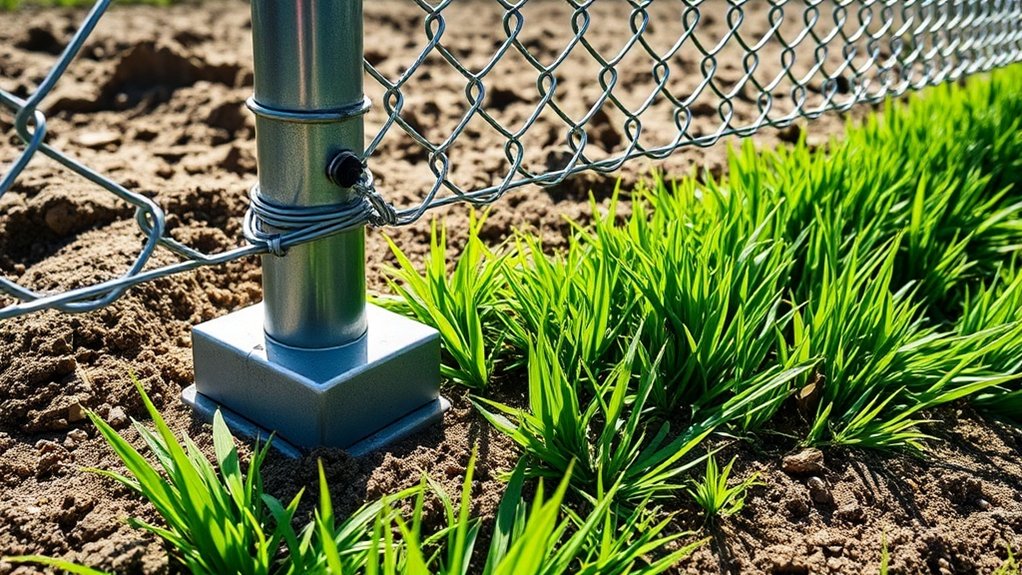
Securing the bottom of your chain link fence is crucial to keep intruders out and enhance durability.
Start by installing bottom rails. Cut aluminum or galvanized steel rails to the right length and place them in shallow trenches, making sure they’re level. Use brackets or ties to secure them, then backfill the trench with compacted soil to eliminate any gaps. Additionally, consider using tension wire for reinforcement at the bottom of the fence to enhance overall stability. This is important because it helps ensure that the fence remains effective against wild animal intrusions, which can pose a threat to your pets.
Next, add tension wire at the bottom of the fence. Attach it to each post with wire ties and pull it tight to prevent sagging.
This combination of bottom rails and tension wire boosts stability, discourages digging, and strengthens your fence’s security.
Increasing Fence Height and Stability
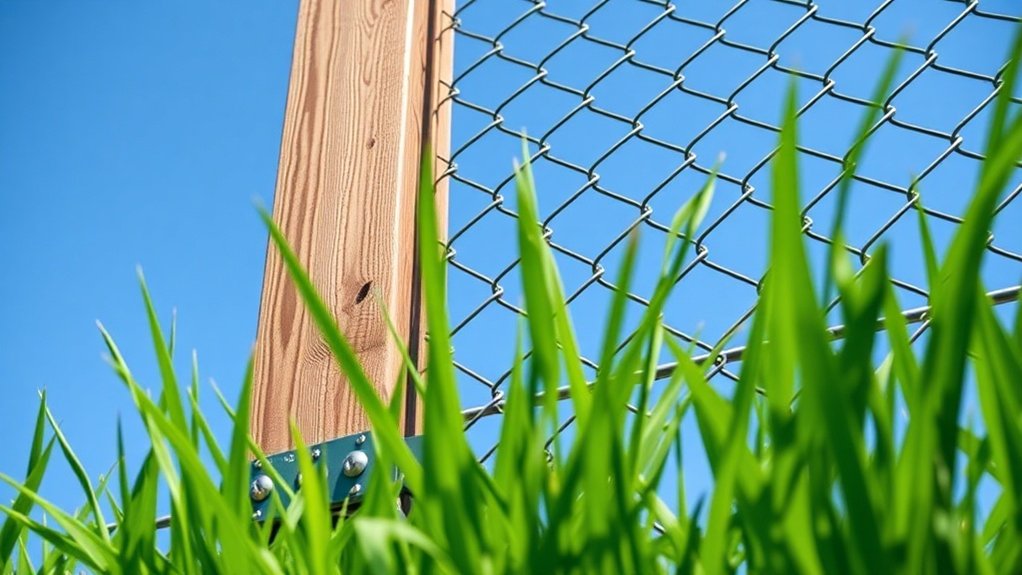
To boost your chain link fence’s height and stability, try adding galvanized steel or aluminum post extenders to your existing posts. You can also enhance security by attaching extra materials like mesh cloth or welded wire on top. These simple methods won’t only raise the fence but also ensure it stays strong against wind and weather. Additionally, adding extra fence panels can further increase the overall height and reinforce the structure. Implementing these strategies will help prevent rust damage and prolong the lifespan of your fence.
Post Extension Techniques
Post extension techniques can boost both the height and stability of your chain link fence, enhancing security and functionality.
To start, choose materials like galvanized steel for durability or PVC piping for a budget-friendly option. Increasing fence height can significantly improve privacy and deter unwanted access. Additionally, ensuring that the quality of materials used in the extension process is high can further enhance the longevity of the fence.
For installation, slide the flared end of the extension over the existing post and secure it with heavy-gauge self-tapping screws or clamps. Apply an exterior-grade sealant at the base to prevent rust and water damage. If using PVC or adding new line posts, temporarily remove the chain link mesh for easier attachment.
Make sure the extended posts are securely anchored in the ground. You might also consider adding privacy slats or barbed wire for extra height and security. Regularly check the connections to ensure they remain sturdy.
Additional Fencing Materials
To enhance the height and stability of your chain link fence, choosing the right materials is essential. Galvanized steel wire is great for durability, while aluminum wire is lightweight and corrosion-resistant.
For a better look, consider adding vinyl or paint coatings for extra protection against the elements. Using thicker wire gauges, like 9-gauge, and smaller mesh sizes helps improve strength and security.
Installing tension wires and bottom rails can prevent sagging at the base, while concrete footings, stakes, or U-pins secure the fence against ground forces.
These steps not only boost stability but also keep your fence looking good.
Reinforcing Fence Posts and Attachments
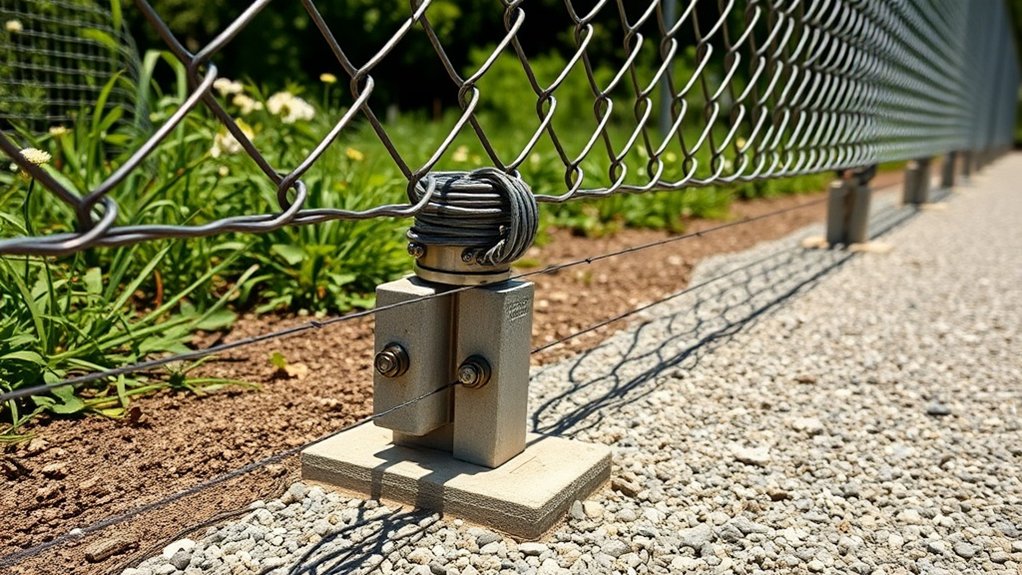
Reinforcing your fence posts is crucial for a sturdy chain link fence.
Here are some straightforward techniques to boost durability:
- Metal Brackets: Use these to strengthen existing posts without having to take them out.
- Diagonal Bracing: Add braces to create a triangular shape that counters wind and lateral forces.
- Drive-in Stakes: These can be quickly installed in about 20 minutes for easy, no-dig reinforcement.
- Concrete Embedding: For new installations, setting posts in concrete ensures maximum stability.
- Ground-Line Protection: Wraps can prevent rot and extend the life of your posts.
Eliminating Gaps and Ensuring Complete Coverage
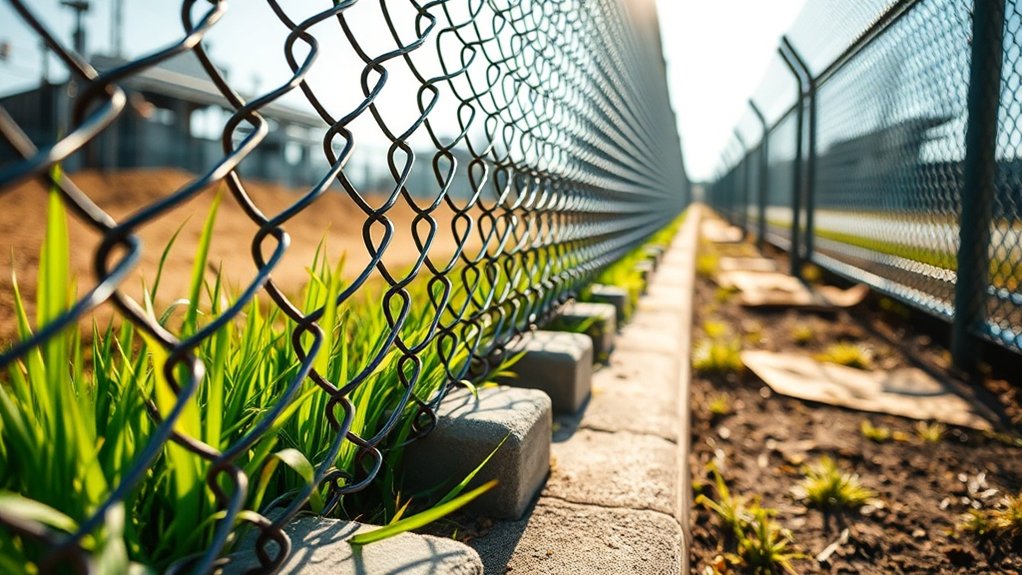
To eliminate gaps at the bottom of your chain link fence, start by reinforcing your posts.
Next, use a tension wire or galvanized steel bottom rails to seal openings.
For quick fixes, pour quick-drying concrete or apply foam fillers in eroded spots.
You can also stack old tires or cinder blocks to create a barrier that keeps animals from digging.
Regularly check your fence for new gaps, and bury barriers partially underground for added strength.
This will ensure your fence remains a reliable barrier for years.
Enhancing Chain Link Mesh Strength and Security
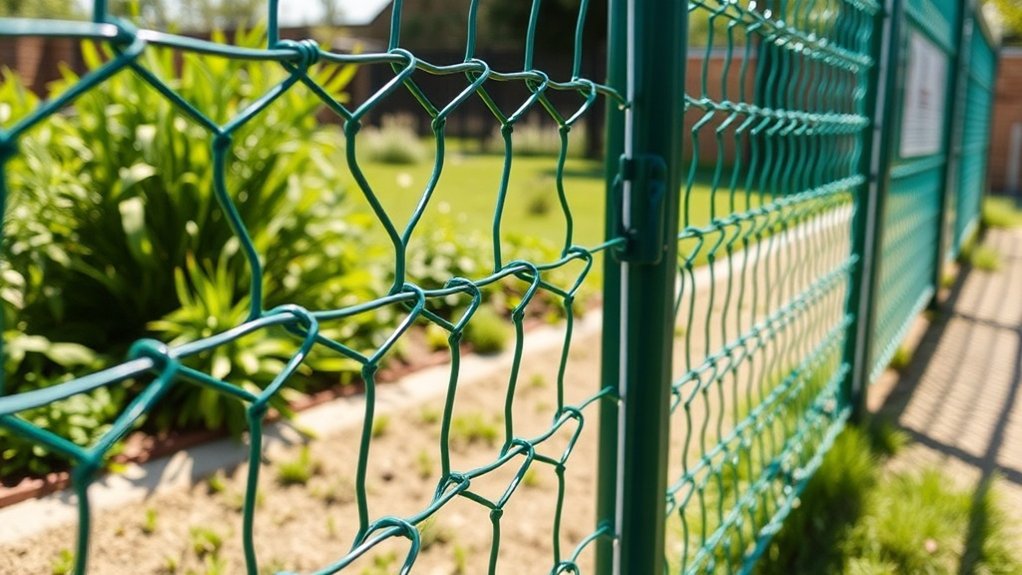
To strengthen your chain link fence, use better materials and reinforcement methods. Here are key points to enhance durability and security:
- Choose heavier gauge wire to resist cutting and bending.
- Select smaller mesh openings to limit intruder access and increase strength.
- Install sturdy galvanized or powder-coated steel posts set in concrete for stability.
- Use support brackets and tension bands to prevent bending or breaking.
- Apply proper selvage techniques at the edges to reinforce weak spots and maintain tension.
These improvements can help keep your property secure.
Protecting Fence From Environmental and Physical Damage
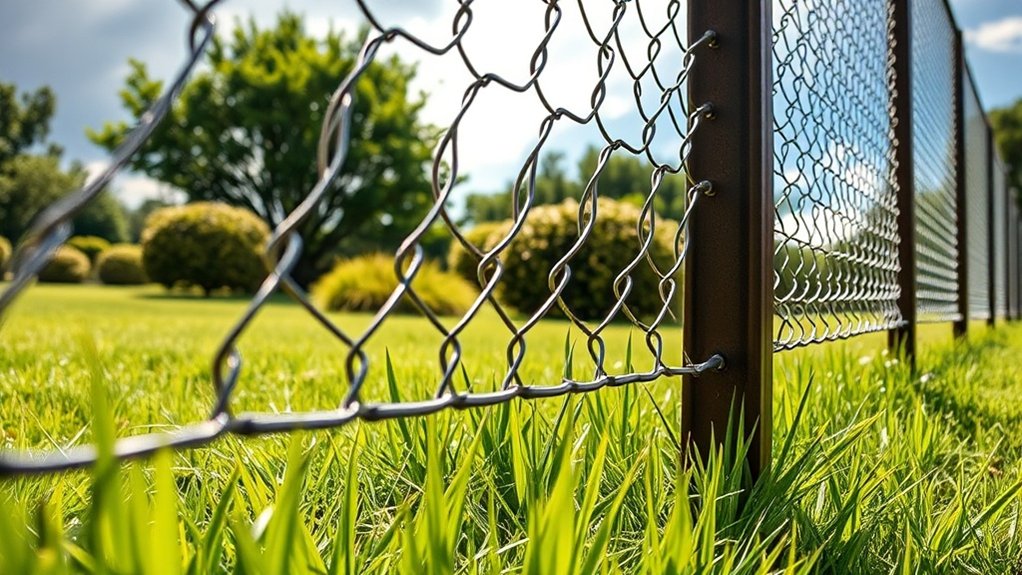
A chain link fence lasts longer when it’s built from strong materials and protected from environmental and physical damage.
First, ensure proper drainage by grading the soil so water flows away from the fence posts. Adding gravel at the base can further improve drainage, reducing moisture that causes rust and structural issues.
Next, keep vegetation in check. Maintain a 12-inch gap between your fence and surrounding trees or shrubs. Overgrown plants can trap moisture and even damage your fence.
Regularly trimming back vegetation helps promote air circulation and prevents roots from invading.
Frequently Asked Questions
How Often Should I Inspect My Chain Link Fence?
Inspect your chain link fence at least once a year. If you have a vinyl-coated fence, check it twice a year. Adjust inspections based on your location, weather conditions, and how much wear the fence gets. This helps ensure it lasts longer and stays in good shape.
What Tools Do I Need for Fence Reinforcement?
To reinforce your fence, think of it as protecting a valuable asset. You’ll need essential tools like post drivers for setting posts securely, tensioning tools for tightening wires, and hog ring pliers for attaching fencing material. These tools will help ensure your fence remains sturdy and durable against weather and wear.
Can I Paint My Chain Link Fence?
Yes, you can paint your chain link fence. Use durable options like alkyd-based enamel for the best results. Proper prep is key—clean the fence well to ensure a smooth finish. This not only improves the look but also protects against rust and weather damage.
How Do I Choose the Right Gauge for My Chain Link Mesh?
When selecting a gauge for your chain link mesh, opt for thicker wires for added strength and durability. A lower gauge number means a sturdier mesh, which translates to better security and a longer lifespan for your fence. For instance, if you want a fence that can withstand harsh weather or deter intruders, consider using a 9-gauge wire instead of a 11-gauge.
What’S the Best Way to Remove Rust From My Fence?
To remove rust from your fence, begin with mechanical methods like wire brushing or using sandpaper. Afterward, apply a chemical rust remover. Make sure your fence is clean and dry for the best results.
Conclusion
To ensure your chain link fence lasts, follow these simple steps. Secure the bottom to prevent animals from digging underneath, increase the height for added security, and strengthen the posts to withstand wind and impacts. Fill in any gaps to keep pests out and reinforce the mesh for better durability. Think of it like building a strong wall around your home. By taking these measures, your fence will be resilient and reliable for years to come.

How to install a chain link fence in Broward County? It is advisable to plan ahead first before placing a Read more

How to choose the right aluminum fencing for your home in Broward County? Aluminum fences are a popular choice of Read more

A pergola plan can pave your way to build a wood pergola in no time at all while saving you Read more


