

When picking the right height for your metal fence, check local regulations first—typically, front yard fences can be 3-4 feet tall, while backyards can reach 6-8 feet. Think about your needs: a taller fence offers more privacy, while a shorter one improves visibility for safety. Make sure the height you choose matches your home’s style and surroundings. It’s also a good idea to talk to your neighbors to avoid any misunderstandings. This straightforward approach will help you choose a fence that works best for your space.
Key Takeaways
- Check local regulations for fence height limits, usually 3-4 feet for front yards and 6-8 feet for backyards.
- Ensure lower fences in front yards maintain clear sight lines for pedestrians and drivers for safety.
- Choose materials and styles that match your home’s look while providing privacy and security.
- Talk to your neighbors about your fence height to keep good relations and avoid disputes.
- Hire a surveyor to confirm property boundaries and comply with zoning laws, which can save you from costly mistakes later on.
Understanding Local Fence Height Regulations
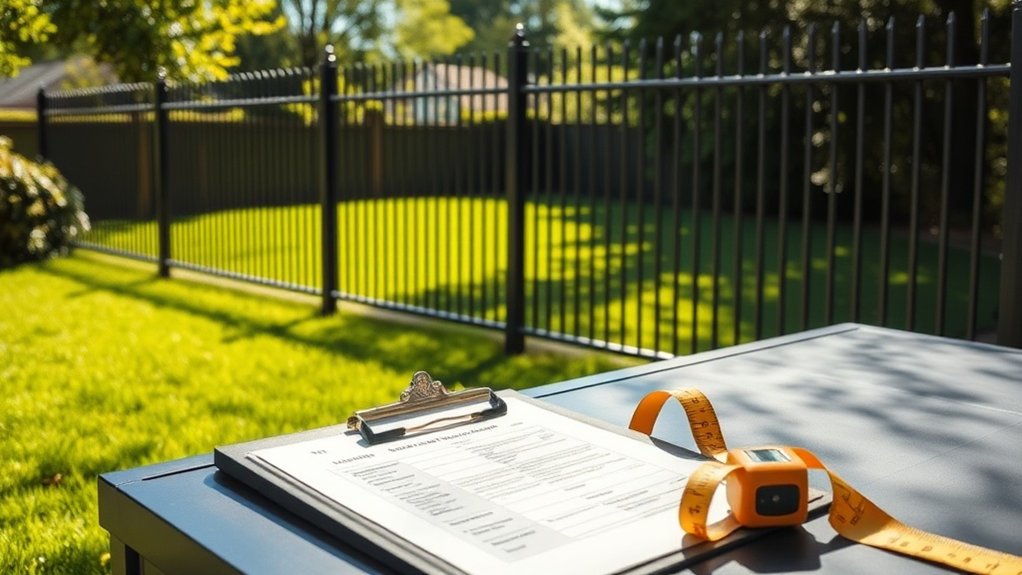
Before installing a metal fence, it’s crucial to know your local height regulations, as they can differ widely.
Generally, front yard fences are capped at 3 to 4 feet, while rear yard fences can typically go up to 6 feet without needing a permit. For commercial properties, the height limit may extend to 8 feet. Local zoning ordinances may impose additional restrictions that can affect your project.
Be mindful of setbacks and property line rules, as these can affect your design. Ignoring these regulations can result in fines or the need to remove your fence, so it’s important to familiarize yourself with local codes before starting your project. Compliance with fence laws ensures that your installation adheres to the necessary guidelines and protects your investment.
Factors Influencing Fence Height Decisions
When choosing the height for your metal fence, consider local regulations that set minimum and maximum limits. Safety and visibility are crucial; a fence that’s too tall can block views, while one that’s too short may not provide adequate security. Finding the right balance ensures your fence meets its purpose without breaking any laws or creating safety issues. Additionally, the right height can significantly impact the overall aesthetic and functionality of your property. It’s important to remember that maximum fence height is generally 6 feet statewide in Florida, which can guide your decision-making process.
Local Regulations Compliance
When building a metal fence, understanding local regulations is crucial. Different municipalities have their own height restrictions, which can be stricter than state guidelines.
For example, in Florida, front yard fences can be up to 4 feet tall, while backyards can range from 6 to 8 feet. However, cities like Miami-Dade may enforce even tighter rules. Additionally, fence height regulations can vary significantly across counties, so it’s important to familiarize yourself with the specific rules in your area.
Given that compliance with local zoning ordinances is essential, if your fence exceeds 6 feet or includes masonry elements, you’ll need to obtain zoning board approvals and permits. Always check local codes before starting construction to avoid fines or having to take down your fence.
This ensures your project meets all necessary regulations.
Safety and Visibility Factors
When deciding on the height of your metal fence, safety and visibility are key factors. A fence height of 6 to 8 feet usually deters unauthorized access while still looking good.
For industrial areas, taller fences may be necessary. Keep in mind that higher fences can create blind spots, so consider designs like aluminum pickets with wider spacing to maintain visibility.
Adding anti-climb features, like spikes, can boost security without overly increasing height. The goal is to strike a balance between safety, visibility, and aesthetics, ensuring your property is well protected while still appealing.
Safety and Visibility Considerations for Fences
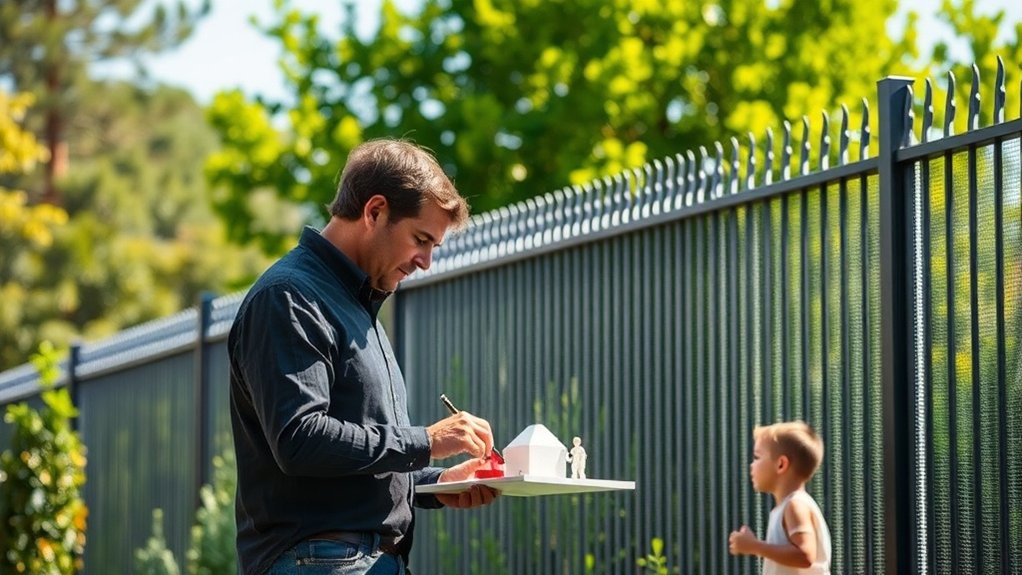
When choosing the height for your metal fence, consider safety and visibility to protect your property and community. Here are some key points:
- Front Yard: Aim for 3-4 feet tall to ensure visibility for pedestrians and drivers.
- Backyard: A height of 6-8 feet offers privacy while keeping sight lines clear.
- Side Yard: Heights can go up to 6 feet.
- Permits: Fences over 7 feet often need permits and safety reviews.
- Open-Style Fences: These improve visibility near parks, enhancing community safety.
Importance of Property Boundaries and Surveys
Understanding property boundaries and surveys is crucial to avoid legal issues and financial losses. Accurate surveys provide clear evidence of your property limits, preventing disputes that can complicate real estate transactions.
For example, knowing where your land ends ensures you comply with zoning laws when installing a fence. Without a precise survey, you might face costly encroachments or legal battles.
Additionally, a comprehensive survey uncovers easements and restrictions that could affect how you use your property. By investing in a professional survey from the start, you secure your property lines, enhance its value, and reduce future risks tied to unclear boundaries.
Common Fence Height Limits in Different Areas
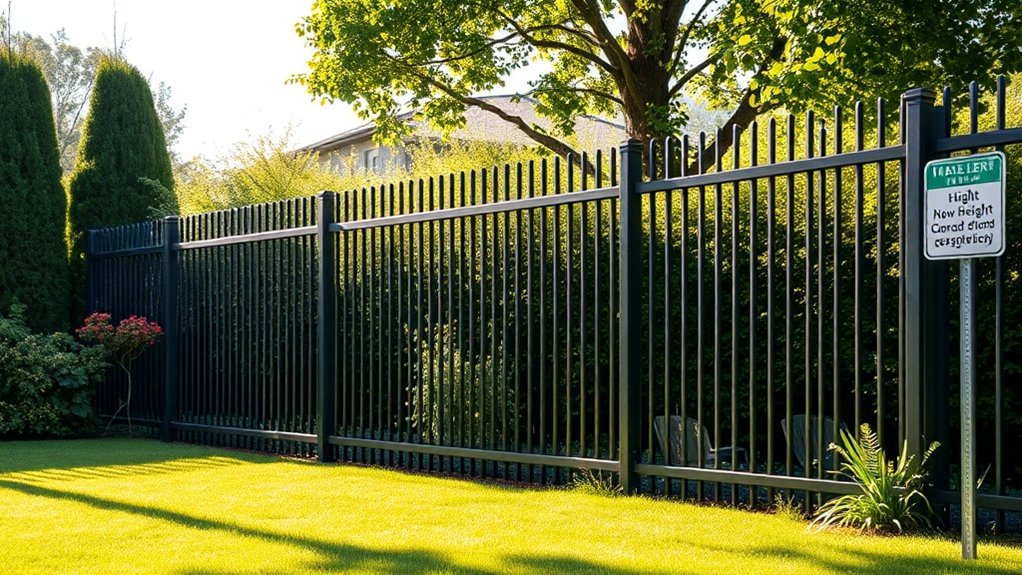
When planning your metal fence, it’s crucial to know the height regulations in your area.
Local rules can vary significantly, affecting what’s allowed based on materials or yard types. For example, some neighborhoods may permit taller fences in backyards but restrict heights in front yards.
Understanding these regulations can help you avoid costly errors and ensure your fence meets municipal codes and neighborhood standards.
Regional Height Regulations
Navigating regional height regulations for fences is crucial for your project. Here are some key points to consider:
- In California, residential fences typically can’t exceed 6 feet.
- Front yard fences are often limited to 42 inches in many areas.
- Multifamily homes usually have stricter limits near streets, often capped at 42 inches.
- Corner lots may have even lower limits for visibility, sometimes down to 30 inches.
- Always check with local authorities, as regulations can vary significantly.
Understanding these guidelines will help you design a fence that meets local requirements and enhances your property.
Local Variations and Exceptions
When planning your fence installation, it’s essential to check local height limits, as they can significantly influence your design.
Many towns restrict front yard fences to 3 to 4 feet for visibility, but rear and side yard fences can often go up to 6 to 8 feet.
Don’t forget that agricultural fencing may have different height allowances due to safety needs.
While some areas have no regulations, others require permits for fences over 6 feet.
Always verify local codes to ensure compliance and avoid fines or changes after installation.
Construction and Material Guidelines for Metal Fences
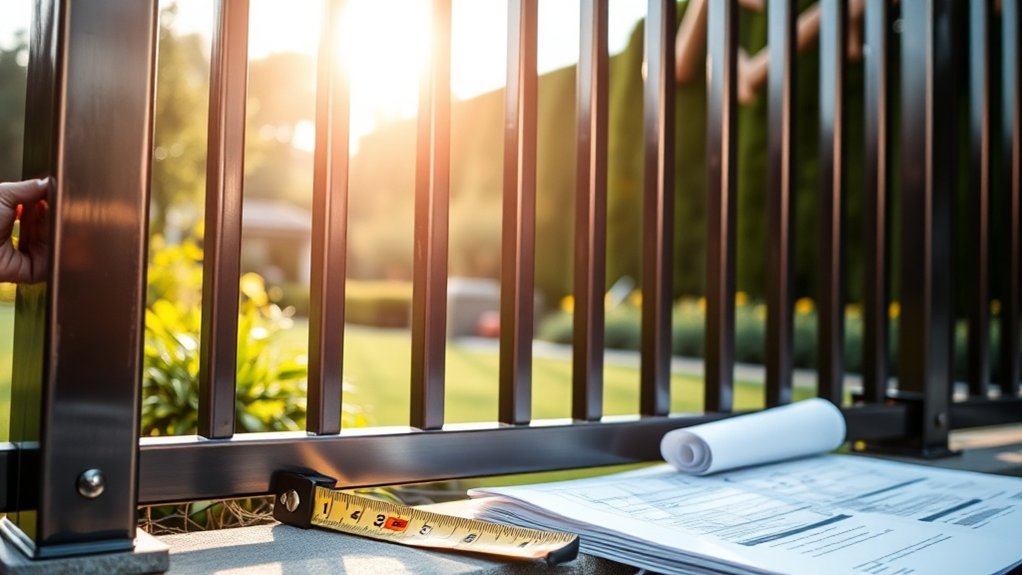
Choosing the right materials and construction guidelines for your metal fence is crucial for ensuring it lasts. Here are some straightforward tips:
- Use galvanized steel posts, preferably 1 3/8” in diameter for added strength.
- Make sure terminal posts rise 3 feet above the fence height for better stability.
- Space line posts no more than 10 feet apart and set them at least 2 feet deeper than the height of the fence fabric.
- Pour concrete footings with a minimum strength of 20 MPa, and let them cure for at least 72 hours.
- Ensure all posts are plumb and straight, especially on uneven ground, to keep your fence sturdy.
Legal and Zoning Compliance for Fence Installation
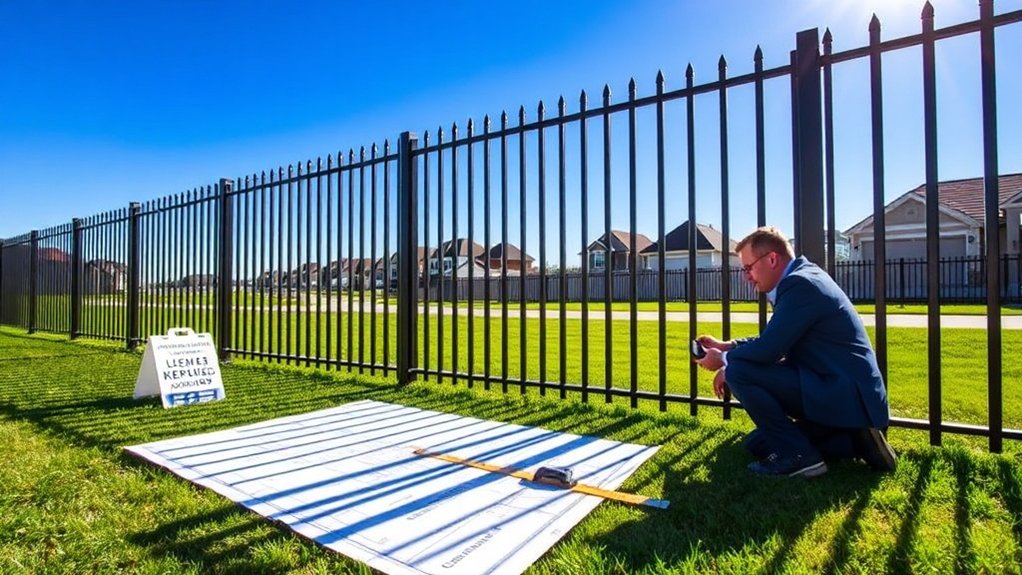
Installing a sturdy metal fence involves more than just materials and construction; it requires understanding local laws and zoning rules.
Before you start, check your area’s height limits—most residential fences can be 4 to 6 feet tall, especially in front yards. Ensure your fence stays within your property lines; hiring a surveyor can help prevent costly mistakes.
Pay attention to setback rules, particularly on corner lots, where visibility matters. Many places require permits for fences over certain heights or in specific locations, so make sure to get any necessary approvals first.
Following these regulations helps you avoid fines and ensures a smoother installation process.
Selecting the Right Height for Aesthetic Appeal
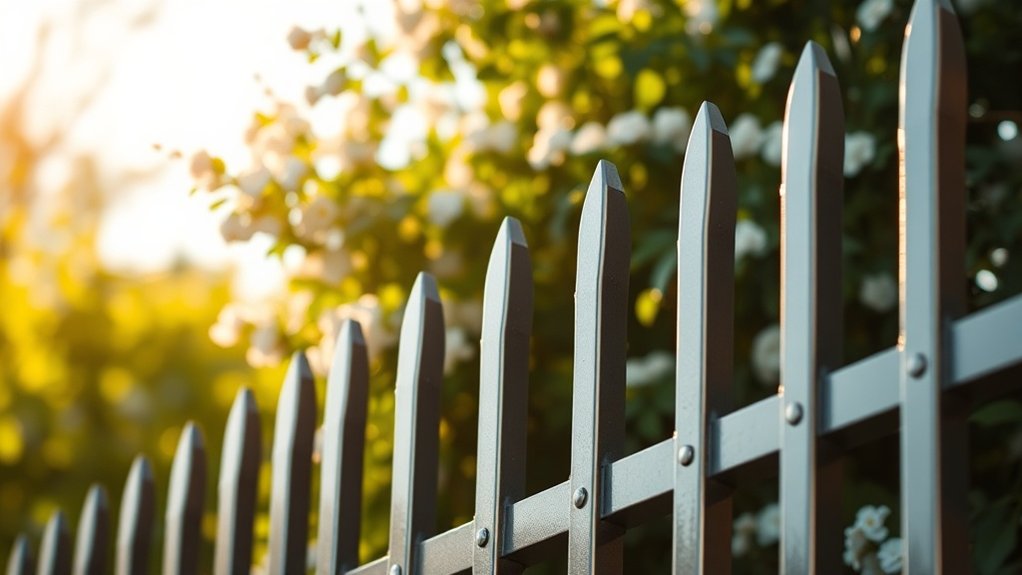
When choosing the height for your metal fence, consider its impact on your property’s aesthetic. The right height can significantly boost your curb appeal.
Here are some key factors to consider:
- Height and style: A low fence works well with cottage-style homes, while taller fences pair nicely with modern designs.
- Material choice: Options like wrought iron or aluminum can enhance your fence’s appearance.
- Add greenery: Climbing plants can soften taller fences and add a touch of charm.
- Visual balance: Ensure your fence complements, rather than overshadows, your landscaping.
- Openness vs. privacy: Lower fences create a welcoming feel, while taller ones offer more privacy in backyards.
Tips for Working With Neighbors on Fence Height Choices

To maintain a good relationship with your neighbors while deciding on the height of your metal fence, start by communicating openly.
Discuss your preferences and check local regulations before moving forward. This can help avoid conflicts and legal issues.
If your fence is near the property line, ask for their input to build goodwill. Be open to compromises, like adjusting the fence height on either side to meet both of your needs.
It’s smart to document any agreements to prevent misunderstandings later.
If you want a taller fence for privacy or security, make sure to coordinate with your neighbors and verify if you need any permits.
A collaborative approach benefits everyone involved.
Frequently Asked Questions
Can I Install a Fence Without a Professional Survey?
You can put up a fence without getting a professional survey, but you might accidentally cross into your neighbor’s property. This could lead to disputes, fines, or even having to take the fence down. It’s best to check local regulations before you start your fence installation to avoid any issues.
How Do I Maintain My Metal Fence’s Height Over Time?
Is your metal fence leaning or uneven? Regular inspections are key to keeping it stable. Look for loose posts or signs of rust. Fixing these issues quickly will help maintain your fence’s height and strength over time.
What Types of Metal Are Best for Tall Fences?
For tall fences, steel is strong and versatile, making it a great choice for durability. Aluminum, on the other hand, is lightweight and resistant to corrosion, which is ideal for low maintenance. Your decision should consider factors like appearance, upkeep, and the local environment. For example, if you live in a coastal area, aluminum might be better due to its resistance to rust.
Are There Height Restrictions for Decorative Fence Elements?
Curious about height limits for decorative fence elements? Most local regulations cap their height at six feet to keep neighborhoods looking good and maintain visibility. Always check your local codes before you start your project!
Can I Paint My Metal Fence to Alter Its Appearance?
Yes, you can paint your metal fence to change its look. Choose colors that complement your garden or yard. To ensure the paint lasts, prep the surface well and use high-quality, rust-resistant paint. This will keep your fence looking great for years.
Conclusion
When selecting the height for your metal fence, remember that “good fences make good neighbors.” Check local regulations and consider safety, aesthetics, and property lines. For example, if you have pets, a taller fence may be necessary. Communicating with your neighbors about height choices fosters goodwill. With thoughtful planning, your fence can benefit both your property and the community.

Find out how to choose the ideal fence for your commercial property, balancing security, aesthetics, and durability—discover the key factors Read more

How do aluminum, steel, wrought iron, and more elevate your property's aesthetic and security? Discover the best metal fencing options Read more

Overwhelmed by fencing choices? Discover the key differences between aluminum, steel, and wrought iron to find the perfect fit for Read more


