

Using reclaimed or salvaged wood for rustic fence projects adds unique charm to your yard and promotes sustainability. Options like barn wood and cedar offer both beauty and durability while minimizing waste. Properly preparing the wood and using strong construction methods will ensure your fence lasts. Additionally, the environmental benefits and potential cost savings make this choice appealing. Discover creative ideas and maintenance tips to elevate your fencing project.
Key Takeaways
- Reclaimed wood, like barn wood and cedar, provides a unique look and durability for rustic fences.
- Inspect and clean the wood properly to ensure it’s safe for use.
- Using reclaimed wood can save money and help the environment by reducing the need for new timber.
- Regular cleaning and protective coatings can keep your reclaimed wood fence looking good and lasting longer.
- The weathered appearance of reclaimed wood brings a natural feel to outdoor spaces, enhancing their design.
Types of Reclaimed Wood for Fencing

When selecting reclaimed wood for your fencing project, you have several great options that enhance both aesthetics and sustainability. Barn wood is a favorite, known for its rustic charm and weathered look that adds character to any outdoor space. Additionally, using cedar wood as a reclaimed option can provide natural beauty and durability, making it an excellent choice for outdoor fencing. Cedar wood’s aromatic oils provide natural resistance to pests and decay, ensuring the longevity of your fence. Pallet wood is another versatile choice, offering affordability and the ability to create unique designs. Whether you want a classic picket fence or a modern vertical design, both materials can help you craft a beautiful, eco-friendly fence that enhances your property.
Preparing Salvaged Wood for Use

Before starting your fencing project, it’s crucial to prepare your salvaged wood to ensure safety and durability. Here’s a straightforward guide:
- Inspect the wood for any harmful materials or structural issues.
- Clean the wood thoroughly with brushes or a power washer to remove dirt and mildew.
- Cut the wood to uniform sizes for easier assembly.
- Fill any cracks or defects with wood filler to maintain stability. Good quality wood should be selected for future projects to ensure longevity.
- Lightly sand the surfaces to help finishes adhere better.
- Always wear gloves and goggles for your safety while handling the wood.
Construction Techniques for Rustic Fences

Before starting your rustic fence project, it’s important to understand the basic construction techniques for a strong and attractive fence.
First, assess your site for slopes and obstacles. Use stakes and string to mark your fence line, making sure to follow local building codes. When selecting reclaimed wood, choose styles that fit well with your environment. Incorporating recycled materials can not only enhance the sustainability of your project but also add character to your fence. Consider applying weatherproofing treatments to protect your reclaimed wood from potential damage caused by moisture and UV exposure.
For the frame, use sturdy posts secured with screws and brackets for added stability. Maintain consistent gaps between planks for a neat look.
As you finish, check for any weak spots and consider adding decorative touches to enhance the overall appeal. These steps will help ensure your rustic fence is both durable and charming.
Benefits of Using Reclaimed Wood

Using reclaimed wood for your fence projects offers unique benefits that make it an excellent choice for eco-conscious homeowners. Here’s why you should consider it:
- Sustainability: It reduces the need for new timber, helping to protect our forests.
- Unique Look: Each piece has its own rustic charm and historical character.
- Durability: Reclaimed wood is often more weather-resistant, ensuring your fence lasts longer.
- Cost Savings: It’s usually cheaper than new lumber, helping you save money.
- Eco-Friendly: Using reclaimed wood helps minimize landfill waste and reduces reliance on synthetic materials.
Choosing reclaimed wood not only enhances your property but also supports a healthier planet.
Challenges in Working With Reclaimed Wood

Reclaimed wood can enhance your fence projects with character and sustainability, but it also presents several challenges.
Start by checking for rot or pest damage, as these issues can weaken the wood. Old nails might be rusted, so you’ll need durable, weather-resistant fasteners instead.
Variations in wood thickness can make fastening tricky, requiring some custom solutions. Be prepared to invest extra time in cleaning and treating the wood before installation.
Creative Project Ideas With Reclaimed Wood

Reclaimed wood is perfect for creative fencing projects that go beyond just boundaries.
Here are some practical ideas to enhance your outdoor spaces with a rustic touch:
- Make coffee tables or potting benches from salvaged wood.
- Create vertical planters or living walls for herbs and climbing plants.
- Design decorative signs or art panels that showcase the wood’s natural patina.
- Use picket fencing fragments to build trellises for vertical gardening.
- Repurpose old fence posts as supports for trellises or raised beds.
Let your creativity shine as you transform reclaimed wood into functional art that reflects your style and supports sustainability!
Maintenance Tips for Reclaimed Wood Fences

To maintain your reclaimed wood fence, aim for at least two inspections a year. Create a simple checklist to spot issues like cracks or rot. Clean the wood with a wood cleaner to remove dirt and mildew, then rinse it off. Apply a water-repellent coating and UV stabilizers to protect against moisture and sun damage. Spot-clean any trouble areas as needed. Fix minor damage with wood filler and replace severely damaged sections promptly. Strengthening weak posts will help keep your fence stable. Staying on top of these tasks will help your fence last longer and look great. Additionally, consider applying protective coatings to enhance durability and resistance against the elements.
Sourcing Reclaimed Wood Safely

When sourcing reclaimed wood, prioritize safety to protect your project and health.
Use proper dismantling techniques to avoid hazards and maintain the wood’s quality.
Identifying Safe Materials
When sourcing reclaimed wood for your fence projects, it’s important to ensure safety.
Here are some straightforward steps to confirm you’re selecting safe materials:
- Check where the wood comes from to prevent contamination from previous uses.
- Test for harmful chemicals, like lead-based paint.
- Inspect for any signs of pests or insect damage.
- Buy from trusted suppliers with certifications, such as FSC®.
- Make sure the wood has been kiln-dried and professionally cleaned.
Proper Dismantling Techniques
Once you’ve confirmed your reclaimed wood is safe, it’s time to dismantle it properly to get the best materials.
Start by removing the panels first; this makes everything easier. Use a pry bar, hammer, and screwdriver to gently detach the panels without damaging them. If the panels can’t be salvaged, just cut the rails close to the posts.
For pulling out posts, a car jack can help, especially if they’re set in concrete, but always prioritize safety. Don’t forget to wear protective gear and check the fence’s condition before you begin.
As you work, sort the boards and watch out for any nails that may have fallen. Following these steps will help you preserve your wood and ensure a safer, smoother dismantling process.
Enhancing Aesthetics With Weathered Wood

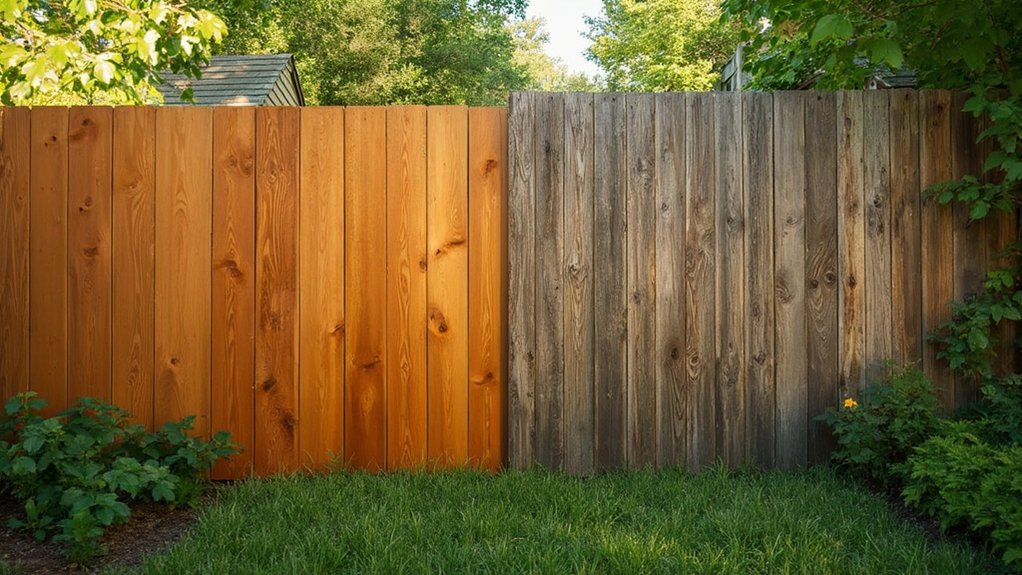
When planning your fencing project, consider using weathered wood to enhance the look of your outdoor space. Its unique grain patterns and texture provide a rustic charm that stands out.
Here are some reasons to choose weathered wood:
- Unique grain and texture add character.
- Natural color variations blend with your landscape.
- Imperfections create an authentic feel.
- Low maintenance keeps the beauty intact.
- Eco-friendly, supporting sustainable practices.
Using weathered wood for your fence not only improves your outdoor design but also connects it to nature.
This versatile material works well with various styles, making your space inviting while being environmentally friendly. Choose weathered wood for a beautiful and timeless fence!
Frequently Asked Questions
How Can I Identify Treated Wood From Reclaimed Sources?
To identify treated wood, check for discoloration, chemical stains, and a uniform appearance. On the other hand, reclaimed wood has unique aging, irregular grain patterns, and historical markings. Knowing these differences helps ensure you select safe and authentic materials for your project.
What Tools Are Necessary for Dismantling Old Fences?
To dismantle an old fence, gather pry bars, hammers, and screwdrivers. Always prioritize safety by wearing gloves, safety glasses, and sturdy shoes. These tools and precautions will help you tackle the job effectively.
Can I Use Reclaimed Wood for Indoor Projects?
Yes, you can definitely use reclaimed wood for indoor projects! It’s often 30% harder than new lumber, making it perfect for durable and stylish designs. Think of using reclaimed wood for furniture like tables or shelves, or for accent walls that add character to your space.
How Do I Store Reclaimed Wood Properly?
To store reclaimed wood properly, find a dry, well-ventilated space. Elevate the wood off the ground to prevent moisture damage. Use spacers between layers to allow air circulation, and regularly check for signs of decay or pests to keep the wood in good condition.
What Are the Environmental Benefits of Using Reclaimed Wood?
Using reclaimed wood is a sustainable choice that helps protect forests and reduce energy use. By opting for this eco-friendly material, you contribute to healthier ecosystems, lower carbon emissions, and less waste, benefiting the environment for future generations.
Conclusion
Using reclaimed wood for your rustic fence projects adds character and tells a story. Each piece has its own history, enhancing your outdoor space. With proper preparation and creative techniques, you can turn salvaged wood into a beautiful feature. Embrace sustainability and let the unique charm of reclaimed wood inspire your next project.

Finding the perfect fence color can enhance your home's charm, but the right choice depends on several key factors that Read more

Explore the hottest residential fencing trends of the year, where sustainability meets innovation—discover what features could transform your outdoor space!
Find out which fencing option offers superior longevity and durability, and discover how your choice can impact maintenance and costs Read more


