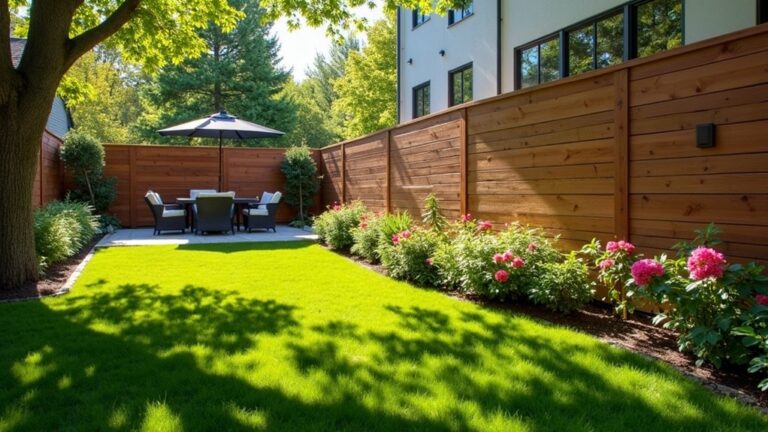
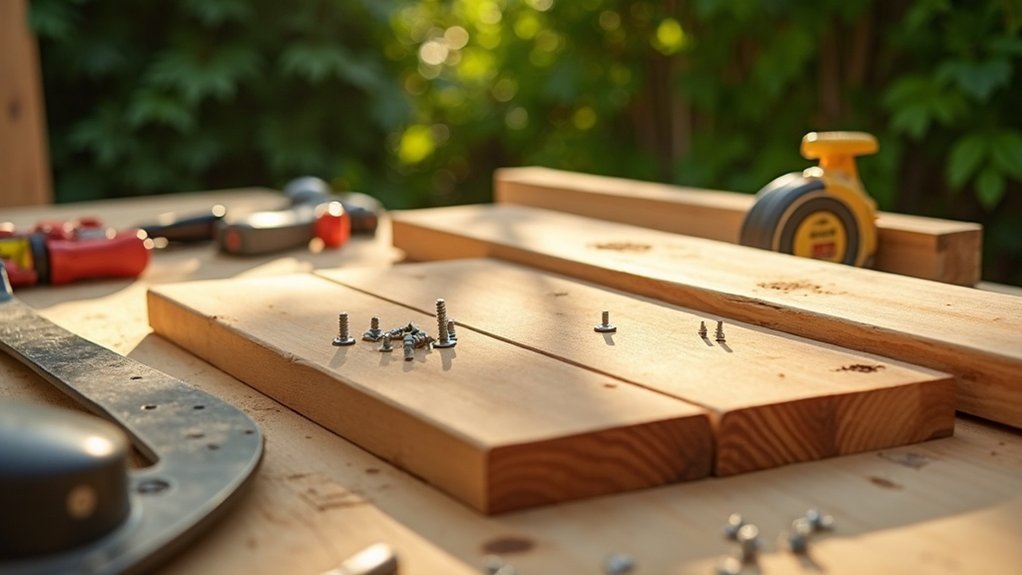
To build a custom fence from scratch, first choose your materials based on your needs—cedar for a warm look, vinyl for easy upkeep, or composite for strength. Design your fence with features like lattice tops or arches for added charm. Gather the necessary tools and prepare your site by marking the boundaries and checking for utilities. Follow best practices during installation for a stable structure. Finally, consider adding unique decorative elements to make your fence stand out!
Key Takeaways
- Use sturdy materials like cedar, vinyl, or composite for a long-lasting, low-maintenance fence.
- Incorporate features like privacy panels and decorative toppers to boost both function and style.
- Equip yourself with essential tools such as a post hole digger, level, and saw for a smooth installation.
- Carefully plan your site by marking boundaries and checking for underground utilities before you start.
- Ensure your posts are deep and well-aligned for stability and a polished look.
Selecting the Right Materials for Your Fence

When choosing materials for your fence, consider both looks and durability. A beautiful cedar fence adds warmth but needs regular maintenance to avoid rot. On the other hand, vinyl is vibrant and low-maintenance, ideal for busy lives. For a modern touch, aluminum is rust-resistant and requires little care, while composite materials combine wood’s beauty with synthetic strength, though they tend to be pricier. Additionally, cedar wood fencing offers long-lasting durability and minimal maintenance compared to other wood types. Wood fencing can be a popular choice but may require more upkeep in harsh weather conditions. Weigh your options to find a balance between aesthetics and durability, ensuring your investment lasts and enhances your property.
Designing Your Custom Fence Style

Choosing the right materials is just the beginning; the design of your fence truly defines its character. Think about aesthetics that match your style and enhance your home.
For example, a privacy fence offers seclusion, while a lattice-top design adds charm. Customize dimensions to fit your space perfectly, blending functionality with beauty. You might consider features like arched tops or Gothic accents for added visual appeal. Additionally, consider using cedar wood for its natural resistance to decay and insects, ensuring your fence remains beautiful for years. Including horizontal slat fences in your design can provide a modern touch while enhancing privacy and security.
Strike a balance between privacy and openness based on how you use your yard; shadowbox designs can allow airflow while still looking good.
Don’t forget that the right color and finish can tie your fence into your landscape beautifully. Create a fence that’s not just a boundary, but a standout feature of your outdoor area.
Gathering Tools and Materials for Installation

Gathering the right tools and materials is key for a successful fence installation. Having at least ten essential items ready will help keep your project on track.
Here are three important categories to consider:
- Digging Tools: Use a post hole digger, shovel, and tamping tool to ensure your posts are secure. Post hole diggers are crucial for creating stable holes in various soil types.
- Measuring and Layout Tools: A tape measure, mason string, and level will help you achieve accuracy. Additionally, consider using a DIY fencing kit for convenience and simplified installation.
- Cutting Tools: A circular saw and jigsaw are necessary for making precise cuts. Using a circular saw will offer accuracy for clean, straight cuts in wood, vinyl, and metal materials.
For materials, choose pressure-treated posts and lumber for durability, and don’t forget concrete mix for stability.
With the right tools and materials in hand, you’ll be well-prepared for a smooth fence installation!
Planning and Preparing Your Site

Before installing your fence, visualize the space and mark the boundaries with stakes and string.
Don’t forget to check for underground utility lines to avoid any issues.
Leveling the ground a bit can greatly improve the stability and appearance of your new fence.
Marking Fence Lines
When marking your fence lines, precision is key for a smooth installation. Here’s how to create an accurate layout:
- Mark with paint: Use marking paint to outline key points on the ground. Connect these points with straight lines to define your fence perimeter.
- Use string lines: Set up bright string lines a little away from where the fence will go. This helps guide your digging without getting in the way.
- Space your posts: Decide on post hole spacing based on your fence style. Consistent spacing is crucial for keeping your fence strong and stable.
Checking Utility Locations
When planning your fence installation, it’s crucial to check utility locations first to ensure a smooth and safe process. Start by contacting local utility companies or calling 811 for utility identification services to avoid hazards during digging.
| Utility Type | Contact Method | Safety Protocols |
|---|---|---|
| Public Utilities | Call 811 | Free markings for safety |
| Private Lines | Hire a locator | Confirm accuracy with documents |
| Visual Inspection | On-site check | Look for visible above-ground signs |
Conduct thorough visual inspections and use detection tools for accurate utility mapping. Following safety protocols can prevent costly damages and ensure a hassle-free installation. Taking these steps now will save you from headaches later!
Ground Leveling Requirements
To ensure your fence lasts, proper site preparation for ground leveling is key. This helps with soil stability and drainage, avoiding future problems.
- Set a Reference Point: Pick a clear level point to use as a guide.
- Level the Ground: Fill in low areas with soil or gravel and shave down high spots for a flat surface.
- Get Ready for Posts: Dig post holes below the frost line, add gravel for drainage, and set the posts straight with concrete.
Best Practices for Fence Installation

Installing a fence may seem simple, but following best practices ensures it lasts and looks great. First, check your property lines and call local utilities to mark underground lines before digging. Aim for post holes at least 36 inches deep—48 inches is even better for stability. Adding gravel at the bottom helps with drainage and prevents frost heave.
When setting your posts, use concrete mixed as directed for the best support. Tamping the concrete removes air pockets, and shaping it to slope away from the wood keeps water from pooling.
Pay attention to alignment and spacing throughout the process; these details greatly affect your fence’s appearance and durability, especially while the concrete cures.
Maintenance Tips for Longevity

To keep your fence looking great and lasting longer, regular maintenance is key. Here are three simple tips:
1. Clean and Inspect: Clean your fence annually to get rid of dirt and mold.
Check it monthly for any damage.
2. Use Protective Coatings****: Every 2-5 years, apply weather-resistant paint or sealants to protect against sun and moisture damage.
3. Check Structure: Once a year, ensure fence posts are secure and replace any that are damaged.
Enhancing Your Fence With Custom Features

To enhance your fence, consider unique infill options like colorful glass panels or natural wood slats that match your style and provide privacy.
You can also add decorative toppers, such as ornate lattice or sleek metal accents, to make a bold visual impact in your outdoor space.
Unique Infill Options
Elevate your fence with unique infill options that blend style and practicality.
Here are three great ideas:
- Bamboo Infill: A sustainable choice that looks modern and lasts up to 25 years, ideal for eco-friendly homes.
- Metal Accents: Add a stylish touch with designer metals like aluminum or steel, creating a bold visual contrast.
- Composite Materials: Opt for LuxeCore Composite for a weather-resistant and low-maintenance option that resembles wood without the hassle.
These options can transform your fence into a standout feature!
Decorative Topper Designs
Want to enhance your fence’s charm while adding practical benefits? Consider decorative toppers that combine style and function.
Bamboo toppers bring a tropical feel, while classic picket styles are easy to customize with paint. For added security, wrought iron toppers are both sophisticated and durable.
Wooden lattice toppers create a lovely crisscross design, ideal for gardens. Custom metal art toppers can showcase unique designs that reflect your personality.
Each material not only beautifies your fence but also boosts privacy and helps deter pests. Transform your fence into a striking feature that complements your home!
Frequently Asked Questions
What Are the Local Regulations for Fence Height and Placement?
Local regulations for fence height and placement differ by location, so it’s essential to consult your city codes. Generally, fences should be built within property lines and may have material restrictions to ensure they fit the neighborhood’s look. For example, a wooden fence might be allowed in a suburban area, while a chain-link fence may not be permitted in a residential zone. Always check local rules to avoid fines or having to take down your fence.
How Do I Choose a Contractor for Fence Installation?
To choose a contractor for fence installation, start by checking their qualifications, experience, and reputation. Ask about their past projects and look for reviews. Discuss your timeline to ensure they can meet your schedule. Make sure they understand your style preferences for the best results.
Can I Install a Fence on a Slope?
Yes, you can install a fence on a slope. Just ensure you adapt the fence to the incline and choose sturdy materials for both stability and appearance. For instance, you might consider using a step method or racked panels to effectively follow the slope’s contour.
What Permits Are Required for Building a Fence?
To build a fence, you may need a permit if it exceeds local height limits or impacts property lines. For example, if your fence is taller than 6 feet or close to your neighbor’s property, check with your local authorities. This ensures you follow the rules and have all the right documents for a hassle-free approval.
How Do I Handle Neighbor Disputes Regarding Fence Boundaries?
To handle fence boundary disputes, start by talking to your neighbor directly. Clear communication can help you both understand each other’s perspectives. For example, if you both have different ideas about where the boundary lies, consider walking the line together to clarify. This approach can prevent misunderstandings and foster a cooperative solution.
Conclusion
A custom fence can enhance your outdoor space and add a personal touch. Choose durable materials that match your style to create more than just a barrier; you’re building something special. With careful planning and creativity, your fence can last for years and become a valued part of your home. So, get started and bring your vision to life!