
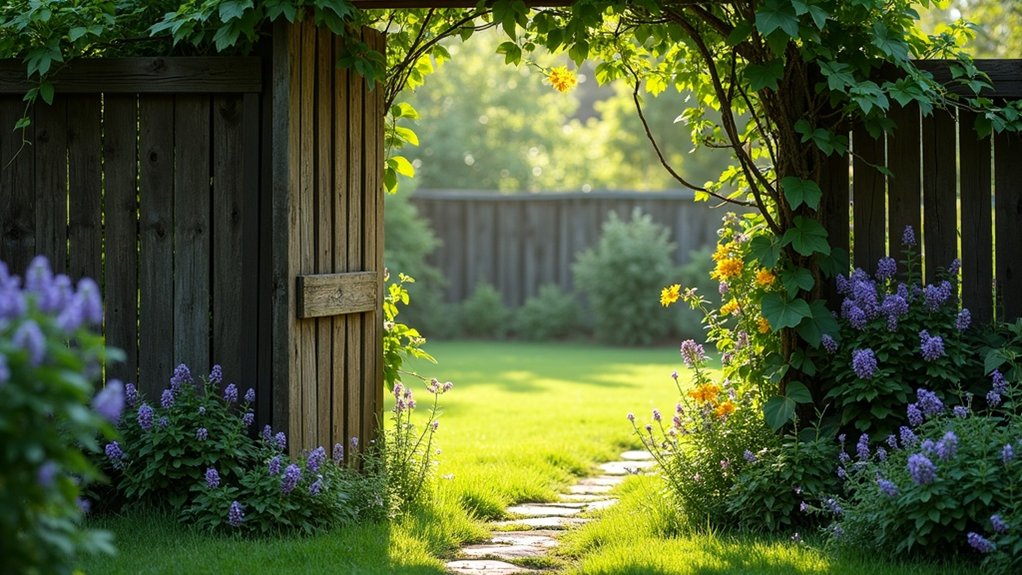
To match your fence style with your garden landscape, focus on creating harmony. For a rustic look, split-rail fencing works well with climbing plants like clematis. If you prefer a modern aesthetic, horizontal slat fences look great alongside structured boxwoods. Consider functionality too; taller fences can provide privacy and block views. Choose options that enhance your home’s character, and explore plant pairings and decorative touches to elevate your outdoor space.
Key Takeaways
- Choose a fence style that suits your garden, like rustic split-rail for a natural look or sleek horizontal slats for a modern vibe.
- Combine wooden fences with climbing plants like clematis, and pair structured plants like boxwoods with vinyl fences for a polished appearance.
- Match fence height to your privacy needs: opt for taller fences in the backyard and shorter ones in the front yard.
- Select materials that align with your home’s design; for instance, wrought iron pairs well with airy lavenders and climbing roses.
- Enhance your fence area with shrubs and trees to create a unified and functional outdoor space.
Choosing the Right Fence Type for Your Garden Style

When choosing a fence for your garden, consider how it fits your style and needs.
For a rustic look, split-rail fencing works well in natural settings. If you need privacy, featherboard fencing offers solid protection from wind. Taller fences may also provide more privacy but could block sunlight, so it’s essential to balance aesthetics with functionality. Choosing a durable wood material, such as Western Red Cedar, can ensure longevity and resilience.
For a modern feel, horizontal slat fences provide an open vibe while still offering some seclusion. Picket fencing is great for a classic touch in traditional gardens.
Each option not only serves a function but also enhances your garden’s overall appearance, making it a more inviting outdoor space.
Complementary Plant Pairings for Different Fences

When designing your garden, choosing plants that match your fence style can enhance the overall look. For wooden fences, opt for climbing plants like clematis and colorful hydrangeas. Fence landscaping can also help define your outdoor space and improve functionality. Additionally, a variety of materials can be used to create a cohesive garden design. Vinyl fences work well with structured plants such as boxwoods and ornamental grasses. Chain-link fences can be adorned with fast-growing vines like trumpet vine, while wrought iron fences pair beautifully with airy lavenders and climbing roses.
Here’s a quick reference table:
| Fence Type | Recommended Plants | Aesthetic Impact |
|---|---|---|
| Wooden | Climbing roses, hydrangeas | Softens and adds color |
| Vinyl | Boxwood, agapanthus | Modern, polished look |
| Chain-Link | Clematis, dense shrubs | Provides privacy and interest |
| Wrought Iron | Lavender, climbing jasmine | Elegant framing and color |
Functional Considerations for Fence and Landscape Integration

Integrating your fence with your landscape can significantly enhance both functionality and aesthetics. Start by establishing clear property boundaries to avoid disputes. Choose fence heights wisely: low for front yards, mid-height for sides, and solid privacy fencing for backyards. Use materials that match your home’s style, and consider adding landscaping elements like shrubs and trees for added privacy and wind protection. Cohesive design ensures that your fencing and landscaping not only complement each other but also create a unified outdoor experience. Additionally, consider the typical lifespan of a fence in Florida when selecting materials, as this can influence long-term maintenance and aesthetic value. Position your fence to create microclimates, and think about adding features like trellises or lighting for extra functionality. This thoughtful integration not only boosts your garden’s appeal but also ensures safety and comfort in your outdoor space.
Decorative Fencing Options to Enhance Aesthetic Appeal

A fence can do more than just mark boundaries; it can enhance your garden’s beauty.
Consider an arched top wood fence for a soft, elegant look, or a Cape Cod style for classic charm, perfect for coastal areas.
For a more rustic feel, split-rail fences fit beautifully into country settings.
If you lean towards metal, black powder-coated iron fences with intricate designs are durable and visually appealing.
Sculptural designs can turn your fence into a striking centerpiece.
Adding decorative accents like lighting can enhance your outdoor space and make it enjoyable even at night.
Choosing the right decorative fencing can inject personality, warmth, and beauty into your garden.
Maintenance Tips for Long-Lasting Fencing Solutions

For a fence that looks great and lasts long, regular maintenance is key. Here are three simple tips to keep your fencing in top shape:
– Clean it every 1-3 years with mild soap and water, depending on your fence material.
For example, a vinyl fence can be hosed down, while wood may need scrubbing to remove dirt and mildew.
- Use protective coatings like stains or sealants for wood, and rust-inhibitors for wrought iron to protect against moisture and UV damage.
- Check hardware and posts regularly. Tighten any loose screws and look for signs of rust or wear.
Frequently Asked Questions
How Do I Determine the Best Fence Height for My Garden?
To find the right fence height for your garden, think about both looks and privacy. A height of 4 to 6 feet is usually ideal, as it can block views without feeling too imposing. For example, if you want to keep pets in or neighbors out, a 5-foot fence can be effective. Aim for a design that complements your garden while providing the privacy you need.
Can I Mix Different Fence Styles in One Garden?
Yes, you can mix different fence styles in one garden. For instance, pairing a classic picket fence with modern metal panels can create an interesting contrast. By blending materials and colors thoughtfully, you can enhance your garden’s look and reflect your personal style while maintaining a cohesive vibe.
What Is the Average Lifespan of Different Fence Materials?
When choosing fence materials, wood can last anywhere from 4 to 75 years, depending on the type and treatment. Metal fences usually last between 15 to over 30 years. Each material has its own pros and cons, so pick one that best fits your needs.
How Do Local Regulations Affect Fence Installation in Gardens?
Local regulations play a crucial role in fence installation. You often need a permit and must follow zoning laws. For instance, there might be specific height limits or restrictions on materials. Always check these rules to ensure your garden fence fits in with the neighborhood and meets local standards.
What Are the Best Practices for Installing a Fence on Uneven Terrain?
When installing a fence on uneven terrain, begin by leveling the posts from the lowest point. Use concrete footings for added stability. Opt for stepped or racked panels to follow the ground’s contours, which ensures your fence looks good and functions well.
Conclusion
A well-chosen fence enhances your garden and highlights its beauty. By matching your fence style to your landscape, you create a cohesive look that offers protection and charm. For example, a rustic wooden fence pairs nicely with a cottage garden, while a sleek metal fence complements a modern design. With thoughtful plant choices and a bit of creativity, your outdoor space can thrive. Let your fence be the element that ties your garden together and tells its story.
Unlock the secret to stunning privacy screens that enhance your outdoor space—discover how to create a beautiful retreat that captivates Read more

Navigating the choice between horizontal and vertical fence boards reveals unique advantages and challenges—discover which option suits your needs best.

Make your outdoor space cohesive by matching your fence to your driveway and garage—discover essential tips for achieving stunning visual Read more


