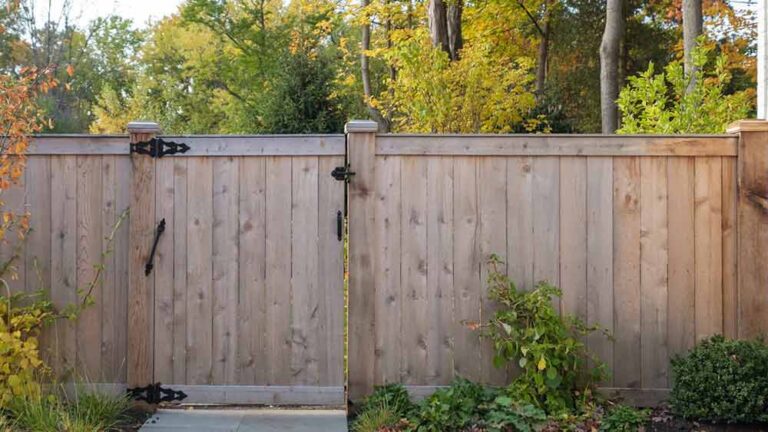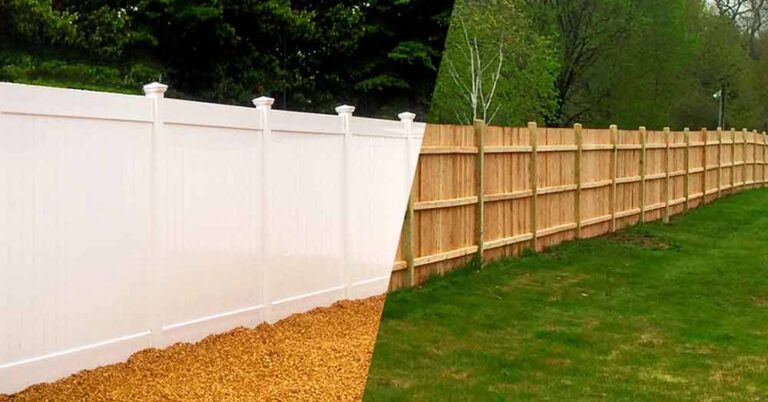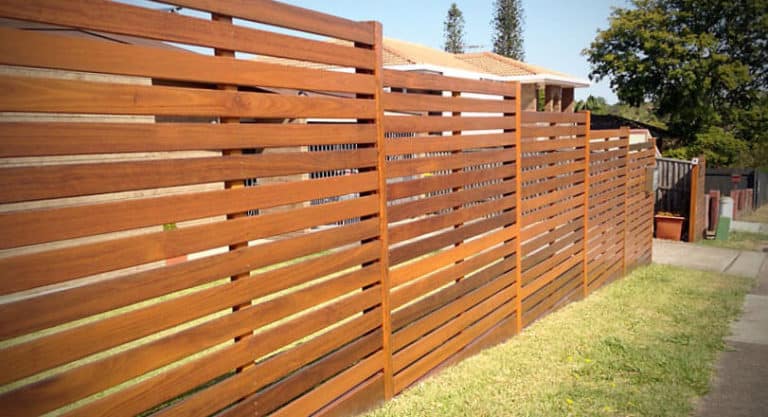

To fence off parking lots effectively for traffic flow and safety, follow local regulations regarding fence height and visibility. Keep fences under 6 feet tall and consider using transparent materials to maintain visibility. Adding landscaping can improve aesthetics and safety, but ensure pedestrian paths are clear. Be mindful of utility easements to avoid compliance issues. There are many design best practices and material options that can help optimize your parking lot layout.
Key Takeaways
- Make sure the fence height meets local rules, usually between 3 to 6 feet, to ensure safety and visibility.
- Use clear materials or shorter fences at entrances to keep sight lines open for both cars and pedestrians.
- Add landscaping to improve the look of the area while creating a buffer between the parking lot and nearby spaces.
- Clearly mark entrances to align with the shortest walking paths from parking spots, making it easier and safer for foot traffic.
- Check for utility easements to avoid blocking access to essential services, ensuring compliance with local regulations.
Understanding Regulatory Standards for Parking Lot Fencing
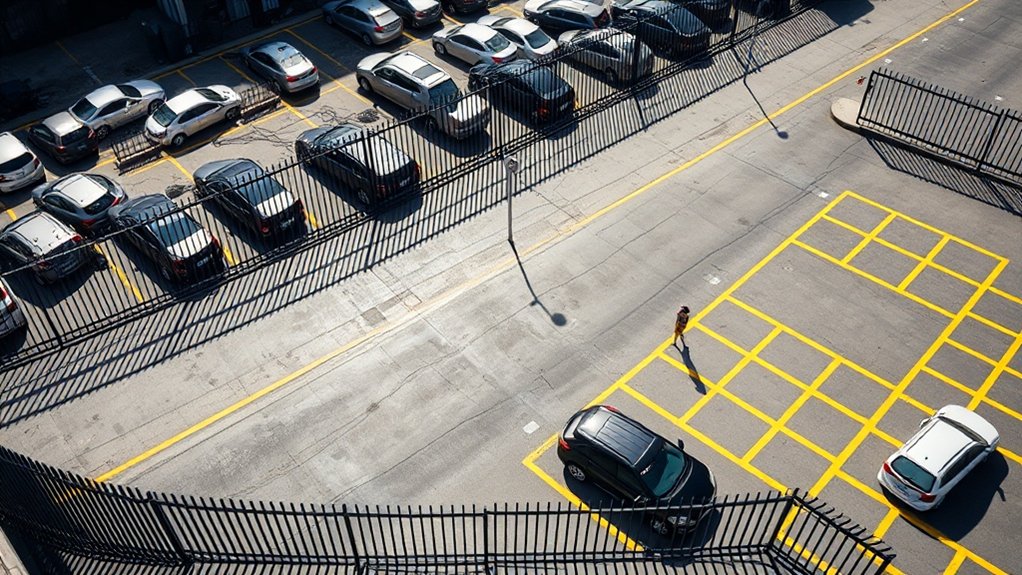
When installing fencing around parking lots, it’s crucial to know the regulations regarding height, materials, and placement.
Typically, fence heights range from 3 to 6 feet, depending on the location. Front yard fences often face stricter limits, usually capped at 3 to 4 feet for aesthetics. If your parking lot is near intersections, you may need to keep the fence height to 2 to 3 feet to maintain visibility. Additionally, chain link fences are often not allowed in front yards. Fences in front yard setbacks have a maximum height of three feet, with exceptions allowing up to 60 inches under specific conditions. Following these guidelines ensures your fence enhances safety and complies with local regulations. Moreover, it’s essential to check local zoning laws to avoid potential violations and fines.
Importance of Visibility and Sight Lines
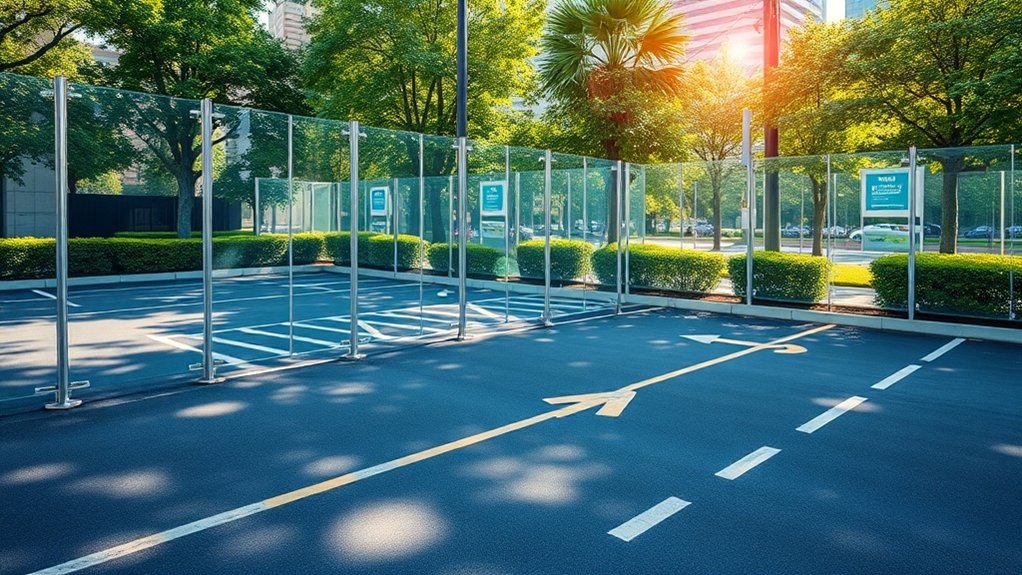
In parking lots, clear sight lines are crucial for everyone’s safety. Make sure any fencing meets height regulations and doesn’t block the view of oncoming cars or pedestrians. For example, using transparent fencing materials can improve visibility, lower accident risks, and keep traffic moving smoothly. Additionally, it is important that parking areas must comply with drainage requirements to prevent water accumulation that can obstruct visibility.
Clear Sight Lines
Clear sight lines are crucial for safety and efficiency in parking lots. They enhance visibility for drivers, helping them make better decisions regarding pedestrians, vehicles, and obstacles. To ensure clear sight lines, follow these design recommendations:
| Design Element | Recommendation |
|---|---|
| Plant Height | Keep plants under 30 inches near exits |
| Setback Distance | Maintain 3-5 feet from curbs |
| Barrier Use | Use wheel stops and curbing effectively |
| Driveway Design | Ensure driveways are wide enough with proper radii |
Implementing these elements will significantly improve safety and visibility in parking areas. Additionally, maintaining adequate access for all parking spaces is essential to prevent congestion and ensure smooth traffic flow.
Height Regulations Compliance
Height regulations are crucial for ensuring visibility and safety in parking lots. By keeping fences to a maximum of 6 feet, you help maintain clear sight lines, especially at intersections, which reduces collision risks.
In areas near homes, limiting fences to 4 feet not only enhances safety but also improves appearance while providing necessary privacy. Alternatives like solid materials or evergreen plants can reduce visual obstruction for drivers. Additionally, adhering to local zoning ordinances ensures compliance with specific height limitations, further promoting safety and aesthetics.
Following these guidelines promotes safer driving and better security monitoring, creating a more functional parking environment.
Transparency for Safety
Clear visibility is crucial for safety in parking lots, and transparent fencing significantly improves sight lines for drivers and pedestrians.
Using materials like mesh or clear polycarbonate reduces the risk of vehicle-pedestrian collisions. These transparent designs help people see each other from farther away, cutting down on blind spots that can lead to accidents or crime.
Position fencing to keep sight lines clear, especially near entrances and crossings. Avoid solid panels that block views, and ensure your fencing doesn’t obstruct important signs or lights.
This not only improves traffic flow but also boosts overall safety for everyone. Additionally, preventing disputes about property boundaries is essential to maintaining a safe and organized parking environment.
Selecting the Right Fence Height
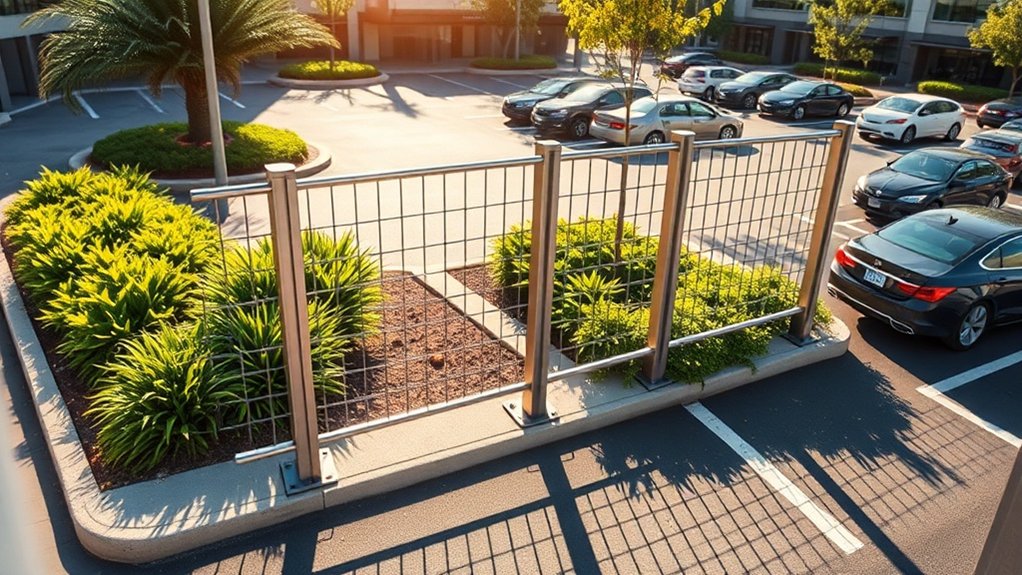
When choosing the right fence height for parking lots, consider safety and functionality.
Typically, front yard fences should be 3.5 to 5 feet tall for visibility, while rear and side yard fences can reach up to 6 feet. In commercial areas, you might be able to use fences up to 8 feet for added security.
Remember, shorter fences near entrances improve sightlines, while taller ones can prevent unauthorized access without blocking important views.
Using transparent materials or lattice on taller fences can enhance both visibility and durability, ensuring your fence meets safety and operational needs effectively.
Approved Materials for Parking Lot Fences
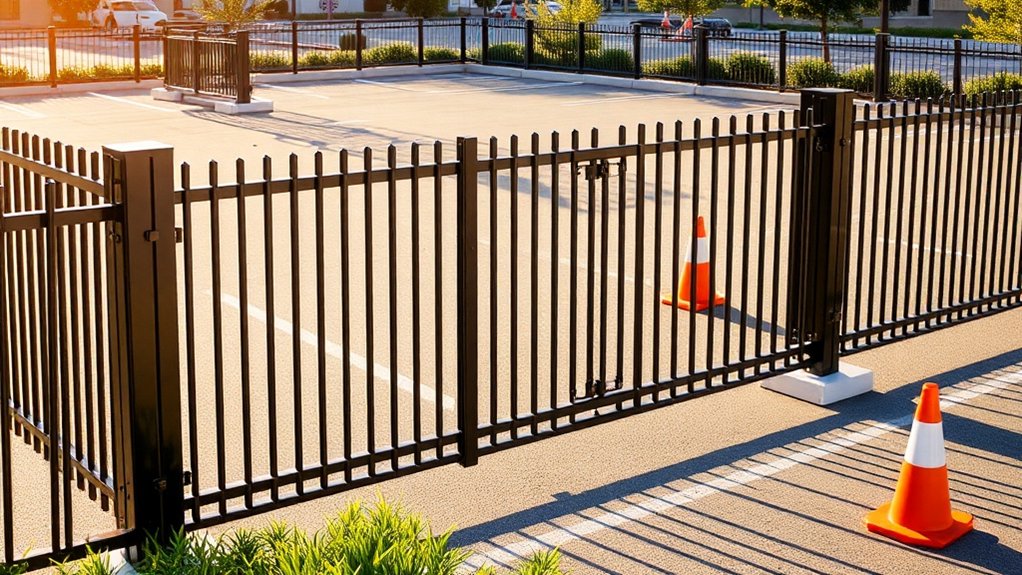
Choosing the right materials for parking lot fences is crucial for safety, durability, and appearance.
Consider using masonry options like brick, stone, or decorative concrete blocks for strength and good looks. Pre-cast concrete panels that resemble traditional materials are also a great choice because they require little maintenance.
For metal, wrought iron-style and picket fences offer security without sacrificing style. Chain link fences with weather-resistant coatings are common and practical.
Avoid barbed wire in standard situations due to safety concerns. Always check local regulations for height and material requirements to ensure compliance and effectiveness.
Enhancing Safety and Traffic Flow
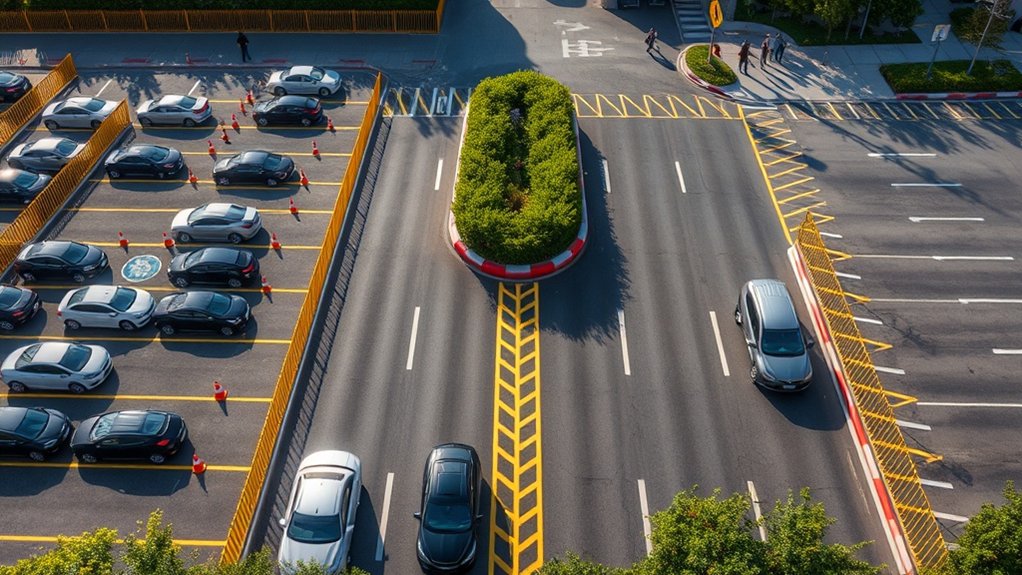
To improve safety and traffic flow in parking lots, it’s essential to have clear sight lines and marked pedestrian pathways.
Good visibility helps drivers see pedestrians, reducing accidents. For example, ensuring that trees and signs don’t block views can make a big difference.
A well-thought-out layout not only keeps everyone safe but also deters crime, making the area feel more secure for everyone.
Clear Sight Lines
Clear sight lines are crucial for safe navigation in parking lots. They help prevent accidents and improve traffic flow by reducing blind spots, allowing you to see vehicles and pedestrians clearly.
To enhance safety, keep landscaping trimmed at intersections and corners to avoid visual obstructions. Ensure parking lot lighting is bright enough in high-traffic areas for better visibility at night.
Clearly marked parking spaces and directional arrows help guide drivers, while well-defined fire lanes ensure emergency access.
Designated Pedestrian Pathways
When navigating a parking lot, designated pedestrian pathways are crucial for safety and traffic flow.
An ideal pedestrian lane should be 8 feet wide to allow for walking alongside mobility devices, meeting accessibility standards.
Use slip-resistant materials like concrete or asphalt to reduce tripping hazards, and keep the slope below 2% for easy wheelchair movement.
Clearly marked lanes with double white lines and “PED ONLY” signs help drivers recognize pedestrian areas.
Curb ramps at crossings improve safety, and buffered zones provide extra space for comfort.
Permit and Inspection Requirements

Understanding the permit and inspection requirements for parking lot fencing is crucial for staying compliant with local laws.
You’ll generally need to submit a permit application that includes site plans, structural details, and possibly contractor licensing. Be sure to include the property address and zoning classification for a smooth review process.
Once submitted, your application will be assessed based on inspection criteria, specifically looking at the fence’s height and placement—especially in visibility zones. Inspectors will check that the fence stays within property lines and meets aesthetic standards.
Permit fees typically range from $50 to $100, depending on your location and project size. Following these regulations is essential for safety and proper traffic flow.
Best Practices for Fencing Design
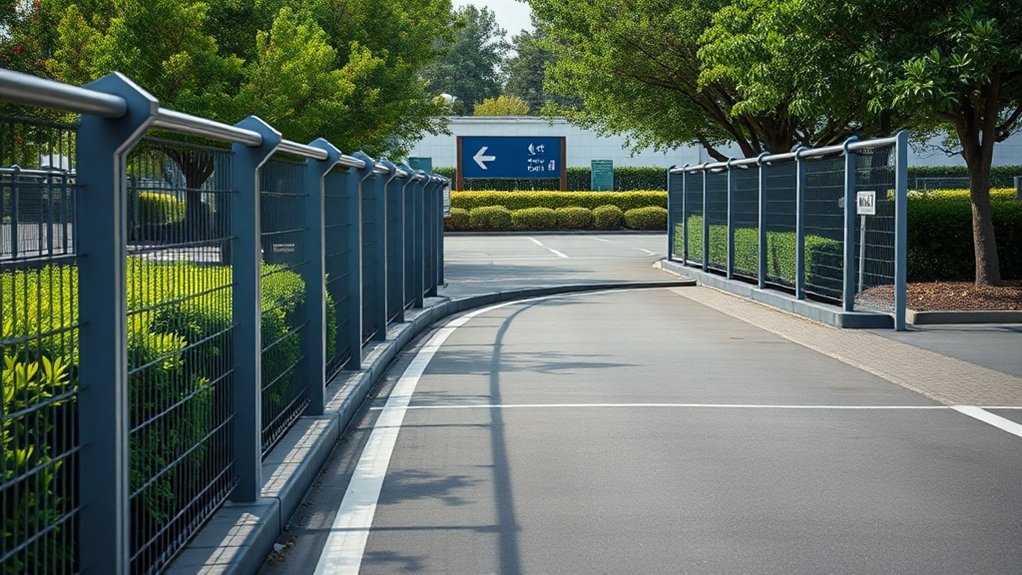
When designing fencing for parking lots, it’s important to balance security and aesthetics.
Here are some best practices to ensure effective fencing:
- Height and Design: Opt for fences that are at least 8 feet tall and include anti-climb features to deter trespassing.
- Materials: Use strong materials like decorative wrought iron or chain link with privacy slats. This combination offers both security and a pleasing look.
- Setbacks and Buffers: Keep a 10-foot distance from walkways and add a 5-foot landscaped buffer to make the fence visually appealing.
Incorporating Landscaping With Fencing
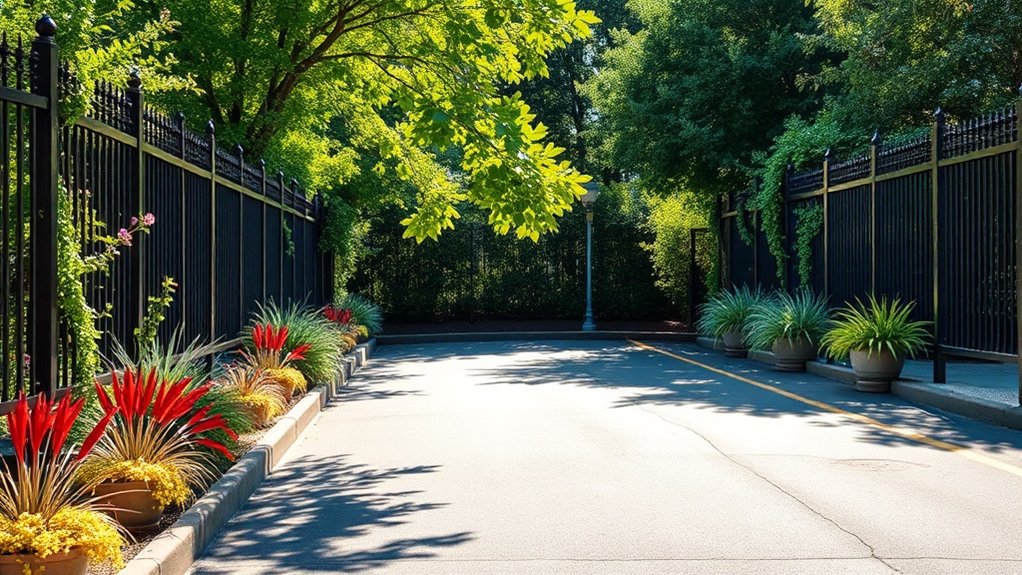
Incorporating landscaping with fencing improves the look of parking lots and provides essential functions like safety and utility. Here are key elements to consider:
| Element | Function | Benefit |
|---|---|---|
| Trees | Offer shade and direct traffic | Stabilize soil and require little upkeep |
| Shrubs | Add visual appeal and privacy | Work well with fencing for enhanced security |
| Vines | Soften the look of fences | Boost overall aesthetics |
Addressing Utility Easements and Compliance
Landscaping and fencing can beautify parking lots, but you must pay attention to utility easements. Here are three essential tips to keep in mind:
- Identify Easements: Look up your property deeds or local records to find out where easements are located before putting up any fencing.
- Access Needs: Ensure your fence doesn’t block access to utility lines. If it does, you may have to remove it at your own cost.
- Get Approval: Always check with utility companies or local authorities for permits to ensure you’re following building codes.
Creating Accessible Entrances for Pedestrians

Creating accessible entrances for pedestrians is crucial for safety and smooth movement in parking lots. Place entrances along the shortest paths from parking spaces to make access easier.
Use canopies and landscaping to make these points noticeable while keeping them in line with the building’s design. In larger parking structures, having multiple accessible entrances can help manage foot traffic better.
Keep pedestrian paths separate from vehicles with raised sidewalks and use high-contrast crosswalks for better visibility. Always ensure accessible routes are clear of obstacles like bollards.
Frequently Asked Questions
How Can I Ensure My Fence Complies With Local Zoning Regulations?
To ensure your fence meets local zoning regulations, start by checking zoning permits and confirming property lines with a surveyor. Follow height limits and use approved materials. For specific guidelines, consult your local planning department. For example, if your area allows a maximum height of 6 feet, make sure your fence stays within that limit to avoid potential fines or the need for removal.
What Are the Costs Associated With Installing a Parking Lot Fence?
Installing a parking lot fence can vary significantly in cost. Fence materials can range from $1 to $60 per linear foot, while installation typically averages around $27 per foot. For example, if you choose a mid-range material at $30 per foot and have 100 feet of fence, you could spend about $3,000 in total. Keep these factors in mind when budgeting for your project.
Can I Install a Fence Without a Professional Contractor?
Yes, you can install a fence on your own. With the right tools and materials, plus some preparation, DIY fencing is doable. Just make sure to check local regulations to ensure you’re following safety and legal guidelines. For example, knowing property lines is crucial to avoid disputes with neighbors.
What Maintenance Is Required for Different Fence Materials?
To maintain your fence and ensure its longevity, here’s what you need to do for each material:
- Vinyl: Just wash it occasionally to keep it looking fresh.
- Wood: Treat it with sealant to protect against moisture and decay.
- Metal: Focus on rust prevention; regular checks and touch-ups help.
- Chain Link: Inspect regularly for any damage or loose parts.
How Do I Address Potential Vandalism on My Parking Lot Fence?
To prevent vandalism on your parking lot fence, use strong materials, design the fence to be hard to climb, install adequate lighting, and set up surveillance cameras. These strategies will make your fence tougher and discourage unwanted behavior.
Conclusion
Implementing proper fencing in your parking lot improves traffic flow and enhances safety for vehicles and pedestrians. While you might fear that fencing could restrict access, a well-thought-out design can create inviting spaces that promote safe movement. Use strategies like clear signage, designated walkways, and landscaping to make your parking area efficient and secure. This not only meets regulatory standards but also enhances the user experience. Investing in the right solutions is beneficial in the long run.