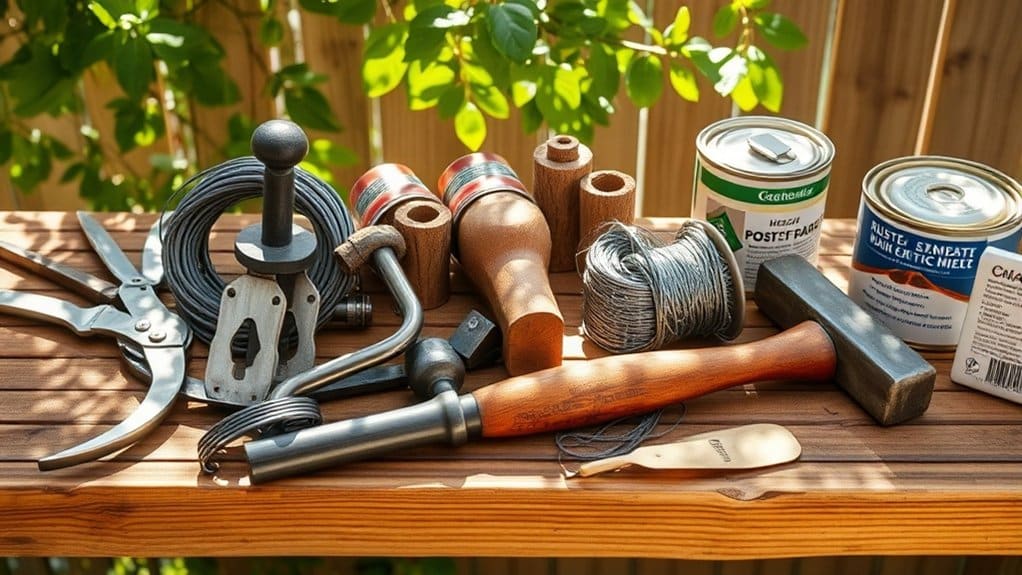
To maintain your fence well, you need a few basic tools. Post hole diggers help with sturdy installation, while cutting tools ensure accurate trimming. Fastening tools are essential for securing connections. Multi-functional fence pliers and leveling tools make repairs easier and more precise. If you have a wood fence, don’t forget about painting and sealing tools. For chain-link fences, specific maintenance tools are a must. Proper tool storage can improve your projects too. Discover the right tools for your fence maintenance needs to keep your fence looking great.
Key Takeaways
- Pruning shears help you keep branches trimmed and hedges neat around your fence.
- Multi-functional fence pliers allow you to cut, hammer, and pull staples, making repairs easier.
- Heavy-duty wire cutters are essential for cutting tough wire accurately.
- A bubble level ensures your fence posts are straight, giving your fence a clean look and stability.
- Wear safety gear like gloves and goggles to protect yourself while working on fence projects.
Essential Post Hole Digging Tools
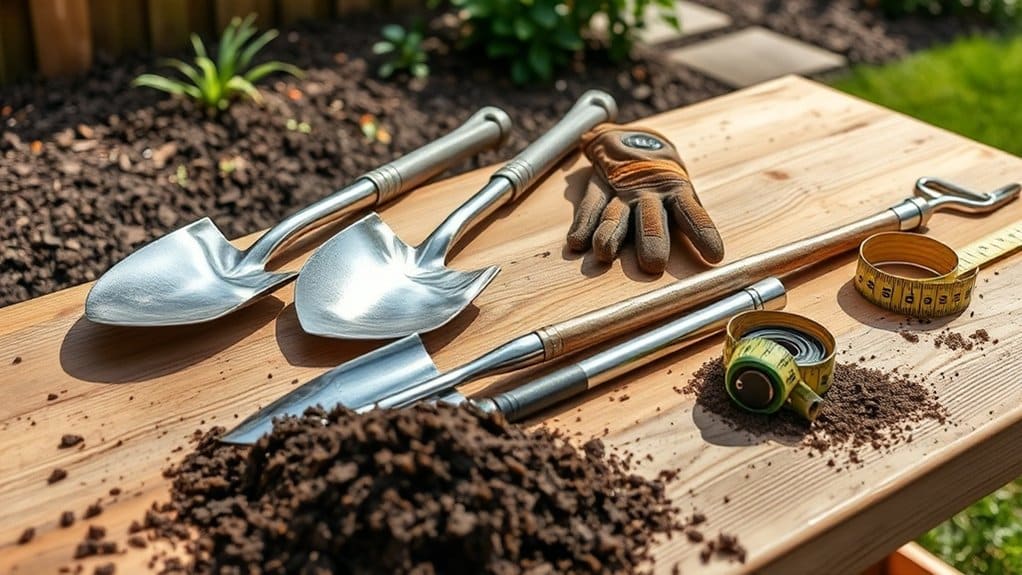
To set up a sturdy fence, having the right post hole digging tools is essential.
Post hole diggers are great for creating deep, narrow holes for fence posts. If you’re working with hard or rocky soil, tools like pickaxes or digging bars will help break through tough ground. Right digging tools save time and effort, ensuring the project is completed efficiently. For softer soils, manual diggers or spades are effective. Look for tools with non-slip grips and sturdy handles to maintain control while digging. It’s important to consider frost line depths when planning your post hole depth in colder climates.
Choosing the right tool based on soil type not only makes the job easier but also improves the stability of your fence.
Cutting and Trimming Tools for Fence Maintenance
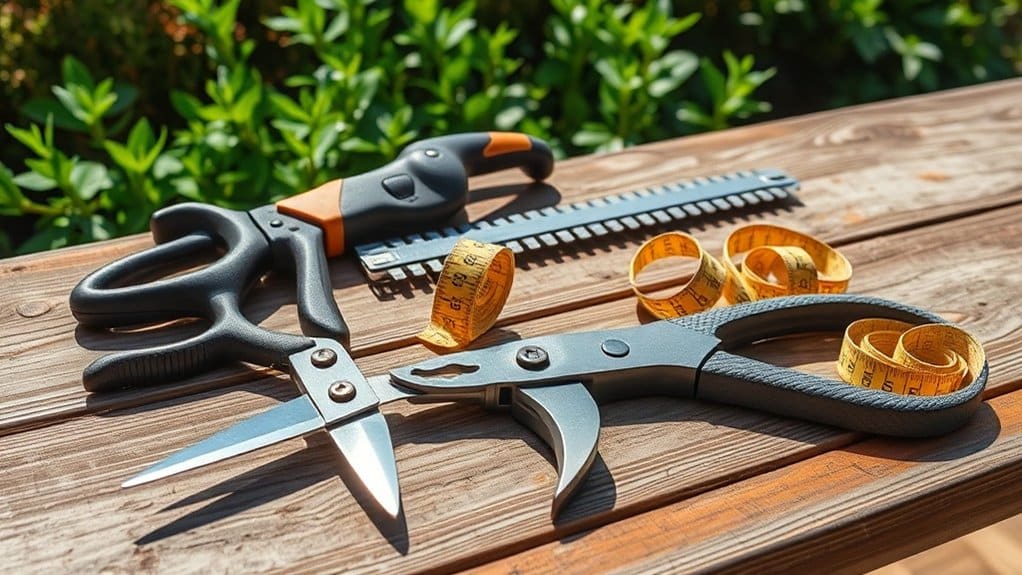
When maintaining your fence, using the right cutting and trimming tools is crucial for precise results. Focus on essential tools like pruning shears, hedge trimmers, and saws that can help you work efficiently. For example, a good pair of pruning shears can make clean cuts on smaller branches, while a hedge trimmer is great for shaping larger areas. Additionally, investing in a circular saw can provide clean cuts for any fence boards that need replacing. Always prioritize safety and keep your tools well-maintained to ensure they last longer and work effectively.
Essential Cutting Tools
To maintain a fence effectively, you’ll need essential cutting tools that ensure precision and efficiency. Consider using electric reciprocating saws instead of hacksaws for quicker cuts on thicker metal. Fine-toothed blades provide clean edges, and securing materials with a vise is crucial for safety. Additionally, regular inspections of temporary repairs can help maintain the integrity of your fence.
- Quality wire cutters and pliers are key for trimming and gripping.
- Circular saws and handsaws help keep your fence height consistent.
- Chainsaws are great for quickly removing old wood and greenery, simplifying repairs.
Investing in these tools not only enhances your fence’s look but also ensures its durability for years. Additionally, using the right tools for specific materials can significantly improve the effectiveness of your repair efforts.
Precise Trimming Techniques
To keep your fence looking great, it’s important to master precise trimming techniques. These methods not only enhance the appearance but also support the health of nearby plants. Here are some effective techniques:
| Technique | Benefit |
|---|---|
| Tapering cuts | Allows sunlight to reach plants |
| Bottom-up trimming | Keeps hedges stable |
| Chamfer cuts | Creates a clean, polished look |
Regularly check your hedges and prune thicker sections to improve airflow and encourage growth. By using these trimming techniques, you’ll ensure a healthy and attractive fence area. Additionally, practicing regular cleaning of your fence can help prevent the growth of mold and mildew that may affect surrounding plants.
Safety and Maintenance Tips
When maintaining your fence with cutting and trimming tools, prioritize safety and proper technique to prevent injuries and ensure efficient operation.
Following safety protocols not only keeps you safe but also extends the life of your tools.
- Always wear protective gear, like goggles and gloves, to protect yourself from flying debris.
- Disconnect power tools before making adjustments to prevent accidental starts.
- Regularly check and maintain your tools to keep them working at their best.
Fastening and Assembly Tools
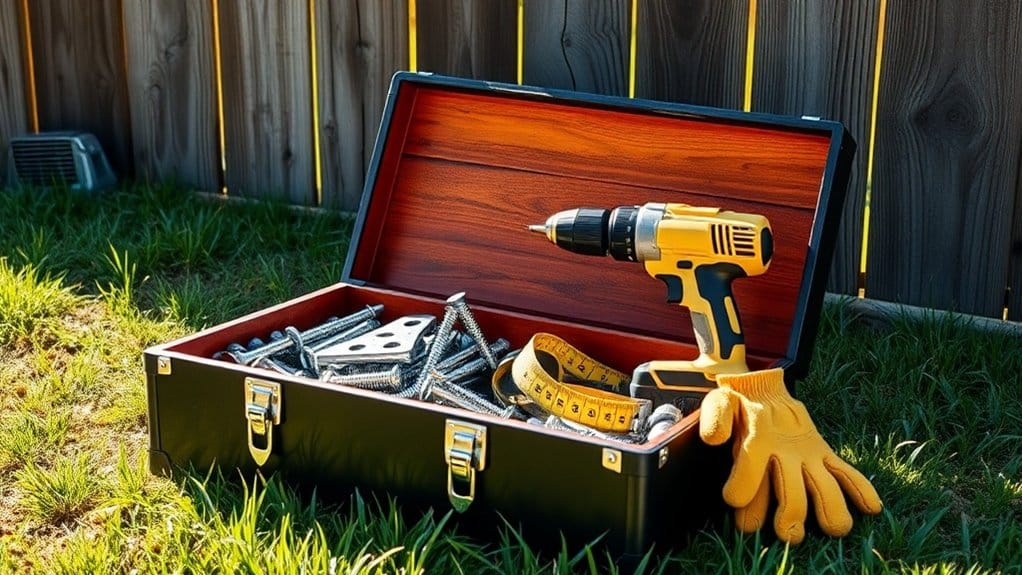
Choosing the right fastening and assembly tools is crucial for building a sturdy fence. Essential tools like power drills, hammers, and wrenches help ensure secure connections.
Using proper assembly techniques boosts durability. Plus, regular maintenance and repair can extend your fence’s lifespan and keep it strong over time.
Essential Fastening Tools
Essential fastening tools are key to building a stable and durable fence. Using the right tools ensures your fence lasts longer and looks great.
- Quick Repairs: Easily fix any damage to keep your fence in top shape.
- Long-Lasting Connections: Proper tools help your fence resist weather and wear.
- Efficiency: Save time on projects with tools designed for quick assembly.
Invest in tools like fence pliers, electric screwdrivers, and wire crimpers. These make fastening easier and enhance the quality of your fence, giving you confidence in your investment for years to come.
Secure Assembly Techniques
For a strong and reliable fence assembly, using the right tools is essential. Proper bracing techniques ensure that posts stay upright and don’t sag. Secure corner posts with brace pins, and use a strainer crank to adjust the tension of the bracing wire. Wire stretchers and come-alongs help maintain even wire tension, preventing damage. Here’s a quick overview of key tools for a secure assembly:
| Tool | Purpose |
|---|---|
| Brace Pins | Stabilize corner and end posts |
| Strainer Crank | Adjust tension of bracing wire |
| Wire Stretchers | Pull fencing wire tight uniformly |
| Be-Fast Brace Kit | Secure wood posts for high-tension setups |
| Gripple Tension Torq Tool | Ensures consistent wire tightness |
Use these tools to build a durable fence that lasts.
Maintenance and Repair Tips
Proper assembly is essential for a sturdy fence, but ongoing maintenance and timely repairs are crucial for its longevity. Use effective tools like a claw hammer for nails and an electric drill for quick fastening.
If you have a wire fence, invest in fence pliers and wire crimping tools for strong connections.
Here are some key tips for maintaining your fence:
- Keep tension consistent with the right tensioning tools.
- Regularly inspect for loose boards or damaged wires.
- Always wear protective gear during repairs for safety.
With the right tools and techniques, you can keep your fence in great shape for years.
Multi-functional Fence Pliers
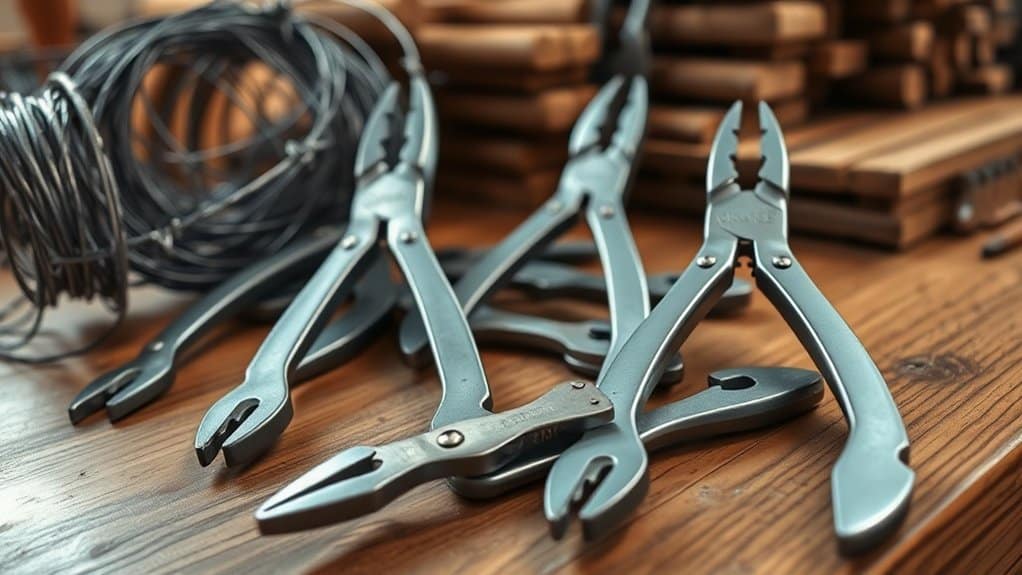
Multi-functional fence pliers are essential for both fence builders and DIYers.
These versatile tools let you cut, hammer, pull staples, and splice wire, all in one. Made from heavy-duty chrome vanadium steel, they resist wear and rust, ensuring they last.
Their specially designed jaws grip and cut various wire gauges effectively. With ergonomic bi-material handles, they offer comfort and reduce hand fatigue during long use.
Most models are between 10″ and 10.75″, providing a good balance of leverage and control. Features like dual wire cutters and rust resistance mean you won’t need multiple tools, making your fencing projects quicker and easier.
Leveling and Measurement Tools
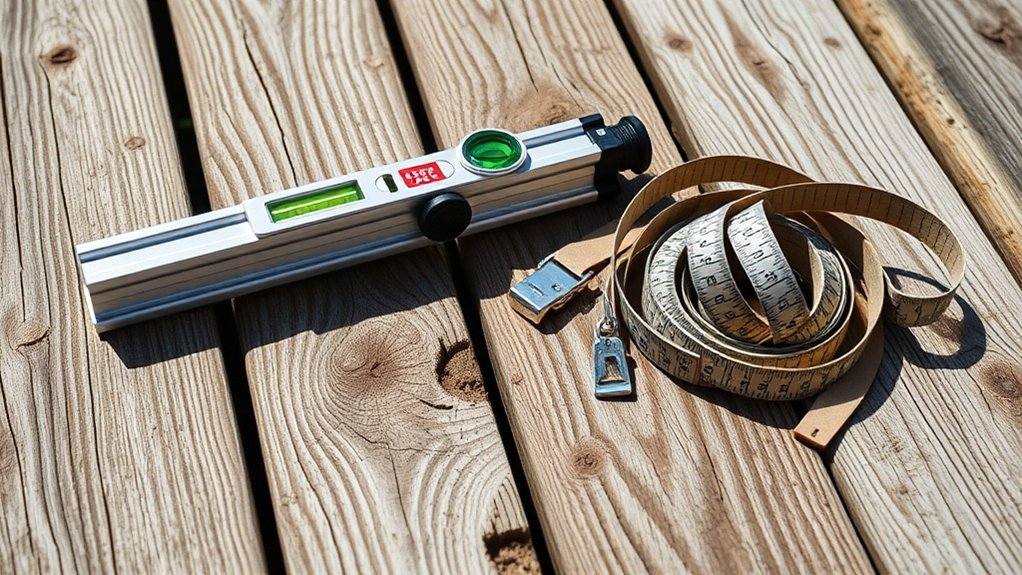
Leveling and measurement tools are crucial for building a strong, lasting fence. Using them correctly ensures your fence is straight and evenly spaced, which helps avoid future repairs.
- A bubble level helps keep your posts straight, giving your fence a professional appearance.
- A reliable tape measure ensures consistent spacing between panels for a uniform look.
- Specialized leveling tools make it easier to achieve accuracy, whether you’re a DIYer or a pro.
Investing in these tools can lead to lower maintenance costs and a longer-lasting fence.
Protective Gear for Safe Fence Work
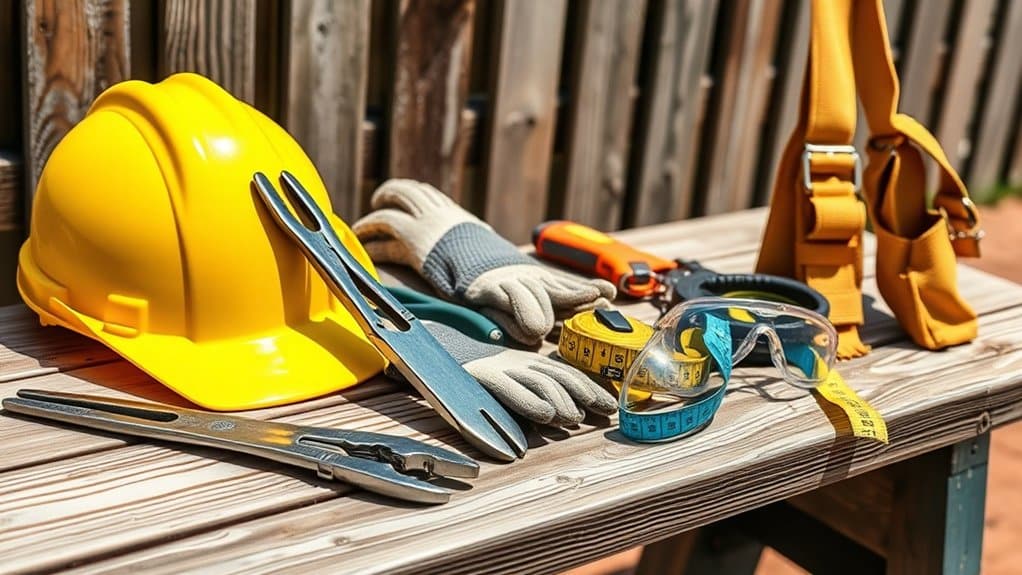
When building a fence, wearing the right protective gear is crucial. Start with gloves to protect your hands from cuts and punctures. Use safety glasses or goggles to shield your eyes from debris.
Steel-toed boots are essential for protecting your feet from heavy materials and accidents. Wear long sleeves and pants to guard against environmental hazards. A hard hat is important if you’re at risk of falling objects.
Regularly check your gear for damage and replace worn items to stay safe. These precautions will help ensure a safer and more efficient fence installation.
Tools for Wire Fencing Maintenance
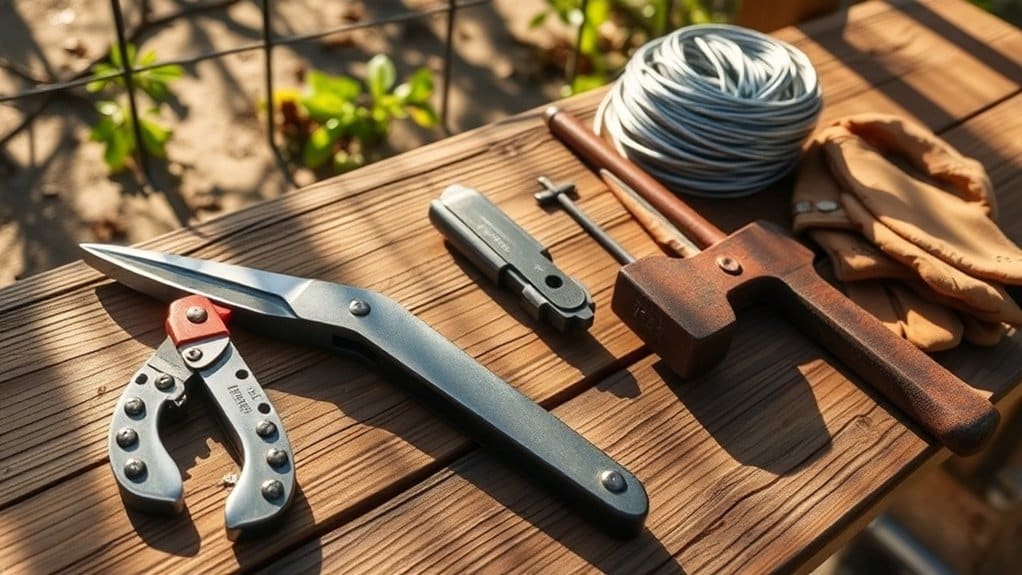
Maintaining wire fencing requires specific tools to ensure efficiency and durability. Here are the essential tools you’ll need:
- Fence pliers: These are versatile tools for gripping, cutting, and hammering wire.
- Wire stretchers: Use these to keep your fencing wire taut without causing damage.
- Heavy-duty wire cutters: Ideal for making clean, precise cuts through tough wire.
Having these tools makes any wire fencing project easier and helps extend the life of your fence.
Regular maintenance is crucial, so make sure to use these tools for a strong, lasting barrier.
Soil Compaction and Stabilization Tools
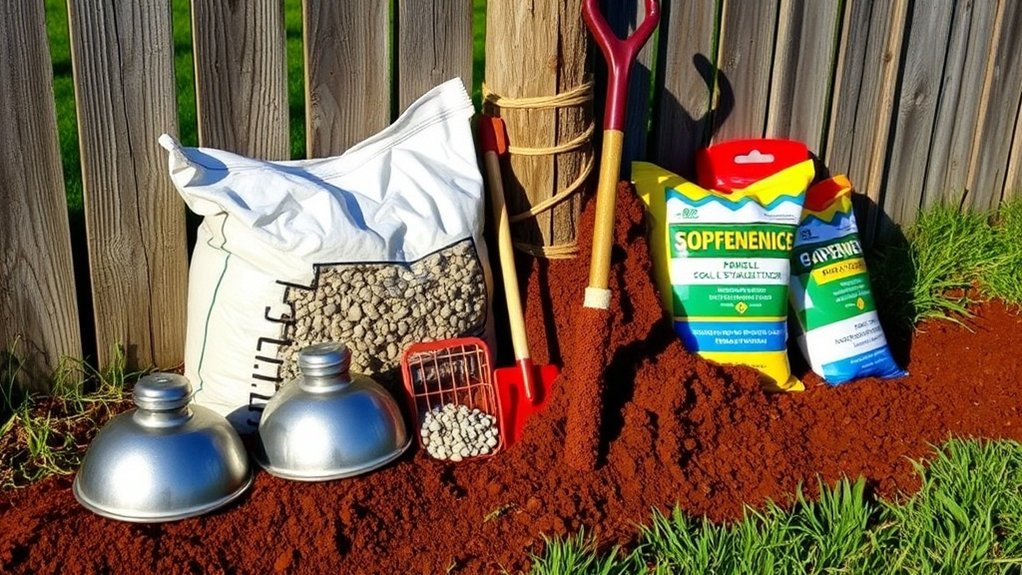
Effective fencing depends not just on materials but also on the stability of the ground.
For compacting soil around fence posts in tight spaces, hand tampers are ideal. For larger areas, vibratory plate compactors work well to ensure even density in granular soils.
In confined areas, rammer compactors, also known as “jumping jacks,” provide strong impact for cohesive soils. For deep compaction of clay and cohesive soils, tamping rollers are best, often used with excavators.
To check your compaction levels, soil compaction testers are essential, ensuring your fence remains sturdy for years.
Painting and Sealing Tools for Wood Fences
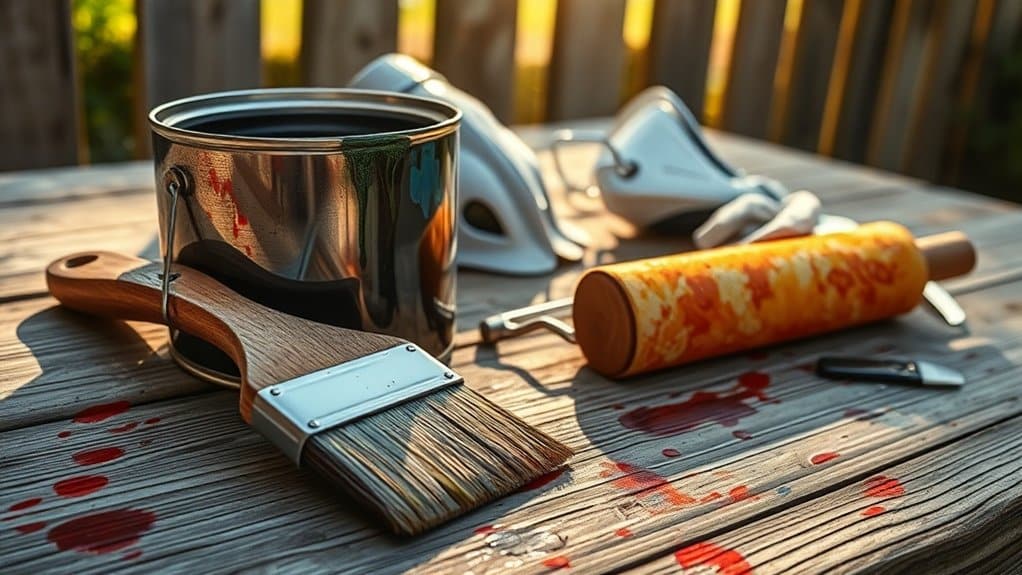
To paint and seal wood fences effectively, it’s crucial to have the right tools.
You’ll need quality rollers with the right nap for smooth coverage and brushes for detailed areas.
Use proper sealing techniques to ensure your fence lasts longer.
With the right supplies, your fence won’t only look great but also resist weather damage over time.
Essential Painting Supplies
To achieve a professional finish on your wood fence, having the right painting supplies is essential. Quality tools not only improve appearance but also extend your fence’s life.
Here’s what you need:
- High-quality paintbrushes (2-5 inch width for detail)
- Paint rollers (for quick coverage of large areas)
- Airless paint sprayer (for speed and even application)
Choose exterior wood paint or stain that resists weather damage. Ensure your paint is top-notch to avoid peeling or fading.
Don’t skip preparation—clean surfaces thoroughly before painting to ensure a good bond and a smooth finish.
With the right supplies, you can turn your fence into an attractive feature of your property.
Effective Sealing Techniques
To ensure your wood fence lasts, it’s crucial to apply a durable seal. Start by cleaning the wood with a wood cleaner and sanding it with medium and fine grit sandpaper. Repair any damage you find.
For sealants, choose oil-based ones for humid areas as they penetrate deeply, or water-based for quick drying and UV protection. Use a brush for edges, a roller for flat surfaces, and a sprayer for speed, but always back-brush to ensure even coverage.
Apply thin, multiple coats, especially in moisture-prone areas, and let each coat dry according to the product instructions for the best results.
Maintenance Tools for Chain-Link Fences
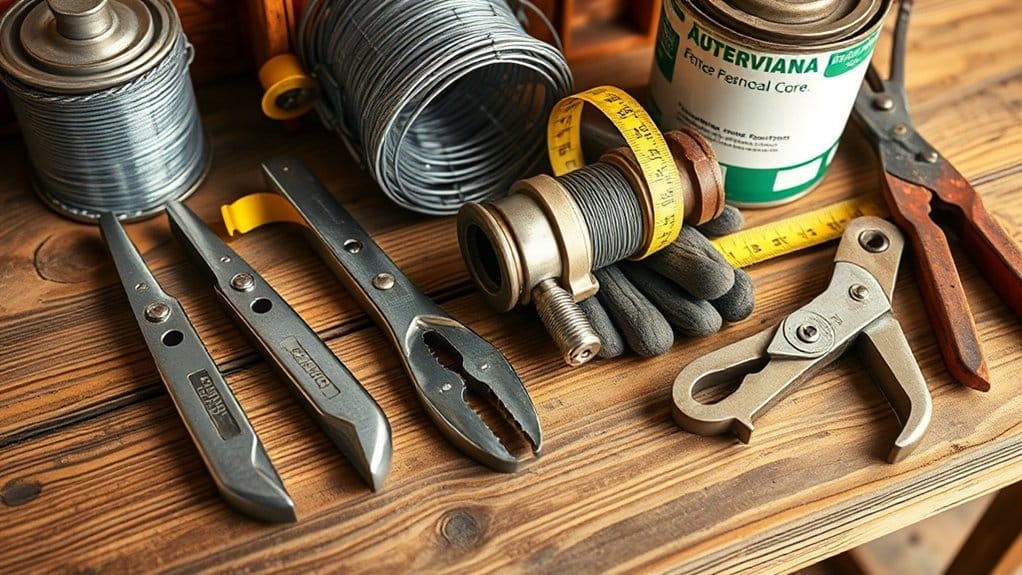
Maintaining a chain-link fence is easier with the right tools. Here are the must-haves for effective repairs and installations:
- Fence stretcher: Use this to get the perfect tension in your fence fabric.
- Hog ring pliers: These help you securely attach the fabric to the posts.
- Wire cutters: Essential for cutting through tough chain link wire.
With these tools, you can confidently make repairs and adjustments, ensuring your fence remains sturdy against the weather.
Investing in the right equipment pays off, saving you time and boosting your fence’s durability.
Storage Solutions for Fence Maintenance Tools
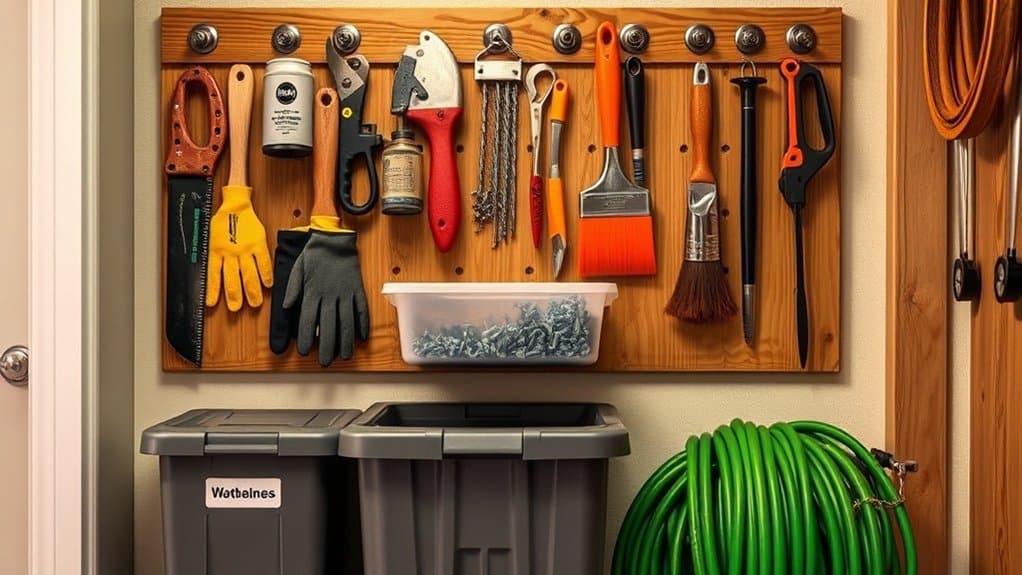
Proper maintenance of your chain-link fence depends on both the right tools and effective storage. Good storage solutions keep your tools organized and ensure they’re easy to access when needed.
Here are some practical options:
| Storage Solution | Benefits |
|---|---|
| Multi-layer toolboxes | Keep small fasteners organized |
| Wall-mounted racks | Free up floor space, easy access |
| Sealed compartments | Protect tools from rust and damage |
| Portable toolboxes | Easy to transport to job sites |
Selecting the right storage method not only protects your tools but also streamlines your workflow, saving you time and effort.
Tips for Choosing the Right Tools for Your Fence Projects
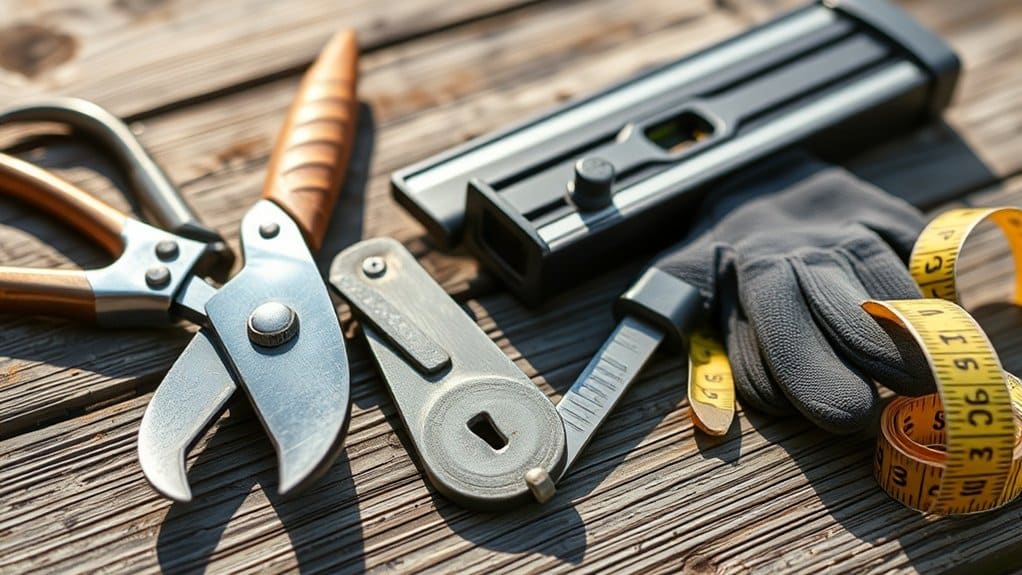
To ensure you’re ready for your fence projects, start by selecting the right tools based on your needs. Focus on tools that offer accuracy and efficiency, like tape measures and post hole diggers.
Here are some key points to consider:
- Invest in quality: Durable tools last longer, saving you money on replacements.
- Opt for versatility: Multi-functional tools help reduce clutter and make your work easier.
- Prioritize comfort: Ergonomic tools minimize fatigue, boosting your productivity.
Remember to maintain your tools; regular cleaning and inspection keep them in top shape for your next project.
Frequently Asked Questions
How Often Should I Maintain My Fence?
Inspect your fence once a year and perform maintenance every six months, in spring and fall. Clean it and remove debris to keep it sturdy and looking good all year round.
What Is the Best Time of Year for Fence Repairs?
The ideal times for fence repairs are spring and fall. These seasons provide mild weather and dry conditions, perfect for quality repairs. Spring allows you to fix any winter damage, while fall is great for inspecting and preparing your fence for the harsh winter ahead.
Can I Rent Tools Instead of Buying Them?
Yes, renting tools is a smart way to save money. If you have a short-term project, like fixing a fence, renting specialized equipment can cut down on costs and avoid storage issues. It’s a practical solution for occasional tasks.
How Do I Safely Dispose of Old Fence Materials?
To dispose of old fence materials safely, start by separating them. Recycle any metal components, compost untreated wood, and take care with hazardous materials like treated wood or chemicals. Always check local disposal guidelines to ensure you’re following the correct procedures.
What Are Common Signs My Fence Needs Repair?
Watch for signs like discoloration, soft wood, and wobbly sections—these indicate something’s wrong. Check for cracks, splinters, or signs of pests. If more than 20% of your fence shows these issues, it’s time for repairs.
Conclusion
As a homeowner, having the right tools for fence maintenance is essential. Think of a post hole digger as your go-to tool for digging holes easily, while a quality trimmer helps you keep the edges tidy. When it comes to assembly, a good hammer and level ensure everything is straight and secure. With these basic tools, you can maintain your fence effectively, making the job easier and more efficient.