
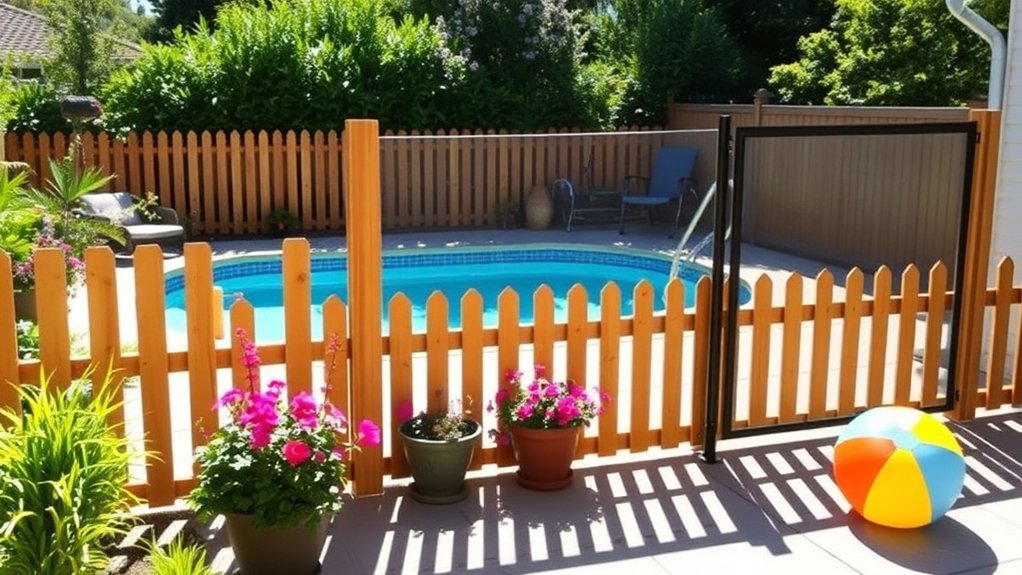
For budget-friendly and safe pool fencing, consider lightweight mesh options that are easy to maintain. Make sure your fence includes important safety features like a self-closing gate and a high latch. Eco-friendly choices made from recycled materials enhance safety while being kind to the environment. You can also customize your fence with colorful mesh or chain link with privacy slats to boost your space’s appeal. Explore more effective solutions and tips for your pool area.
Key Takeaways
- Affordable mesh pool fences are safe and low-maintenance, costing between $10 and $35 per linear foot to install.
- Eco-friendly choices like recycled wood and composite materials not only promote sustainability but also improve the look of your pool area.
- Make sure your fence is at least 4 feet high, features a high latch, and has a self-closing gate for better security.
- Use climb-resistant materials like high-density mesh and sturdy poles to deter unauthorized access.
- Regular inspections and cleaning are key to keeping your pool fence safe and extending its lifespan.
Affordable Mesh Pool Fences

Affordable mesh pool fences are a smart way to secure your pool without overspending. They’re lightweight, easy to maintain, and soft to the touch, reducing the risk of injury. These fences effectively prevent children and pets from climbing over, boosting safety. Aluminum pool fencing can also be a low-maintenance option to consider for added durability and style. Installation costs typically range from $10 to $35 per linear foot, depending on whether you hire a pro or go the DIY route. Professionally installed mesh pool fences ensure compliance with safety codes, further enhancing protection for your family. Your total expenses can vary based on your pool’s layout, the type of gates you choose, and the surface materials. Sticking with standard heights and colors can save you money too. With proper installation and care, a mesh fence will protect your pool and give you peace of mind.
Essential Safety Features for Pool Fencing

When selecting pool fencing, it’s crucial to include key safety features like a high gate latch, materials resistant to climbing, and a self-closing gate. These features help keep your pool area secure and reduce the chance of accidents. Additionally, ensuring that the fence height is at least 4 feet is essential for preventing unauthorized access. It is also important to consider additional security features such as electronic locks and alarms, which can significantly enhance the safety of the pool area.
Gate Latch Height Requirements
Ensuring your pool gate latch meets height requirements is essential for child safety. Follow these key points:
- Latch Height: Aim for a latch height of at least 54 inches. In places like California, a height of 60 inches is often required for extra security.
- Latch Positioning: Install the latch on the pool side of the gate, positioning it at least 3 inches below the top edge to prevent children from reaching over. Additionally, the California Pool Safety Act mandates that gate latches must be located at least 54 inches above ground to keep it out of reach of small children. This aligns with Florida’s requirement for pool safety compliance.
- Self-Latching Mechanism: Ensure your latch is both self-closing and self-latching to automatically secure the gate after use.
Climb-Resistant Materials
Climb-resistant materials are crucial for pool safety, as they help prevent children from climbing over fences. High-density mesh fabric is a great option because its tight weave leaves no footholds for kids.
Lightweight aluminum poles offer durability, while stainless steel rods provide extra strength where it’s needed most. For outdoor use, PVC reinforced poles resist corrosion.
Additionally, welded wire mesh adds another layer of security. Always ensure your fencing meets safety standards like ASTM and CPSC for optimal protection.
Choosing the right materials ensures a safe environment without breaking the bank.
Self-Closing Gate Mechanism
A self-closing gate mechanism is a crucial safety feature for pool fencing that helps prevent accidental access.
Here are three key benefits:
- Prevents unauthorized access: The gate closes automatically, ensuring it’s never left open.
- Reduces drowning risk: This is especially important for young children, enhancing safety for everyone.
- Meets regulations: Many local codes require these features, providing added peace of mind.
With adjustable tension and strong materials, these mechanisms offer reliable protection.
Regular maintenance is vital to ensure they function properly, keeping your pool area safe and compliant.
Eco-Friendly Pool Fencing Options

When selecting eco-friendly pool fencing, consider materials like recycled vinyl and composite.
These options are durable, weather-resistant, and low-maintenance, saving you time.
Recycled Material Fencing
Recycled material fencing is a smart, eco-friendly choice for your pool area. It saves you money and helps the environment.
Here are three excellent options:
- Recycled Wood: Using reclaimed wood from old buildings not only cuts down on new timber usage but also gives your space a distinctive look.
- Composite Materials: These fences, made from recycled plastics and wood fibers, resist rot and pests, making them low-maintenance.
- Recycled PVC/Vinyl: Strong and water-resistant, these fences often contain a lot of recycled material, meeting safety standards while looking great.
Choosing recycled fencing enhances your pool area and reduces your environmental footprint.
Weather-Resistant Options
Choosing weather-resistant fencing for your pool area enhances safety and ensures long-lasting, low-maintenance solutions.
Materials like Resysta and composite fencing are excellent choices due to their durability against moisture, UV rays, and insects. Resysta is chlorine-resistant, making it ideal for poolside use, while composite fencing resists rot for a reliable barrier.
Bamboo and metal options also perform well in harsh conditions, offering strength and reliability.
Additionally, recyclable vinyl fencing can withstand winds up to 130 mph, making it suitable for various climates.
Low Maintenance Solutions
Investing in low-maintenance, eco-friendly pool fencing can enhance your outdoor space while promoting sustainability.
Here are three excellent options:
- Bamboo Fencing: A renewable resource that resists moisture and pests, bamboo requires minimal upkeep and gives your pool area a natural look.
- Vinyl Fencing: Made from recycled PVC, vinyl fences are durable and don’t need painting or staining. They resist moisture and fading, making them a reliable pool barrier.
- Composite Fencing: This option combines wood fibers and recycled plastics. It looks like wood but doesn’t require regular maintenance, helping you reduce your ecological footprint.
Opt for these stylish, eco-friendly choices for low-maintenance pool fencing!
Aesthetic Choices for Budget Pool Fencing

If you’re looking to upgrade your pool area on a budget, consider some affordable fencing options that can really enhance the space.
Classic wooden fences add a warm, natural feel and can be customized in styles like picket or solid for more privacy.
Metal and aluminum fences are sleek and come in various finishes, allowing you to choose colors that match your decor.
For a rustic vibe, stone or concrete fences can be painted to fit your color scheme.
Mesh and composite materials offer a modern look and require little maintenance, combining safety with style.
Adding decorative elements or landscaping can further boost your pool area’s appeal.
Understanding Local Compliance Regulations

When enhancing your pool area with stylish fencing, understanding local compliance regulations is crucial for safety and legality.
Here are some key points to consider:
- Height and Spacing: Ensure your fence is at least 4 to 5 feet tall, and check for any gap restrictions to keep kids safe.
- Gate Features: Gates should open outward and be self-closing and self-latching, with latches out of reach of small children.
- Barrier Design: Use solid fences without horizontal members to prevent climbing, and avoid gaps larger than 4 inches.
Always verify compliance with local regulations to avoid fines and ensure a safe environment for your family and guests.
Tips for DIY Installation of Pool Fencing

Before you start installing your pool fence, make a clear plan. Measure the perimeter of your pool and mark where the posts will go, keeping at least two feet away from the water for safety.
Gather the necessary tools like a hammer drill and masonry bits, and choose fencing materials that comply with safety standards.
When drilling, ensure your holes are straight. If you’re installing a permanent fence, set the posts in concrete.
Follow the manufacturer’s instructions to assemble the sections, making sure all connections are secure.
Once done, walk along the fence line to check that everything is attached correctly, the gates operate smoothly, and there are no gaps that could pose a safety risk.
A proper DIY installation boosts safety and adds value to your property.
Maintenance Strategies for Long-Lasting Fencing

To keep your pool fence safe and lasting, regular maintenance is key. Follow these simple strategies:
- Monthly Cleaning: Wipe down the fence with mild soap and water to remove dirt without causing damage.
- Seasonal Inspections: Check for rust, corrosion, and loose parts. Catching these issues early can save you from bigger problems later.
- Protective Treatments: Seal wooden fences once a year and use rust-resistant paint on metal to help them last longer.
Customization and Adaptability in Pool Fencing

Pool fencing is more than just a safety feature; it’s an opportunity for customization to suit your needs.
You can choose from various styles, such as chain link fences with privacy slats or colorful mesh for a unique flair.
Consider materials like wrought iron, aluminum, or even a combination of wood and gabion for a distinctive look.
Retractable rolltop fences allow you to easily adjust height and privacy, while DIY mesh sections can adapt to different pool shapes.
Custom cut panels ensure a perfect fit, enhancing both safety and the overall appearance of your outdoor space.
Frequently Asked Questions
What Are the Best Pool Fencing Materials for Windy Areas?
For windy areas, choose sturdy materials like metal, vinyl with airflow designs, or composite wood. These options are strong against gusts, low-maintenance, and enhance your pool’s safety and look.
How Do I Choose the Right Height for My Pool Fence?
To select the right height for your pool fence, follow safety regulations. A minimum height of 48 inches is recommended, but 5 feet offers better security. This height helps prevent children from climbing or crawling over the fence easily.
Can I Install a Pool Fence on Uneven Ground?
Yes, you can install a pool fence on uneven ground by using stepped or rackable panels. Make sure to evaluate the terrain for stability and adjust as needed to ensure a safe and effective setup.
What Is the Average Cost of Pool Fencing Installation?
The average cost of installing pool fencing is between $2,000 and $13,500. This variation depends on the style and complexity of the fence. To get the best results, choose durable materials and make sure you follow local regulations.
How Can I Improve the Visibility of My Pool Fence?
To enhance the visibility of your pool fence, consider using semi-framed glass designs that provide clear sightlines. Regularly trim any surrounding plants and opt for simple patterns in your fence. This ensures an unobstructed view of the pool area, making it safer and more aesthetically pleasing.
Conclusion
In conclusion, you don’t need a lavish pool fence to ensure safety. Affordable options can be both secure and visually appealing. Consider using durable mesh or eco-friendly materials to create a stylish barrier without breaking the bank. With regular upkeep and adherence to safety guidelines, your pool can remain a safe space for everyone. Choose wisely and keep your pool area secure!

Find the perfect pool fencing ideas that blend safety and style to elevate your backyard oasis—discover what options await you!

In small backyards, discover how to maximize space and safety with innovative pool fencing solutions that will transform your outdoor Read more

Find the perfect non-slip surfaces to complement your pool fencing and enhance safety—discover unique options that transform your pool area Read more


