
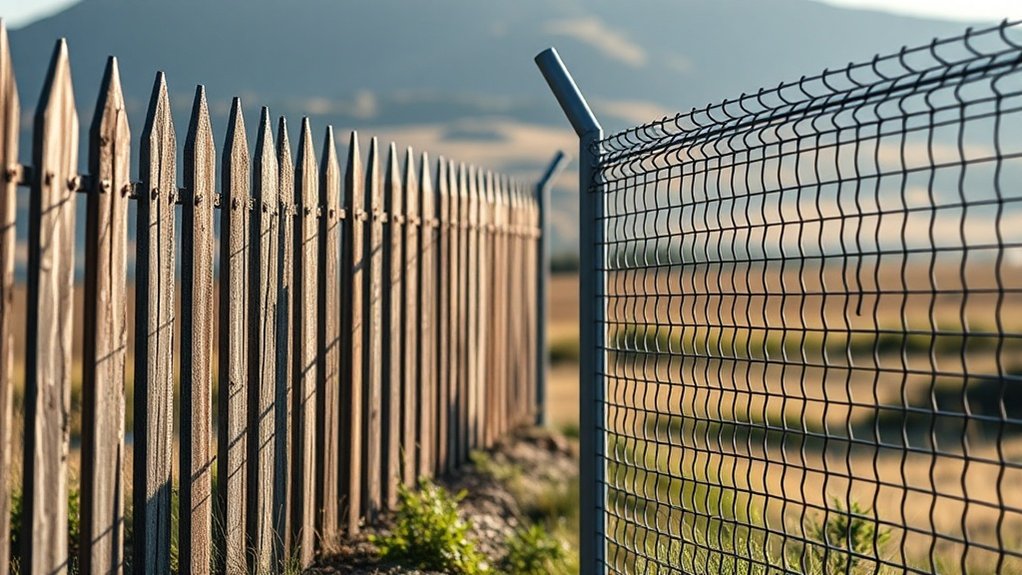
When deciding between palisade fencing and welded mesh fencing, think about your security needs. Palisade fencing, with its sharp tops and solid steel construction, is great for high-risk areas. On the other hand, welded mesh fencing allows for visibility and has features that prevent cutting, making it ideal for places that require surveillance. Each type has unique installation and maintenance needs. By comparing costs and aesthetics, you can choose the option that best fits your project.
Key Takeaways
- Palisade fencing provides strong security with its sharp tops and narrow gaps, making it difficult for intruders to access the property.
- Welded mesh fencing allows for visibility while offering anti-cut features, making it a good choice for areas that need surveillance.
- While palisade fencing is great for high-risk locations, its fortress-like design may not suit residential areas.
- Welded mesh fencing is typically cheaper and easier to install, resulting in lower maintenance costs over time.
- Both options effectively deter intruders, but the best choice depends on your specific security needs and design preferences.
Overview of Palisade Fencing
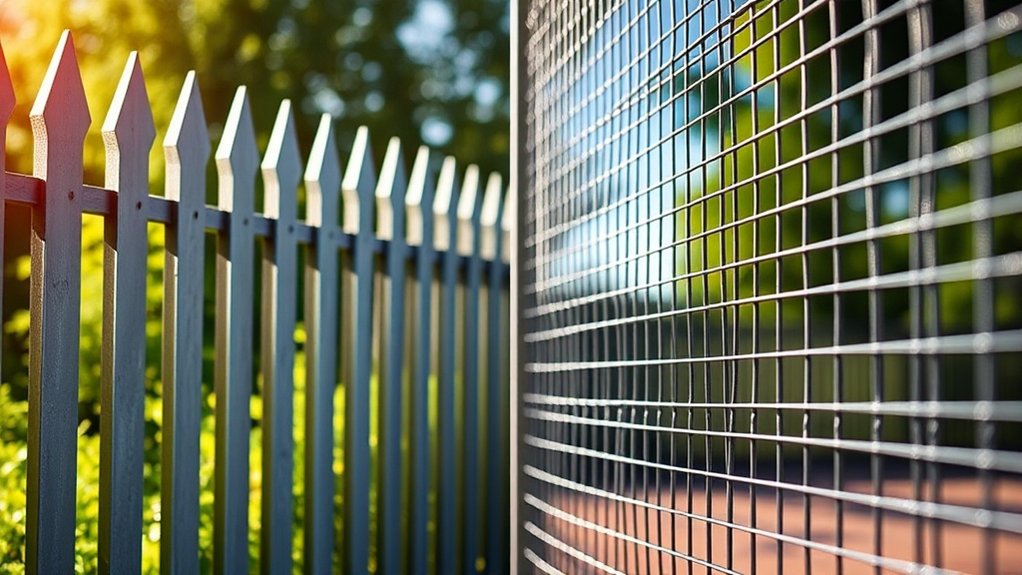
Palisade fencing is a strong security option made from vertical steel pales attached to sturdy horizontal rails. It has evolved over the years from wooden barriers to the durable steel designs we see now. One major advantage of palisade fencing is its tough structure, featuring pointed tops that effectively deter intruders. Available in heights between 6 to 10 feet, it can be customized to meet various security needs. Constructed from galvanised steel, it’s resistant to rust and weather damage, ensuring it lasts with minimal upkeep. Its modular design allows for easy installation on uneven terrain, making it suitable for homes, businesses, and industrial sites. Additionally, palisade fencing is a top choice for durability and unauthorized entry prevention, making it an ideal option for enhancing security. This fencing option, like wrought iron fences, provides a robust barrier against intruders and enhances property value.
Overview of Welded Mesh Fencing
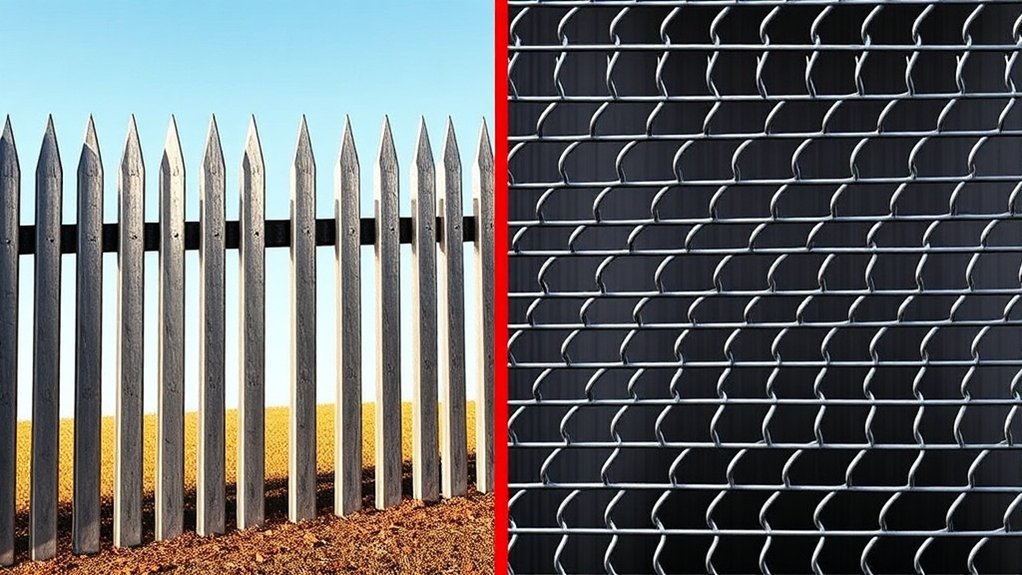
Welded mesh fencing is made from low carbon steel wires that are welded together at each intersection, forming a strong barrier with rectangular or square openings. This design has closely spaced wires that improve security and prevent climbing, making it tough for unauthorized individuals to get through. The materials used are durable and often treated to withstand various weather conditions, ensuring the fencing looks good and functions well over time. Additionally, weld mesh fencing provides a modern alternative to outdated fencing solutions, enhancing overall security in various applications. Its cost-effectiveness makes it an appealing choice for both residential and commercial properties seeking reliable protection.
Construction and Materials
Welded mesh fencing is a strong and versatile option for both residential and commercial use. Made from a grid of wires welded together, it offers excellent stability, especially in rigid panel formats. Common sizes like 4’x8′ and 6’x8′ suit various needs, and the 2″x4″ mesh openings strike a good balance between visibility and security. Galvanized steel is the main material, providing durability against rust and corrosion, while stainless steel is better for harsh environments. For decorative purposes, aluminum or PVC-coated options are available. Overall, welded mesh fencing is a reliable choice for effective fencing solutions, making it a popular choice for yard fencing and other applications. Additionally, its low maintenance nature makes it an appealing option for busy property owners.
Security and Anti-Climb Features
Welded mesh fencing offers strong security thanks to its sturdy design and anti-climb features. The welded wires form a solid barrier that’s hard to cut or pry open, acting as a strong deterrent.
Its tight mesh pattern limits footholds, making it difficult to climb. The small openings and smooth surfaces also resist cutting tools, further enhancing security. Optional features like angled tops or spikes can improve anti-climb effectiveness.
Plus, its open design provides clear visibility for easy perimeter monitoring. Overall, welded mesh fencing is a durable and effective choice for anyone focused on safety.
Security Features of Palisade Fencing
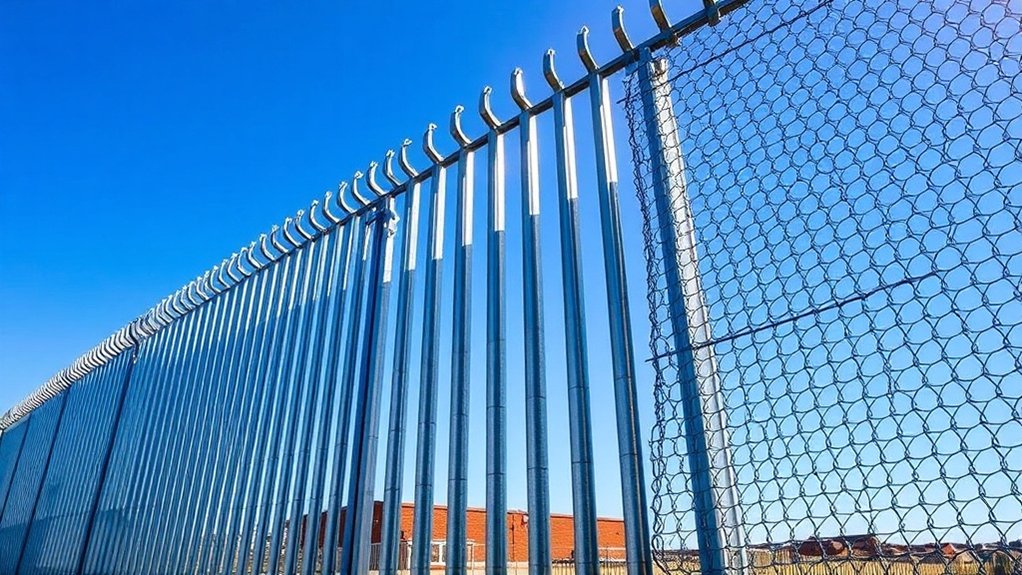
Palisade fencing provides strong security features ideal for protecting high-risk areas. Made from high-tensile galvanized steel, it offers durability and is resistant to tampering. Its anti-climb design, featuring sharp tops and narrow spacing, effectively deters intruders. The solid steel pales create a formidable barrier, delaying unauthorized access better than typical fences.
| Feature | Description | Benefit |
|---|---|---|
| Material Strength | High-tensile galvanized steel | Long-lasting and tamper-resistant |
| Anti-Climb Designs | Sharp tops, narrow gaps | Prevents climbing |
| Intrusion Delay | Hard to cut or pry | Boosted security |
These qualities make palisade fencing a top choice for high-security environments.
Security Features of Welded Mesh Fencing
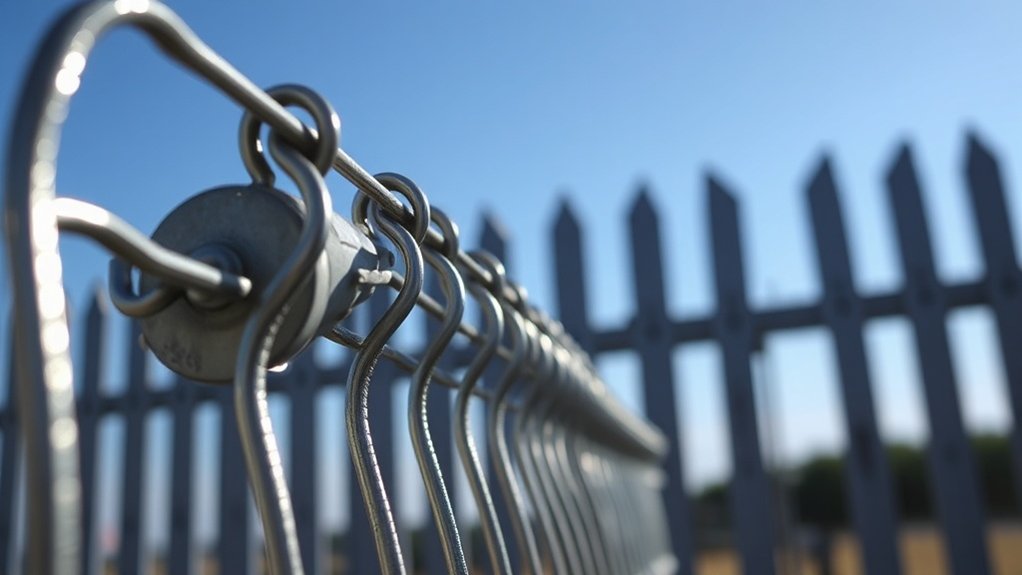
Welded mesh fencing is highly secure due to its strong climbing resistance and anti-cut features.
The tightly spaced mesh makes it tough for intruders to find footholds, and cutting through the wires takes time and effort.
This combination effectively deters unauthorized access and helps maintain a safer perimeter around your property.
Climbing Resistance Properties
When choosing security fencing, welded mesh fencing is a top choice due to its strong design. The welded steel wires create a rigid grid that resists bending, making it hard for anyone to climb.
The tight 358 anti-climb mesh openings (3” x 5”) leave no room for hand or footholds, making climbing attempts difficult. Plus, the smooth surface and lack of sharp edges further deter climbers.
Welded joints add strength, ensuring the fence holds up over time. For added security, features like razor wire or electric fencing can enhance its climbing resistance, creating a strong barrier against unauthorized access.
Anti-Cut Features
Anti-cut features in welded mesh fencing offer exceptional security. Its robust design is ideal for high-security areas. Here’s how it works:
- Heavy-gauge steel (4 mm or thicker): This thickness makes cutting attempts difficult.
- Small mesh openings (12.7 mm x 76.2 mm): These prevent tools from gaining leverage.
- Welded joints: They create a strong structure that resists separation.
- Reinforcement options: Adding horizontal bars enhances strength even further.
These features limit the effectiveness of standard cutting tools, ensuring the mesh withstands brute force attacks.
Installation and Maintenance Considerations
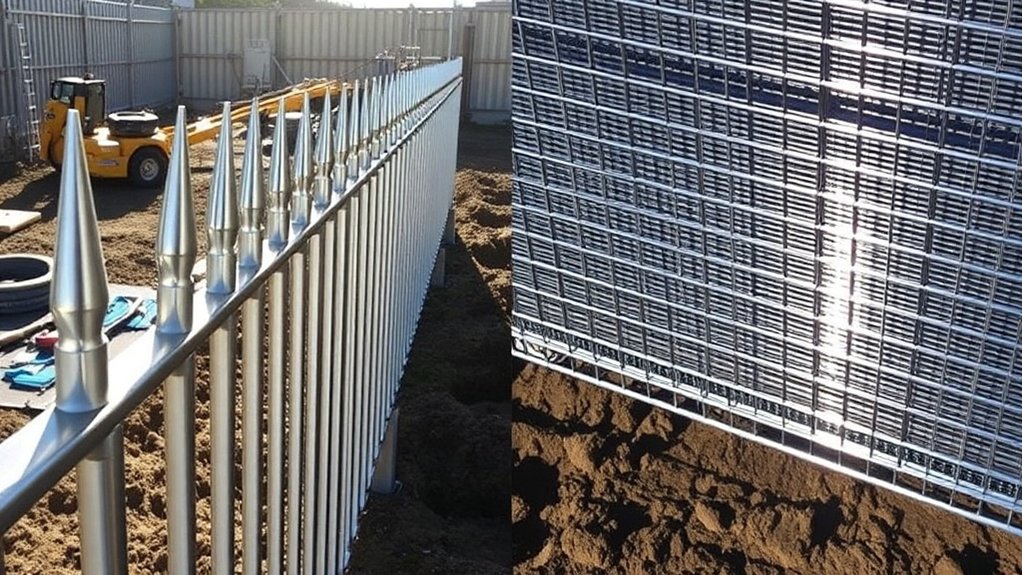
When installing palisade fencing, it’s crucial to consider deep post holes and precise concrete setting to ensure stability and security. For security-focused needs, hiring a professional installer can help you avoid common pitfalls.
Maintenance is key to longevity. Inspect your fencing at least twice a year, especially after severe weather. Look closely at high-risk areas and do quarterly checks for any signs of wear.
Clean your fence every six months with low-pressure water or mild detergent to prevent damage to the coating. Promptly touch up any protective finishes to avoid rust, and consult a professional for any structural concerns.
Following these tips can significantly extend your fence’s lifespan.
Aesthetic and Architectural Differences
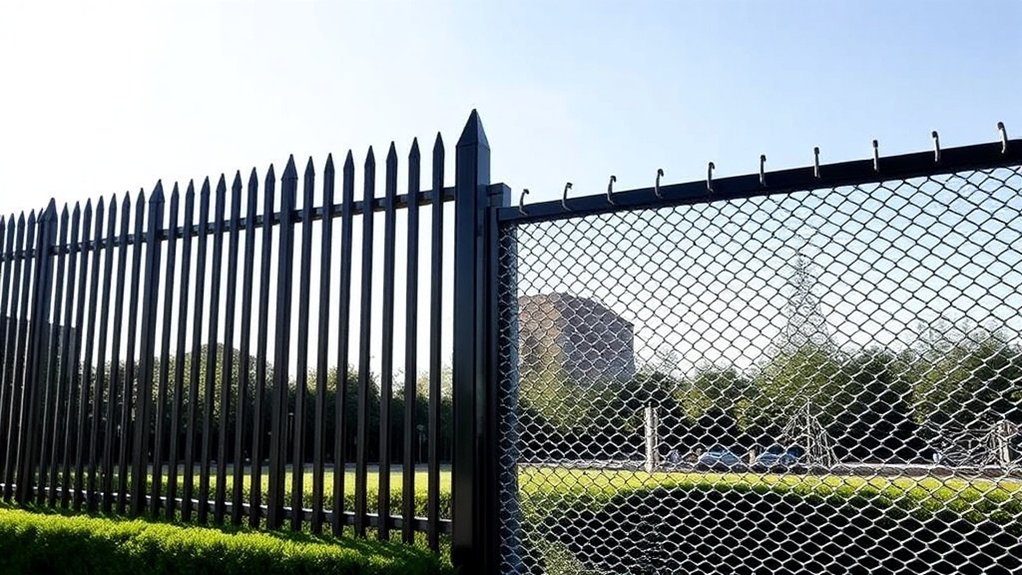
When choosing between palisade fencing and welded mesh, aesthetics and architecture matter alongside security.
- Palisade fencing features vertical steel pickets that create a strong, fortress-like look, emphasizing security.
- In contrast, welded mesh has a sleek, modern design that blends seamlessly into different environments, enhancing overall appeal.
- The bold appearance of palisade fencing may not suit residential or educational settings, where a softer look is often more desirable.
- Welded mesh can be customized with various color coatings, allowing it to match landscaping and architectural styles effectively.
Ultimately, your decision should reflect both security requirements and the visual impact you want for your space.
Cost Analysis and Application Suitability
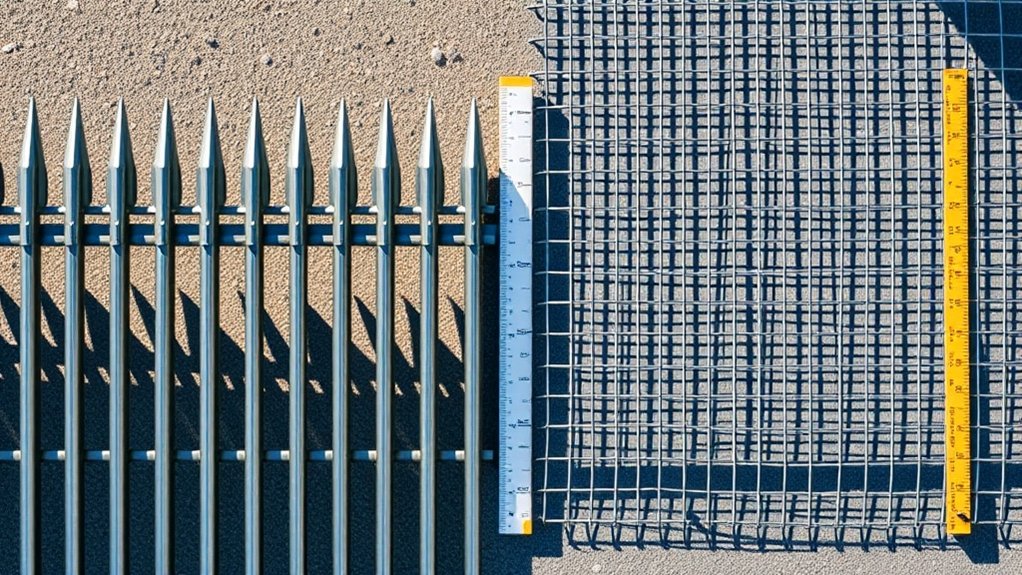
When comparing palisade fencing and welded mesh, consider both initial costs and ongoing maintenance.
Palisade fencing usually ranges from $15 to $30 per square foot, while welded mesh costs between $8 and $25. Though palisade fencing has a higher upfront cost due to its complex installation, welded mesh is often more cost-effective because it assembles quickly and requires less maintenance.
Think about where you’ll use the fencing: palisade fencing is best for high-risk areas that need a strong visual deterrent, while welded mesh works well in places like correctional facilities, where visibility and security tech integration are key.
Your decision should reflect your budget and security needs.
Frequently Asked Questions
How Long Does Palisade Fencing Typically Last?
Palisade fencing usually lasts between 15 and 40 years, influenced by the materials used and environmental conditions. Regular maintenance, like inspections and cleaning, can significantly extend its lifespan and prevent early wear.
Can Welded Mesh Be Painted or Customized?
Yes, you can paint and customize welded mesh. To ensure the paint sticks well, proper surface preparation is key. You can also get creative with textured finishes or stencils for added style. Painted welded mesh not only looks good but is also durable, making it a great choice for various uses.
What Are Common Uses for Palisade Fencing?
Palisade fencing is commonly used for protecting assets and marking boundaries in commercial settings. In residential areas, it enhances security while allowing visibility, which helps deter intruders and promotes a sense of safety.
Are There Eco-Friendly Options for Both Fencing Types?
Yes, both fencing types have eco-friendly options. They can include recycled materials and sustainable practices like modular designs and low-emission coatings. This way, you can choose a responsible solution that doesn’t sacrifice quality or durability.
How Do Weather Conditions Affect These Fence Types?
Weather impacts fence durability significantly. Moisture can speed up corrosion in both palisade and welded mesh fences. Palisade fences usually handle wind better, while welded mesh might need extra support in tough conditions to stay strong.
Conclusion
When deciding between palisade fencing and welded mesh, it really depends on your needs. Palisade fencing is known for its strong security, thanks to its tough design. On the other hand, welded mesh offers a more flexible and visually appealing option. Think about what matters most to you—security or aesthetics—before making your choice. Ultimately, the best option should fit your security goals, budget, and how you plan to use the fencing.
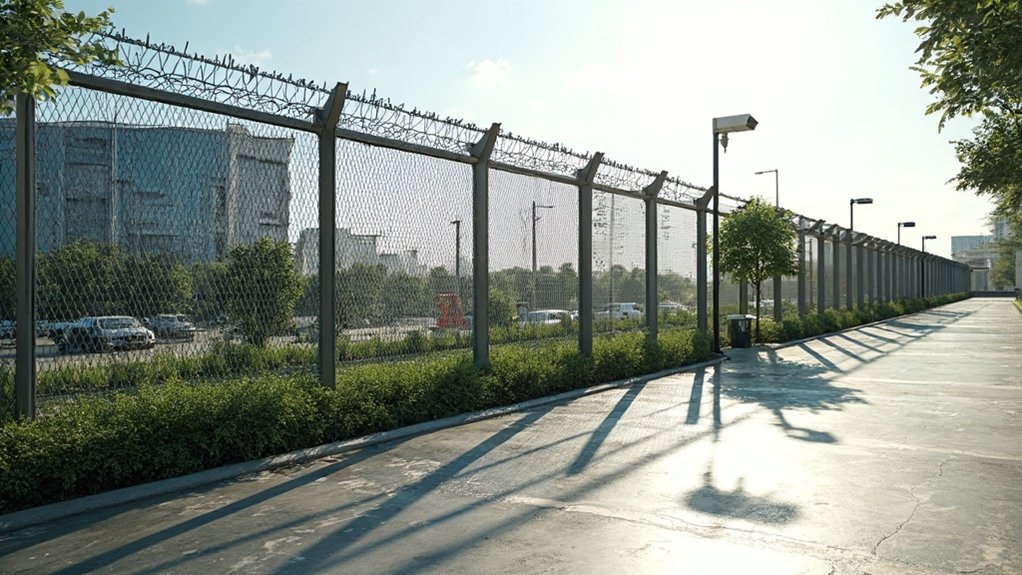
Navigate the world of anti-climb fence options for high-security zones and discover why the right choice is crucial for protecting Read more
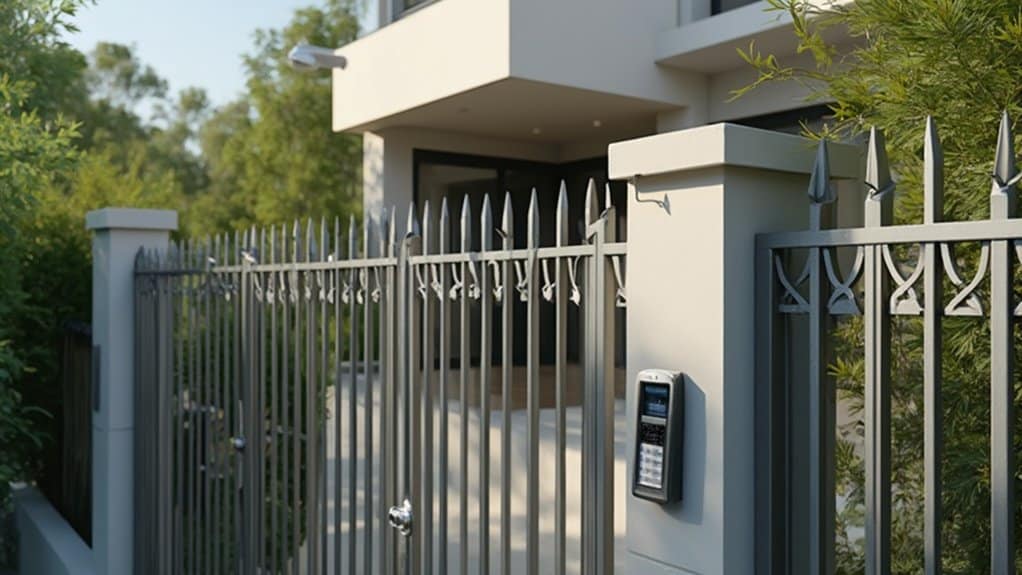
Find the perfect security fencing solutions for your property that combine style and strength; discover how to protect your space Read more

With the right combination of bollards, barriers, and fencing, you can elevate safety and security—discover how to create the ultimate Read more


