Pre-treated wooden fence panels are built to last, typically enduring 15–20 years with minimal care, unlike untreated panels that last around 5–10 years. They offer better weather resistance, shielding against moisture and UV damage. Plus, pre-treated options fend off pests and decay thanks to protective chemicals, saving you money in the long run. Regular checks and maintenance keep them in great shape, allowing you to spend more time enjoying your yard rather than worrying about repairs. Explore more benefits and insights below.
Key Takeaways
- Pre-treated wood panels can last 15–20 years with proper care, while untreated softwoods typically only last 5–10 years.
- These pre-treated panels resist weather damage, preventing moisture issues and UV fading, which helps maintain their appearance over time.
- Pressure-treated wood is more resistant to pests and decay, offering better protection against termites and rot compared to untreated wood.
- Choosing pre-treated panels can save you money in the long run, as they require less frequent replacement and lower maintenance costs.
- Maintenance for pre-treated wood is easier too, needing checks every 6-12 months, compared to the more frequent 3-6 months for untreated panels.
Durability and Lifespan of Wooden Fence Panels

When looking at the durability and lifespan of wooden fence panels, it’s crucial to consider the impact of pre-treatment.
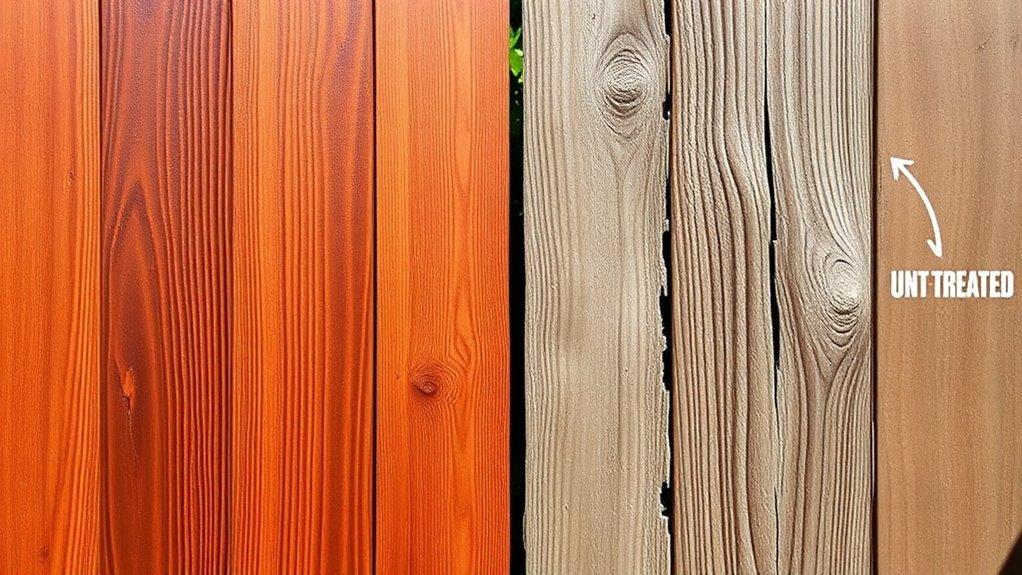
Pressure-treated wood can last 15–20 years or more with good maintenance. In contrast, untreated softwoods like spruce or fir typically last only 5–10 years due to their vulnerability to decay. Untreated pine falls into a similar range of 5–12 years. Additionally, pressure-treated wood is protected against moisture, fungi, and insects, significantly enhancing its longevity.
On the other hand, naturally durable woods like cedar and redwood can last 20–30 years without treatment. With proper treatment, cedar can even last up to 40 years. Cedar fencing can last 15 to 30 years with proper care and maintenance, making it a reliable choice.
Untreated wood panels, however, will need more frequent replacements and maintenance. Therefore, selecting the right wood type and treatment method is key to maximizing your fence’s lifespan and minimizing upkeep.
Weather Resistance and Environmental Protection

The durability of wooden fence panels hinges on their weather resistance and environmental protection. Pre-treated panels are top-notch in these areas thanks to advanced chemical preservatives.
- They resist moisture, preventing damage during heavy rain and humid conditions.
- Their enhanced UV resistance keeps them looking good, as they won’t fade easily in sunlight.
- Chemical barriers stop fungal growth, which helps prevent rot in wet environments. Additionally, regular inspections can help identify early detection of any issues before they escalate into major problems.
These features ensure that pre-treated panels can handle extreme temperatures and moisture changes without significant wear. In addition, their extended lifespan compared to untreated lumber means you’ll enjoy a longer-lasting fence that requires less maintenance.
Choosing pre-treated panels not only boosts durability but also reduces environmental impact.
Pest and Decay Resistance

Untreated wooden fence panels may look nice, but they lack the pest and decay resistance of pressure-treated wood. Pressure-treated wood is infused with chemicals that protect against moisture, fungi, and pests like termites and carpenter ants, which often target untreated wood. With proper care, pre-treated fences can last 10–20 years. These protective chemicals not only keep insects at bay but also fight rot, helping your fence stay strong over time. For added longevity, use corrosion-resistant nails and apply water-repellent preservatives during installation and maintenance. Additionally, pressure-treated pine is a budget-friendly option that offers a versatile solution for various fence designs. Furthermore, PVC fences can last over 50 years, making them a strong alternative to wood.
Cost Considerations Over Time

When evaluating the long-term costs of wooden fence panels, it’s important to look beyond the initial price.
Pre-treated panels typically last 15–20 years with minimal maintenance, making them a cost-effective choice. In contrast, untreated panels often need replacing every 10–15 years, which can drive up overall expenses.
Additionally, the maintenance costs for untreated wood can be higher than for pre-treated options, further increasing your total ownership costs.
Maintenance and Upkeep Requirements

When choosing wooden fence panels, it’s important to know how to maintain them for durability. Pre-treated panels should be inspected every 6-12 months, while untreated ones need checks every 3-6 months to prevent decay.
Clean both types at least once a year with a soft brush and mild detergent. For tougher grime, use a power washer under 800 psi.
Seal or stain pre-treated wood every 2-4 years; untreated wood may need it every 1-2 years. Regularly check for loose boards and damage, fixing any issues quickly to keep your fence sturdy and looking good.
Aesthetic and Customization Options

When choosing between pre-treated and untreated wooden fence panels, consider both functionality and visual appeal.
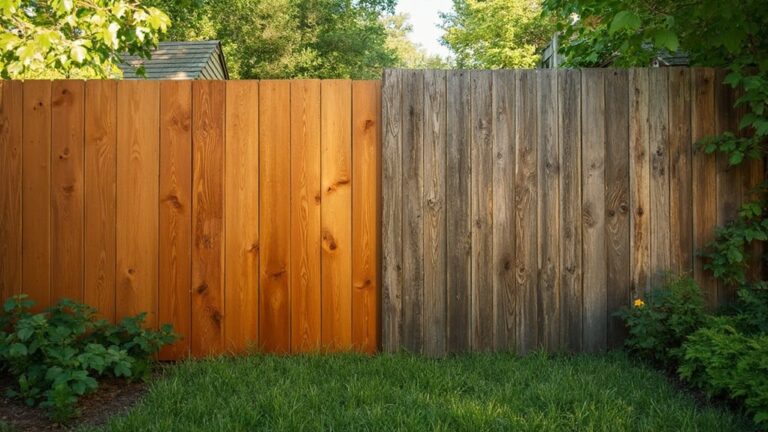
- Natural Look: Untreated wood, like cedar, highlights beautiful grains and warm tones, perfect for a rustic feel.
- Customization Options: Pre-treated panels serve as a blank canvas for bright colors, while untreated wood can be subtly stained to accentuate its natural beauty.
- Durability: Pressure-treated wood can be refinished multiple times, while untreated wood needs regular sealing to keep looking good.
Ultimately, your decision should reflect whether you prefer the natural charm of untreated wood or the creative potential of pre-treated panels.
Both options allow you to create a fence that fits your style.
Frequently Asked Questions
How Do I Choose Between Pre-Treated and Untreated Wood for My Fence?
When deciding between pre-treated and untreated wood for your fence, weigh the costs and longevity. Pre-treated wood is more durable and saves money over time. For example, if you choose untreated wood, you’ll enjoy its natural look, but be prepared for more maintenance and potential replacements. In short, if you want long-lasting value, go for pre-treated; if you prefer aesthetics and don’t mind upkeep, untreated might be your choice.
What Is the Installation Process for Treated Versus Untreated Wooden Panels?
When installing treated or untreated wooden panels, first, gather your tools. For treated panels, ensure they’re properly aligned and brace posts securely while the concrete cures. This helps maintain your fence’s durability. Remember, using the right techniques is key to a long-lasting installation.
Can I Use Both Treated and Untreated Wood in the Same Fence?
Yes, you can use both treated and untreated wood in the same fence. Just plan carefully to ensure the fence remains sturdy. For example, use treated wood for posts and untreated wood for panels to create a balanced look. Proper finishing will help both types last longer and look good together.
How Does the Climate Affect My Choice of Treated or Untreated Wood?
When considering wood for your project, think of untreated wood like a sponge in a rainstorm—it soaks up moisture and can decay quickly. On the other hand, treated wood is like a raincoat, built to handle harsh weather and last longer. Your local climate plays a big role in this decision, so choose wisely for durability.
What Types of Finishes Work Best on Treated Wood?
For treated wood, use semi-transparent stains for a good look and solid stains for better protection. Pair them with nano-polyurethane sealants to boost durability. This combo helps your fence endure the weather while looking great.
Conclusion
Choosing pre-treated wooden fence panels is a wise investment. Studies show these panels can last years longer than untreated ones, resisting weather, pests, and decay. Although they may cost more upfront, the savings in maintenance and replacements make pre-treated panels a better long-term choice. In short, they not only safeguard your property but also enhance its appearance, ensuring your fence remains strong and attractive over time.