
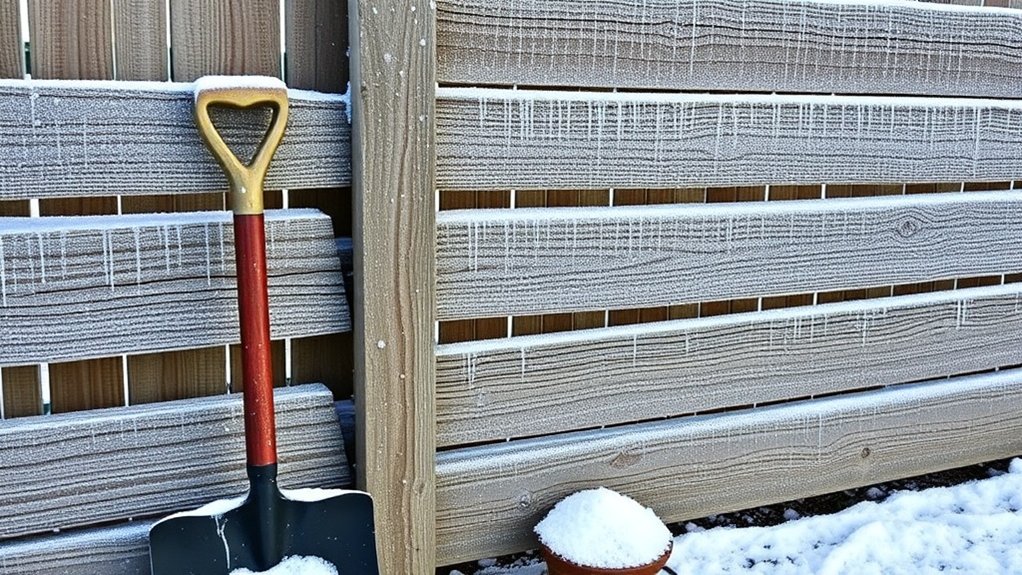
To protect your fence from frost and snow, start by inspecting it for broken panels, loose hardware, and signs of rust or rot. Clear snow regularly and avoid piling it against the fence. Apply water-resistant coatings and remove debris to prevent moisture buildup. Trim any overhanging branches to lessen the weight of snow. After storms, check for damage and ensure posts are stable. For long-term care, consider additional maintenance strategies.
Key Takeaways
- Use a soft tool to regularly clear snow off your fence to stop moisture buildup.
- Don’t stack snow next to the fence; it can lead to rot and rust.
- Before winter hits, apply a water-resistant wood stain or rust-resistant paint to protect your fence.
- Keep the base of the fence free from leaves and debris to allow air circulation and prevent rot.
- After storms, check for any damage and fix any unstable posts right away.
Inspect and Repair Your Fence Before Winter

Before winter hits, inspect your fence to ensure it can handle the tough weather. Start by checking for broken panels, rust, and rot, especially on wooden fences. Look for loose hardware and test the stability of the posts by shaking them. Make a list of any issues you find to prioritize repairs. For fixing problems, replace any damaged boards, and reinforce weak posts with concrete. Ensure gates open and close smoothly, and lubricate hinges to avoid sagging. If you have a wooden fence, apply sealant to protect it from moisture. Regular fence inspections are essential to identify potential issues before they worsen, as early detection of damage can save money on expensive repairs. Finally, make sure all components are tight and secure to prepare your fence for winter.
Manage Snow and Ice Accumulation

Managing snow and ice is crucial for your fence’s longevity in winter. Regularly remove snow with soft tools like brooms or shovels, and use safe methods to tackle ice, such as warm water or eco-friendly de-icers. These simple steps help prevent damage and keep your fence in great condition. Additionally, addressing moisture protection is essential to prevent issues caused by fluctuating temperatures during winter.
Snow Clearing Techniques
Regular snow clearing is crucial to protect your fence from heavy snow and ice damage. Remove snow frequently, especially during storms—ideally every few days or even multiple times a day. Use soft-bristled brooms or plastic shovels to gently clear the snow; avoid metal tools that can scratch the surface. Always push the snow straight ahead to keep fence parts secure.
Make sure to remove light snow buildup and avoid piling snow against the fence; instead, move it away to reduce moisture exposure. Check your fence regularly throughout winter to ensure it can handle the snow load. Consistent snow removal can help prevent long-term damage to your fence.
Ice Removal Strategies
To effectively remove ice and protect your fence, start with safe alternatives like sand or coffee grounds for traction and heat absorption.
If ice forms, use plastic shovels or brooms to remove it, as metal tools can scratch surfaces. Consider using heated mats to prevent ice buildup.
For existing ice, a vinegar-water solution can help melt it gently. Regularly clear small ice patches to prevent thicker layers, ensuring your fence stays intact all winter.
Proactive maintenance will save you from costly repairs later.
Apply Protective Coatings and Sealants

To protect your fence from winter weather, you need to apply protective coatings and sealants.
Choose a water-resistant wood stain for wooden fences and rust-resistant paint for metal ones.
First, clean the surface to ensure proper adhesion. Use a brush, roller, or sprayer to apply the coating evenly on all sides.
It’s better to apply multiple thin coats, allowing each to dry before adding the next. After the first coat, check for any missed spots and touch them up.
Reapply every few years, ideally in early autumn, to keep your fence looking good and protected from moisture and cold. Additionally, consider using oil-based treatments for enhanced durability and moisture resistance.
Clear Debris and Manage Landscaping

To protect your fence in winter, regularly clear leaves and debris from its base to avoid moisture buildup that can cause rot or rust. Also, trim any overhanging branches to prevent snow from piling up, which can add weight and moisture to your fence. Additionally, be sure to follow seasonal care adjustments for your specific climate to maintain the fence’s integrity throughout the winter months.
Rake Leaves and Debris
As winter approaches, it’s important to clear leaves and debris from around your fence to prevent moisture damage.
Removing leaves helps avoid wood rot and rust on metal parts. Decomposing leaves can stain wood, and debris can block drainage, creating a space for mold and insects.
By cleaning up early, you make it easier to remove snow and ice later, reducing stress on the fence.
Regularly raking leaves and clearing sticks ensures good air circulation, helping your fence dry after rain or snow.
This simple maintenance protects your fence and reduces the risk of costly repairs down the line.
Trim Overhanging Branches
Trimming overhanging branches before winter is crucial to protect your fence. Heavy snow and ice can weigh down branches, causing them to break and damage your fence.
Use proper pruning techniques to keep branches healthy and remove any that threaten your fence. Make sure there’s enough space between the branches and your fence to prevent issues during harsh winter weather.
Regularly inspect and trim throughout the year to reduce winter maintenance. If your neighbor’s trees are getting too close, talk to them about it.
Implement Preventive Measures for Longevity

To extend the life of your fence this winter, take these simple preventive steps:
- Trim back any plants around the fence to reduce moisture buildup and decay.
- Clean your fence thoroughly and apply a weatherproof sealant to minimize moisture absorption.
- Regularly clear off snow and ice to prevent damage.
These actions will help keep your fence in great shape all winter long.
Conduct Post-Storm Inspections and Ongoing Monitoring

After a winter storm, inspect your fence for any damage. Look for broken panels, rot, or rust.
Test each post by shaking it; if it wobbles, it may need attention. Keep a checklist and take photos of any issues for reference.
Schedule follow-up inspections to catch problems that may arise from freeze-thaw cycles. Fix minor repairs quickly to avoid bigger issues later.
If repairs are beyond your skill level, consult a fencing professional. Regular checks will help keep your fence strong and functional all winter.
Frequently Asked Questions
How Often Should I Inspect My Fence During Winter?
Inspect your fence once a month during winter to catch any damage. After heavy snow or storms, check it right away to ensure it’s stable and secure. This helps prevent bigger issues down the line.
What Type of Sealant Is Best for My Wooden Fence?
For your wooden fence, go for oil-based stains or clear sealants. They offer excellent protection and waterproofing, ensuring your fence stays strong over time. Just make sure to apply them correctly for the best results.
Can I Use a Pressure Washer to Clean My Fence?
Yes, you can pressure wash your fence, but make sure to adjust the pressure and cleaner for the specific material. Always inspect for damage before starting, and avoid cleaning in winter to prevent further issues.
How Do I Fix a Leaning Fence Post?
If your fence post is leaning, it’s time to fix it. First, dig around the post and straighten it up. Then, brace it with supports or use concrete to secure it in place. This will ensure it stands tall and strong again.
What Should I Do if My Vinyl Fence Cracks in Winter?
If your vinyl fence cracks in winter, apply vinyl adhesive to seal small cracks. To prevent damage, regularly clear snow and check for debris to keep your fence in good shape.
Conclusion
To protect your fence this winter, regular maintenance is key. Inspect it for damage, apply protective coatings, and manage snow buildup to prevent ice weight from causing issues. By staying proactive, your fence can withstand harsh winter conditions, ensuring it remains a strong and attractive part of your property for years to come.

Care for your residential fence with essential tips for longevity and style—discover the secrets to keeping it beautiful and durable Read more

Get ready to discover the crucial signs that indicate your residential fence needs replacing before it's too late.

A comprehensive guide on the top five common fence repairs reveals essential tips for maintenance, ensuring your fence remains sturdy Read more


