
In 2024, chain link fencing will cost between $9 and $30 per linear foot, depending on factors like height and material. Installation adds another $5 to $15 per foot. Taller fences and specialized materials can raise prices, and labor rates vary by region. For tips on saving money and extending your fence’s lifespan, keep reading.
Key Takeaways
Chain link fencing typically costs between $9 and $30 per linear foot, depending on factors like height and material. Installation labor usually accounts for about half of the total cost, which can vary based on your location and specific site conditions.
For example, a 6-foot fence can cost around $13 to over $30 per foot, while an 8-foot fence may exceed $40 per foot. Adding features like privacy slats or barbed wire will boost costs but can improve security and functionality.
To save money, consider getting quotes from multiple contractors or exploring DIY installation options.
Understanding Chain Link Fence Costs
When planning a chain link fence for your property, it’s important to know what affects the cost. Typically, you can expect to pay between $9 and $30 per linear foot, depending on the fence’s height and materials. Labor usually makes up about half of this cost, ranging from $5 to $15 per foot. Installation methods also play a significant role; taller fences need more materials and labor, leading to higher prices. The choice of materials, like galvanized versus vinyl-coated chain link, will impact your budget as well. Additionally, chain link fences offer cost-effective solutions that make them an attractive option for budget-conscious projects. If you want to add features like privacy slats or gates, be prepared for additional costs. Understanding these factors will help you budget effectively for your fence project. Labor costs typically account for approximately 50% of the total installation cost, so it’s essential to factor this into your overall budget.
Factors Influencing Chain Link Fence Pricing

When considering chain link fencing, the height and material type significantly influence costs. Taller fences need more materials and labor, increasing expenses. For instance, a 6-foot fence will cost more than a 4-foot one. Additionally, choosing between galvanized steel and vinyl-coated options will also affect your budget. Quality of materials plays a crucial role in determining the overall cost, as higher-quality materials often lead to increased durability and long-term savings. A well-maintained fence can last up to 20-30 years, providing value for your investment.
Fence Height Impact
Fence height significantly affects chain link fencing prices, ranging from 3 to 12 feet. Most residential options are between 3 and 6 feet, while commercial or security fences typically start at 8 feet. Taller fences require more materials, increasing costs due to complex installation and added support. For fences over 6 feet, expect higher labor costs and possible permit fees due to height regulations. Additionally, taller fences enhance security by deterring intruders and can accommodate features like barbed wire. Chain link fences are known for their average lifespan of 25-30 years, making them a reliable option for taller installations. Always consider your property’s specific needs, as these factors will impact your budget and installation process.
Material Type Differences
Choosing the right material for chain link fencing is crucial as it affects both cost and performance.
Galvanized steel is the most popular option due to its affordability and rust resistance, typically ranging from $3 to $15 per linear foot, depending on height and wire gauge.
If you want a more attractive look and better corrosion resistance, vinyl coatings add an extra $2 to $5 per foot.
Powder coating offers a tough finish but raises the price even more.
The thickness of the wire also matters; thicker wires (lower gauge numbers) offer better security, which can impact both cost and installation difficulty.
Specialty materials like stainless steel are available for specific purposes but come with a higher price tag.
Lastly, the size of the mesh can slightly influence the overall strength and cost.
Average Cost Per Linear Foot

The average cost per linear foot for chain link fencing varies primarily based on installation and material choices.
Generally, you can expect installed costs to range from $9 to $40 per linear foot, depending on factors like fence height and material type.
Knowing these details will help you plan your budget for the fencing project effectively.
Installation Cost Breakdown
The cost of chain link fencing varies based on height and materials, with average installation costs ranging from $9 to $30 per linear foot. Here’s a cost breakdown to help with your planning:
| Fence Height | Average Cost per Linear Foot | Labor Cost per Linear Foot |
|---|---|---|
| 4 feet | $10 to $20 | $5 to $10 |
| 6 feet | $13 to $30+ | $10 to $20 |
| 8 feet | $20 to $40+ | $15 to $20 |
Keep in mind that installation techniques and regional factors can affect these prices. Additionally, features like privacy slats or decorative elements can increase costs.
Material Price Variations
After breaking down installation costs, it’s crucial to look at how material choices affect the price of chain link fencing.
Material prices vary mainly due to quality and gauge. For example, galvanized steel costs between $4 to $15 per linear foot, while vinyl-coated options range from $10 to $20. Thicker wires are more durable but also more expensive.
Fence height plays a big role in pricing too; a 4-foot fence might cost $5 to $10 per foot, while an 8-foot fence can range from $10 to $20.
Features like privacy slats or special coatings add to the cost, reflecting a desire for both style and utility in fencing.
Total Cost Estimates by Fence Length
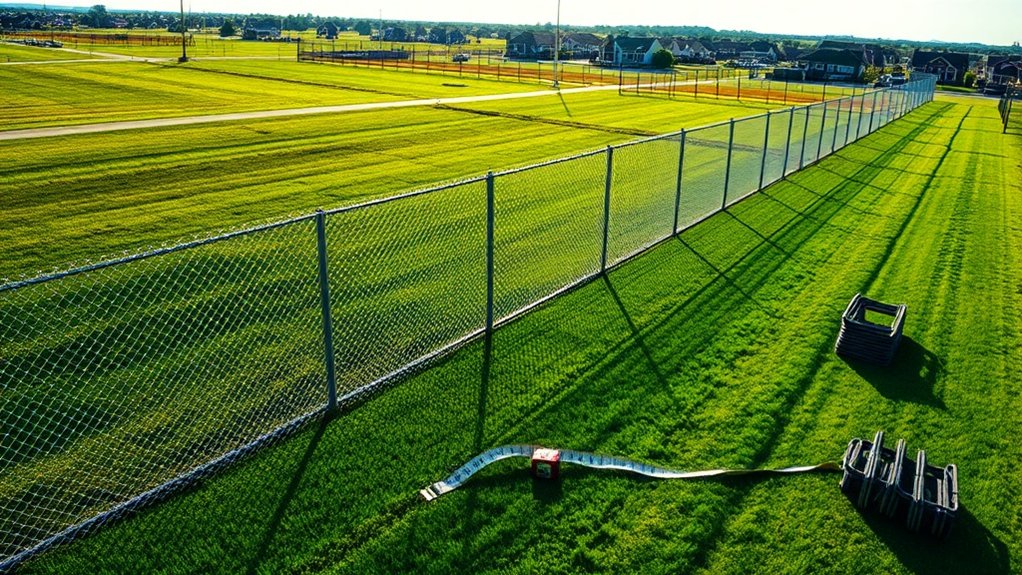
Total cost estimates for chain link fencing can vary widely based on the length of the fence.
For shorter fences up to 100 feet, expect to pay between $500 and $2,000. If you’re handy, doing it yourself can cut costs significantly.
For medium-length fences (100 to 200 feet), prices generally range from $1,500 to $8,000, influenced by factors like height and features.
Longer fences (over 200 feet) can cost anywhere from $3,000 to $12,000, especially if you add privacy slats or gates.
Material Types and Their Impact on Prices
When choosing chain link fencing, the material you select affects both price and performance. Here’s a quick overview to help you decide:
| Material Type | Price Range (per linear foot) | Key Features |
|---|---|---|
| Galvanized Steel | $3 – $15 | Affordable, corrosion-resistant |
| Vinyl-Coated | +20-40% | Various colors, better rust resistance |
| Aluminum | Higher than steel | Lightweight, rust-free |
Galvanized steel is popular due to its affordability. If you want something more visually appealing, vinyl-coated options come in different colors. For a rust-free choice, aluminum is ideal. If you live in an area with harsh weather, consider cyclone-resistant fencing for added durability. Remember, the gauge of the material also influences strength and cost, so choose based on your specific needs.
Labor Costs and Installation Considerations
When planning your chain link fencing project, consider how labor rates differ by location and site conditions.
For example, if your site is rocky or uneven, it may require more time and effort to prepare, which can increase labor costs.
Labor Rate Variations
Labor rates for chain link fence installation vary significantly based on location, fence height, and site complexity.
In urban areas, expect to pay between $25 to $50 per hour due to higher living costs and demand for workers. In contrast, rural areas usually have lower rates because of less competition and lower wages.
If you’re installing taller fences or dealing with intricate designs, labor costs will rise as these require more time and effort. Additionally, challenging terrain or the need for special equipment can further inflate expenses.
It’s crucial to understand these factors when budgeting for your chain link fence project.
Site Preparation Importance
Proper site preparation is crucial for a successful chain link fence installation, impacting both labor costs and the overall quality. Clearing the site of trees, bushes, and rocks prevents damage during installation. Leveling the ground ensures stability and improves drainage, which enhances the fence’s longevity and reduces maintenance costs.
| Task | Impact on Costs |
|---|---|
| Site Clearing | Saves installation time |
| Ground Leveling | Boosts fence stability |
| Soil Testing | Determines anchoring methods |
| Permits | Adds to initial project costs |
| Site Access | Complicates labor requirements |
In simple terms, a well-prepared site leads to a smoother installation process and a stronger, longer-lasting fence.
Height Variations and Cost Implications
Height variations in chain link fencing significantly affect both material and installation costs, so it’s vital to understand these effects before starting your project.
For example, a standard 4-foot fence costs between $10 to $20 per linear foot, while a 6-foot fence runs from $13 to $30.
If you choose an 8-foot fence for added security, prices can jump to $20 to $40+ per linear foot.
Taller fences require more materials and labor, leading to increased expenses.
Therefore, comparing costs across different heights will help you make smart choices that fit your budget and project needs.
Additional Features and Their Costs
When planning your chain link fencing project, additional features can significantly affect your budget.
Privacy slats, which improve privacy and reduce wind, add $1 to $3 per linear foot. They come in various colors and materials but require extra labor for installation.
For security, options like barbed or razor wire increase costs due to their complexity. Anti-climb features and integrated lighting also raise expenses but enhance safety.
Additionally, gate sizes matter; walkway gates are typically cheaper than larger driveway gates.
Keep in mind that every feature adds to the total cost, so choose wisely to stay within your budget.
Cost-Saving Tips for Chain Link Fencing
To manage costs when installing chain link fencing, start by obtaining multiple contractor quotes to find the best pricing and terms.
Carefully compare each bid, looking at labor, materials, and any extra fees. Use these quotes to negotiate for discounts.
If you’re handy, consider doing it yourself to save on labor, but make sure the site is prepped to reduce contractor hours if you hire help.
Choose standard fence heights and mid-range gauge materials for a good balance of cost and durability.
Buy materials during seasonal sales and in bulk for additional savings.
Following these tips can significantly cut your fencing expenses.
Longevity and Maintenance of Chain Link Fences
Installing chain link fencing is a smart, budget-friendly choice, but knowing how to care for it is key to getting the most out of your investment.
To extend the life of your fence, follow these simple maintenance tips:
- Regularly apply rust-resistant coatings, especially at the bottom.
- Clean your fence with water to remove dirt and prevent rust.
- Trim back nearby plants to minimize wear and tear.
- Fix any damage quickly to prevent it from worsening.
With the right materials and installation, a chain link fence can last between 15 and 30 years.
Galvanized steel lasts about 15-25 years, while vinyl-coated options may last an additional 3-5 years.
Regional Variations in Fencing Costs
Regional differences significantly affect chain link fencing costs.
In urban areas, higher labor costs can increase your total expense, while rural regions may have lower labor costs but higher delivery fees for materials.
Coastal areas often face elevated material prices due to transportation issues.
Local economic factors, like wages and competition among contractors, also influence pricing.
For instance, if there’s high demand for fencing in an area, prices may spike.
Additionally, supply chain disruptions can lead to temporary cost increases.
Understanding these factors can help you budget more effectively for your fencing project.
Comparing Chain Link Fencing to Other Types
When considering chain link fencing, it’s essential to compare it with other options. Here are some key points:
- Cost: Chain link fencing generally ranges from $10 to $40 per linear foot installed, making it a budget-friendly choice.
- Durability: Constructed from galvanized steel, it’s resilient against weather and impacts.
- Maintenance: It requires less upkeep than wood, which can rot and needs regular staining.
- Customization: Options for aesthetics are limited, but you can enhance it with privacy slats or coatings.
While chain link is cost-effective and durable, it lacks the visual appeal of wood or wrought iron.
Evaluating these factors will help you choose the right fencing for your needs.
Frequently Asked Questions
How Do I Choose the Right Height for My Fence?
To pick the right fence height, think about what you need: Is it for keeping pets in, ensuring privacy, or boosting curb appeal? Check local regulations and HOA rules to avoid issues. For example, if you want to block noise from a busy street, a taller fence may be ideal. Keep it simple and aligned with your property’s style.
Are There Any Local Regulations for Fence Installation?
Yes, check local zoning laws for fence permits. Regulations differ by area, so verify height limits, materials, and placement with your city’s building department to ensure compliance and avoid fines. For example, some neighborhoods may only allow fences up to 6 feet tall or require specific materials.
Can I Install a Chain Link Fence in Winter?
Yes, you can install a chain link fence in winter. Its resistance to cold and moisture makes it a good choice. Just ensure the ground is properly prepared and keep an eye on the weather for the best results.
What Tools Do I Need for DIY Installation?
To install a fence successfully, you’ll need a few key tools: a post hole digger for digging holes, a level to ensure everything is straight, fence pliers for handling wire, measuring tape for accurate lengths, and a concrete mixer for setting posts. With these tools, you’ll set up a solid and reliable fence.
How Can I Ensure My Fence Lasts Longer?
To make your fence last longer, choose quality materials, check it regularly, and follow maintenance tips. This includes cleaning, preventing rust, and controlling nearby plants. A little effort goes a long way in keeping your fence durable and protected from damage.
Conclusion
Understanding the costs of chain link fencing can help you avoid overspending and future issues. Just like using the right tools for a project, selecting the best materials and planning your installation is crucial. Consider factors like length, material type, and maintenance to make an informed choice. With some research, you can invest in a durable and cost-effective fence that serves you well for years.
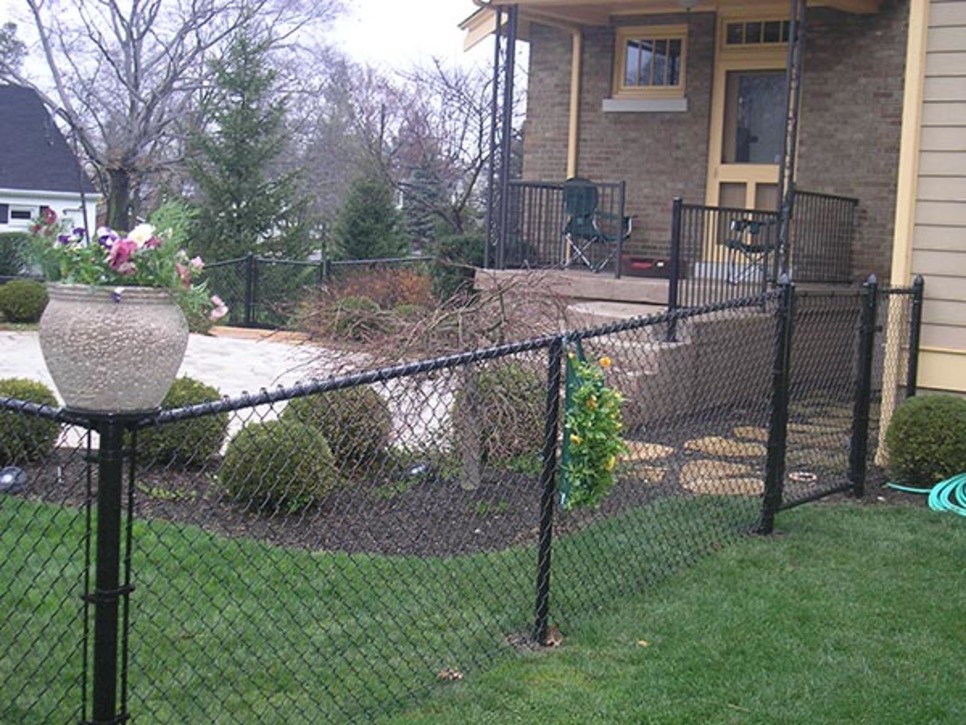
The purpose of fences is to provide security and demarcate a property area but before installing a fence you need Read more
Chainlink Fence is the most popular kind of fences, generally used in many places for the purpose of security.This type Read more
Are you considering installing a chain link fence to enclose your garden boundary? Perhaps you're wondering about the durability and Read more


