
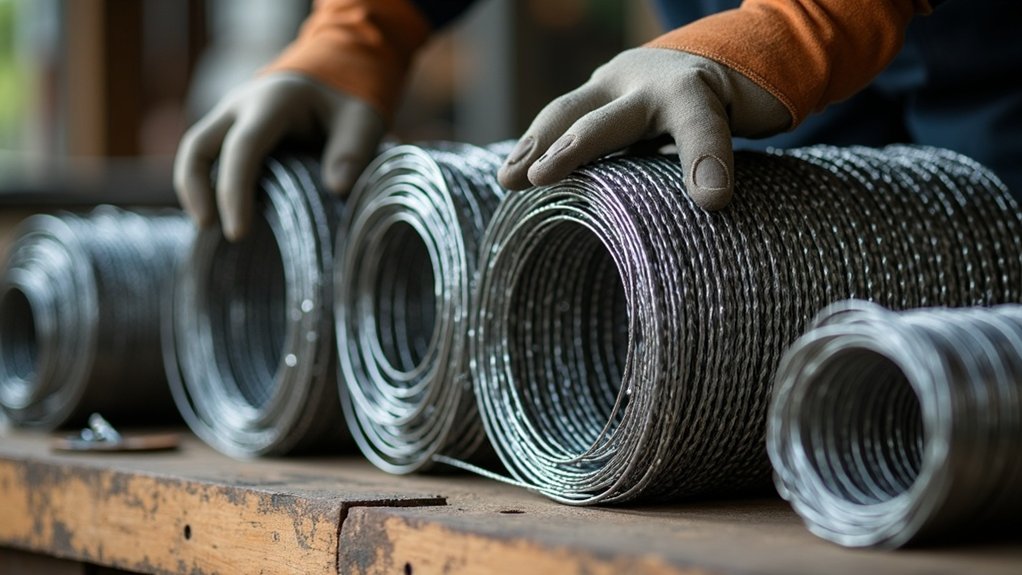
Choosing the right gauge for your chain link fence wire is crucial for both safety and durability. Thicker wires, indicated by lower gauge numbers, are better for permanent and high-security setups because they can carry more weight and resist damage. If you only need a fence for light use or decoration, a higher gauge may work just fine. Also, consider wire coatings that protect against corrosion and reduce maintenance. Assessing your specific needs will help you select the best gauge for your fence, but remember that there’s more to consider beyond just the gauge.
Key Takeaways
- Choose a wire gauge based on your needs: thicker wires are better for permanent fences, while thinner wires work for temporary setups.
- Think about the environment; thicker wires are more resistant to corrosion and wear, which means they’ll last longer in tough conditions.
- Look at wire coatings; options like zinc-aluminium or powder coating can protect against rust and reduce maintenance.
- For residential areas, 9 gauge wire is a good choice, while 6 gauge is ideal for high-security locations, offering a balance between strength and cost.
- Don’t forget to inspect your fence regularly, especially if you’re using thinner wires, as they may need more upkeep to stay strong.
Understanding Wire Gauge and Its Importance

Choosing the right wire gauge for your chain link fence is crucial.
Wire gauge measures the thickness of the wire, with the American Wire Gauge (AWG) standard. A higher gauge number means a thinner wire.
Selecting the correct gauge is important for safety; it determines how much current a wire can handle without overheating. For instance, thicker wires (lower AWG) can carry more current, reducing the risk of overheating and fire hazards. Additionally, higher gauge numbers indicate thinner wires that are typically less capable of handling larger electrical loads.
Common Wire Gauges and Their Applications

When choosing a wire gauge for your chain link fence, think about its purpose. For residential use, 9 gauge wire offers a good mix of strength and affordability, while 11 gauge is suitable for lighter needs. If you need something stronger for industrial settings or high-security areas, 6 gauge wire is the way to go. The gauge measures the thickness of individual wires, which directly impacts the fence’s durability and strength. Additionally, choosing the right gauge can enhance security and visibility while ensuring the fence meets your specific needs.
Residential Fencing Options
Selecting the right wire gauge for your chain link fence is crucial for balancing cost, strength, and functionality.
For most homeowners, 9 gauge wire is ideal—it’s durable and reasonably priced, perfect for garden perimeters and pet enclosures. Additionally, 9-gauge wire is suitable for high-security areas and industrial sites, offering enhanced durability. This wire gauge aligns with safety features that ensure a secure environment for both pets and children.
If you’re on a budget, 11 or 11-1/2 gauge wires can work for decorative or temporary fencing, but they won’t last as long.
For added security, opt for 8 gauge wire, as it’s more resistant to damage.
Keep in mind that thicker wires may need more support during installation.
Additionally, PVC-coated options can improve your fence’s appearance and enhance its resistance to corrosion and wear.
Industrial Security Needs
In industrial security, choosing the right wire gauge for chain link fencing is crucial for effective protection.
For high-security areas, opt for 9-gauge wire, which offers excellent strength and resistance to break-ins.
For medium-security needs, like commercial properties, 10-gauge wire strikes a good balance between strength and flexibility.
For lighter industrial applications, 11-gauge wire may be adequate.
Remember, lower gauge numbers mean thicker, stronger wire, which enhances the fence’s ability to deter intruders.
Applying a protective coating, like PVC, can also improve resistance to corrosion, prolonging the fence’s lifespan. Additionally, regular inspections are essential for ensuring structural integrity and identifying any potential rust issues.
Always refer to ASTM and industry standards to ensure you choose the right gauge for optimal security.
Evaluating Strength and Durability of Wire Gauges

When choosing wire gauges for chain link fences, wire thickness is crucial for strength and durability.
Thicker wires, like 9-gauge, are stronger and more resistant to damage, making them suitable for heavy-duty use.
In contrast, thinner wires, such as 16-gauge, are cheaper but often lack the longevity and reliability needed for tougher conditions.
Impact of Wire Thickness
Wire thickness is crucial for the strength and longevity of chain link fences. A lower gauge number means a thicker wire; for example, 9 gauge wire is stronger than 11 gauge. This makes 9 gauge a better option for high-security areas.
Thicker wires, such as 6 or 9 gauge, resist cuts and impacts more effectively, which means less maintenance over time. In places with a risk of vandalism, using heavier gauges can decrease damage and improve durability.
Although thicker wire may cost more upfront, its long-term benefits in strength and fewer repairs often make it worth the investment, especially for commercial and industrial use.
Durability Across Applications
Choosing the right wire gauge for your chain link fence is crucial for durability and effectiveness. Thicker wires, such as 6 gauge, are ideal for high-security areas due to their exceptional strength.
For commercial use, 9 gauge offers solid tensile strength, while 11 gauge is a cost-effective option for residential settings, striking a balance between strength and price.
Wire flexibility is also important; thicker wires are less likely to bend or deform during installation, which enhances their longevity.
In high-traffic areas, using 9 gauge can lead to fewer repairs compared to 11 gauge.
Ultimately, understanding your specific needs will help you select a wire gauge that reduces maintenance and enhances durability, ensuring long-term value and security for your fencing project.
Coating Types and Their Impact on Wire Selection

Choosing the right coating for your chain link fence wire is crucial for durability and maintenance. Different coatings provide varying levels of corrosion resistance, which significantly impacts your wire selection.
| Coating Type | Durability | Corrosion Resistance |
|---|---|---|
| Zinc Galvanized | Medium to High | Good (depends on thickness) |
| Zinc-Aluminium | High | Superior |
| Powder Coated (PVC) | High | Excellent |
Zinc coatings act as a sacrificial layer to prevent rust, while Zinc-Aluminium is ideal for harsh environments. Powder coatings, especially PVC, not only boost durability but also enhance appearance. Knowing these options helps you choose the right wire for your specific conditions.
Mesh Size Compatibility With Different Gauges

Choosing the right mesh size and wire gauge is crucial for the effectiveness and safety of chain link fences. For added security, smaller mesh sizes (like 1″ or less) should be paired with thicker gauges (8 or 10), making it harder to climb or cut.
On the other hand, larger mesh sizes (2″ or more) can use thinner gauges (11 or 11.5), which are often sufficient for residential settings.
When deciding, think about the specific use, installation methods, and maintenance needs.
Also, consider costs and environmental factors, as aesthetics might play a role in your choice.
Regulatory Standards for Chain Link Fencing

When installing chain link fencing, it’s crucial to know the regulatory standards to ensure compliance and safety. Start by reviewing ASTM specifications like A392 for zinc-coated steel and A491 for aluminum-coated fabric, which are important for durability.
Follow both federal codes and local regulations, especially regarding gauge requirements—11 gauge is standard for residential fences, while 6 gauge is often used for security.
Also, check performance criteria in ASTM F1043 and F626 that detail the strength of posts and hardware compatibility.
Lastly, be aware of local building codes that specify maximum fence heights and mesh sizes to ensure your installation meets industry standards for safety and longevity.
Choosing the Right Gauge for Your Specific Needs

Choosing the right gauge for your chain link fence is crucial for meeting your specific needs. Here are some key points to consider:
- Security Level: Higher gauges (like 6 or 9) offer better protection against breaches.
- Environmental Factors: Thicker wires are more durable and resistant to wear and corrosion in tough conditions.
- Purpose of Use: Lighter gauges (such as 11 or 11.5) are ideal for temporary or decorative fencing.
Cost Considerations and Long-Term Value

When choosing the right gauge for your chain link fence, consider the long-term value.
Thicker wires, like 9-gauge, may cost more upfront but last over five years longer than thinner 11-gauge options. This durability can save you on repairs and maintenance in the long run.
Plus, thicker wire offers better security, which can reduce vandalism costs.
Frequently Asked Questions
How Does Wire Gauge Affect the Overall Fence Cost?
Wire thickness significantly affects the total cost of a fence. Thicker wires cost more and require stronger posts, which can increase installation expenses. For example, if you choose a heavier gauge wire for added security, be prepared for higher material and labor costs. To find the right balance between security and budget, compare different wire gauges and their respective prices. This way, you can make an informed choice that meets your needs without overspending.
Can I Mix Different Gauges in One Fence?
Mixing different gauges in a fence is possible, but it can weaken the structure and affect its appearance. For example, using a thicker wire alongside a thinner one may create weak points that can bend or break more easily. Sticking to one gauge ensures a sturdy, uniform look and better durability.
What Maintenance Is Required for Different Wire Gauges?
For maintaining wire gauges, regularly inspect tension, check for corrosion, and clean the wires. Factors like weather and usage affect how long your fence lasts, so choose a gauge that balances strength and maintenance costs for the best results.
How Does Weather Impact Chain Link Fence Durability?
Weather significantly affects the durability of chain link fences, primarily through moisture and UV exposure that can lead to corrosion. To improve weather resistance, opt for chain link fences with protective coatings, such as vinyl or galvanized finishes. Regular inspections are essential; addressing any rust or damage quickly can extend the life of your fence and maintain its appearance.
Are There Eco-Friendly Options for Chain Link Fences?
Yes, eco-friendly chain link fences are available. You can opt for sustainable materials like aluminum or go for recycled options such as galvanized steel or bamboo slats. These choices help reduce environmental impact while maintaining durability.
Conclusion
When choosing the right gauge for your chain link fence, consider that a heavier gauge might cost more upfront but provides better strength and durability. This can save you money in the long run by cutting down on maintenance and replacement needs. Think about your specific requirements and the benefits of different gauges. Investing in quality ensures your fence lasts longer and meets your needs effectively. Prioritize durability for a fence that truly stands the test of time.

How to install a chain link fence in Broward County? It is advisable to plan ahead first before placing a Read more

How to choose the right aluminum fencing for your home in Broward County? Aluminum fences are a popular choice of Read more

A pergola plan can pave your way to build a wood pergola in no time at all while saving you Read more


