
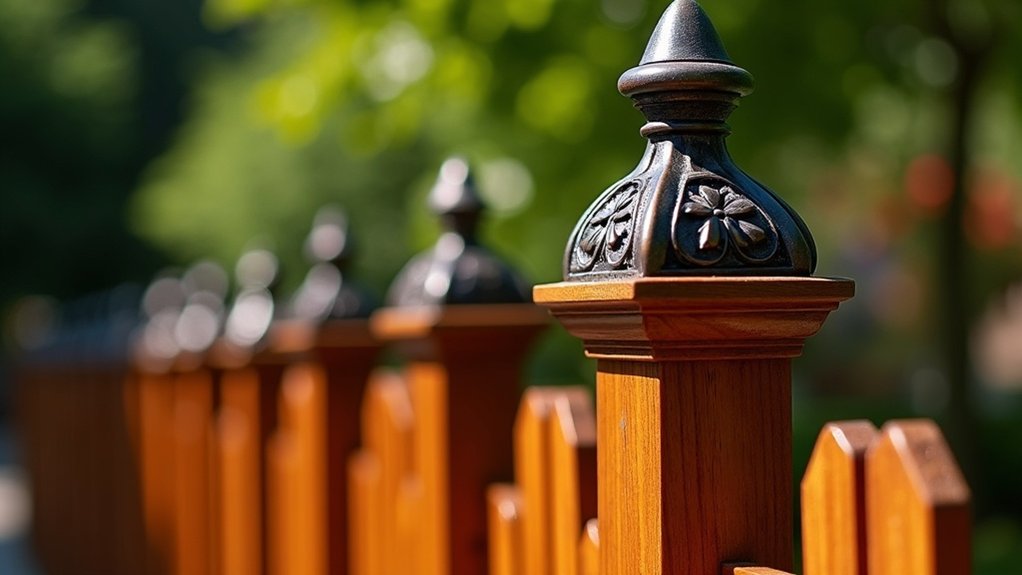
When selecting fence post caps for your wooden fences, focus on durability, size, and design. Choose materials like treated wood or composite that resist rot for lasting protection. Make sure to measure your posts accurately for a perfect fit. Also, pick colors and styles that enhance your fence’s look. Don’t forget to consider the maintenance and costs associated with each material. For more tips on boosting your fence’s lifespan and appearance, keep exploring your options.
Key Takeaways
- Pick post caps that protect against moisture and UV rays to extend your wooden fence’s lifespan.
- Consider your maintenance preferences; if you want something easier to care for, go for durable plastic or metal options.
- Measure your fence posts accurately—be sure to account for both size and shape (square or round) to ensure a snug fit.
- Match the design and color of the post caps with your fence and surroundings for a cohesive look.
- Weigh the initial costs against future maintenance to make a smart choice that balances quality and durability.
Understanding the Importance of Fence Post Caps
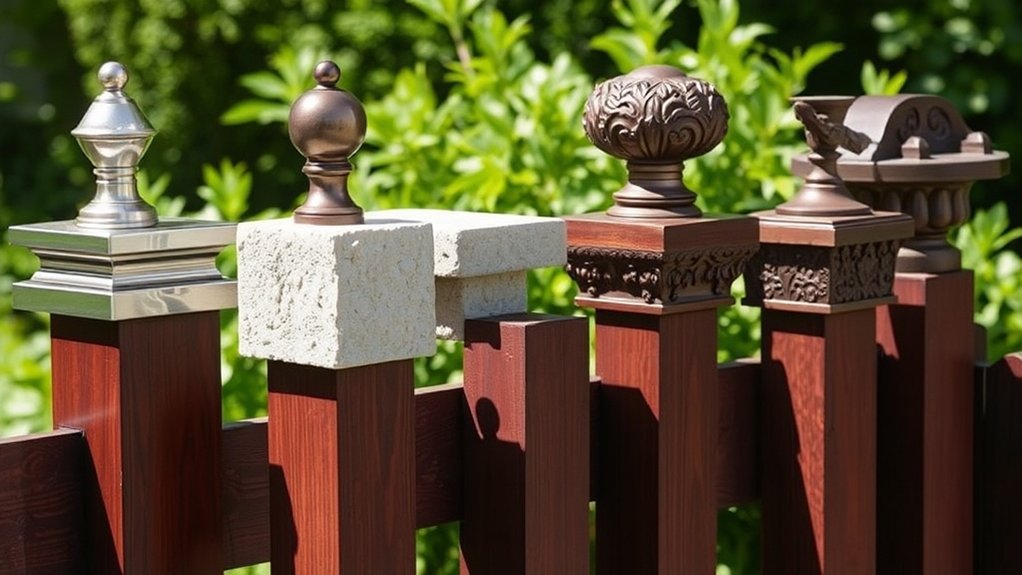
Fence post caps are essential for protecting your wooden fences and extending their lifespan. They guard against rain, snow, and sun, preventing moisture and UV damage that can lead to decay—cutting post top deterioration by over 80%. Additionally, these caps help keep pests like termites at bay, which can threaten the structural integrity of your posts. Using treated wood caps provides both rot resistance and insect repellency, making your fence more durable and cost-effective over time. Investing in quality post caps is a smart way to ensure your fence remains healthy and strong. These caps are crucial for maintaining fence integrity and should be a priority in any fencing project. Moreover, proper installation techniques, such as elevated installation, can further enhance the effectiveness of post caps in preventing moisture accumulation.
Exploring Different Materials for Post Caps
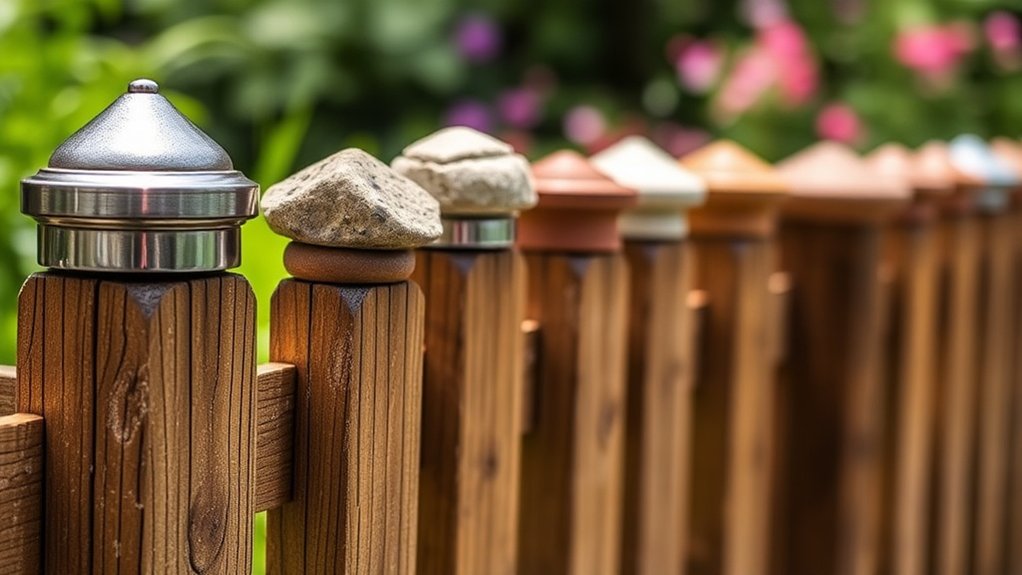
Choosing the right material for your post caps can significantly enhance the durability and look of your wooden fence. Here’s a quick rundown of your options:
- Plastic: Low-maintenance and UV-resistant, plastic post caps are budget-friendly and fit well in modern designs.
- Metal: Rust-resistant metal caps provide strength and a sleek appearance, perfect for areas with heavy foot traffic. They are particularly effective in protecting fence posts from environmental damage.
- Wood: Offering natural beauty, wood caps can be charming but need regular upkeep to avoid wear and tear.
- Composite: These caps combine the look of wood with added durability, reducing maintenance while resisting rot.
- Glass: Elegant and sometimes illuminated, glass caps can elevate your fence’s style but tend to be more expensive and fragile.
Weigh these options based on your style preferences and maintenance willingness to find the best fit for your fence.
Evaluating Durability and Lifespan
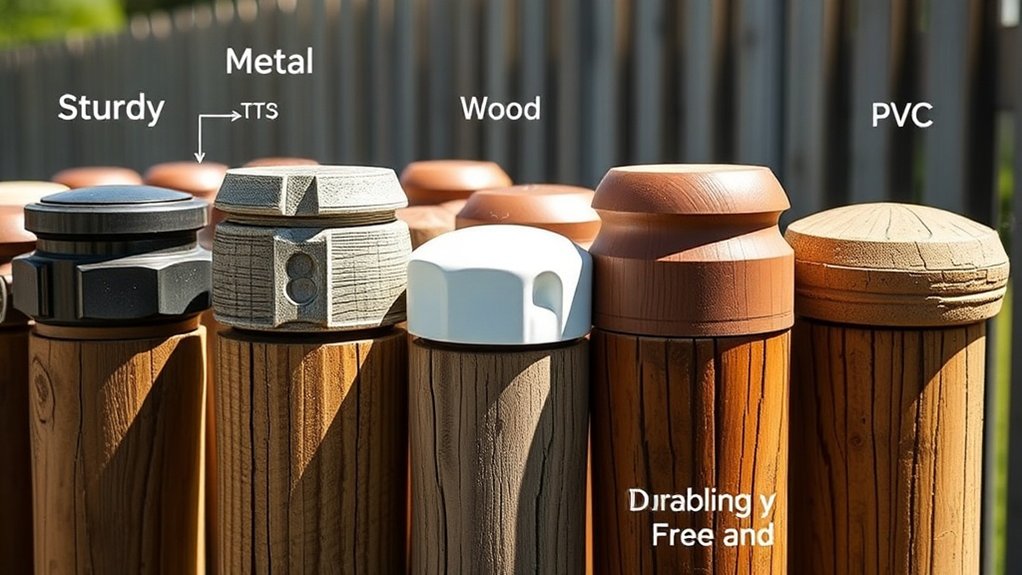
When selecting post caps, the material you choose significantly affects durability and lifespan. Wooden caps look nice but often need more upkeep than metal or composite options, which usually provide longer-lasting protection. Knowing these differences can help you decide, ensuring your fence remains attractive and sturdy for years. Additionally, using high-quality materials such as treated wood for your fence posts can further enhance their longevity and minimize the need for frequent replacements. Furthermore, opting for PVC fences can provide even greater durability and reduce maintenance needs over time.
Material Impact on Durability
Choosing the right material for your fence post caps is crucial for the durability and lifespan of your wooden fence.
Consider materials that resist moisture, UV exposure, and corrosion. Powder-coated steel and polymer caps are great for protecting against water damage, while UV-resistant plastics prevent fading and cracking from sunlight.
For example, galvanized steel caps resist rust and require little maintenance, making them a durable option. In contrast, treated wood caps need regular upkeep.
If you’re looking for low-maintenance solutions, high-density plastics can last up to 15 years, significantly lowering repair costs. Additionally, choosing materials that are resistant to rust and rot can enhance the overall longevity of your fence installation.
Lifespan Expectations by Type
When considering fence post caps, it’s important to know their lifespan varies by material.
Cedar caps last 15-20 years due to their natural resistance to rot and insects, making them great for tough weather.
Pressure-treated pine caps, while cost-effective, typically last only 10-15 years and need regular maintenance to extend their life.
Composite wood caps are a solid choice, lasting 15-25 years with minimal upkeep, thanks to moisture-resistant features.
Keep in mind that factors like moisture and temperature changes can impact how long these materials last.
For wooden caps, regular maintenance is key to preventing issues like rot and splitting, ensuring they last as long as possible.
Protective Functions of Fence Post Caps
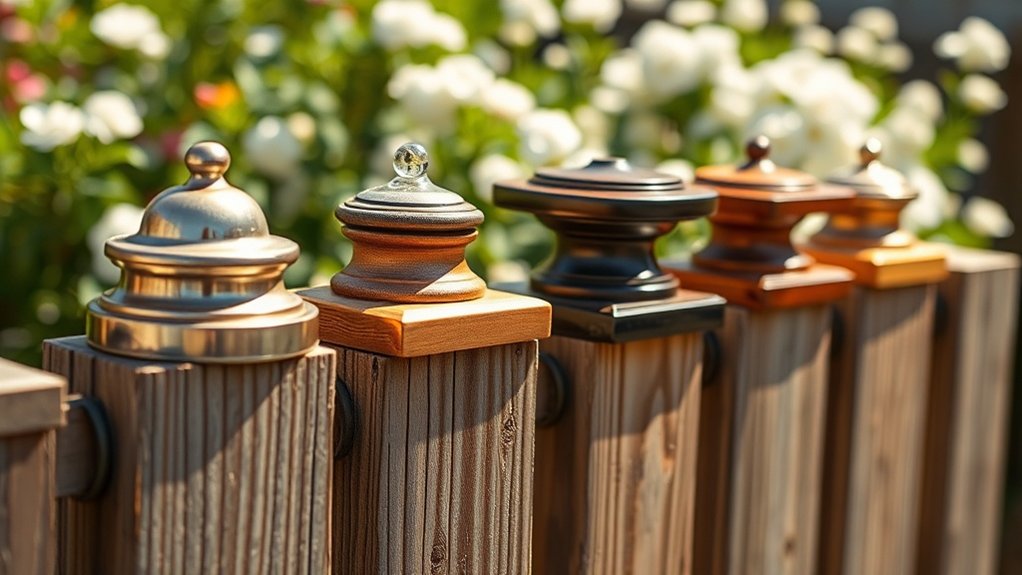
Fence post caps are often overlooked, but they play a vital role in protecting your wooden fence. By sealing the top of the posts, they prevent moisture from rain and snow, which can lead to wood rot.
In fact, without caps, moisture can shorten your fence’s lifespan by up to 40%.
Caps also help keep pests at bay by blocking entry points for insects like termites and preventing water buildup that can attract them.
By keeping your fence dry and reducing conditions that lead to decay, caps enhance its strength, lower maintenance needs, and prolong its life.
Investing in good-quality caps is a smart move for ensuring your fence lasts longer.
Ensuring Proper Size and Fit
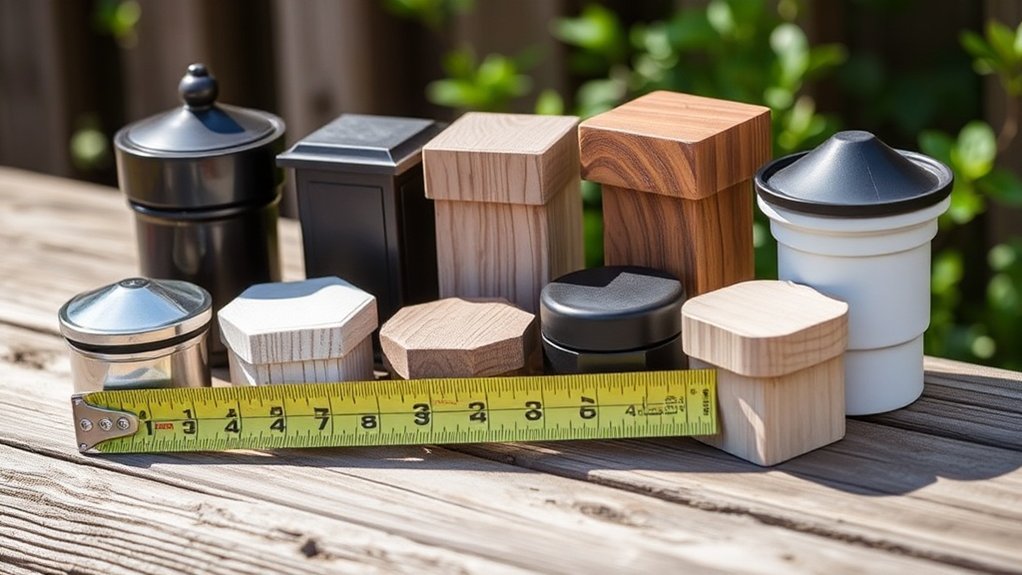
To ensure your post caps fit properly, measure your fence posts accurately.
Pay attention to the cap size and shape, as these factors can impact installation and performance.
For instance, a square cap won’t fit a round post.
Measuring Post Dimensions
To ensure your fence post caps fit properly, accurate measurements are crucial. Use a tape measure and caliper for precise measurements.
For square or rectangular posts, measure the width across the flat face; for circular posts, measure the diameter. Keep in mind whether the posts are rough sawn or dressed, as this can affect the dimensions.
Measure at different points to account for any irregularities, and record both nominal and actual sizes. After installation, double-check the post height and length to confirm a good fit.
Remember that environmental factors can change post dimensions, so choosing the right caps is key to maintaining a neat appearance for your wooden fence.
Cap Size Compatibility
To ensure your fence post caps fit well, follow these simple tips:
- Measure Your Posts: Use a tape measure to check the width and length of your post tops.
- Know Common Sizes: Be aware of standard post cap sizes like 4×4 and 6×6 for easier selection.
- Look for Custom Options: If your posts aren’t standard sizes, search for custom or flexible caps that can adapt to fit.
These steps will help you achieve a snug and functional fit for your fence post caps.
Shape Considerations
Choosing the right shape for your fence post caps involves balancing functionality and design.
Pyramid-shaped caps effectively shed water, helping to prevent wood rot. Flat-top caps provide a sleek, modern aesthetic but may require sealing to avoid water damage. Rounded caps offer a classic look and also assist with water runoff.
For a unique touch, decorative options like globes or finials can elevate your fence’s appearance. Ensure your cap matches your post size for a proper fit, and consider how easy it’s to install each shape—some caps are simpler to secure than others.
Make your selection carefully to ensure durability and style!
Aesthetic Considerations for Your Fence
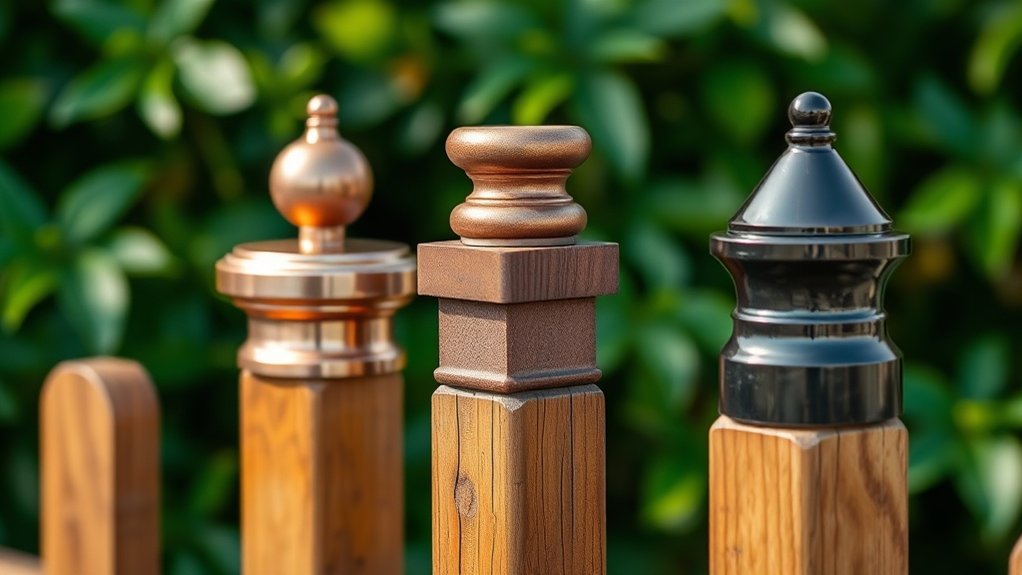
Aesthetic elements can significantly enhance your fence’s appeal. Here are some key points to consider:
1. Color Coordination: Choose post caps that either match or contrast with your fence and surrounding features.
For instance, natural wood finishes can showcase the grain, while painted caps can add a pop of color.
2. Design Themes: Pick post caps that fit your design style.
Classic flat-tops work well with traditional fencing, while ornamental or pyramidal caps lend a modern touch.
3. Material Variety: Use different materials like wood, metal, or even solar-powered caps to add texture and functionality.
This not only boosts visual interest but also improves practicality.
Cost and Maintenance Analysis
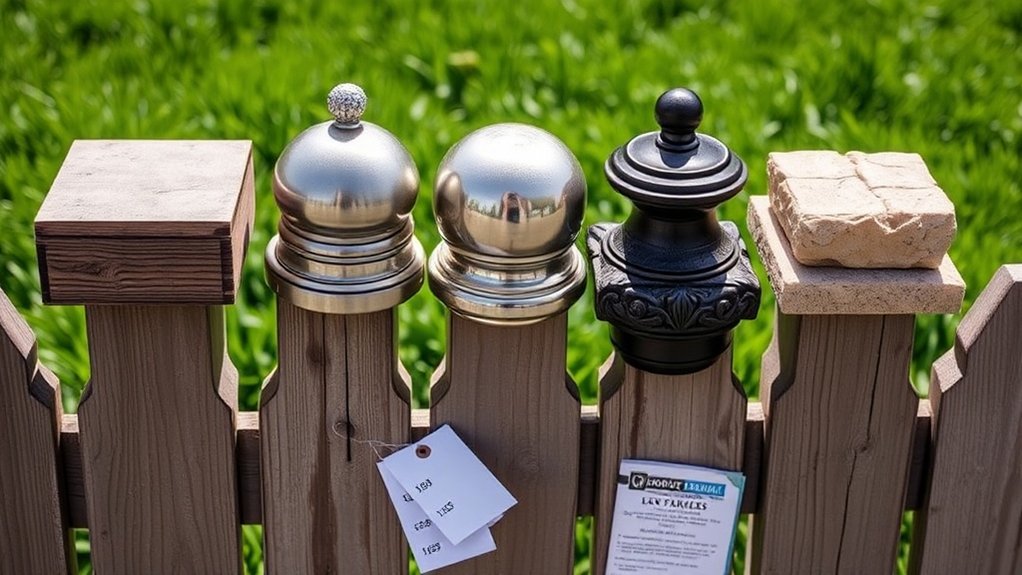
When selecting post caps for your wooden fence, it’s crucial to consider cost and maintenance.
Wooden post caps typically cost between $5 and $40, while plastic options are usually cheaper. However, wooden caps require regular maintenance, such as sealing or painting, which can increase long-term costs.
In contrast, plastic and metal caps are low-maintenance and tend to last longer. Look for warranties as well; many wooden caps cover pest damage, while plastic caps may offer up to a ten-year warranty against fading.
Make an informed choice to enjoy your fence for years!
Frequently Asked Questions
Can I Paint or Stain Fence Post Caps?
Yes, you can paint or stain fence post caps. Use outdoor-grade paint for durability or a stain to highlight the wood grain. Make sure to prepare the surface well for a lasting finish.
How Do I Install Fence Post Caps?
To install fence post caps, first gather your tools like adhesive and a level. Choose your post cap style and place it on the top of the post. Make sure it fits snugly. Press down firmly and let the adhesive cure for a solid bond. It’s that simple!
Are There Eco-Friendly Options for Post Caps?
When picking eco-friendly post caps, focus on sustainable materials like recycled composites or untreated wood. These options not only look good but also support environmentally responsible choices for your fence.
Do Post Caps Come With Warranties?
Yes, post caps usually come with warranties. For instance, plastic post caps often have around 10-year coverage, while wood post caps can offer lifetime guarantees. This helps ensure your investment is protected based on the material you choose.
Can I Use Different Materials for Caps on the Same Fence?
Yes, you can use different materials for caps on the same fence. Just make sure they work well together visually. For example, pairing sleek metal caps with colorful vinyl ones can add character, but ensure they create a harmonious look overall.
Conclusion
Choosing the right fence post caps is essential for enhancing your wooden fence’s appearance and protecting it from the elements. Think of post caps as a protective shield; they help prevent water damage and decay. When selecting caps, consider materials like wood, metal, or vinyl, and choose a style that complements your fence. Investing in quality post caps will keep your fence looking great and standing strong for years.
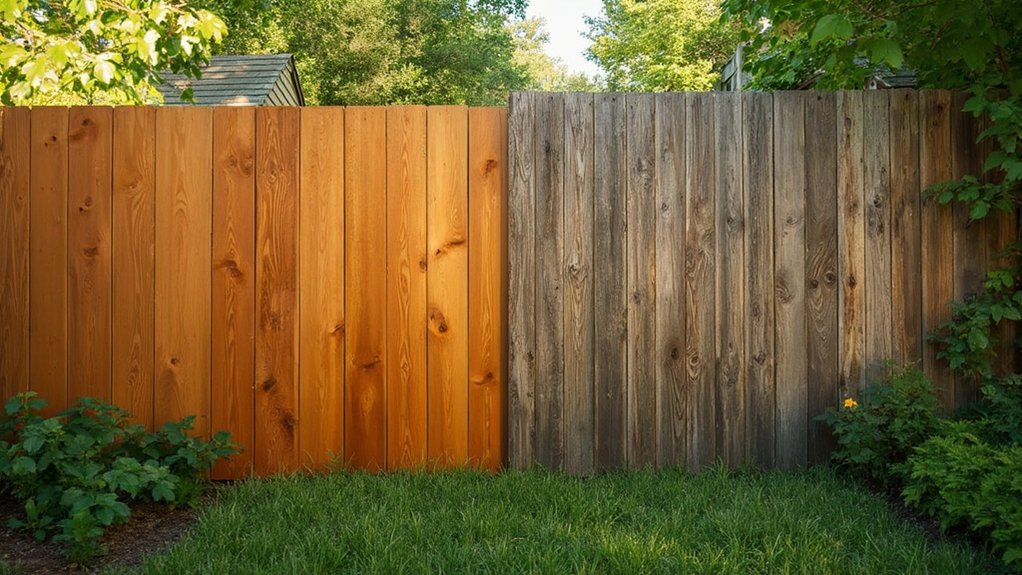
Find out which fencing option offers superior longevity and durability, and discover how your choice can impact maintenance and costs Read more
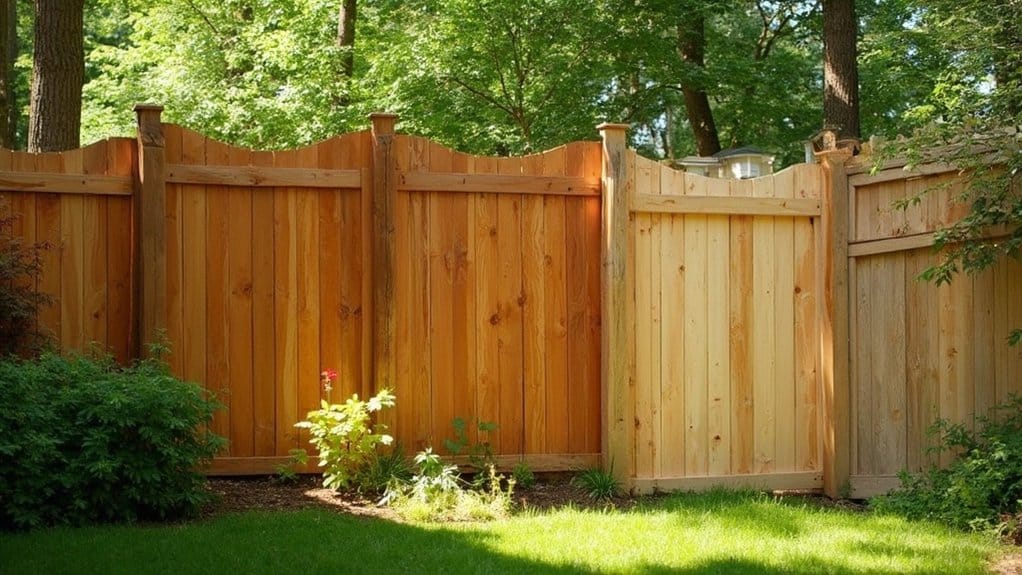
Uncover the ideal wood types for fencing that match your style and environment—each option holds secrets to durability and beauty Read more
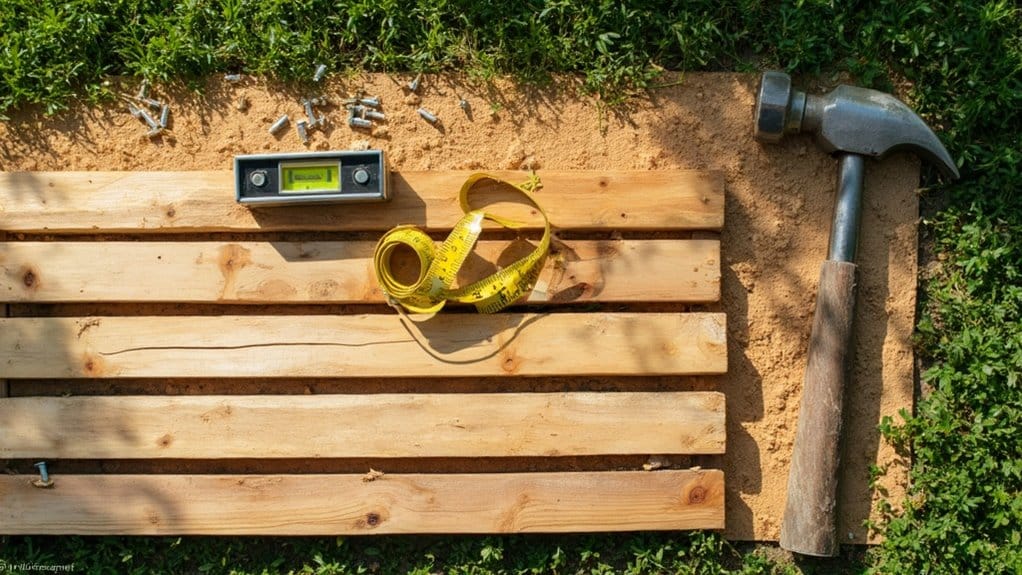
Unlock the secrets to crafting a stunning DIY wooden fence with our step-by-step guide—your backyard transformation awaits!


