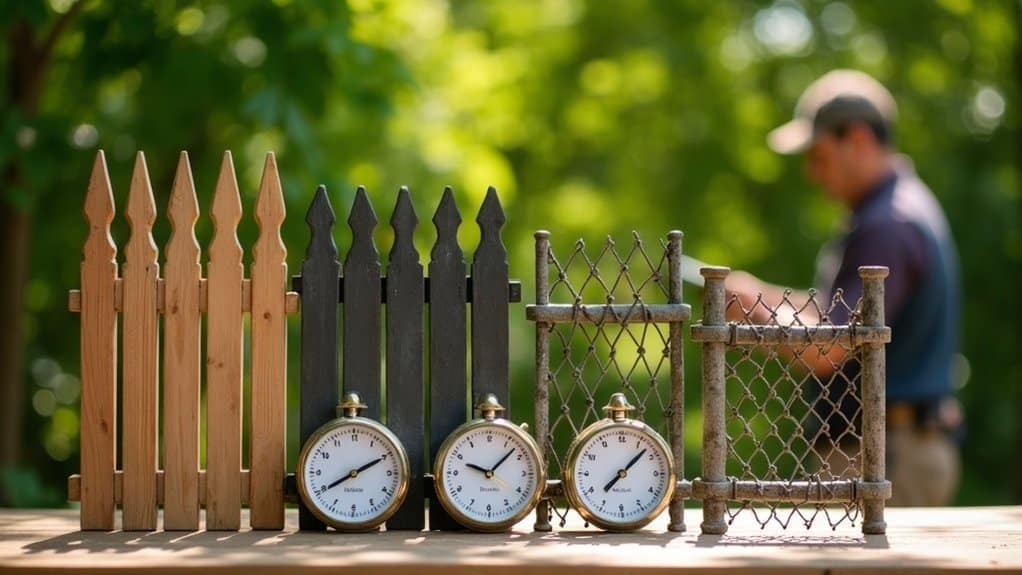
When estimating fence installation times, here’s a quick breakdown:
- Vinyl fences: 2-5 days
- Wood fences: 1 day to several days, depending on the style
- Chain link fences: typically done in 1 day
- Aluminum fences: 1-2 days
- Composite fencing: 1-3 days
Keep in mind that factors like design complexity, terrain, and site readiness can affect these timelines. Understanding these variables can help you plan your installation more effectively.
Key Takeaways
- Vinyl fences take about 2 to 5 days to install, depending on your yard and design.
- Wood fences can be up in as little as 1 day but may take longer based on style and site conditions.
- Chain link fences are quick and usually finished in a single day.
- Aluminum fences need about 1 to 2 days to install for 200 linear feet with a two-person crew.
- Composite fences typically take 1 to 3 days to install for standard homes, depending on how ready the site is.
Vinyl Fence Installation Times
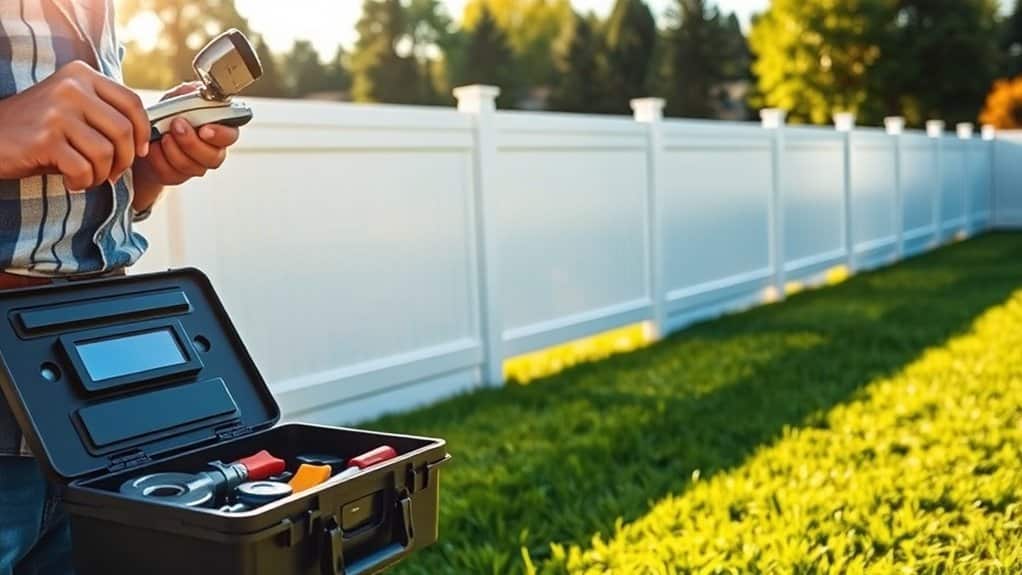
Installing a vinyl fence typically takes 2 to 5 days, depending on your yard’s conditions and the design complexity. For a standard installation of 100 to 200 linear feet, expect the process to last 2 to 4 days. Simpler designs in smaller yards can often be completed in just 1 to 2 days. Keep in mind that weather and soil conditions can affect these timelines, especially in tricky areas. Additionally, proper installation and maintenance are crucial for vinyl durability, which can significantly impact your fence’s lifespan. Make sure to have the right tools, like augers and post-hole diggers, to speed up the installation. Also, check property lines and local regulations to avoid any setbacks. Proper preparation can lead to a smoother process, further enhancing your installation experience. With a variety of design and color options available, you can enhance your property while following these guidelines.
Wood Fence Installation Times
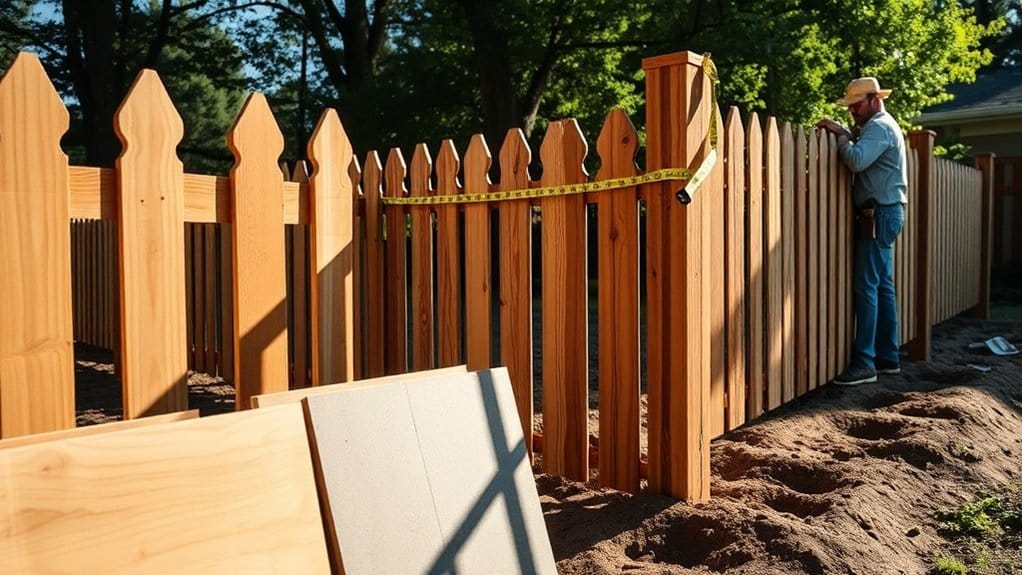
Wood fence installation requires careful planning and can take from one day to several days, depending on various factors such as site conditions and fence style. Here’s a quick overview of average installation times:
| Fence Style | Avg. Time per Linear Foot | Total Time for 200 Linear Feet |
|---|---|---|
| Split Rail | 15 minutes | 10 hours |
| Picket | 15 minutes | 10 hours |
| Privacy | 30 minutes | 20 hours |
| Complex Designs | 45 minutes | 30 hours |
For a standard residential project of 200 linear feet, expect it to take about one day under ideal conditions. However, more complex designs or challenging site conditions can significantly extend this timeframe. It is essential to evaluate total linear footage and consider obstacles during the planning phase to ensure accurate time estimates. Additionally, selecting a durable wood type can impact the overall installation process and longevity of the fence.
Chain Link Fence Installation Times
Chain link fence installation is quick and efficient, but various factors can affect the timeline. For example, uneven ground or weather conditions can slow things down. Similarly, the type of materials you choose and the experience of the crew can impact how fast the job gets done. Additionally, professional installation typically takes one full day to dig and set posts with cement, which can influence the overall timeline. It is essential to check local regulations and obtain necessary permits before starting your project, as this can also affect installation time.
Installation Speed Benefits
Chain link fences are known for their fast installation, making them a popular choice for many projects. Here are some reasons why:
- Readily Available Materials: Standard parts are easy to find, speeding up the procurement process.
- Spaced Posts: With posts placed up to 10 feet apart, you need fewer holes, which saves time.
- Quick Fabric Attachment: Using mechanical methods to attach the fabric makes alignment and securing faster, cutting down on labor.
- Minimal Finishing Work: Unlike wood or vinyl, there’s very little work needed after installation.
Thanks to these advantages, an average-sized chain link fence can often be installed in just one day, significantly shortening your project timeline.
Factors Affecting Duration
Several factors can affect how long it takes to install a chain link fence.
First, the size and shape of your property matter—a larger or oddly shaped lot takes more time to measure and cut the materials.
Ground conditions also play a role; rocky or uneven soil makes it harder to dig post holes, while wet ground can delay concrete setting.
Weather can be a significant factor too; rain or snow can slow down progress, and extreme temperatures can make it tricky to work with metal.
If you’re customizing your fence with features like privacy slats or special gates, expect that to add complexity and time to the project.
Lastly, don’t forget about permits and site prep, like clearing the area and leveling the ground, which can also extend the installation time.
Aluminum Fence Installation Times
When installing an aluminum fence, you can typically complete about 200 linear feet in a day.
However, the total installation time can vary based on factors like the complexity of the project, the terrain, and the chosen installation method.
Installation Speed Comparison
When choosing a fence, aluminum fences are a top pick for their fast installation compared to heavier materials like wood and wrought iron.
Here’s what you can expect for installation timelines:
- 200 linear feet: 1-2 days with a two-person crew.
- 100 linear feet: Typically takes 1-2 days, depending on complexity.
- Larger projects: May take up to 3 days, especially with multiple gates or uneven terrain.
- No-Mess, No-Dig methods: Can often be completed in one day for average-sized jobs.
These benefits make aluminum fences an excellent option for those wanting quick results without compromising on quality.
Factors Affecting Duration
While aluminum fences are quick to install, several factors can affect how long the process takes.
For instance, flat terrain allows for quicker post setting, whereas sloped or rocky ground poses challenges. Soil quality, including moisture and stability, can also slow down digging and securing posts.
Additionally, bad weather, like rain or extreme heat, can delay work. Accessibility issues might make it harder to handle materials, extending the project timeline.
Proper site prep, like clearing debris and securing permits, is crucial to prevent delays.
Finally, the skill and efficiency of your installation team will greatly impact how quickly the job gets done.
Typical Project Scope
Aluminum fence installations usually span 100 to 200 linear feet for residential spaces.
The installation duration varies based on materials and techniques used. Here’s a quick overview:
- 100 Linear Feet: Generally takes 1 to 2 days with a two-person team.
- 200 Linear Feet: Usually requires 2 to 3 days, especially with gates or challenging terrain.
- DIY Projects: Can range from 1 to 3 days, depending on your expertise and site conditions.
- Professional Installations: A 200-foot fence can often be completed in one day using efficient methods like No-Mess, No-Dig.
Understanding these factors can help you plan your project better.
Composite Fence Installation Times
Composite fence installation usually takes 1 to 3 days for standard residential projects.
For a 100-foot stretch, you might finish in just 1 or 2 days under ideal conditions. Lightweight composite materials speed up the process, and pre-made sections reduce the need for onsite cutting.
However, site preparation and setting posts are crucial and can affect the timeline. If the terrain is complex or the project is larger, installation may take longer.
To avoid delays, double-check measurements and prepare the site well. Hiring skilled labor experienced with composite materials can also help the installation go smoothly.
Wrought Iron Fence Installation Times
Installing a wrought iron fence requires careful consideration of installation complexity, which significantly affects the timeline.
The weight of the material means more labor is needed for handling. Additionally, the type of terrain can complicate the process.
For example, rocky or uneven ground may prolong installation. By recognizing these factors, you can better estimate how long your project will take.
Installation Complexity Factors
Wrought iron fences are durable and visually appealing, but their installation can be quite complex, affecting how long the project takes.
Here are some key challenges to consider:
- Design Complexity: Ornate designs require careful measurements and skilled workers, which can slow down the installation.
- Terrain Preparation: If the ground is uneven, it may need grading. Rocky soil can also make digging post holes more difficult.
- Post Alignment: Posts must be set accurately; any misalignment could mean extra work to fix.
- Specialized Tools: Using tools like welders and power equipment requires skilled operators and setup time, adding to the complexity.
Being aware of these factors can help you better estimate the time needed for a successful installation of a wrought iron fence.
Material Weight Considerations
The weight of wrought iron significantly impacts installation times. Heavier materials need more manual handling and careful coordination.
For instance, you might require cranes or lifts to properly position and secure these components. Transporting heavy wrought iron around the site can also slow down setup compared to lighter options.
Aligning and securing posts and panels takes longer due to their sturdiness, which can affect labor efficiency. Additionally, skilled workers are necessary to handle these heavy pieces safely, often requiring a larger crew.
This complexity can extend preparation time and increase the risk of fatigue among workers dealing with heavy materials.
Terrain Impact on Timeline
Installing a wrought iron fence on challenging terrain can significantly delay your project.
Here are some common issues that can extend your timeline:
- Uneven or Rocky Ground: More time is needed for grading or digging.
- Sloped Areas: Requires careful leveling, which slows down post installation.
- Obstructions: Removing large roots or boulders adds extra work.
- Soil Type: Hard or wet soil makes digging and anchoring tougher.
These challenges can also necessitate specialized tools, further impacting your schedule.
Factors Affecting Installation Duration

When planning to install a fence, several key factors will affect how long the project takes. The type of material you choose plays a big role; for instance, wood fences take more time to cut and assemble compared to quicker-installing chain-link fences. Soil conditions are another important consideration. If the ground is rocky, you may need specialized equipment, which can lengthen the process. Additionally, the terrain and the height of the fence can impact installation time, especially if deep post holes are required. Lastly, having an experienced crew can significantly speed up the project and reduce delays from weather or site prep.
| Factor | Impact on Duration | Example |
|---|---|---|
| Fence Material | Varies by complexity | Wood takes longer than chain-link |
| Soil Conditions | Affects equipment choice | Rocky soil requires special tools |
| Crew Experience | Influences overall speed | Skilled teams work more efficiently |
Site Readiness and Its Impact
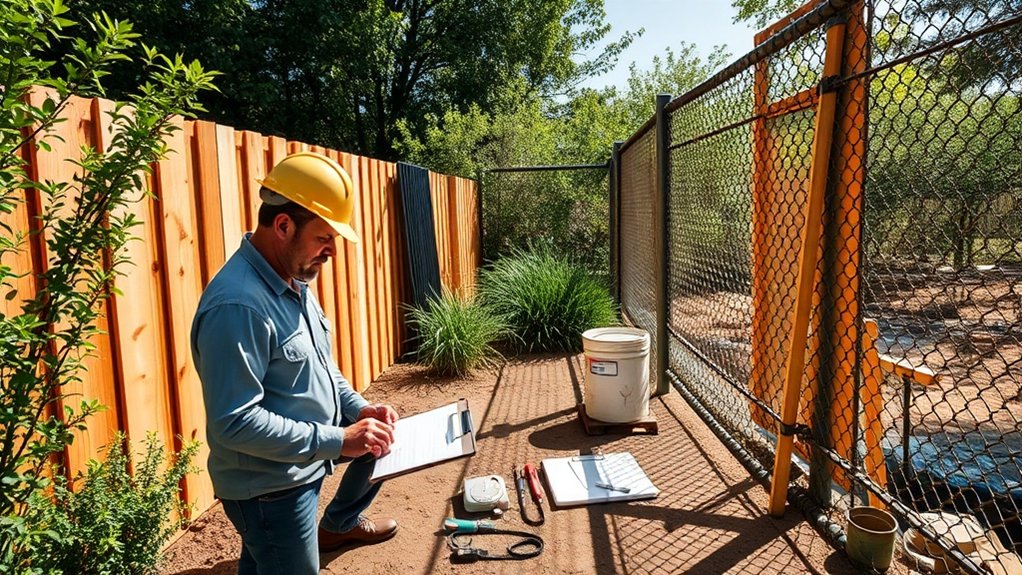
Proper site readiness is crucial for an efficient fence installation. Here are the key factors to consider:
- Final grading should be within 6 inches of the fence foundation level to avoid delays.
- Underground utilities need to be marked according to 811 dig laws before starting work.
- Clear the area of debris and vegetation along the fence line for easy access.
- Obtain necessary permits to ensure compliance with local height and setback regulations, preventing any issues later on.
Getting these aspects right helps ensure a smooth installation process.
Comparing Installation Times Across Fence Types
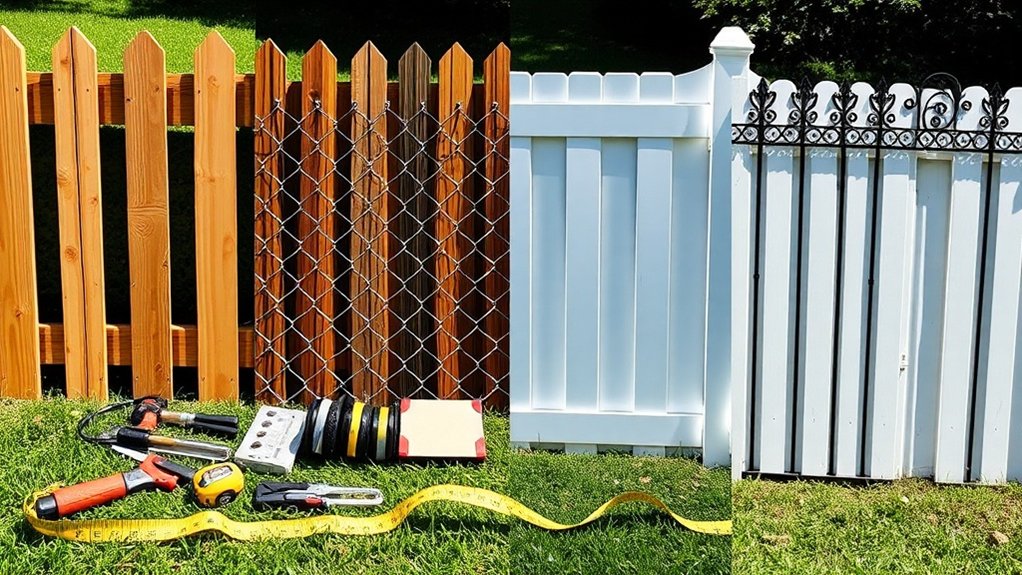
Understanding installation times for different fence types is crucial for effective project planning.
Chain link fences are the quickest to install, often completed in a single day thanks to their simple design.
Wood and vinyl fences usually take 1-3 days, but vinyl can be faster due to its No-Mess, No-Dig techniques.
Ornamental iron or metal fences generally require 2-3 days because of their heavier materials and precise alignment.
Composite fences are similar in installation time to wood and vinyl but can be a bit trickier due to their weight.
Knowing these timeframes helps you allocate resources and schedule work efficiently.
Tips for Efficient Fence Installation
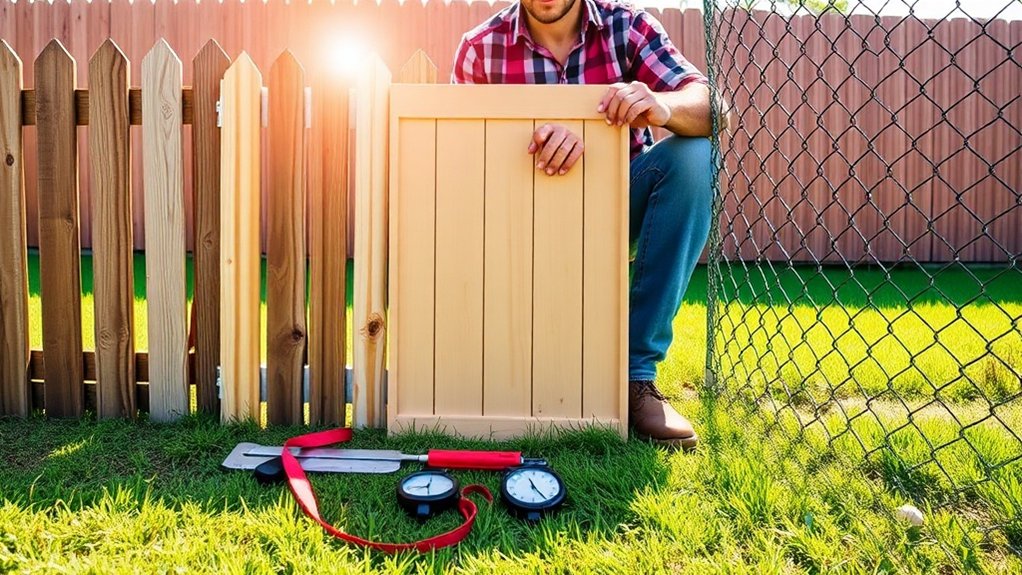
For efficient fence installation, using the right tools and techniques is crucial. Here are some straightforward tips to ensure durability and speed:
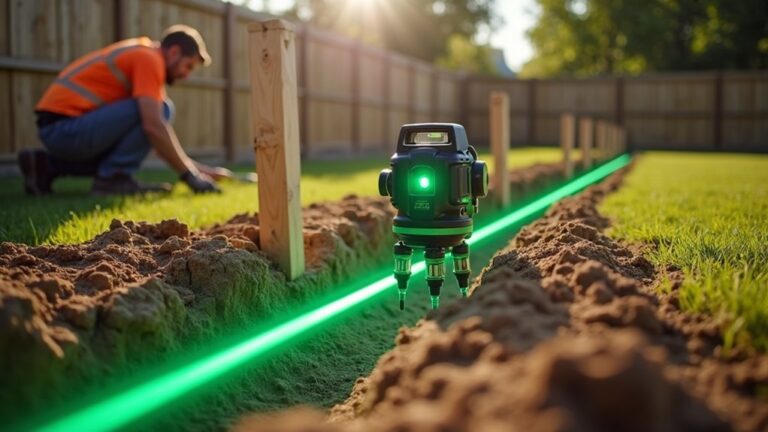
- Use laser levels and GPS tools to mark accurate property lines and keep your fence straight.
- Set posts in concrete for stability, ensuring the mix is right and posts are aligned.
- Opt for pneumatic tools to speed up post setting, especially in tough soil conditions.
- Prepare the soil well with hydraulic tampers and rock drills for a solid foundation.
Keeping it simple and effective will make your fence installation smoother.
Understanding Labor Costs Related to Installation Time
When installing a fence, understanding labor costs is crucial. Labor often accounts for about 50% of your total project costs, averaging around $1,600.
Rates can vary from $30 to $100 per hour depending on your location and the contractor’s experience. Complex installations, like those on uneven ground or with custom features, will take more time and cost more.
For example, heavier materials such as wrought iron require more handling, increasing labor time, while lighter materials like vinyl are quicker to install.
Keep these factors in mind to accurately estimate your overall installation costs and avoid unexpected expenses.
Frequently Asked Questions
What Are Common Materials Used for Fencing Besides Those Mentioned?
In addition to the previously mentioned materials, vinyl fencing is popular for its durability and low maintenance, while chain link fencing is favored for its affordability and security. Each material meets different needs in various situations.
How Does Weather Affect Fence Installation Times?
Weather plays a significant role in fence installation. For example, wet soil from rain can delay digging, while extreme temperatures can make it difficult to handle materials and cure concrete properly. Seasonal changes may also cause interruptions, so careful scheduling is essential for completing the project efficiently.
Can I Install a Fence Myself to Save Costs?
If you’re looking to save money, installing a fence yourself is a great option. With some DIY tips and a clear budget, you can cut labor costs. For instance, researching materials and using online tutorials can help you avoid common mistakes. Just be prepared to invest some time and effort for a successful installation.
Are There Local Regulations Affecting Fence Installation?
Yes, local regulations usually require permits for installing fences. It’s important to verify height limits, materials, and where you can place the fence in your area. For example, some neighborhoods might not allow fences over six feet tall or require specific materials. Checking these rules can help you avoid fines or having to take your fence down later.
What Maintenance Is Required After Fence Installation?
Just like your car needs oil changes, your fence needs regular maintenance. Set a schedule to check for damage, remove debris, and apply sealants or stains when needed. This will help keep your fence strong and lasting longer.
Conclusion
When installing a fence, knowing the specifics of each type—vinyl, wood, chain link, aluminum, and composite—can help you save time and effort. For instance, vinyl and aluminum are often quicker to install because they require less maintenance and fewer materials than wood. Preparing your site well can also make a big difference. With proper planning, you can transform your outdoor space efficiently, making installation a straightforward process.