When deciding between palisade fencing and welded mesh for security, it’s essential to know their key differences. Palisade fencing provides robust protection with its anti-climb features, making it suitable for industrial and commercial areas. On the other hand, welded mesh offers moderate security, is customizable in size, and is generally easier and cheaper to install. Both options need regular maintenance to last. Think about your specific security needs and aesthetic preferences to make the right choice. More detailed insights are available below.
Key Takeaways
- Palisade fencing provides excellent security due to its anti-climb design and sharp tops, making it perfect for high-risk areas like industrial sites.
- Welded mesh fencing offers decent security for less critical applications, but it doesn’t have the intimidating look of palisade fencing.
- Both types use galvanized steel to resist corrosion, but palisade fencing can chip and needs more upkeep.
- Palisade fencing is pricier because installation takes more labor, while welded mesh is about 40% cheaper and can be installed quickly.
- Consider your specific security needs and the environment to choose the best fencing option for your property.
Overview of Palisade Fencing
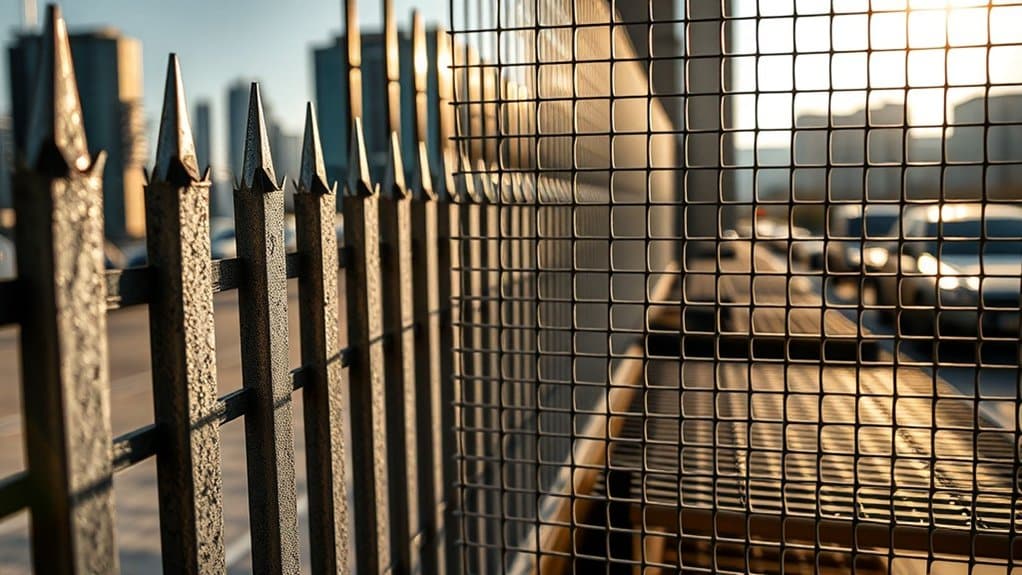
Palisade fencing is a strong security option made of vertical steel pales attached to horizontal rails and posts.
Its design includes sharp, pointed tops and narrow spacing (under 155mm), which effectively deters climbing and unauthorized access. This makes it ideal for industrial, commercial, and high-security areas. With heights between 7′ and 10′, it offers excellent protection. Constructed from galvanized steel, it can weather harsh conditions, ensuring longevity. Additionally, it features anti-climb designs that further enhance its security profile.
Plus, it comes in customizable colors and designs, allowing it to blend into different architectural styles.
Overview of Welded Mesh Fencing
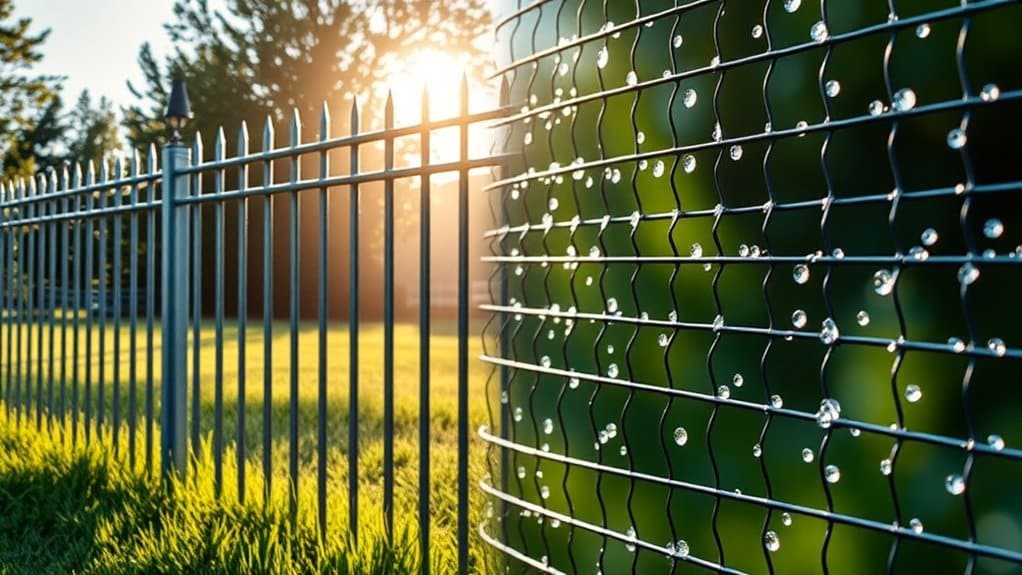
Welded mesh fencing is a strong and flexible option for security and containment in different settings. Made from high-quality steel wire, it offers durability with wire diameters between 1.5 and 6mm, ensuring it can withstand impacts and tension. Welded wire mesh is produced via electric fusion welding, where wires are fused at intersections for enhanced strength and stability. Panel heights range from 630mm to 2430mm, and the mesh openings vary from 25x25mm to 75x300mm, catering to different security needs and livestock containment. To prevent rust, welded mesh can be treated with hot-dipped galvanizing. Additionally, custom design options mean you can get a solution tailored to your requirements.
Security Features Comparison
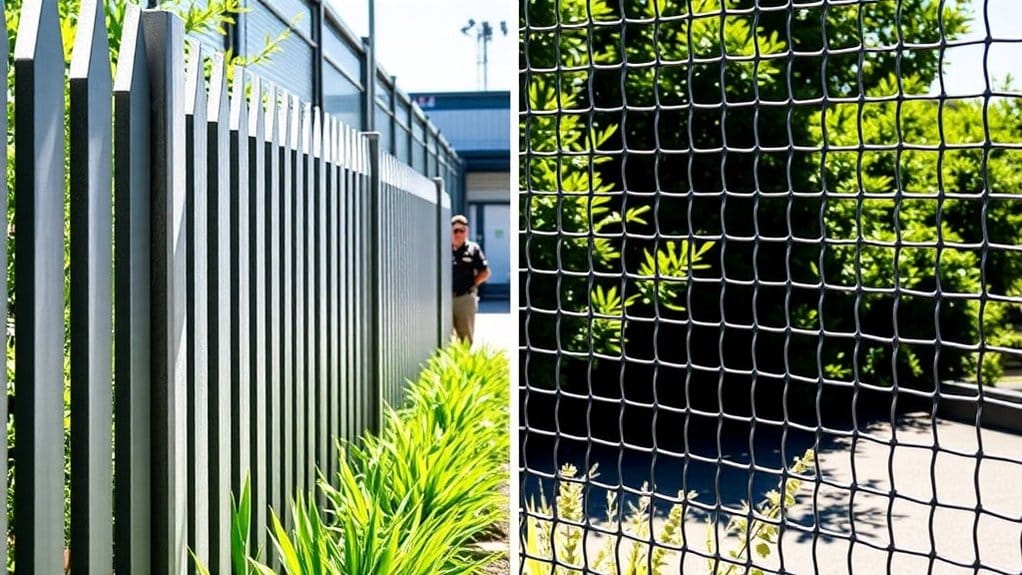
When comparing security features, palisade fencing stands out against welded mesh options. Palisade fencing incorporates advanced security features like anti-climb spikes and closely spaced pales, effectively preventing unauthorized access. Its sturdy materials create a strong physical barrier. Additionally, palisade fencing can be enhanced with hostile vehicle mitigation options, providing an extra layer of security against potential threats.
| Feature | Palisade Fencing | Welded Mesh |
|---|---|---|
| Anti-Climb Design | Yes, with spikes and narrow gaps | Limited, typically flat |
| Tamper Resistance | High, with specialized fixings | Moderate, easier to breach |
| Visual Deterrence | Intimidating and imposing | Less imposing |
| Maintenance Frequency | Lower, due to durable materials | Higher, more prone to damage |
Construction Materials Analysis
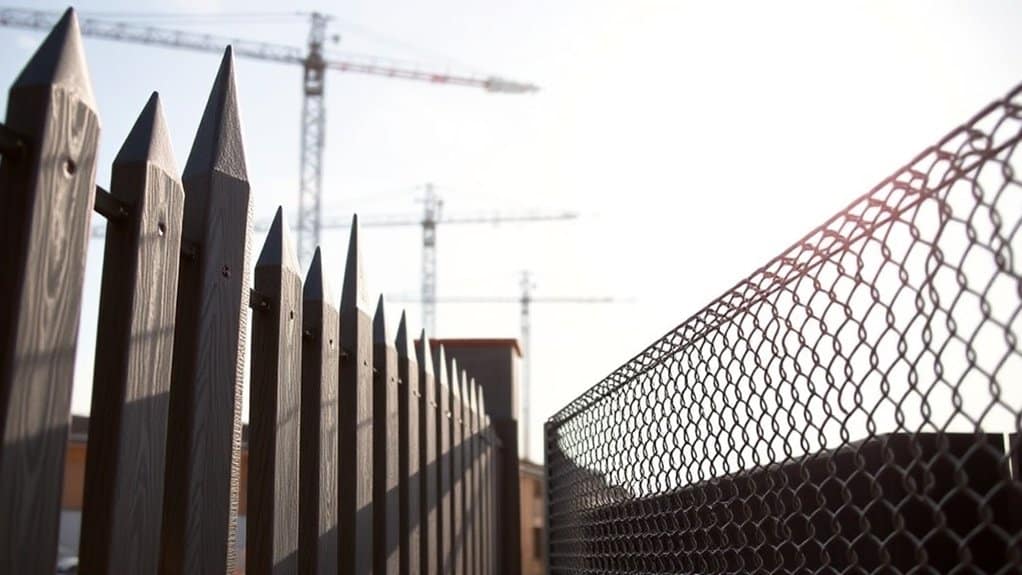
When comparing palisade fencing and welded mesh, focus on durability and corrosion resistance.
Palisade fencing is made from strong ASTM A36 mild steel or S235JR, while welded mesh uses high-tensile steel wire, both treated with galvanization for added protection.
Knowing these differences will help you choose the right option for your security and longevity needs.
Material Durability Comparison
Material durability is vital for security fencing, and comparing palisade fencing with welded mesh highlights their unique strengths.
Palisade fencing is made from high-quality steel and typically lasts 10-12 years with proper maintenance. It’s designed to endure heavy impacts, making it a tough choice for security.
On the other hand, welded mesh, especially the 358 type, is even more durable, lasting 25-30 years. Its tightly welded design reduces weak points, making it harder to damage or penetrate with tools.
While both types need protective coatings to extend their lifespan, welded mesh requires less upkeep, making it a superior option for long-term security. Additionally, maintenance requirements for welded mesh are lower compared to palisade fencing, which can enhance its appeal for security applications.
Corrosion Resistance Features
Corrosion resistance is vital for the durability of security fencing, such as palisade and welded mesh options. Knowing the different coating types can help you choose the best solution.
| Coating Type | Corrosion Resistance Features |
|---|---|
| Galvanised Steel | Zinc coating provides sacrificial protection with low maintenance. |
| Powder-Coated Steel | Seals zinc layer for aesthetics, but can chip easily. |
| PVC Coated Steel | Thick plastic layer ideal for harsh environments, plus color options. |
| Welded Mesh | Zinc-coated base with PVC for extra protection in severe conditions. |
Selecting the right coating not only ensures lasting strength but also extends the lifespan of your fencing. Regular inspections and maintenance are essential for preventing rust buildup and ensuring long-term durability.
Anti-Climb Capabilities
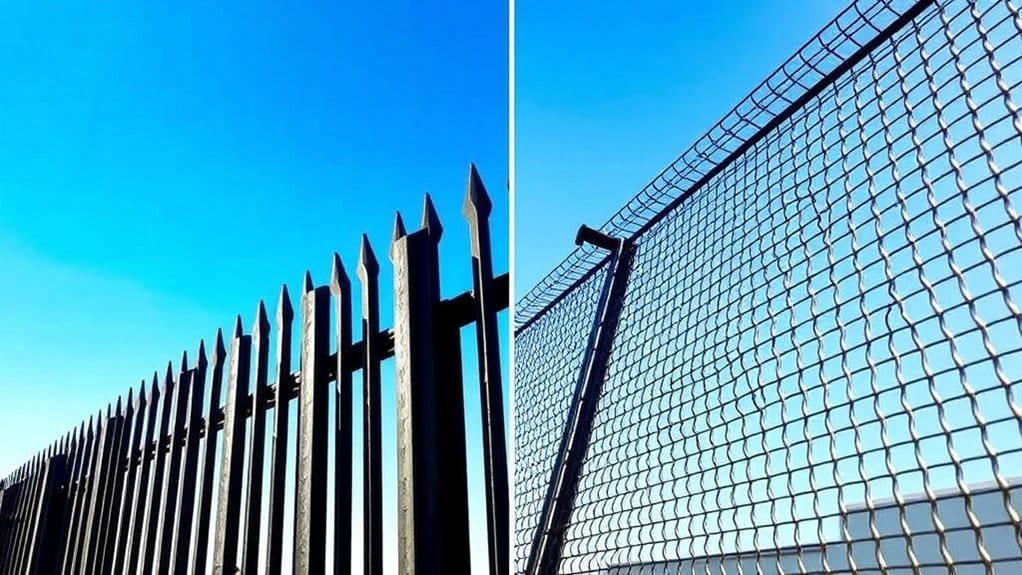
Palisade fencing and welded mesh both provide strong anti-climb features, but they do so differently.
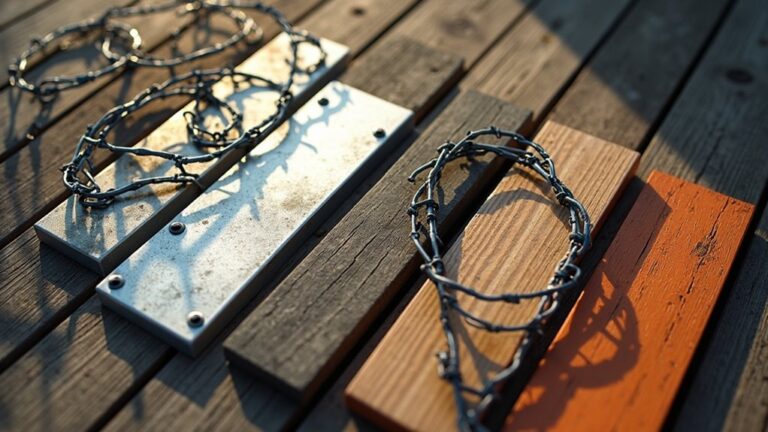
Palisade fencing uses vertical steel pales that are closely spaced, with pointed tops and minimal footholds to make climbing difficult. Adding curved pales or barbed wire enhances this effect.
In contrast, welded mesh has tight mesh spacing and smooth surfaces, making it hard for climbers to find grip. An outward curve at the top adds extra deterrence, while the lack of horizontal rails boosts security.
Both options effectively slow down intruders, making climbing time-consuming.
Choose based on your property’s specific security needs and vulnerabilities.
Installation Flexibility and Process
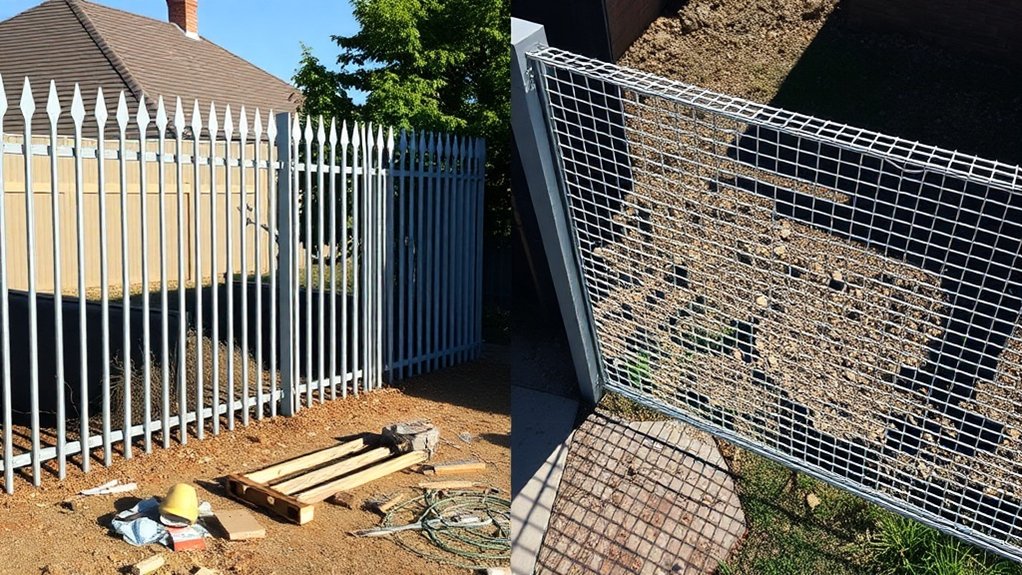
Welded mesh fencing offers excellent installation flexibility, making it suitable for various site conditions. Here are its key advantages:
- Custom Sizes: Panels can be cut to fit uneven or curved boundaries easily.
- Quick Setup: Fewer specialized parts mean faster installation.
- Flexible Foundations: Posts can be set in shallower holes or attached to existing structures, minimizing excavation needs.
On the other hand, palisade fencing has strict requirements for post spacing and components, which limits its adaptability in complex layouts.
For sites with tricky shapes or tight corners, welded mesh fencing is often the more efficient choice.
Vulnerability and Mitigation Strategies
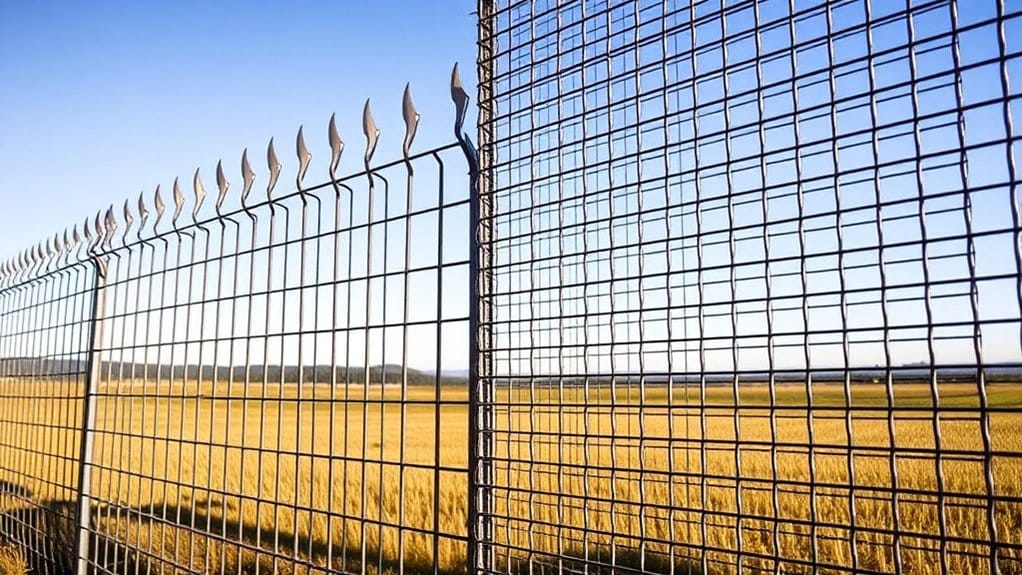
When assessing the vulnerabilities of palisade and welded mesh fencing, it’s crucial to pinpoint weaknesses that intruders could exploit.
For instance, gaps or weak points can be targeted for unauthorized access.
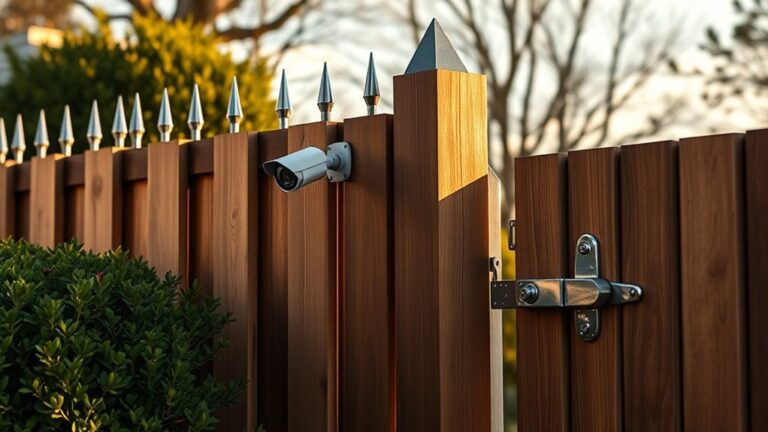
To counter these risks, consider reinforcing the structure and adding surveillance cameras.
Common Vulnerabilities Identified
Palisade fencing has several vulnerabilities that can compromise security. Here are some key weaknesses to consider:
- Vertical pales can be spaced apart, allowing unauthorized access.
- M8 fixings can be breached in under 13 seconds, leaving your property vulnerable.
- Horizontal rails can be used as footholds, making it easier for intruders to climb.
Additionally, poorly installed panels, leaning posts, and rotting materials further weaken the fencing.
The design may also obstruct surveillance, making monitoring difficult.
Regular maintenance and professional installation are crucial to ensure your palisade fencing effectively secures your property.
Effective Mitigation Techniques
To effectively secure palisade fencing and prevent unauthorized access, it’s important to use a variety of straightforward techniques.
Start by reinforcing the fence with deep-set posts and tamper-resistant fixings for stability.
Add anti-dig measures, like concrete-filled trenches, to stop underground breaches.
To deter climbing, consider installing spikes or coil springs at the top.
Use technology by adding vibration sensors and CCTV with motion detection for real-time alerts.
Regularly maintain the fence with rust-proof coatings and high-gauge steel for durability.
Lastly, enhance security by creating a layered defense with secondary fences and strategic lighting to deter intruders.
Cost-Effectiveness Assessment
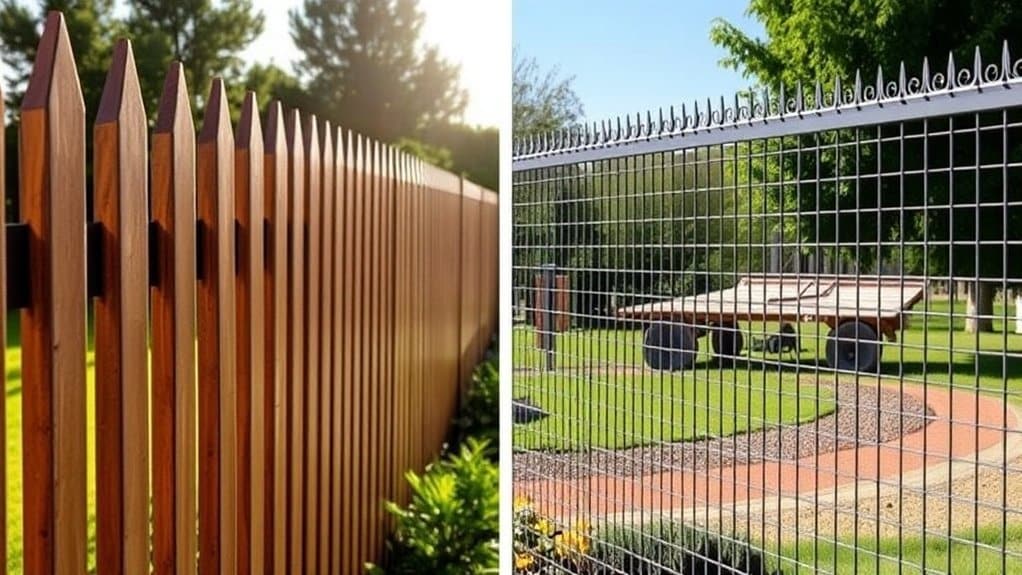
When evaluating cost-effectiveness between palisade fencing and welded mesh, consider initial purchase costs, installation, and long-term maintenance.
Here are some key points:
- Standard mesh fencing is about 40% cheaper than palisade fencing due to less steel.
- Installing palisade fencing often requires more labor, leading to higher upfront costs.
- Welded mesh typically needs less maintenance, which can save money over time.
While palisade fencing offers a strong visual deterrent, welded mesh is more durable and secure, which might justify its higher initial cost.
Assessing these factors will guide you in making a well-informed choice.
Aesthetic Appeal and Design Options
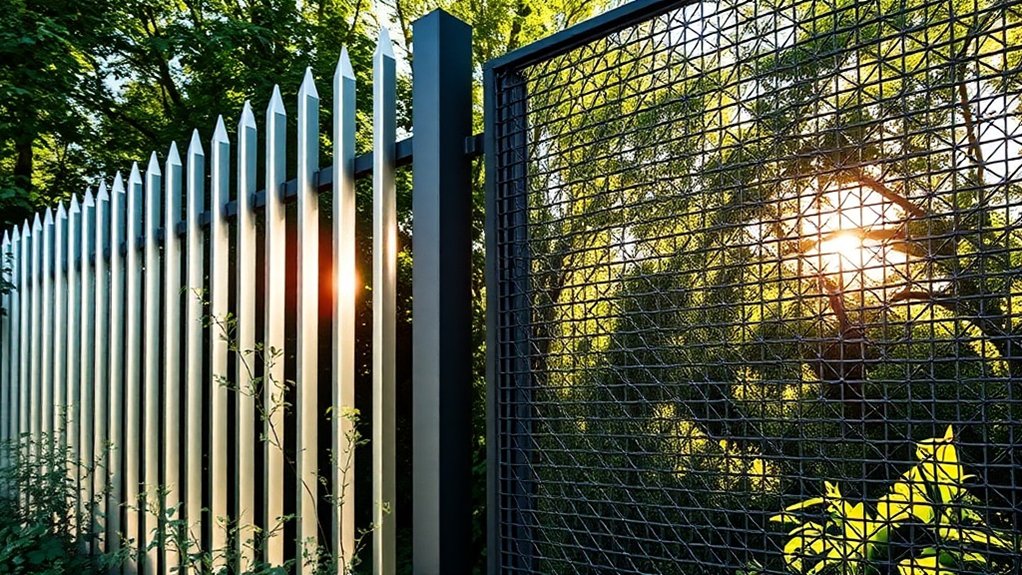
When it comes to aesthetic appeal and design options, palisade fencing and welded mesh each have their unique strengths.
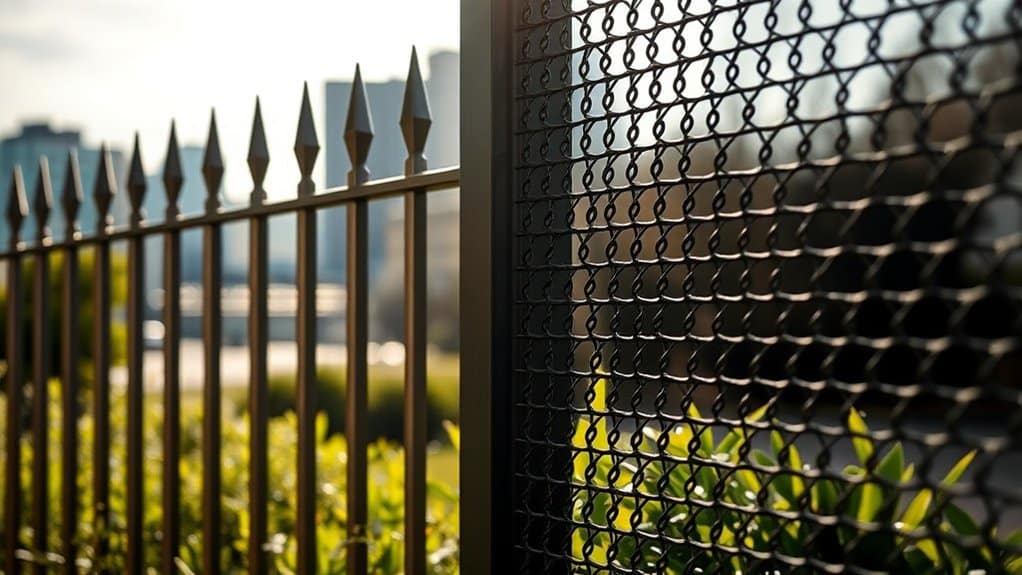
Palisade fencing offers a modern, bold look with customizable features like pointed tops and a variety of powder-coat colors, allowing for personalized design. It can also incorporate softer profiles or decorative elements for added visual interest.
On the other hand, welded mesh panels deliver a clean, minimalist style with uniform patterns and smaller openings, fitting well with contemporary designs.
Both fencing types can be paired with gates and other structures for a unified appearance.
Ultimately, your choice should reflect how well each style enhances your property’s overall look and feel.
Best Use Cases for Each Fencing Type
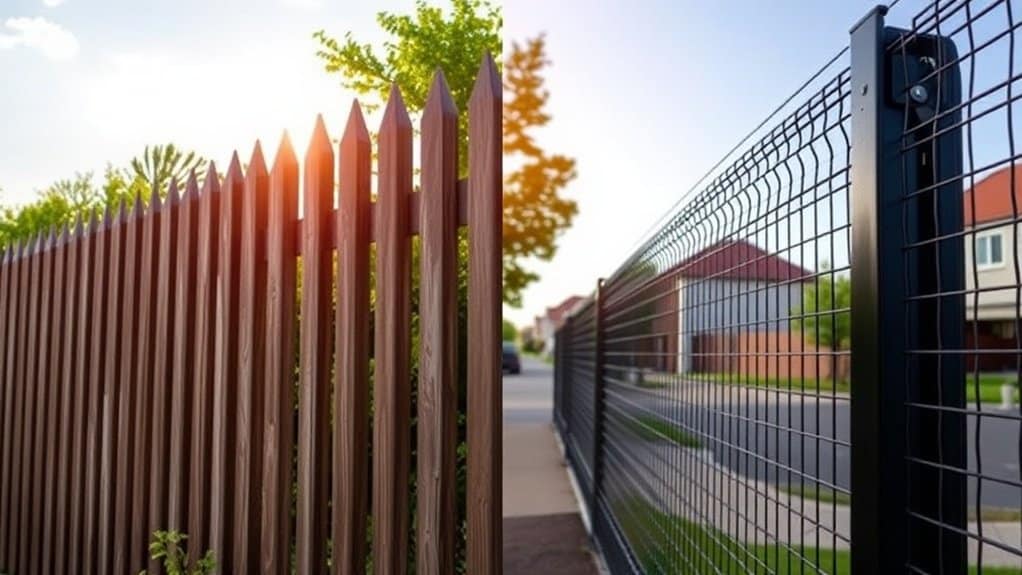
Palisade fencing and welded mesh both provide strong security but are suited for different situations.
- Palisade Fencing: Great for utilities, industrial sites, and telecom infrastructure. It offers a strong barrier, can handle steep terrain, and typically has lower installation costs.
- Welded Mesh: Best for critical national infrastructure. It’s transparent and resistant to climbing, making it ideal for areas that need verified security levels. However, it comes with a higher price tag.
Your choice of fencing should align with your specific security needs and the installation environment.
Frequently Asked Questions
How Do Weather Conditions Affect Palisade and Welded Mesh Fencing Durability?
Weather conditions significantly affect fencing durability. Palisade fencing is more resistant to corrosion in harsh climates, making it a better option for areas with extreme weather. In contrast, welded mesh fencing can deteriorate quickly when exposed to moisture and salt. When choosing fencing, consider the typical weather in your region.
Can Palisade Fencing Be Painted or Customized After Installation?
Yes, you can paint or customize palisade fencing after it’s installed. This allows you to enhance its look and create a design that suits your style. Using high-quality paint or opting for powder coating can add durability and a fresh appearance.
What Maintenance Is Required for Both Fencing Types Over Time?
Both types of fencing require regular maintenance, including inspections, cleaning, and rust prevention. Generally, palisade fencing demands more attention and cost due to its extra rust treatment and repair needs, while welded mesh is easier to maintain. For instance, if you spot rust on palisade fencing, you’ll need to treat it quickly to prevent further damage, whereas welded mesh may only need occasional cleaning.
How Do Local Regulations Impact the Installation of Either Fencing Option?
Local regulations play a significant role in your fencing installation. They often require permits and adherence to zoning laws. For instance, you might face restrictions on how tall your fence can be, what materials you can use, and how far it needs to be set back from property lines. Always check these rules in your area before starting your project to avoid potential fines or having to take down your fence later.
What Are the Environmental Impacts of Producing Palisade Versus Welded Mesh Fencing?
Producing palisade and welded mesh fencing can significantly increase your carbon footprint and deplete resources. Both types require a lot of energy, especially when made from virgin steel. However, using recycled materials can greatly lessen their environmental impact and conserve resources. For example, opting for recycled steel can reduce energy consumption and emissions, making it a more eco-friendly choice.
Conclusion
In conclusion, both palisade fencing and welded mesh offer unique security benefits. While welded mesh may seem less secure at first glance, its strength and corrosion resistance make it a reliable option for various settings. Your choice should depend on your budget, aesthetic preferences, and security needs. By considering these factors, you can select the fencing that best safeguards your property.