
Fencing safety for farm workers and visitors is crucial to avoid accidents and keep livestock secure. Use sturdy materials and follow height guidelines for better protection. Regularly check and maintain fences to spot any hazards. Design fences for visibility and easy access, while also preventing erosion. Clear signage and training on proper fence use can greatly improve safety. For more insights on effective safety practices, keep exploring.
Key Takeaways
- Regularly check and maintain fences to prevent injuries and meet safety standards.
- Train workers and visitors on using fences safely and what to do in an emergency.
- Put up clear signs at entry points to warn visitors about potential hazards.
- Use eco-friendly materials for fencing to ensure safety and protect the environment.
- Set up emergency response plans and keep medical supplies handy for fencing-related incidents.
Importance of Safe Fencing Practices
Safe fencing practices are crucial for protecting your livestock and visitors. Well-designed fences enhance safety and appearance. Use strong materials and ensure the right height to prevent animals from getting hurt or escaping. Fencing is a long-term investment that requires regular maintenance and careful planning to ensure its effectiveness. Additionally, implementing proper safety measures can help safeguard your property from unauthorized access or potential accidents.
Regularly check your fences for any issues to maintain a secure environment. Clear signage and visible fence lines help guide visitors and reduce accidents.
Compliance With Fencing Standards and Regulations
When building a fence, it’s essential to follow height limits and material standards to ensure safety and legality. For example, certain areas might require a fence to be no taller than six feet. Additionally, specific safety requirements for swimming pool enclosures should be taken into account to enhance overall safety. Also, be aware of setback rules to avoid any property line disputes and ensure clear sightlines. Compliance not only protects your animals but also helps you avoid legal troubles. Implementing effective fencing practices can further enhance safety for farm workers and visitors alike.
Height Limitations Enforcement
To ensure your fence meets height regulations, it’s crucial to know local rules. For example, agricultural areas may permit fences up to 7 feet, while front yard limits range from 3 to 4 feet. Understanding the local zoning laws that apply to your area is essential for compliance.
Always verify your area’s requirements and adjust your fence accordingly. While aesthetics matter, safety comes first. Regularly inspect your fence and keep your permits up to date. A properly maintained fence not only secures your property but also prevents legal fence from escaping.
Stay updated on any changes in regulations to keep your farm compliant and secure.
Material Compliance Standards
To comply with fencing material standards, choose materials that follow industry regulations. Use new, galvanized wire meeting ASTM-A116 or ASTM-A121 for durability and rust protection.
Pay attention to the level of galvanization, as it affects how long the materials last. Attach the wire with galvanized clips or fasteners, typically 12 – 12½ gauge, to match the wire’s strength.
For organic farms, steer clear of synthetic chemicals and opt for natural materials like untreated wood or recycled options.
Ensure your choices meet NRCS Fence (382) standards for strength and durability. By following these guidelines, you ensure safe and effective fencing that lasts on your farm.
Setback Requirements Importance
Setback requirements are crucial for farm fencing as they ensure safety and compliance. They specify how far fences must be from property lines, roads, and sidewalks, which helps maintain clear sight lines and prevents hazards for drivers and pedestrians.
Following these rules can reduce trespassing and guarantee emergency access. However, they may limit your fencing options, particularly for farms practicing rotational grazing or using movable systems. Strategic planning can help navigate these constraints.
Non-compliance can lead to fines, forced removals, or legal troubles that disrupt your farm operations. Understanding and following setback regulations is vital for safety and effective farm management.
Designing Fences for Visibility and Access
When designing fences for visibility and access, consider how different styles affect safety and aesthetics on your farm. Chain-link fences are a great option, providing 70-80% visibility, which can boost morale and enhance the overall look.
Think about the main purpose of your fence—whether it’s for boundaries, containing animals, or protecting crops—as that will guide your choices.
Place gates strategically to improve access and reduce travel time. Wide gates are essential for the easy movement of workers and machinery.
Be sure to clearly mark access points with signage to help visitors navigate. Balancing visibility and access is crucial for a safe and functional farm environment.
Materials That Promote Safety and Sustainability
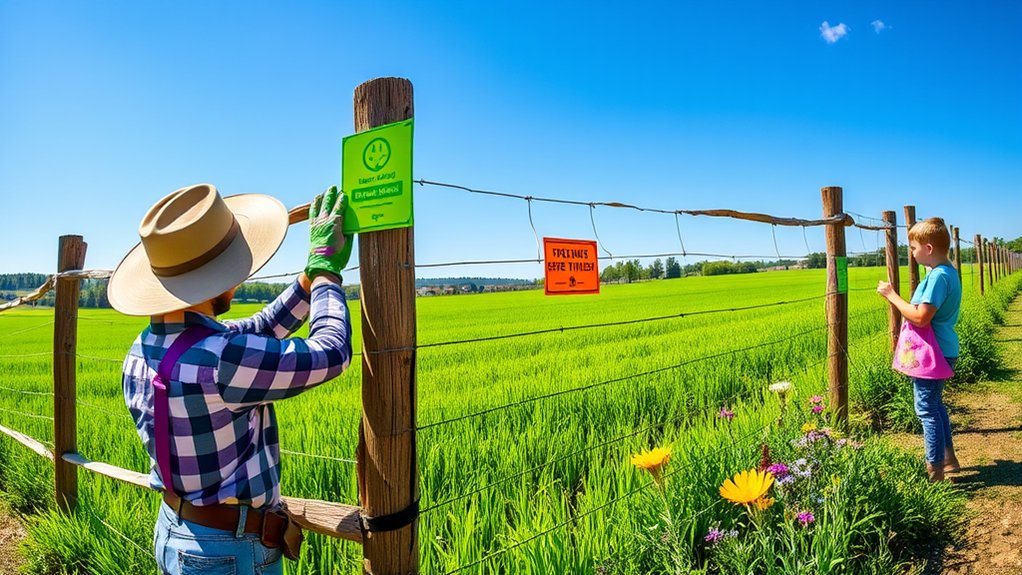
Choosing the right fencing materials boosts safety on your farm and supports sustainability. Here are some effective options:
- HDPE Fencing: Made from recycled materials, it’s tough, weather-resistant, and fully recyclable, ensuring long-lasting use.
- Metal Components: Metal posts and gates provide strong support, resist wear, and require less maintenance.
- Electric Fencing: This flexible option creates a psychological barrier, enhancing safety without the risk of injuries.
Erosion Prevention Through Proper Fencing
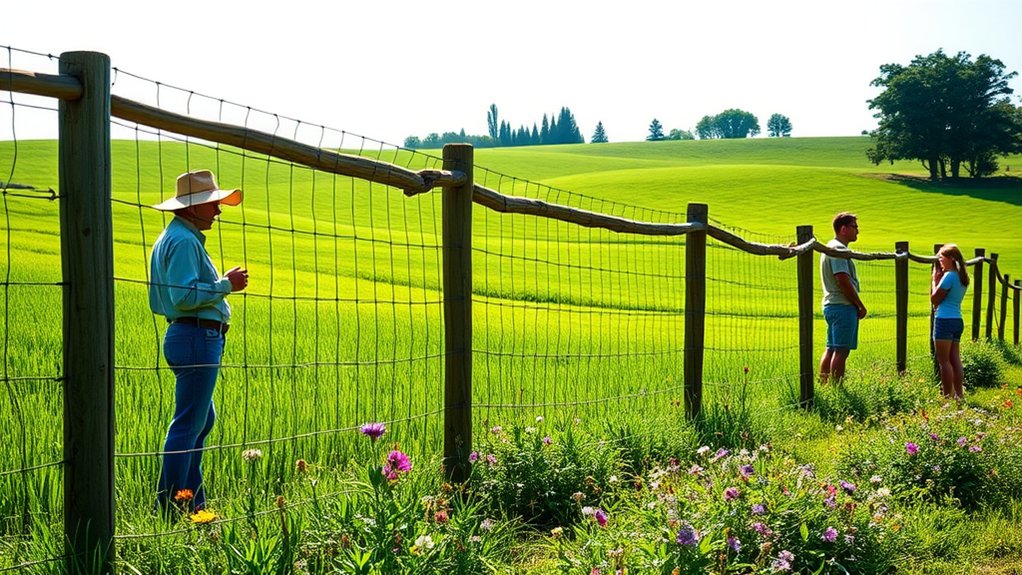
To effectively prevent erosion, minimize soil disturbance and use habitat preservation techniques.
Installing well-placed fences can help stabilize soil and protect local ecosystems. These simple actions improve soil quality and benefit the environment.
For example, a fence around a hillside can reduce runoff and promote plant growth, making a noticeable difference.
Soil Disturbance Minimization
Effective fencing is key to reducing soil disturbance and preventing erosion on your farm. Here are three essential practices to consider:
- Use silt fences to catch sediment-laden runoff and minimize soil loss.
- Place fences along slopes or contours to enhance sediment trapping.
- Secure fences with stakes spaced 6–10 feet apart and driven at least 1 foot deep for stability.
Well-installed fences not only protect your soil but also help control water and wind erosion.
Regularly check and maintain your fencing to ensure it continues to work effectively.
Habitat Preservation Techniques
Proper fencing is crucial for habitat preservation. It helps maintain soil health and creates microclimates that support various plant and animal species.
By directing animal movement away from sensitive areas, fencing can prevent erosion. Ensure your design includes wildlife corridors for easy access to water and habitats, which keeps the ecosystem balanced.
Use sustainable materials like recycled plastics or untreated wood to reduce environmental impact. Adjust your fencing to meet the needs of local wildlife and prevent habitat fragmentation.
Minimizing Animal Stress With Effective Designs
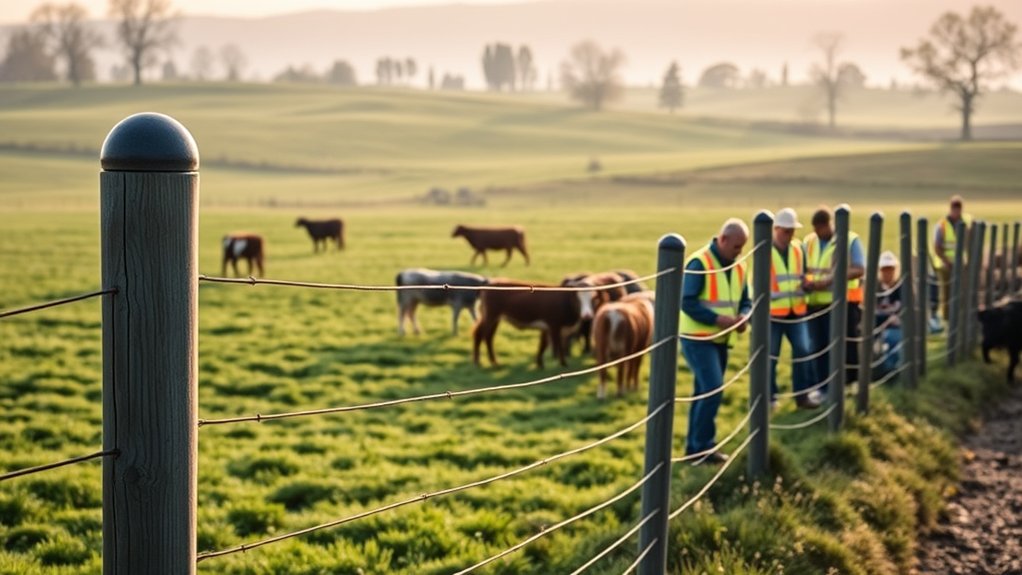
When designing livestock fencing, prioritizing animal stress levels is crucial for their health.
Here are three effective strategies:
- Visibility: Opt for open or semi-open fencing. This allows animals to see their surroundings, which helps reduce anxiety and supports natural herd behavior.
- Physical Barriers: Use solid fences to protect livestock from outside distractions like vehicles or machinery. This creates a calmer environment.
- Durability: Select strong, injury-resistant materials to prevent cuts and bruises. This not only promotes health but also lowers stress from potential injuries.
Training Workers and Visitors on Fence Safety
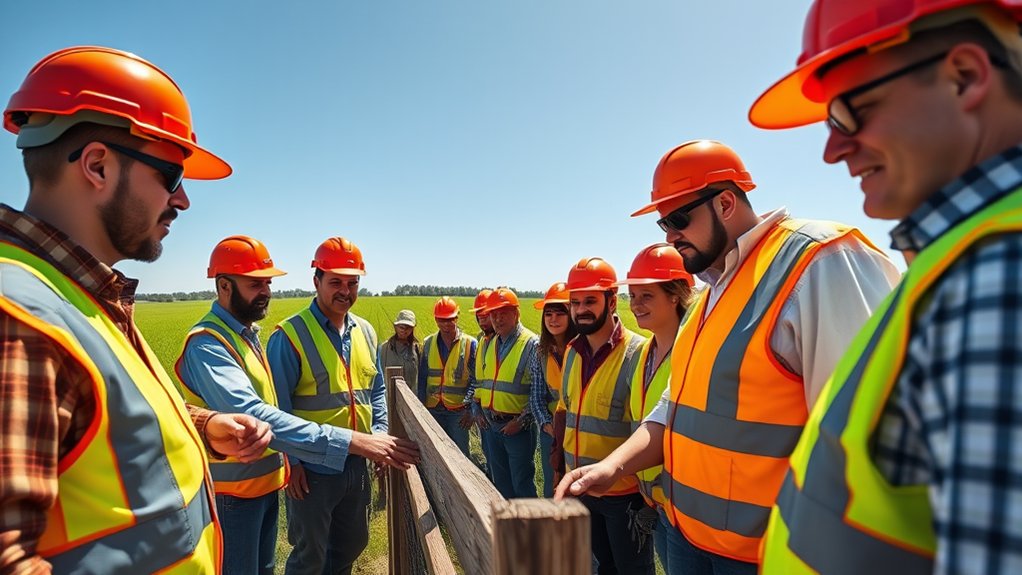
Training workers and visitors on fence safety is crucial for accident prevention on the farm.
Hold training sessions that teach proper fence usage and emergency response. For example, show how to safely open and close gates.
When everyone understands the risks and knows how to react, it creates a safer environment for everyone involved.
Safety Training Sessions
To ensure a safe working environment on the farm, it’s crucial to hold effective safety training sessions for workers and visitors about fence safety.
Key components should include:
- Hands-On Demonstrations: Provide opportunities for trainees to safely handle electric and woven wire fences.
- Interactive Workshops: Foster discussions on predator control and emergency procedures through real-life scenarios.
- Clear Signage: Emphasize the need for visible signs to alert everyone about electric fences and other potential hazards.
Demonstrating Fence Usage
Properly demonstrating fence usage is crucial for the safety of workers and visitors on the farm. Start with controlled demonstrations for electric fences, gradually introducing everyone to their use.
Clearly explain how different types of fences work, highlighting the need for visibility and regular maintenance. Always supervise interactions with electric fences to prevent accidents, and routinely check voltage and fence conditions.
Use clear markings and warning signs to enhance awareness. Incorporate visual aids, like flags, to help smaller animals recognize barriers. Regular training refreshers can keep safety practices top of mind on your farm.
Emergency Response Protocols
Emergencies can occur unexpectedly on the farm, but knowing the emergency response protocols for fence safety can minimize risks. Here’s how to prepare:
- Practice emergency drills so everyone understands their roles and knows the location of gates and alternative routes.
- Set up communication protocols with a list of emergency contacts and a quick incident reporting system.
- Provide first aid training for common fencing injuries, ensuring everyone can access medical supplies and respond to electric fence incidents safely.
Regularly review these protocols with workers and visitors to keep everyone informed and ready for any situation.
Regular Maintenance for Enhanced Safety
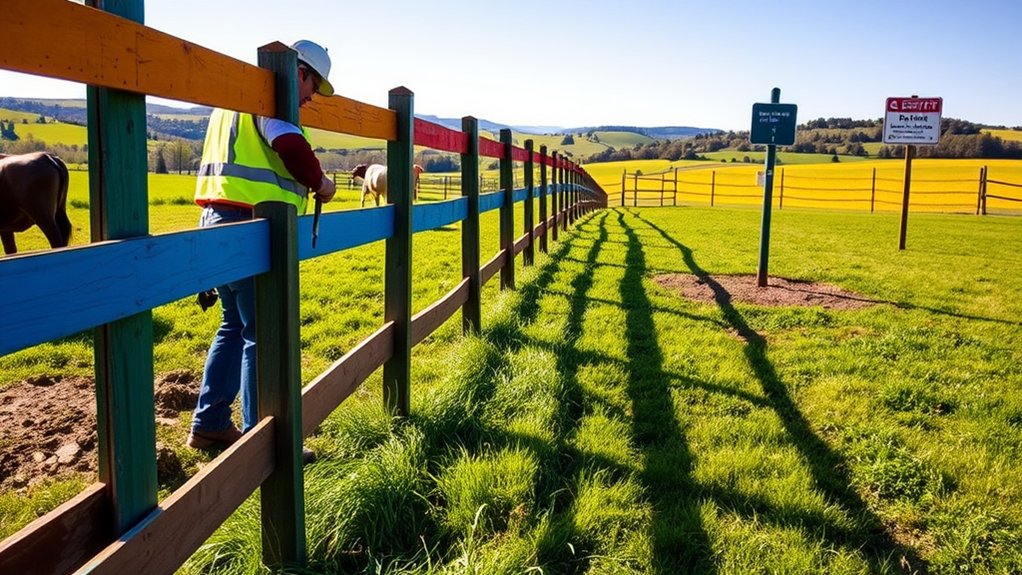
Regular maintenance is crucial for keeping your farm’s fence safe. Schedule seasonal inspections to spot damage like broken wires or loose posts.
Use tools like wire tighteners to maintain proper tension, and invest in high-quality energizers for electric fences to ensure they work effectively. Keeping a record of inspections and repairs helps you monitor the fence’s condition.
Choose rot-resistant wood and durable materials suited to your climate to minimize maintenance. Quick repairs and having spare parts handy can stop minor issues from turning into major problems, making your farm safer for everyone.
Ensuring Compliance With Local Zoning Laws
Maintaining your fence involves more than just repairs; it’s crucial to understand local zoning laws. Here are some key points to ensure compliance:
- Zoning Exemptions: Check if your agricultural activities can qualify for exemptions that simplify fencing restrictions.
- Agricultural Flexibility: Learn about local ordinances that may provide flexibility for your farming needs.
- Permit Requirements: Always obtain the necessary permits before installing or altering fences to avoid fines from local authorities.
Liability Considerations for Farm Operations
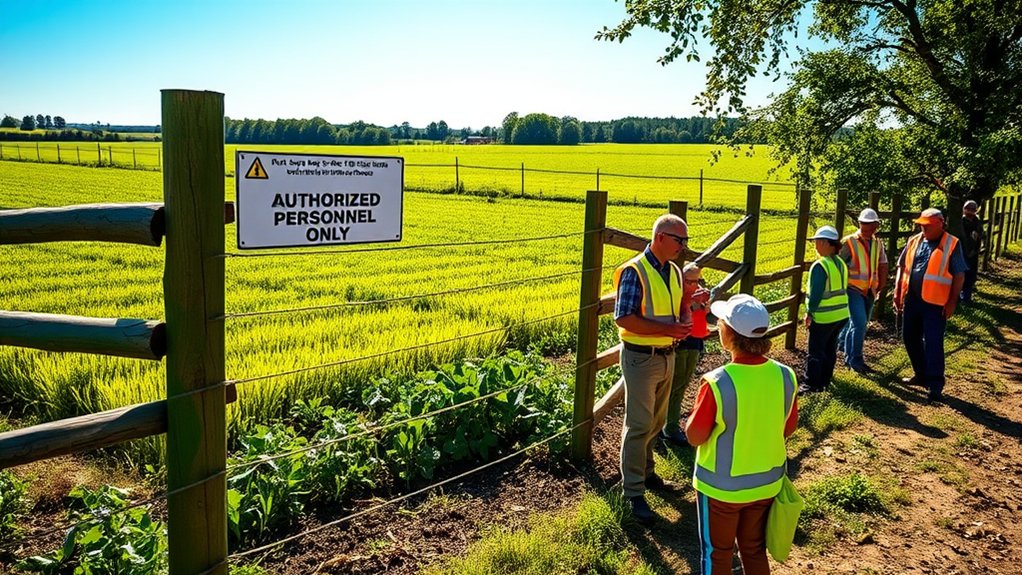
Liability considerations are crucial for any farm operation, impacting your financial health. Having the right liability insurance protects your assets against lawsuits from bodily injury or property damage, like if a visitor gets hurt on your farm.
Regularly assess your liability coverage, especially if you host guests or operate heavy machinery.
Forming an LLC can offer additional legal protection, but it shouldn’t replace solid insurance. Keeping clear documentation and liability policies can help reduce the risk of claims.
Continuous Monitoring and Inspections for Safety
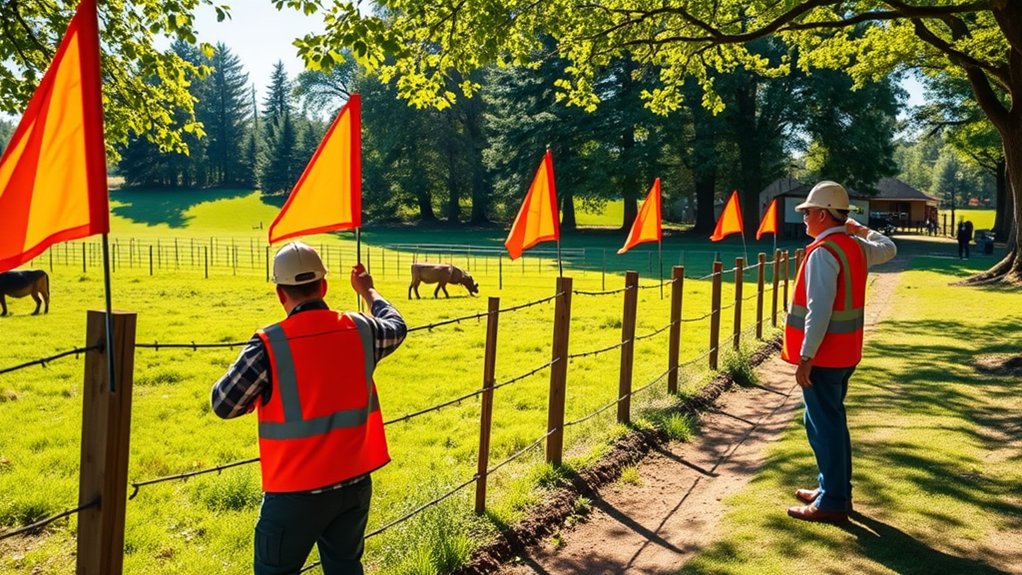
To keep your farm and visitors safe, regular fence monitoring and inspections are crucial. Here’s what to focus on:
- Check Posts and Stays: Look for broken or leaning posts and ensure they’re stable.
- Inspect Rails and Panels: Identify damaged rails and make sure they’re securely attached to posts.
- Review Wire Fencing: Look for sagging or rusted wires that could be hazardous.
Perform inspections at least twice a year, especially after bad weather.
Maintain detailed records of any issues and repairs.
Training your workers on safety procedures will help them spot hazards quickly, ensuring everyone on your farm stays safe.
Frequently Asked Questions
How Can I Identify Hazardous Fencing Materials?
To identify hazardous fencing materials, check for rust, cracks, sharp edges, and loose parts. Be on the lookout for toxic coatings or old paint, like lead-based paint in older fences. Always ensure your fencing meets safety standards to effectively spot potential hazards.
What Should I Do if I Encounter a Damaged Fence?
If you find a damaged fence, report it right away. Take pictures and note what’s wrong to help assess how urgent the repairs are. Fixing the fence promptly ensures safety and prevents bigger problems later on. For example, if a section is leaning or has a broken board, addressing it quickly can keep pets and kids safe.
Are There Specific Safety Gear Requirements for Fence Installation?
Before starting fence installation, prioritize safety. Wear safety gloves to protect your hands and goggles to shield your eyes from debris. Think of it like putting on a helmet before riding a bike—it’s essential for your protection. Stay safe and gear up!
How Often Should I Inspect Temporary Fences?
Inspect temporary fences weekly to ensure they remain secure and compliant. Regular inspections help catch problems early, keeping your site safe and preventing unauthorized access. Think of it like checking your car’s tires; a small issue can lead to bigger problems if not addressed. Consistent checks are key for effective maintenance.
What Are Signs of Stress in Animals Due to Fencing?
Animals communicate stress through changes in behavior. Look for signs like fear, restlessness, reduced activity, vocalizations, and specific body language. For example, a horse might pace or a dog may bark excessively when feeling uneasy around fencing. These behaviors indicate their discomfort and stress.
Conclusion
Implementing safe fencing practices is crucial for protecting your farm workers and visitors while improving your operation’s efficiency. By following regulations and ensuring good visibility, you reduce risks and liabilities. Regularly maintaining and inspecting your fences is key to ongoing safety. Just like taking care of a trusty pair of boots, your fence requires attention to last long. Use these strategies to create a safer and more sustainable farm environment.
Harness the charm and durability of wooden fencing—discover the top types that suit every home style and elevate your outdoor Read more
Find out how vinyl fencing combines affordability and durability, transforming your property while leaving you curious about its advantages over Read more
Create a stunning, personalized barrier with hybrid fencing—discover how combining materials can elevate your outdoor space in unexpected ways. Explore Read more


