
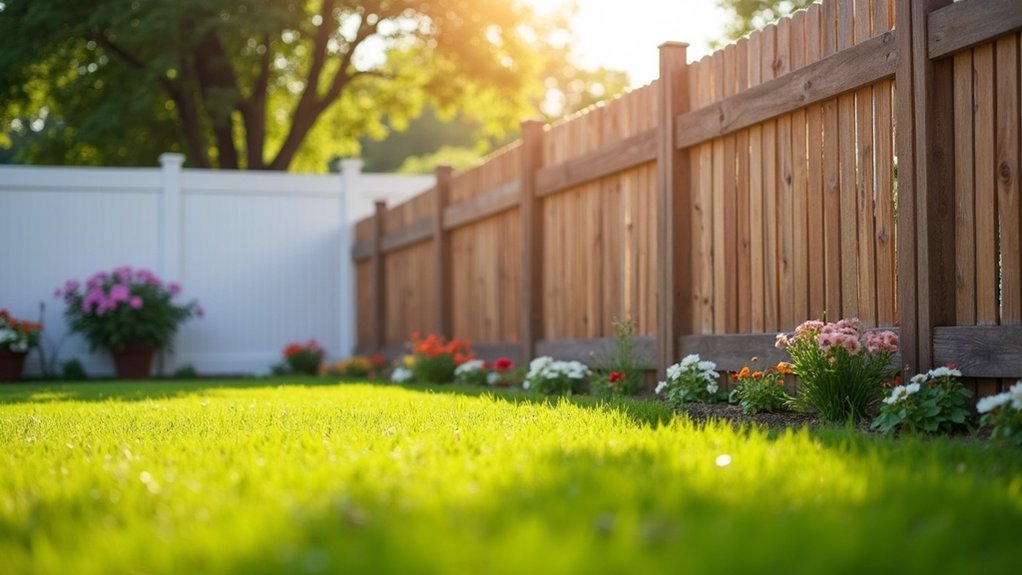
If you want an easy-to-install fence, vinyl, no-dig systems, and metal frame fences are great choices. Vinyl fences need just a few tools and go up quickly. No-dig systems let you install without digging, keeping your yard intact. Metal frame fences are modular and ideal for DIYers. Chain link fences are budget-friendly and simple to manage, while wood fences take more time and effort to set up. Check out the details on each type to see which one fits your needs best.
Key Takeaways
When it comes to easy fence installation, consider these options:
- Vinyl Fences: Easy to assemble with minimal tools and no upkeep needed.
- No-Dig Fence Systems: Install without digging, saving your yard’s soil and cutting down on labor costs.
- Metal Frame System Fences: Feature modular parts for quick assembly and flexible designs.
- Chain Link Fences: Affordable and simple to set up, requiring just basic area prep.
- Wood Fences: More complicated to plan and maintain, making them less convenient than the others.
Overall, vinyl, no-dig, metal frame, and chain link fences stand out as the easiest to install.
Vinyl Fences: Quick and Easy Assembly

Vinyl fences are a simple choice for homeowners wanting to improve their property without much trouble. They’re durable, able to withstand tough weather, and resist fading, making them a smart long-term investment. Additionally, vinyl fences require no yearly maintenance, allowing homeowners to enjoy their benefits without the hassle of regular upkeep. Furthermore, their longevity of 30 to 50 years ensures that they remain a reliable option for many years to come.
To install, first, mark your fence line and gather materials like posts, rails, and panels. Start by securing the bottom rails, then add the top rails. The panels fit easily into place, giving a clean and attractive finish. Make sure everything is level for the best look. With a bit of planning, you can have your vinyl fence up quickly, providing both functionality and style for years to come.
No-Dig Fence Systems: Installation Without Excavation

If you need a quick and easy fencing solution, no-dig fence systems are a great option. They eliminate the need for digging, helping to preserve your yard’s soil. This fencing option is also cost-effective, reducing labor costs due to easy setup and eliminating the need for heavy machinery. Additionally, no-dig fences are designed for sturdy and low-maintenance use, making them an excellent choice for DIY projects.
To get started, accurately measure and mark where you want your fence. Use a post driver to drive steel anchors into the ground, ensuring they’re level.
Next, secure your posts and attach the panels with screws or nails, keeping everything aligned. A post driver is better than a hammer for stability.
Always check for underground utilities before you begin and make sure everything is tightly fastened to avoid movement.
Following these steps will give you a sturdy fence that enhances your outdoor space.
Metal Frame System Fences: Modular and DIY-Friendly

Metal frame system fences are easy to assemble, making them a great choice for DIY projects. The modular components allow for quick setup and precise fitting, so you can save time and ensure a perfect result. Plus, you can customize the design to match your style and needs, whether you want a modern look or something more traditional. Chain link fences can also be a practical and cost-effective option if you’re looking for simplicity. Check local regulations to ensure your fence complies with height restrictions and permits for a hassle-free installation.
Quick Assembly Process
If you want an easy way to install a fence, consider modular metal frame systems. They make assembly quick and simple.
Start by securely setting the posts, making sure they’re deep and aligned with string lines. Use a three-rail system for leveling during installation to keep everything looking uniform.
Attach panels to the horizontal rails tightly with screws or bolts to prevent gaps. Pre-manufactured parts save you time on cutting and measuring.
For DIYers, instructional videos and guides can help you adjust components, even on uneven ground. You’ll have a sturdy and attractive fence set up in no time.
Versatile Design Options
Modular metal frame systems simplify assembly and offer various design options to meet different styles and needs.
With adjustable rail heights and the choice to position panels either horizontally or vertically, you can easily enhance your fence’s look.
The modular design allows for flexible arrangements of panels and inlays, and you can customize gates with single posts for standard widths or double posts for wider openings.
Each kit includes pre-cut parts for easy DIY assembly.
Plus, you can replace individual panels without taking down the whole fence, ensuring it remains adaptable and easy to maintain as your design preferences evolve.
Chain Link Fences: Affordable and Manageable Setup

Chain link fences provide an affordable and easy-to-manage option for homeowners wanting to boost security and enhance their property’s look.
These fences are durable, able to withstand tough weather while allowing visibility.
To set one up, start by preparing the area—clear any obstacles and mark your property lines.
Dig post holes to the right depth and width, and then secure the posts with concrete or packed earth.
Attach the fittings and top rails, making sure everything is level.
Next, unroll the chain link mesh along the fence line and secure it with tension bars and tie wires.
This keeps the fence looking tidy.
Finally, install the gates and make any adjustments needed to ensure your fence is functional and attractive.
Wood Fences: Traditional Yet Time-Consuming

Installing wood fences can be tricky, requiring careful planning and execution.
While you can customize the design to fit your style, remember that they need regular maintenance, which might affect your long-term satisfaction.
Installation Complexity
Installing wood fences can be complex and labor-intensive. It requires precise measuring, digging post holes, and assembling parts, which can be time-consuming.
Adding gates or decorative elements can further prolong the process. Difficult conditions, like uneven ground, may slow down work and necessitate specialized tools.
Labor costs vary widely by region, typically ranging from $25 to $60 per hour. Custom designs or unusual dimensions can lead to longer assembly times and higher costs.
Understanding these factors can help you plan effectively and streamline the installation process.
Customization Options
Customization options for wood fences provide a variety of choices to enhance both functionality and appearance.
You can select from different wood types, like durable cedar or high-quality redwood. Each type can be finished with stains that either highlight the natural grain or provide a specific color.
Popular styles include tongue & groove for a solid look, horizontal for a modern vibe, and lattice for added ventilation.
You can also adjust the height and spacing of the boards to fit your needs.
These options ensure your wood fence not only serves its purpose but also looks great on your property.
Maintenance Requirements
Wood fences need regular maintenance to stay strong and looking good. This includes checking for damage, like cracks or bugs, on a routine basis.
It’s important to clean your fence every year, ideally with a pressure washer and mild cleaner, to avoid mold and mildew.
Every 2 to 3 years, you should seal and stain your fence to protect it from moisture and UV rays; just remember to clean and lightly sand it first.
Skipping these steps can significantly shorten your fence’s lifespan and lead to expensive replacements.
Chicken Wire and Hog Wire Fences: Budget-Friendly Solutions

If you’re seeking an affordable fencing solution, chicken wire and hog wire fences are excellent choices that are simple to install.
Start by measuring your fence area and marking it out. Place your posts about 5 feet apart, burying them one-third of their length for stability. Use wire cutters and a staple gun to attach the wire.
For added strength, especially on uneven ground, consider using tension wire. Digging a trench can help prevent predators from burrowing underneath. Make sure to secure the wire tightly with staples or ties.
With just a few materials and straightforward steps, you can complete this DIY project in a weekend, making it ideal for small to medium-sized enclosures.
Frequently Asked Questions
What Tools Are Required for Fence Installation?
To install a fence, you’ll need some basic tools: a hammer, measuring tape, level, shovel, and screwdriver. For better efficiency, consider adding a sledgehammer for driving in posts, a post hole digger for easy digging, and concrete mixing tools to secure your posts.
How Long Does Fence Installation Typically Take?
Fence installation usually takes 1 to 3 days, depending on the material. For example, wood fences can take longer, while vinyl and chain link fences often complete in just 1 to 2 days. Plan your project with these timelines in mind.
Can I Install a Fence Alone?
Yes, you can install a fence by yourself. Use no-dig methods and follow some solo tips, like using braces for posts and choosing lightweight materials. This will help ensure your installation goes smoothly.
What Type of Fence Is Best for Windy Areas?
In windy areas, your fence acts like a sail, so it needs to be sturdy. Choose wind-resistant materials like aluminum or reinforced wood. Also, consider a shorter fence to reduce wind pressure while keeping it looking good and lasting long.
Are Permits Needed for Fence Installation?
Yes, you usually need permits for fence installation. Requirements vary based on the type, height, and location of the fence. For example, a tall privacy fence may have different rules than a small picket fence. To avoid fines or complications, check with your local planning department before starting.
Conclusion
When choosing a fence, consider ease of installation along with your needs. Vinyl and no-dig systems are quick and hassle-free, making them great for beginners. Metal frames and chain link are affordable and simple to set up. If you’re willing to put in some work, wood fences can add charm to your yard. For budget-friendly options, chicken wire and hog wire are practical choices. Select wisely to enhance your property with minimal effort.

With essential tips and expert insights, discover how to master fence installation and ensure your project stands the test of Read more

Prevent costly errors in your fence installation by learning the top 10 mistakes to avoid; your project depends on it.

Follow this step-by-step guide to install a residential fence and discover the essential tips that will ensure your project is Read more


