
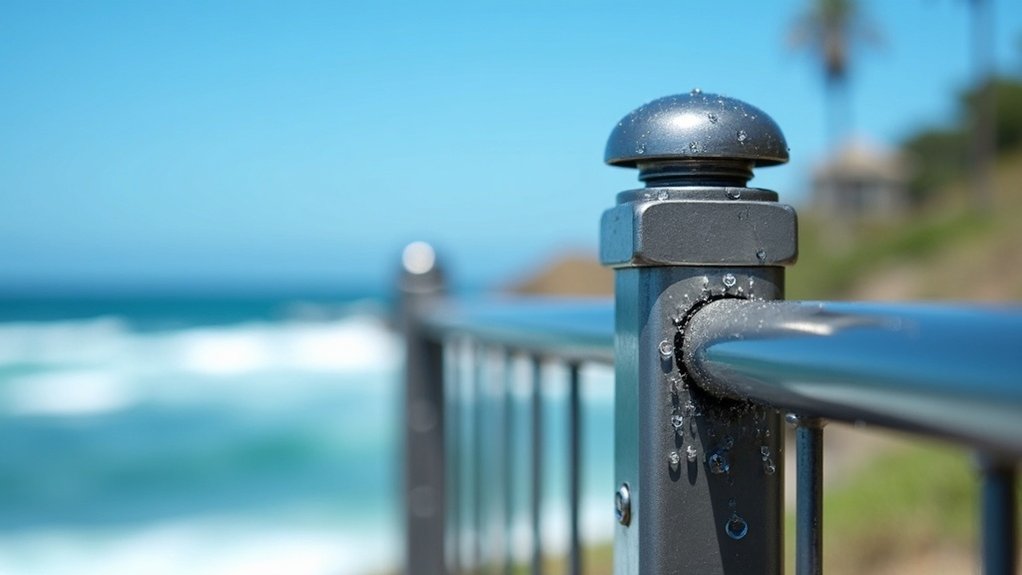
To weatherproof pool fence hardware in coastal areas, choose materials like vinyl, aluminum, or marine-grade stainless steel that resist corrosion. Apply protective coatings to shield against UV rays and moisture. Opt for self-closing gates and secure latches for added safety. Regular maintenance, including power washing and wear inspections, is crucial for durability. By following these tips, you can enhance the lifespan and effectiveness of your pool fence while ensuring safety.
Key Takeaways
- Use durable materials like aluminum, vinyl, and marine-grade stainless steel to resist corrosion in coastal areas.
- Protect hardware with UV-resistant coatings and moisture-resistant sealants against sun and humidity.
- Ensure the fence is between 4 to 5 feet tall, with gaps no wider than 4 inches, to meet local safety codes.
- Regularly maintain your fence by power washing and inspecting it to prevent corrosion and extend its life.
- Consider custom options like adjustable tension systems and reinforced brackets for added strength in coastal conditions.
Understanding Coastal Climate Challenges

Coastal climates present unique challenges that affect pool fence hardware. With moderate temperatures and frequent rain, materials need to be durable. Oceanic climates are characterized by mild winters and warm summers, making them ideal for outdoor activities but also necessitating resilient materials. Coastal erosion can weaken the ground, risking fence stability, so strong designs are essential. Moreover, rising sea temperatures lead to more intense storms, increasing flooding and potential damage.
These factors threaten both infrastructure and marine life. By considering these coastal challenges, you can ensure your pool fence hardware is resilient, safe, and functional while safeguarding nearby habitats.
Selecting the Best Materials for Durability

When choosing materials for pool fence hardware in coastal areas, focus on durability and resistance to harsh conditions. Vinyl, like PVC, is a great choice because it withstands salt air and moisture. It’s non-porous, so it resists mold and rot and needs little maintenance. Additionally, Tampa Bay’s unique climate necessitates the use of materials that can endure intense UV exposure and humidity. For hardware, go for aluminum or marine-grade stainless steel; both resist corrosion from salt spray. Aluminum is especially useful for its flexibility, which helps it withstand strong winds in hurricane-prone regions. PVC fences are also an excellent option due to their long lifespan and resistance to damage. Composite materials are also durable and resist warping and fading. Always check that materials are compatible to ensure your pool fence hardware lasts in tough coastal climates.
Importance of Protective Coatings and Finishes

Protective coatings and finishes are crucial for your pool fence hardware. UV-resistant coatings prevent fading from sunlight, while moisture-resistant sealants protect against rot and mildew in humid areas. Regular maintenance and reapplication keep your fence strong and looking good, no matter the weather. By using galvanized or stainless steel fasteners, you can further enhance the longevity of your fence against corrosive salt air. Additionally, applying protective coatings can significantly extend the lifespan of wrought iron components, ensuring their durability in challenging coastal climates.
UV-Resistant Coatings Benefits
UV-resistant coatings may not get much attention, but they offer substantial benefits for pool fence hardware. These coatings effectively block harmful UV rays that can degrade materials like vinyl, wood, and metal, helping maintain their look and strength.
They also enhance resistance to corrosion and stains, which is especially important in coastal areas with saltwater exposure. By repelling water and environmental stains, these coatings make maintenance easier and cut down repair costs.
Plus, they help keep your fence hardware strong, preventing issues like brittleness. Overall, investing in UV-resistant coatings leads to a durable, attractive pool fence that meets safety standards and requires less upkeep. Additionally, choosing high-quality components ensures long-lasting performance and reliability in various environmental conditions.
Protective Sealants Importance
Protective sealants are crucial for maintaining pool fence hardware. They create a barrier against salt air and moisture, which helps prevent rust and rot in metal and wood, especially in coastal areas where corrosion is more likely.
Sealants also enhance compatibility with marine-grade fasteners, reducing oxidation. By limiting moisture, they help stop mold and mildew growth, keeping your fence looking good.
Plus, they reduce how often you need to maintain your fence, extending its lifespan and saving you money. Overall, using protective sealants ensures your pool fence stays safe and attractive for years.
Regular Maintenance Recommendations
To keep your pool fence functional and looking good, regular maintenance is key, especially for protective coatings. Seasonal checks help catch any signs of corrosion early.
| Maintenance Task | Frequency |
|---|---|
| Check hardware for rust | Every 2 months |
| Lubricate moving parts | Once a year |
| Clean surfaces | Monthly |
| Reapply coatings | As needed |
Preventing rust and extending the life of your fence hardware is crucial. Use rust-inhibiting products on metal parts, and fix any chips in the finish quickly. Regular cleaning with mild detergent helps remove harmful elements, and proper drainage keeps moisture away from hardware. Follow these tips for a long-lasting fence.
Maintenance Practices to Extend Hardware Life

To prolong the life of your pool fence hardware, make sure to power wash it annually to clear away dirt and debris that can cause corrosion.
Check for loose fasteners and signs of wear regularly to keep everything secure.
Remember to lubricate moving parts like hinges and latches each year to ensure they operate smoothly and avoid rust.
Annual Power Washing
Annual power washing is essential for keeping your pool fence hardware in good shape. It helps get rid of salt, sand, and grime that can cause rust.
Here are some simple tips:
- Use gentle, non-corrosive cleaners that match your hardware.
- Opt for low-pressure washing to avoid damaging the surface.
- For tough spots, scrub with soft brushes.
- Rinse well with fresh water to remove any leftover cleaner.
- Wash during cooler, dry times for better drying.
Routine Inspections Needed
Routine inspections are vital for keeping your pool fence hardware in good shape. Regular checks can catch issues early, saving you money on repairs. Aim to inspect your fence monthly, paying attention to key areas like screws and latches.
| Inspection Area | Key Focus | Action Required |
|---|---|---|
| Visual Condition | Look for rust or corrosion | Clean and apply rust inhibitors |
| Functional Checks | Ensure gate closes on its own | Adjust latches and hinges |
| Moisture & Drainage | Check for water buildup | Confirm proper drainage |
Lubricate Moving Parts
To keep your pool fence hardware in top shape, regular lubrication of moving parts is crucial. This simple step can significantly enhance their longevity, especially in coastal areas where corrosion is a concern.
Here’s what you need to know:
- Choose silicone-based lubricants for water resistance.
- Steer clear of oil-based lubricants since they attract dirt.
- Use marine-grade greases if your fence is exposed to saltwater.
- Lubricate at least twice a year, or more often in humid conditions.
- Clean off dirt and salt before applying any lubricant.
Design Considerations for Enhanced Safety

When designing a pool fence, safety should be your top priority to prevent accidents and keep unauthorized individuals out.
Here are some key features to consider:
- Height: Ensure the fence is at least 4 to 5 feet tall to deter children.
- Gaps: Keep vertical gaps under 4 inches and limit bottom clearance to 2 inches to stop small kids from crawling through.
- Gates: Install self-closing gates that swing outward for added security.
- Latches: Place latches at least 54 inches high to make it harder for kids to reach them.
- Materials: Use marine-grade stainless steel to avoid rust, especially in coastal areas.
- Visibility: Consider transparent materials to improve visibility and reduce blind spots.
Regional Compliance and Material Recommendations

Pool fence regulations differ by region, making it crucial to know local requirements for safety and compliance.
Here’s a quick overview of coastal regulations:
- California: Fences must be at least 5 feet tall with gaps no larger than 4 inches.
- Florida: Minimum height of 4 feet, with self-closing gates and alarms.
- Connecticut: Fences must be at least 4 feet tall, with limited horizontal rails.
- Denver, Colorado: 5-foot height required and maximum openings of 4 inches, but there’s no statewide law.
- St. Johns County: Minimum height of 4 feet, with self-latching gates unless the area is fully fenced.
Choosing durable materials is essential.
Aluminum or vinyl fencing is recommended for coastal areas to ensure longevity and compliance with local regulations.
Custom Solutions for Coastal Environments

To succeed in coastal environments, your pool fence hardware must withstand salt air and severe weather. Here are effective solutions:
| Material Type | Benefits | Aesthetic Fit |
|---|---|---|
| Aluminum & Vinyl | Resistant to corrosion, low upkeep | Complements coastal styles |
| Marine-grade Stainless | Excellent rust protection | Modern and sleek look |
| Powder Coated Finishes | UV and moisture resistant | Variety of color choices |
Using adjustable tension systems and reinforced brackets ensures your hardware can handle strong winds. Regular checks and customized solutions will prolong your fence’s life and maintain its appearance in coastal settings.
Frequently Asked Questions
What Is the Average Lifespan of Coastal Pool Fence Hardware?
Coastal pool fence hardware usually lasts between 15 to 50 years, depending on the material. Aluminum and vinyl are the most durable and resistant to corrosion, while wood and mesh need more upkeep due to exposure to the elements.
Can I Use Standard Hardware in Coastal Areas?
Standard hardware isn’t suitable for coastal areas as it corrodes quickly due to salt and humidity. Instead, opt for marine-grade materials that resist corrosion. This choice ensures safety and prolongs the life of your investment in harsh coastal conditions.
How Often Should I Replace My Pool Fence Hardware?
Replace your pool fence hardware every 10 to 15 years. To keep it in good shape, conduct monthly inspections and lubricate it annually. This way, you can catch any problems early and extend the life of your hardware.
Are There Eco-Friendly Materials for Pool Fences?
There are several eco-friendly materials for pool fences, including bamboo and recycled wood. Composite materials and recycled PVC are also great options, offering durability while reducing environmental impact. These sustainable choices not only look good but also help protect the planet.
What Are the Costs Associated With Weatherproofing Pool Fences?
Weatherproofing pool fences varies in cost based on materials. For instance, vinyl and galvanized steel tend to be pricier but offer long-lasting durability, ultimately saving on maintenance and replacement. Choosing the right material can significantly impact your overall expenses.
Conclusion
To protect your pool fence hardware in coastal climates, choose durable materials, apply protective coatings, and conduct regular maintenance. For example, stainless steel or powder-coated aluminum can resist corrosion from saltwater. Consistent upkeep ensures your fence remains safe and attractive. With these steps, your pool area can stay secure and beautiful for years.

Find the perfect pool fencing ideas that blend safety and style to elevate your backyard oasis—discover what options await you!

In small backyards, discover how to maximize space and safety with innovative pool fencing solutions that will transform your outdoor Read more

Find the perfect non-slip surfaces to complement your pool fencing and enhance safety—discover unique options that transform your pool area Read more


