
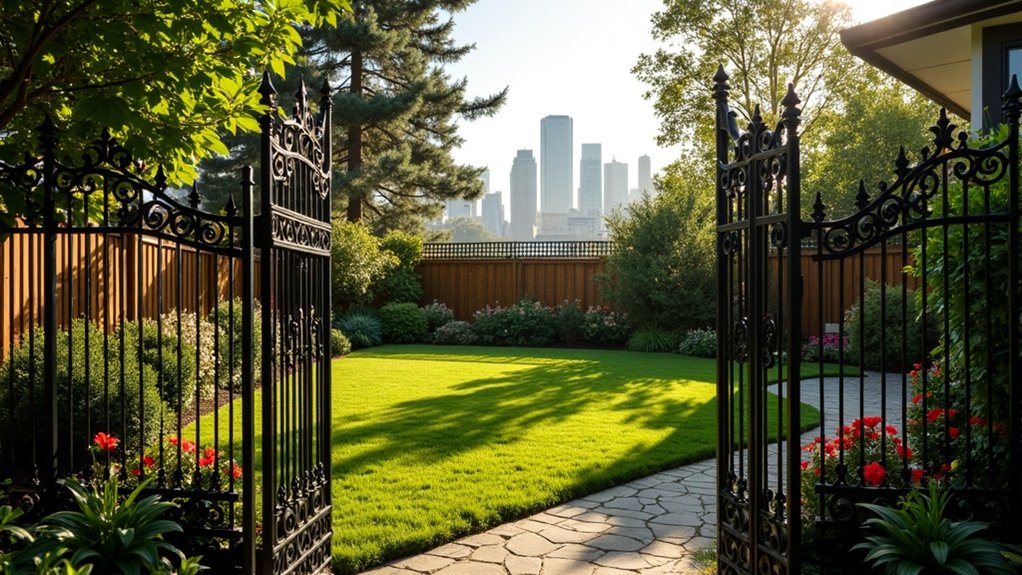
Before installing decorative fencing, check your HOA rules and local codes. Many HOAs limit fence height to about 5 feet for visibility and may have restrictions on materials to maintain neighborhood aesthetics. Be ready to gather documents and possibly submit diagrams for approval. Knowing these regulations can save you from costly mistakes. Let’s explore more tips for your fencing project!
Key Takeaways
- Check with your HOA for specific rules on decorative fence materials, colors, and designs to keep your property in line with community standards.
- Confirm local city codes for any permits needed, as some areas have restrictions or require approvals for decorative fences.
- Be aware of height limits, usually capping front yard fences at 3 to 4 feet for safety and visibility.
- Talk to your neighbors before you start planning to address any concerns about fence placement and design.
- Choose durable materials that meet HOA standards to reduce future maintenance and issues.
Understanding HOA Fence Regulations

Before installing a new fence, it’s important to know your Homeowners Association (HOA) regulations. These rules help maintain the look of your neighborhood and avoid conflicts.
Generally, HOAs limit fence height to around 5 feet for visibility and uniformity. You’ll also need to follow specific color and material guidelines that match your community’s style. Additionally, it’s essential to remember that maintaining property values is a primary goal of HOA regulations. Some communities may also require a permit application for any fence installation, so be sure to check local regulations as well.
Make sure to submit a detailed diagram of your fence design to your HOA for approval before starting the installation.
Keeping your fence well-maintained is crucial; neglect could lead to fines or replacement requirements.
Navigating Municipal Fence Permit Requirements

To ensure your fence project meets municipal regulations, first check if you need a permit based on your design. Many cities have specific height and material rules. For example, in Portland, you need a permit for wood fences over 7 feet, while in NYC, it’s for those over 6 feet. In Austin, fences over 6 feet along public right-of-way require a permit. Engaging your neighbors in the planning process can help avoid conflicts and ensure compliance with local zoning regulations.
| City | Permit Requirement | Permit Exemptions |
|---|---|---|
| Portland | Wood fences over 7 feet | Smaller fences may be exempt |
| NYC | Fences over 6 feet | 4 feet in lower density areas |
| Austin | Varies, project review needed | Specific exemptions apply |
Prepare documents like site plans and neighbor consents to make the application process smoother. Always double-check local regulations to avoid issues.
Height Limits and Placement Guidelines

When planning your decorative fence, it’s crucial to know the height limits and placement guidelines. Front yard fences usually range from 3 to 4 feet high to enhance aesthetics and ensure safety for pedestrians and drivers. Most areas require front yard fences to be capped at 4 feet and set back a certain distance for visibility. Additionally, knowing the privacy fence height requirements can help you make informed decisions about your fence design. It’s also essential to be aware of local zoning laws that may dictate specific restrictions for your area.
In backyards, fences can typically go up to 6 feet, but it’s important to check local codes to avoid fines. Always keep clear sightlines near intersections to ensure traffic safety. Before starting your project, review the regulations to prevent any issues with neighbors or local authorities.
Material Restrictions and Acceptable Choices

Before choosing materials for your decorative fence, check local regulations and homeowners association (HOA) rules.
In hurricane-prone areas like Miami-Dade, durability is key, so materials like aluminum, PVC, and composite wood are often permitted. Your HOA may also require materials like wood, vinyl, or wrought iron for a uniform look.
Be aware of environmental restrictions, especially regarding chemically treated wood near wetlands. Selecting weather-resistant materials that meet local codes can save you maintenance issues later.
Always verify specific guidelines to ensure your fence enhances your property while staying compliant.
Application and Approval Processes

Navigating the application and approval process for your decorative fence can seem daunting, but it doesn’t have to be. Here’s how to make it easier:
- Gather Documentation: Collect necessary documents like your property survey and design visuals. This will help clarify your vision.
- Communicate with Your HOA: Clear and open communication can prevent delays and misunderstandings.
| Step | Importance |
|---|---|
| Detailed Packet | Increases likelihood of approval |
| Compliance Forms | Helps you avoid legal issues |
| Early Submission | Keeps the timeline on track |
| Contractor Support | Eases the process |
Expect the application process to take between one to six weeks. Stay organized, and you’ll be on your way to making your fence dreams a reality with minimal setbacks.
Maintenance and Compliance Responsibilities

Maintaining your decorative fence is crucial for its durability and compliance with regulations. Here’s a straightforward checklist to help you stay on top of it:
- Spring Inspections: Check for winter damage and make repairs as needed.
- Seasonal Treatments: In summer, apply UV sealants; in fall, use water-repellent coatings to protect your fence.
- Trim Vegetation: Regularly cut back plants to prevent overgrowth that could damage the fence.
- Document Maintenance: Keep records of your maintenance to ensure you’re meeting HOA and local regulations.
Staying proactive can save you from costly repairs and fines.
Frequently Asked Questions
Can I Install Decorative Fencing Without HOA Approval?
No, you can’t install decorative fencing without HOA approval. Always check your HOA guidelines first. For example, if your HOA requires a specific fence height or style, ignoring those rules could lead to fines or having to remove your fence later. Following the proper procedures ensures your fence is compliant and avoids headaches down the line.
What Happens if I Violate Fence Regulations?
Violating fence regulations can result in daily fines and legal issues. For example, if you ignore notices, you might face costly removal orders or even lawsuits. This could hurt your property’s value and reputation in the community.
Are There Exemptions for Historic Properties?
Yes, historic properties often have zoning exemptions. You’ll need to collaborate with local historic preservation officers who assess fencing proposals to ensure they preserve the property’s historic character while offering some flexibility in regulations.
Can I Appeal a Denied Fence Application?
Yes, you can appeal a denied fence application. To start, submit a formal petition with any necessary documents before the deadline. Be ready to explain your case at a hearing if needed. For example, if your fence design complies with local guidelines but was denied, share that information to strengthen your appeal.
How Do I Find My Property Lines for Fencing?
To find your property lines for fencing, first check your property survey and look for boundary markers like stakes or stones. Be aware of any easements or restrictions that may affect your project. If you’re uncertain, consider hiring a professional surveyor for clarity.
Conclusion
In summary, understanding decorative fencing regulations is essential for a smooth approval process. Check your HOA rules and local permits before starting your project. Stay proactive with maintenance and compliance to prevent issues down the road. With the right knowledge, your fence can enhance your property while adhering to the guidelines, ensuring your home remains attractive and compliant.

Harness the power of decorative fencing to elevate your property’s style—discover unique ideas that will leave your neighbors in awe.
Stylish and sturdy, decorative metal fencing enhances your property’s appeal and security—discover how to choose the perfect design for your Read more

Incorporating decorative fencing can significantly elevate your property's value, but do you know the key factors that influence its impact?


