
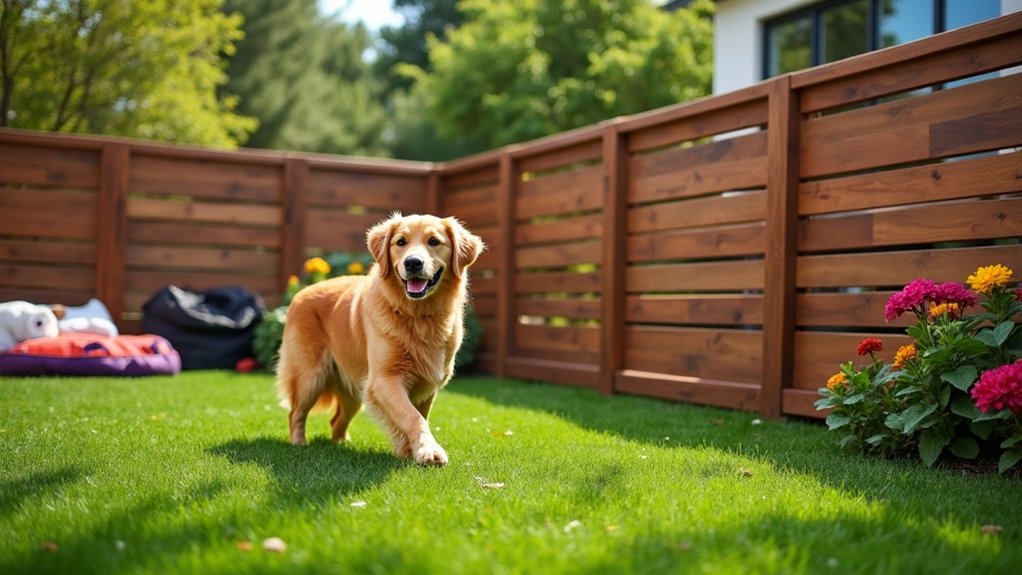
When choosing custom fencing for your pets, prioritize safety and style. Durable materials like vinyl or wood can secure your pets while enhancing your home’s look. Features such as anti-climb designs and self-closing gates ensure they stay contained. If you prefer an unobstructed view, consider invisible fencing. Balancing aesthetics with pet safety is crucial, and understanding your options will help you make the best choice for your needs.
Key Takeaways
- Opt for vinyl fencing for its durability and low maintenance; it has a smooth surface to keep small breeds safe from narrow gaps.
- Add anti-climb features and underground dig guards to custom fencing for better pet security and to prevent escapes.
- Consider wood fencing for its attractive look and privacy, but be ready for regular maintenance to keep it effective.
- Use invisible fencing if you want a neat yard; just ensure pets are trained to understand their boundaries with GPS collars.
- Choose materials like aluminum for a strong, stylish fence that balances safety and aesthetics.
Understanding Pet Safety and Containment Needs

To keep your pets safe, understanding their containment needs is essential. A sturdy fence prevents them from running into traffic or meeting aggressive animals. Training them to understand boundaries helps reduce anxiety, offering them a safe space to play and exercise. This not only protects them but also gives you peace of mind. Additionally, ensuring that your fence is well-maintained is crucial for pet safety as it minimizes risks of accidents and escape. Regularly check your fence for damage to ensure it remains effective. By considering your pet’s behavior when setting up fencing, you’ll create a safe environment that enhances their well-being while keeping them secure. It is also important to select a fence that is appropriate for your dog’s size, as this will further ensure their containment and safety.
Exploring Common Fencing Materials

When choosing a fence for your pets, it’s important to consider the different materials and their pros and cons. Vinyl fencing is durable and weather-resistant, making it low-maintenance and safe for pets, thanks to its smooth surface. Small breeds often require fences with narrow gaps to prevent them from escaping, making vinyl a great choice for security as well. Additionally, vinyl fences can increase property value while providing both safety and style. If you’re after a classic look, wood fencing provides great aesthetics and privacy, but it does require regular maintenance to prevent issues like rot and splintering. For those on a budget, chain-link fencing is a cost-effective option that’s sturdy but offers limited privacy and style. In the end, your decision should balance how the fence looks, how safe it’s for your pets, and your budget.
Design Features to Enhance Pet Security

To ensure your pets’ safety, start with the right fencing material, but don’t stop there. Enhance security with these design features:
- Dig Guards: Install underground dig guards and concrete at gate thresholds to prevent tunneling under the fence. Additionally, regular inspections for weak spots can help maintain the effectiveness of these dig guards.
- Anti-Climb Designs: Use flexible materials and anti-climb tops to stop pets from scaling the fence. No-climb woven wire mesh can significantly reduce climbing. Additionally, adopting low-visibility fencing options not only enhances aesthetics but also contributes to overall pet safety. A mesh size of 5 cm is recommended to ensure safety for pets.
- Gate Security: Upgrade gates with self-closing mechanisms and ensure minimal gaps to avoid accidental openings. This will complement the overall safety provided by chain link fencing, which protects pets from escaping and wild animals.
These measures won’t only secure your yard but also give you peace of mind, letting your pets enjoy their outdoor space safely.
Evaluating Invisible and Electronic Fencing Options

Evaluating invisible and electronic fencing options can greatly enhance the safety of your pets outdoors.
Wired fences offer dependable containment with buried wires and come with extended warranties, but they require installation effort. For instance, if you have a uniquely shaped yard, a wired fence might involve some planning and digging.
Wireless fences are easy to set up and can be moved as needed, but they typically create circular boundaries that mightn’t match your property lines perfectly. This can be a hassle if your yard is irregularly shaped.
For a high-tech alternative, GPS collars let you set customizable boundaries through a smartphone app, which is ideal for complex layouts. However, keep in mind that these collars need regular charging and can lose signal when indoors.
Whichever option you choose, remember that boundary training is crucial. It ensures your pet understands their limits and stays safe within the designated area.
Balancing Cost, Maintenance, and Aesthetics

When choosing custom fencing for your pets, it’s important to balance cost, maintenance, and aesthetics to suit your lifestyle.
Here are three key points to consider:
- Material: Wood looks great but needs regular upkeep, while vinyl is low-maintenance but costs more upfront.
- Long-Term Costs: Cheaper options like chain link may require more repairs over time, whereas durable materials like aluminum save money in the long run.
- Visual Appeal: Invisible fences keep your yard open but can affect your pet’s behavior, while physical fences offer security but may block your view.
Frequently Asked Questions
What Are the Best Fencing Options for Large, Active Dogs?
For large, active dogs, choose sturdy materials like vinyl or chain-link fencing that stands over 6 feet tall. These options are durable, help prevent escapes, and reduce distractions that might trigger aggressive behavior.
How Can I Ensure My Fence Blends With My Landscape?
To ensure your fence blends with your landscape, select materials that match natural colors and textures. For example, a wooden fence can complement a garden, while a vinyl fence can mimic stone. Incorporate plants and design elements that harmonize with the fence, creating a cohesive look. This approach will enhance your outdoor space and provide a welcoming environment for both pets and visitors.
What Colors Are Available for Vinyl and Composite Fences?
Vinyl fences come in colors like soft taupe and coastal blue, while composite fences offer earthy tones. Both options enhance your home’s look and blend well with your landscape.
Can I Install a Fence in a Sloped Yard?
Yes, you can install a fence in a sloped yard! With the right planning, options like stepped or racked designs can provide both stability and style. This helps keep your pets safe while enhancing the beauty of your yard.
Are There Eco-Friendly Fencing Materials Available for Pets?
Yes, there are eco-friendly fencing materials for pets, such as bamboo and recycled plastic. These options are durable, low-maintenance, and help reduce waste, providing a safe space for your pets while being kind to the planet.
Conclusion
When choosing custom fencing for your pets, you’re not just setting a boundary; you’re creating a safe space for them. Consider materials and design features that ensure security while also looking good. It’s essential to balance your budget and maintenance needs, but your pet’s happiness should come first. With the right fencing, your pets can roam freely, enhancing their lives—and yours.
Keen on enhancing your property with a unique touch? Discover the unmatched advantages of custom fences that pre-made solutions simply Read more
Grow your property's resale value with custom fencing that enhances security and appeal; discover the best options to maximize your Read more
Create your dream fence from scratch with expert tips, but wait until you discover the unique features that can elevate Read more


