

Key Takeaways
The bottom line: Your fence material choice in Broward County directly impacts your wallet, home value, and peace of mind for the next 15-30 years. Vinyl, aluminum, and composite materials dominate the South Florida market because they withstand 175+ mph hurricane winds, resist salt air corrosion, and require minimal maintenance—while wood fences rarely last beyond 10-15 years in our humid climate despite lower upfront costs.
Critical facts every Broward homeowner needs:
- Broward County is entirely designated High-Velocity Hurricane Zone (HVHZ), requiring stricter wind load standards than most of Florida
- Permits are mandatory for virtually all fence installations, costing $200-400 on average plus 2-4 weeks processing time
- Material costs range dramatically: $10-20/linear foot for chain link up to $25-70/linear foot for wrought iron
- Climate destroys the wrong materials: Wood lifespans drop 30-50% in South Florida humidity compared to northern climates
- HOA approval must come first: Most of Broward’s 31 municipalities have communities with architectural review requirements that supersede county codes
Why choosing the right fence material matters in South Florida
Most homeowners underestimate how aggressively South Florida’s climate attacks fencing. The combination of 70-80% year-round humidity, salt air extending 30+ miles inland, intense UV exposure, and Category 5 hurricane threats creates a uniquely hostile environment that separates premium materials from poor investments within just a few years.
A $3,000 wood privacy fence might seem budget-friendly compared to a $5,000 vinyl alternative—until you factor in $200-500 annual maintenance costs, warping within 3-5 years, and complete replacement by year 12. Meanwhile, that vinyl fence will still look nearly new at year 20 with nothing more than occasional soap-and-water cleaning.
The stakes get higher in hurricane zones. Broward County’s HVHZ designation means your fence must be engineered to withstand 175+ mph design wind speeds. A non-compliant fence doesn’t just risk destruction in the next hurricane—it becomes dangerous wind-borne debris that can damage your home, your neighbor’s property, and void your insurance coverage. According to the Florida Building Code, all fences require specific wind load calculations and proper installation methods, with aluminum and vinyl fences requiring engineer-sealed drawings or manufacturer Product Approval (NOA).
Beyond survival, your fence choice impacts home value, HOA compliance, and neighborhood aesthetics for decades. This guide gives you the data-driven insights needed to make the smartest choice for your specific situation in Broward or Palm Beach County.

Material-by-material breakdown: Performance in Florida’s climate
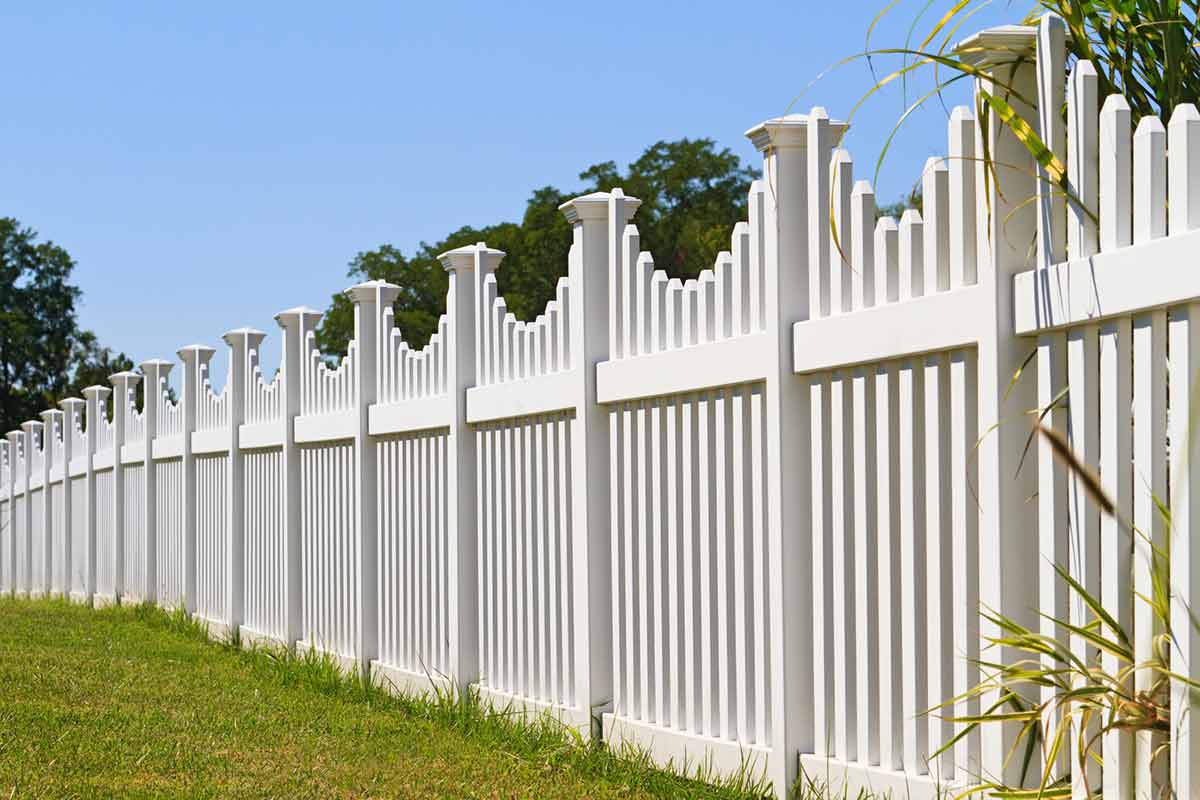
Vinyl/PVC fencing: The low-maintenance champion
Lifespan in South Florida: 20-30+ years
Vinyl dominates South Florida residential installations for good reason. Modern PVC fencing contains five times the tensile strength of wood and four times its flexibility, allowing it to bend in hurricane-force winds without breaking. Quality products incorporate titanium dioxide for UV protection and are completely impervious to moisture, making them ideal for our humid, salt-air environment.
Performance factors: Vinyl never rots, rusts, or attracts termites—the three primary destroyers of fencing in our climate. It maintains its appearance without painting, staining, or sealing. When properly installed with reinforced posts, vinyl fencing achieves wind ratings up to 130 mph, with commercial-grade systems exceeding that threshold.
Maintenance requirements: Quarterly washing with soap and water represents the total maintenance commitment. No annual staining, no rust repair, no replacement of rotted boards. Over a 20-year lifespan, you’ll save $4,000-10,000 in maintenance costs compared to wood.
The catches: Higher upfront cost ($20-35 per linear foot in Broward County), limited color options compared to painted wood, and the plastic appearance some find less appealing than natural materials. Solid vinyl panels also act as sails in high winds, requiring proper engineering and spacing—which your contractor must address in HVHZ-compliant designs.
Best applications: Privacy fencing, pool enclosures, properties within 10 miles of coast, HOA communities (widely approved), and anywhere low maintenance is prioritized.
Aluminum fencing: Maximum hurricane resistance with elegance
Lifespan in South Florida: 30-50+ years
Aluminum represents the gold standard for South Florida fencing when you need both durability and aesthetics. Naturally rust-resistant even in direct salt-air exposure, aluminum requires no protective coating to survive coastal conditions—though powder coating adds color options and further protection. Its open picket design creates the critical advantage in hurricane zones: wind passes through rather than pushing against a solid barrier.
Performance factors: The American Fence Association rates aluminum as the top hurricane-resistant material because its high strength-to-weight ratio allows impact absorption while maintaining structural integrity. Aluminum reflects heat rather than absorbing it, preventing the thermal expansion problems that affect other materials. Marine-grade options with stainless steel hardware perform flawlessly even in beachfront properties.
Maintenance requirements: Annual inspection and occasional washing. No rust prevention treatments needed. Check connection points and tighten hardware every 1-2 years. For coastal properties, monthly freshwater rinsing removes salt buildup and extends the already-impressive lifespan.
The catches: Limited privacy due to open designs (unless you add privacy slats), higher cost than wood or chain link ($20-40 per linear foot), and the potential for bending under extreme direct impact, though properly installed aluminum bounces back.
Best applications: Pool fencing (meets all safety codes), waterfront properties, ornamental/decorative boundaries, areas requiring visibility with security, and anywhere maximum storm resistance is essential.
Wood fencing: Natural beauty with intensive maintenance demands
Lifespan in South Florida: 10-15 years (with excellent maintenance); 5-10 years (with poor maintenance)
Wood offers unmatched aesthetic warmth and customization options, but South Florida’s climate reduces wood fence lifespan by 30-50% compared to northern regions. Cedar and pressure-treated pine represent your viable options here—never use untreated wood, which fails within 5 years in our humidity.
Performance factors: Wood privacy panels act as sails during hurricanes, creating the highest wind load of any common material. Florida Building Code requires specific construction: 4×4 posts set 4 feet on center, embedded 2 feet in concrete footings, with three horizontal 2×4 rails. Even with proper installation, expect warping, cracking, and moisture damage within 3-5 years. Termites and carpenter ants view wood fences as invitation to colonize.
Maintenance requirements: Annual staining or sealing with UV-blocking products ($200-500 professionally), quarterly inspections for rot and pest damage, immediate repair of damaged boards, and complete replacement of compromised sections. Coastal properties require twice-yearly treatments due to accelerated salt-air damage. Budget $3,000-6,000 in maintenance over a 12-year lifespan.
The catches: Beyond intensive maintenance, wood fences rarely survive Category 3+ hurricanes intact. Insurance may not cover replacement of fences that don’t meet current wind load standards. Many HOAs in premium Broward communities now restrict or prohibit wood privacy fencing.
Best applications: Front-yard picket fences (decorative, lower wind load), split-rail boundaries in non-hurricane-prone inland areas, and properties where natural aesthetics justify the maintenance commitment and you accept 10-15 year replacement cycles.
Ready to Upgrade Your Property with Professional Fencing?
Get expert fence installation from Broward County’s trusted professionals. Licensed, insured, and specializing in hurricane-resistant designs that protect your investment for decades.
Composite fencing: Eco-friendly durability at premium pricing
Lifespan in South Florida: 25-30+ years
Composite materials blend 60% recycled wood fibers with 40% recycled plastic, creating a material that mimics wood’s appearance while delivering near-vinyl durability. Quality composites perform exceptionally well in humid climates because the plastic component prevents moisture absorption while wood fibers provide natural aesthetics.
Performance factors: Composite resists rot, mold, termites, and decay—all the factors that destroy wood in South Florida. It won’t crack, split, or splinter. The material bends in high winds without breaking, and polymer cap layers on premium products enhance UV protection. Scratch-resistant surfaces maintain their appearance for decades.
Maintenance requirements: Annual inspection and occasional washing with mild detergent. Some manufacturers recommend UV-protective sprays every few years, particularly for darker colors that show more fading. Overall maintenance costs run 90% lower than wood over the fence’s lifespan.
The catches: Highest upfront cost of common materials ($22-45 per linear foot), and darker colors can fade in our intense UV exposure despite protective coatings. Cannot be painted if you want to change colors later. Quality varies significantly between manufacturers—cheap composite with high wood fiber content absorbs moisture and warps, defeating the purpose.
Best applications: Eco-conscious homeowners, properties wanting wood appearance without wood maintenance, modern horizontal fence designs, and anywhere durability justifies premium investment.
Chain link fencing: Budget-friendly utility with rust concerns
Lifespan in South Florida: 15-20 years (vinyl-coated); 12-18 years (galvanized)
Chain link delivers the most affordable metal fencing option, and its open mesh design provides excellent hurricane resistance because wind passes straight through. However, standard galvanized chain link can rust in South Florida’s humid, salt-air environment—making vinyl-coated versions essential for longevity in coastal Broward County.
Performance factors: The diamond-pattern steel mesh withstands hurricane-force winds exceptionally well, meeting ASTM F2611-15 standards for security fencing. Vinyl coating adds rust protection and comes in black, brown, and green color options. Chain link meets pool safety codes when properly installed with self-closing, self-latching gates.
Maintenance requirements: Annual inspection for rust spots, especially at connection points and ground level. Vinyl-coated versions require checking for coating damage. Tighten fabric tension as needed. Gate hardware needs lubrication. Coastal properties should rinse monthly to remove salt accumulation.
The catches: Industrial appearance lacks aesthetic appeal for front yards or upscale neighborhoods. Provides zero privacy without slat inserts. Easy to climb, limiting security value. Many HOAs prohibit chain link in visible areas. Even galvanized steel eventually rusts in our climate.
Best applications: Large property boundaries, pet enclosures, HVAC screening, budget-conscious backyards, and utility areas where function trumps aesthetics.
Wrought iron and ornamental steel: Premium security with rust vulnerability
Lifespan in South Florida: 40-60+ years (with diligent maintenance); 20-30 years (with poor maintenance)
True wrought iron is rare today—most “wrought iron” fences use galvanized steel or solid steel with ornamental designs. These materials offer maximum strength and timeless elegance but require rust-prevention maintenance in humid South Florida, especially near the coast.
Performance factors: Wrought iron provides the highest strength of all residential fence materials—virtually impossible to breach without specialized tools. Hand-forged quality and customizable ornate designs add significant property value. Storm resistance is excellent when properly installed, though solid components catch more wind than aluminum pickets.
Maintenance requirements: Rust-resistant coating every 2-3 years (professional powder coating lasts 20+ years, paint needs reapplication more frequently). Regular inspection of connection points and hardware. Immediate treatment of any scratches that expose bare metal. Coastal properties require more intensive care. Budget $100-300 annually for maintenance.
The catches: Highest material cost ($25-70 per linear foot), heavy installation requiring professional contractors, vulnerability to rust without constant vigilance in our climate, and limited privacy due to open designs. Not recommended for beachfront properties unless you commit to intensive maintenance.
Best applications: High-end properties, estate fencing, security-focused installations, traditional architectural styles, and front yards where ornamental appeal justifies the investment.

Hurricane codes and wind resistance requirements you must meet
Understanding Broward County’s High-Velocity Hurricane Zone designation
Broward County is one of only two Florida counties entirely designated HVHZ (Miami-Dade is the other), requiring all fences to withstand 175+ mph design wind speeds per the 2023 Florida Building Code. This isn’t optional—it’s state law backed by building permits, inspections, and enforcement.
The practical impact: Your fence must be engineered to survive Category 5 hurricanes without becoming wind-borne debris. ASTM standards provide the framework: ASTM F537 for wood fences requires posts set 2 feet deep in 10-inch diameter concrete footings, spaced maximum 4 feet on center. ASTM F1999 for vinyl fences and ASTM F2957 for aluminum require manufacturer engineering data or engineer-sealed drawings showing wind load calculations.
Critical compliance requirements:
- Wood fences: Must use 4×4 posts (No. 2 grade minimum), three 2×4 horizontal rails, all decay-resistant and properly embedded in concrete
- Aluminum/vinyl fences: Require engineer-sealed drawings OR valid Florida Product Approval (NOA) from manufacturer showing wind resistance testing
- Chain link: Must meet ASTM F2611 specifications with proper gauge calculations based on height and wind exposure category
- All fences: Must create continuous load path from top pickets to concrete foundation
Wind load calculations use ASCE 7-22 standards, factoring in exposure category (most Broward residential areas are Exposure C, requiring 45.99 psf wind pressure design for 150 mph zones). Your contractor must demonstrate compliance through engineering documentation at permit application.
Material performance comparison in hurricane conditions
Superior hurricane performers:
- Aluminum: Open design allows wind passage, natural flexibility absorbs impacts without breaking, wind-rated to 160+ mph
- Vinyl (reinforced): Quality systems with metal inserts achieve 100-130 mph ratings, flexibility prevents catastrophic failure
- Chain link: Wind flows through mesh, minimal pressure build-up, survives Category 5 storms when properly installed
Moderate performers with caveats:
- Composite: Strong and flexible, but solid panels require proper engineering
- Steel/ornamental iron: Extremely strong but heavy, requires robust foundation work
Poor hurricane performers:
- Wood privacy fences: Solid panels act as sails, pickets strip easily, rails fail under sustained wind loads
The 2023 Florida Building Code requires TAS 201/202/203 Large Missile Impact Testing for HVHZ products—simulating a 9-pound 2×4 lumber piece striking at 50 feet per second. Products passing this test receive Florida Product Approval, simplifying your permit process.
Real 2024-2025 pricing for Broward and Palm Beach counties
Current installed costs per linear foot
| Material | Broward County | Palm Beach County | Notes |
|---|---|---|---|
| Chain Link | $10-20 | $10-18 | Vinyl-coated adds $2/LF |
| Wood Privacy | $17-27 | $15-25 | Cedar 40% more than pine |
| Vinyl/PVC | $20-35 | $18-30 | 15-25% higher in Broward |
| Aluminum | $20-40 | $18-38 | Pool-code compliant versions |
| Composite | $22-45 | $20-42 | Premium brands cost more |
| Wrought Iron | $25-70 | $25-65 | Custom designs at high end |
Fort Lauderdale and Hollywood average 15-20% higher than West Palm Beach and Boca Raton for identical materials and installation. Coastal and waterfront properties face 10-20% premiums due to stricter material requirements and site access challenges.
Breaking down total project costs (150 linear feet, 6-foot privacy fence)
Materials + Professional Installation:
- Chain link: $1,500-3,000 total
- Wood privacy: $2,550-4,050 total
- Vinyl privacy: $3,000-5,250 total
- Aluminum ornamental: $3,000-6,000 total
- Composite privacy: $3,300-6,750 total
Additional mandatory costs:
- Building permit: $200-400 (average in Broward)
- Property survey: $300-600 (if current survey unavailable)
- Old fence removal: $450-750 (150 LF × $3-5)
- HOA application fee: $0-250
- Standard gate: $150-400 each
Real-world example: A 150-foot vinyl privacy fence in Coral Springs costs approximately $4,500 for materials and installation, plus $350 for permits, $400 for survey, $500 for old fence removal, and $300 for two gates—totaling $6,050 before any site preparation or grading work.
Long-term value calculations that change the equation
Smart buyers calculate total cost of ownership over expected lifespan, not just installation price. A $2,700 wood fence requiring $300 annual maintenance for 12 years costs $6,300 total before replacement. A $4,500 vinyl fence requiring $50 annual cleaning for 25 years costs $5,750 total—making vinyl $550 cheaper despite 67% higher upfront cost, while lasting twice as long.
According to HomeAdvisor’s 2025 fence cost data, maintenance cost averages by material (annual):
- Wood: $200-500 (staining, repairs, treatments)
- Wrought iron: $100-300 (rust prevention, painting)
- Chain link: $100-200 (rust checks, coating repairs)
- Vinyl: $50-100 (cleaning only)
- Aluminum: $50-100 (minimal)
- Composite: $25-50 (virtually none)
ROI at resale: Quality fencing returns 30-50% of installation cost in home value according to real estate comps in Broward County. Privacy fences (vinyl or wood) appeal most to buyers with children or pets. Aluminum pool fencing and ornamental iron increase appeal in upscale markets like Parkland, Weston, and Coral Springs.
Navigating permits, HOAs, and Broward County regulations
Permit requirements in Broward’s 31 municipalities
Permits are mandatory for virtually all fence installations in Broward County’s 31 cities—from Coral Springs to Dania Beach, Davie to Deerfield Beach. The few exceptions: repairs affecting less than 25% of fence length or valued under $1,500 in some municipalities.
Required documentation for permit application:
- Notarized building permit application
- Two complete sets of fence plans showing height, linear footage, materials, and setback dimensions
- Two copies of current property survey with fence location marked
- Engineer-sealed drawings (for aluminum/vinyl) OR prescriptive drawings (for wood/chain link)
- HOA approval letter (if applicable)
- Easement agreements from utility companies (AT&T, FPL, Comcast, etc.)
- Notice of Commencement (if project exceeds $2,500)
- Licensed contractor documentation OR Owner-Builder affidavit
Processing timeline: Budget 2-4 weeks for permit review and approval. Applications missing documentation get returned, restarting the clock. Foundation inspection occurs before setting posts; final inspection after completion. Both are mandatory.
Permit costs: Range from $100-1,500 depending on project scope and municipality, averaging $200-400. Costs calculate as either flat fee or 2.4% of project value (whichever is greater), plus surcharges. Working without permits results in double fees, stop-work orders, and forced removal.
Visit the Broward County Building Division for official permit applications and requirements.
Decoding HOA requirements in South Florida communities
HOA approval must precede permit application—submit to your Architectural Review Committee first, obtain written approval, then apply for building permits. Most HOAs require 2-4 weeks for review.
Standard HOA restrictions across Broward communities:
- Height limits: 6 feet maximum in backyards, 3-4 feet maximum in front yards
- Approved materials: Usually wood, vinyl, aluminum, wrought iron; chain link typically prohibited in front yards
- Color requirements: Neutrals only (white, tan, beige, black); must complement home’s trim
- Style uniformity: All fences must match neighborhood aesthetic
- Setback requirements: Often stricter than county minimums
Waterfront and golf course communities impose the strictest rules. Properties along Intracoastal Waterway or bordering golf courses in cities like Coral Springs, Parkland, and Weston often prohibit solid privacy fencing entirely, requiring open aluminum or iron designs to preserve sightlines and views.
Gated communities like those in Weston and Southwest Ranches frequently maintain pre-approved fence model lists—choose from 1-2 approved designs only. Some require using specific approved contractors.
Violating HOA rules results in daily fines, forced removal at your expense, and potential liens on your property. Always verify requirements before purchasing materials.
Palm Beach County differences worth noting
Palm Beach County regulations differ from Broward in several ways: Not the entire county is HVHZ (only coastal areas), permits cost slightly less on average, and some cities have more relaxed height restrictions allowing 6-foot fences in certain front yard situations.
However, the same basic requirements apply: permits mandatory, engineer drawings needed for aluminum and vinyl, HOA approval precedes permits, and all fences must meet wind load standards per Florida Building Code.

Choosing the right material for your specific situation
Decision framework based on priorities
If hurricane resistance is your top priority: Choose aluminum or vinyl with reinforced posts. Both materials deliver the highest wind ratings and have proven track records surviving South Florida’s worst storms. Avoid solid wood privacy fences.
If minimizing long-term costs matters most: Choose vinyl or composite. Despite higher upfront costs, these materials save thousands in maintenance over their 20-30 year lifespans while outlasting wood by 10-15 years.
If you’re within 10 miles of the coast: Eliminate wood, chain link (unless vinyl-coated), and wrought iron from consideration. Salt air corrosion makes these materials poor investments. Focus exclusively on aluminum, vinyl, or composite.
If HOA approval is required: Start with vinyl or aluminum—they pass architectural review most consistently. Wood and chain link face frequent rejection in upscale communities. Request your HOA’s pre-approved fence list before making any decisions.
If natural aesthetics are essential: Cedar wood delivers unmatched beauty but demands commitment to annual maintenance and 10-15 year replacement cycles. Composite offers wood-like appearance with far less maintenance—the best of both worlds at premium pricing.
If you need maximum security: Wrought iron or steel provides the highest strength, though aluminum ornamental fencing with spear-top designs delivers excellent security with less maintenance vulnerability.
Climate-specific material recommendations by location
Coastal Broward (Deerfield Beach, Pompano Beach, Fort Lauderdale, Hollywood, Hallandale Beach):
- Best choices: Marine-grade aluminum with stainless steel hardware, vinyl with UV inhibitors
- Avoid: Wood (rots quickly), standard chain link (rusts), wrought iron (maintenance nightmare)
- Special considerations: Monthly freshwater rinsing essential, expect highest material costs
Inland Broward (Coral Springs, Parkland, Coconut Creek, Weston, Southwest Ranches, Davie):
- Best choices: Vinyl for privacy, aluminum for pools, composite for eco-conscious buyers
- Workable options: Pressure-treated wood if you accept maintenance, vinyl-coated chain link for budgets
- Special considerations: Slightly less salt exposure but still high humidity and hurricane risk
Palm Beach County coastal areas:
- Same recommendations as coastal Broward—salt air extends far inland in flat Florida
Palm Beach County inland areas:
- More flexibility for wood fences than Broward, but vinyl and aluminum still offer better value
- Chain link viable for large properties and agricultural/ranch areas in western county
Universal South Florida rule: Any material you choose must be hurricane-rated and properly engineered for HVHZ if in Broward County or coastal Palm Beach. No exceptions.
Quick comparison: Best and worst choices for common scenarios
Best for pool enclosures: Aluminum (meets all safety codes, looks elegant, zero rust)
Best for privacy on budget: Vinyl (lower long-term cost than wood despite higher upfront price)
Best for waterfront property: Marine-grade aluminum or vinyl (salt-proof)
Best for traditional aesthetics: Cedar wood (if you accept maintenance) or composite (if you want low maintenance)
Best for large-acreage properties: Vinyl-coated chain link (affordable, durable, functional)
Best for high-end curb appeal: Wrought iron or ornamental aluminum with custom designs
Worst for hurricanes: Wood privacy fences with solid panels
Worst for coastal properties: Untreated wood, standard galvanized chain link, wrought iron without intensive maintenance commitment
Worst long-term value: Cheap wood with inadequate treatment (false economy—replace twice)
Ready to Upgrade Your Property with Professional Fencing?
Get expert fence installation from Broward County’s trusted professionals. Licensed, insured, and specializing in hurricane-resistant designs that protect your investment for decades.
Frequently asked questions
How long do different fence materials last in South Florida’s climate?
Lifespan varies dramatically by material and maintenance. Vinyl and aluminum last 20-30+ years with minimal care. Quality composite fences reach 25-30 years. Wood fences typically last only 10-15 years even with excellent maintenance due to humidity, salt air, and UV exposure—30-50% shorter than in northern climates. Chain link lasts 15-20 years if vinyl-coated. Wrought iron can last 40-60+ years but requires rust-prevention maintenance every 2-3 years in South Florida.
Do I really need a permit for fence installation in Broward County?
Yes, permits are required for virtually all new fence installations and replacements in Broward County’s 31 municipalities. The only exceptions are minor repairs valued under $1,500 affecting less than 25% of fence length. Installing without permits results in double fees when caught, potential stop-work orders, and forced removal of non-compliant fencing. Insurance may not cover unpermitted work. Budget $200-400 for average permit costs and 2-4 weeks for processing.
What makes Broward County different from other Florida counties for fencing?
Broward County is entirely designated High-Velocity Hurricane Zone (HVHZ), requiring fences to withstand 175+ mph design wind speeds—stricter than most Florida counties. All aluminum and vinyl fences need engineer-sealed drawings or manufacturer Florida Product Approval (NOA). Only Miami-Dade County shares this complete HVHZ designation. Palm Beach County’s HVHZ applies only to coastal areas. This means higher material standards, more rigorous permitting, and better engineering—but also better hurricane performance.
Which fence materials resist salt air and humidity best?
Aluminum and vinyl perform best in salt-air environments. Aluminum is naturally rust-resistant and requires no protective coating for coastal use, though powder coating adds color options. Vinyl is completely impervious to moisture and salt. Composite also resists salt and humidity well. Wood performs poorly in both conditions—humidity causes rot and warping while salt accelerates deterioration. Even galvanized chain link eventually rusts in salt air unless vinyl-coated. Wrought iron requires intensive rust-prevention maintenance near the coast.
How much does a typical fence cost in Fort Lauderdale or Coral Springs?
For a standard 150-foot, 6-foot privacy fence installed in 2024-2025: chain link costs $1,500-3,000 total, wood costs $2,550-4,050, vinyl costs $3,000-5,250, aluminum costs $3,000-6,000, and composite costs $3,300-6,750. Add $200-400 for permits, $300-600 for survey if needed, $450-750 for old fence removal, and $150-400 per gate. Fort Lauderdale and Hollywood average 15-20% higher than West Palm Beach for identical installations. Coastal properties face 10-20% premiums.
What are HOA rules for fences in Broward County communities?
Most HOAs restrict fence height to 6 feet in backyards and 3-4 feet in front yards. Approved materials typically include wood, vinyl, aluminum, and wrought iron; chain link is usually prohibited in visible areas. Colors must be neutrals (white, tan, beige, black) that complement home exteriors. All fences must match neighborhood style. Waterfront and golf course communities often prohibit solid privacy fencing entirely. You must obtain HOA approval before applying for building permits—violation results in forced removal and fines.
Can wood fences survive hurricanes in South Florida?
Wood fences perform worst in hurricanes because solid privacy panels act as sails, catching wind rather than letting it pass through. Even properly installed wood fences meeting Florida Building Code standards (4×4 posts, 2-foot concrete embedment, 4-foot spacing) rarely survive Category 3+ hurricanes intact. Pickets strip, rails fail, and entire sections collapse. If you choose wood, open picket designs perform better than solid privacy panels, and steel posts with brackets outperform wood posts. Most hurricane-conscious Broward homeowners choose aluminum or reinforced vinyl instead.
What’s the maintenance difference between vinyl and wood fences in Florida?
The difference is dramatic. Vinyl requires quarterly washing with soap and water—period. No painting, staining, sealing, or repairs beyond occasional picket replacement from storm damage. Budget $50-100 annually. Wood requires annual staining or sealing ($200-500 professionally), quarterly inspections for rot and pest damage, immediate repair of compromised boards, and complete section replacements every few years. Budget $300-500 annually for maintenance plus $800-1,500 for major repairs over a 12-year lifespan. Vinyl saves $4,000-10,000 in maintenance costs over wood’s typical lifespan.
Are there special requirements for fences near swimming pools?
Yes, Florida Swimming Pool Safety Act requires specific fence and gate standards. Fences must be minimum 4 feet high (some municipalities require 5-6 feet). Gates must be self-closing, self-latching, with latches minimum 54 inches from ground, and must open away from pool. Barriers cannot have gaps larger than 4 inches. No horizontal rails on pool side that create climbing opportunities. All pool fence installations require additional Swimming Pool Safety Act documentation with permit applications and pass specific inspections for gate operation.
How do I choose between aluminum and vinyl for my Broward County home?
Choose aluminum if you need maximum hurricane resistance (wind-rated to 160+ mph), prefer open ornamental designs, want pool fencing that meets all codes, or have a waterfront property. Choose vinyl if you need privacy, want solid panels, prefer slightly lower cost, or prioritize complete weather-proofing. Both materials excel in South Florida’s climate with 20-30+ year lifespans and minimal maintenance. Aluminum costs $20-40 per linear foot while vinyl costs $20-35 per linear foot in Broward County—comparable pricing for different benefits.
What happens if I install a fence without HOA approval?
HOAs can force you to remove the entire fence at your expense, regardless of how much you spent. Daily fines accrue until you achieve compliance—potentially hundreds or thousands of dollars. The HOA can place liens on your property for unpaid fines and legal fees. Your homeowners insurance may not cover removal and reinstallation costs. You’ll also face delays and complications when selling your home due to HOA violations in disclosure documents. Always obtain written HOA approval before purchasing materials or starting installation—it’s required before building permit applications anyway.
Which fence material offers the best return on investment in Broward County?
Quality fencing returns 30-50% of installation cost in home value according to Broward County real estate comps. Vinyl privacy fencing offers the best overall ROI—moderate upfront cost, 20-30 year lifespan, minimal maintenance expenses, and strong buyer appeal among families with children and pets. Aluminum pool fencing adds premium value in upscale markets like Parkland, Weston, and Coral Springs. Wood privacy fencing returns less due to visible aging and maintenance requirements that concern buyers. Calculate ROI over the fence’s full lifespan including maintenance costs, not just installation price.
Ready to install your hurricane-resistant fence?
Choosing the right fence material for your Broward County home requires balancing hurricane resistance, climate durability, HOA requirements, aesthetics, and long-term costs. Vinyl and aluminum materials dominate South Florida installations for good reason—they deliver the performance needed in our unique HVHZ environment while minimizing maintenance demands over 20-30+ year lifespans.
Broward County Fence & Pergola has served homeowners across all 31 Broward County municipalities and Palm Beach County since 2016. Our team brings 20+ years of combined experience navigating Florida Building Code requirements, HOA approvals, and HVHZ engineering standards. We’re licensed and insured, specializing in hurricane-resistant installations that protect your property and investment.
We handle the entire process: permit applications and approvals, HOA architectural reviews, professional engineering drawings for aluminum and vinyl installations, utility company easement coordination, and expert installation meeting all wind load requirements. Every fence installation includes our 5-year workmanship warranty.
Get your free estimate today. We’ll assess your property, review your HOA requirements, explain material options specific to your location and needs, and provide transparent pricing with no hidden costs. Whether you’re in Fort Lauderdale, Coral Springs, Pembroke Pines, Plantation, or anywhere across Broward and Palm Beach counties, we deliver the hurricane-resistant fencing your South Florida home deserves.
Call us or visit our website to schedule your free consultation. Let’s build a fence that will still look great—and still be standing—after the next hurricane season.

You would have heard about product being available on internet nowadays. You may have heard about people purchasing and ordering Read more

{What are the advantages and disadvantages to using chain link fencing?|What are the pros and cons of chain link fence?|What Read more
What Type Of Fence Is Best In Florida? Are you searching for the perfect fence to protect your Broward County Read more


