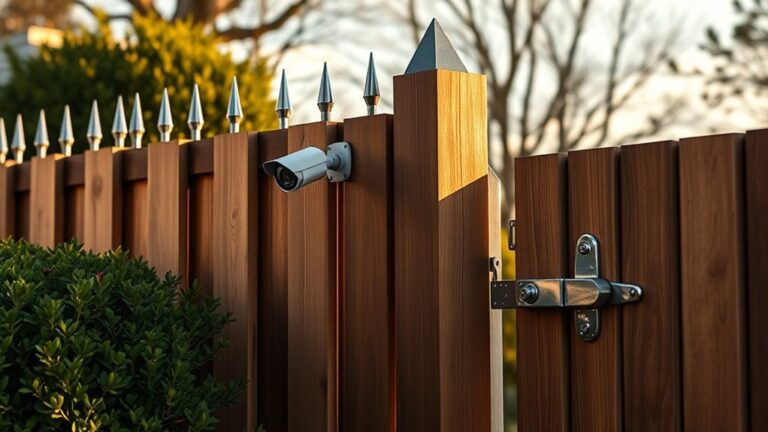
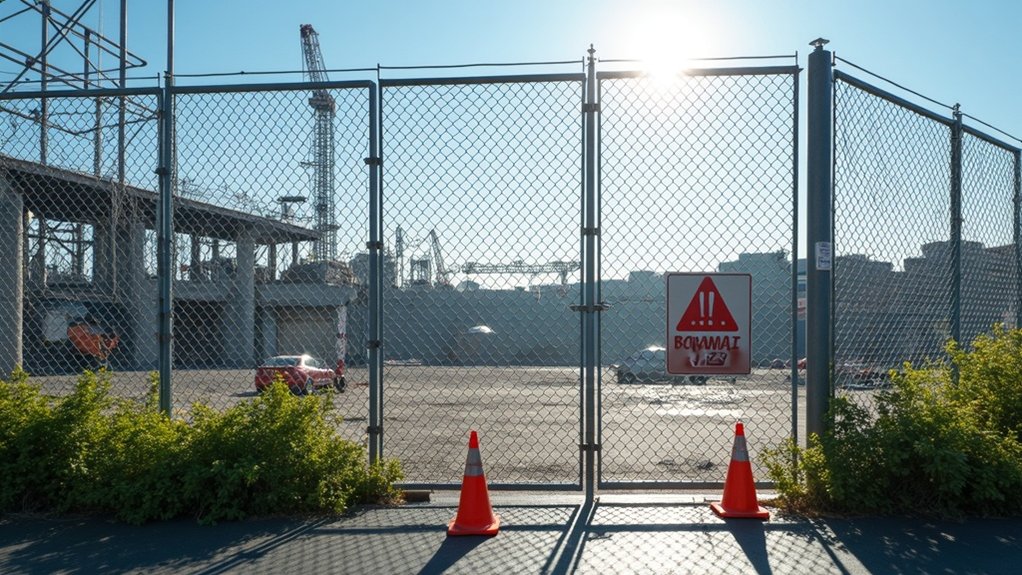
When setting up security fencing for construction sites, ensure you follow OSHA regulations to keep workers and the public safe. Use fences that are at least 4 feet high for residential areas and 6 feet for commercial sites, opting for sturdy materials like chain link or wrought iron. Include access control measures, such as surveillance cameras and security personnel. Regularly inspect and maintain your fencing to quickly address any problems. These steps are essential for enhancing safety and compliance on your site.
Key Takeaways
- Follow OSHA regulations by choosing the right fence height and materials to boost safety and avoid fines.
- Set up fencing that secures the site and keeps the public at a safe distance to reduce risks.
- Use access control methods like security staff and electronic entry systems to oversee who enters and exits the site.
- Regularly check and fix any damage to the fencing to maintain safety and meet standards.
- Clearly label hazards and exits on the fencing to help the public stay informed and ensure quick evacuations in emergencies.
Importance of Compliance With OSHA Regulations

Compliance with OSHA regulations is crucial for the safety of workers and the public during construction projects.
OSHA requires that fencing effectively secures the site and prevents unauthorized access. One key requirement is having at least one clear exit through the fencing for emergency situations, like fires. Additionally, fencing should create clear separation from public areas to enhance overall safety. Ensure that gates are easy to find and access to avoid any delays in evacuation. Ignoring these regulations not only risks OSHA penalties but also puts your workers at risk.
Selecting the Right Fence Height and Material

Choosing the right fence height and material is crucial for safety and security at construction sites. Here’s what you need to know:
- For residential sites, OSHA requires a minimum height of 4 feet.
- Commercial projects must be at least 6 feet tall.
- Strong materials like chain link or wrought iron are best for industrial use due to their durability. Durability and weather resistance are key factors when selecting materials for construction site fencing.
- Check local regulations; some areas allow fence heights of 7 or 8 feet with special permits.
- Aesthetic considerations matter too, especially if you’re using ornamental fencing in visible areas. Additionally, ensuring compliance with OSHA regulations is essential to avoid potential fines and maintain safety standards.
Enhancing Site Security and Access Control

To boost security and access control at construction sites, take a comprehensive approach that combines trained personnel, technology, and strong perimeter management.
Start by ensuring security staff are well-trained to monitor access points and enforce rules. Use advanced technology like biometric scanners and electronic entry systems to allow only authorized individuals into sensitive areas. Construction Site Access Control focuses on maintaining safety and security, making it essential to incorporate these methods effectively.
Implement regular rotation schedules for personnel to keep them alert and reduce fatigue. Real-time location tracking can help monitor worker safety and compliance.
Add surveillance cameras and automated logging to improve accountability and response times.
Ensuring Public Safety and Legal Adherence

A solid security plan prioritizes public safety and legal compliance. Here are essential elements to consider:
- Public Awareness: Post clear signs on fencing to alert people about hazards and restricted areas.
- Emergency Planning: Include exit points in your fencing for quick evacuations during emergencies.
- Legal Compliance: Follow OSHA standards and local laws regarding fencing height and materials. Additionally, ensure you understand permit requirements to avoid legal issues during installation.
- Routine Inspections: Regularly inspect fencing for stability and damage to ensure safety.
Best Practices for Installation and Maintenance

Installing and maintaining security fencing is crucial for protecting construction sites. Start with a site assessment to spot vulnerable areas and plan your fence placement.
Use solid installation techniques, like ensuring a strong foundation and proper interlocking of panels, to avoid weak points. Set up a maintenance schedule for daily inspections to check for damage or wear.
Fix issues quickly, whether it’s re-tightening fittings or replacing broken sections. Keep an eye on the integrity of posts and gates to ensure all access points are secure. If site conditions change, adjust the fencing layout as needed. Following these best practices will help you maintain an effective barrier that safeguards your assets and enhances safety. Additionally, perform utility checks before installation to prevent service interruptions and costly repairs.
Frequently Asked Questions
How Often Should Construction Site Fencing Be Inspected?
Inspect construction site fencing weekly to ensure safety compliance. In severe weather or high-security areas, check every 2-3 days or even daily to maintain structural integrity and security.
What Are the Costs Associated With Installing Construction Fencing?
The cost of installing construction fencing ranges from $1,000 to $7,500. This price varies based on the type of materials and labor involved. For instance, rough terrain or added features like gates can increase your total expenses.
Can Temporary Fencing Be Reused for Different Projects?
Yes, temporary fencing can be reused for different projects. This approach is cost-effective and environmentally friendly. For example, if you use the same fencing for multiple construction sites, you save money on materials and reduce waste. Plus, it helps maintain safety standards across various projects.
What Types of Signs Are Required on Construction Fencing?
Construction fencing acts as a protective barrier and requires specific safety signs to ensure compliance. Essential signs include “No Trespassing,” danger alerts, and emergency contact information. These signs help maintain safety and legal standards around the construction site.
How Can Fencing Be Adapted for Uneven Terrain?
To adapt fencing for uneven terrain, use step-style or stair-stepping techniques. Choose strong materials that align with the land’s contours to ensure stability and reduce gaps. This approach not only enhances durability but also keeps the fence looking good. For example, if you’re fencing a hilly area, consider how each section can follow the slope without leaving spaces underneath.
Conclusion
Security fencing is essential for construction sites, providing a strong defense against potential threats. Following OSHA regulations and selecting appropriate materials not only protects your site but also ensures the safety of workers and visitors. A well-installed fence is more than just a physical barrier; it represents a commitment to safety and professionalism. Regular maintenance of your fencing is crucial to keeping your site secure and ready to handle any challenges that may arise.