When installing lighting and cameras along commercial fence lines, start by placing power sources nearby to reduce voltage drop. Position lights and cameras strategically at gates and corners for optimal visibility. Always check local electrical codes, and consider energy-efficient options like LED and solar lights. Regular maintenance is crucial to ensure everything works properly over time. Keep these tips in mind for a successful installation.
Key Takeaways
- Position power sources near the fence to reduce voltage drop and enhance the efficiency of your lights and cameras.
- Install lights and cameras at gates and corners to maximize visibility and security coverage.
- Use weather-resistant fixtures with an IP65 rating or higher to endure outdoor conditions along the fence line.
- Regularly check and maintain lighting and camera systems to ensure they function properly and to fix any damage.
- Follow local electrical codes and regulations for the safe installation and operation of outdoor lighting and cameras.
Assessing Power Source Locations
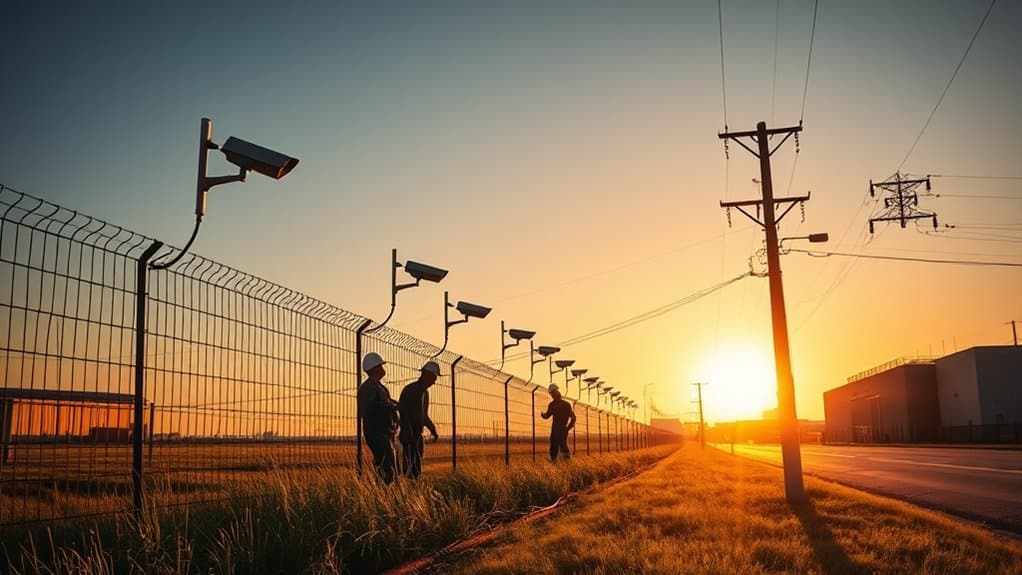
When choosing power source locations for lighting and cameras along commercial fence lines, prioritize placing them close to the fence. This reduces voltage drop and makes power more accessible. You can opt for AC, battery, solar, or hybrid systems based on your site’s needs. AC sources require nearby outlets, while batteries offer flexibility but need regular maintenance. Solar systems simplify wiring but depend on sufficient sunlight. Always select locations that avoid flooding and moisture for maintenance access. Ground your systems within 20 feet of the power source for reliability and use insulated wiring to prevent short circuits. This ensures a safe, efficient installation tailored to your operational needs, while also considering the importance of proper grounding for reliable electrical performance.
Strategic Light Placement for Visibility
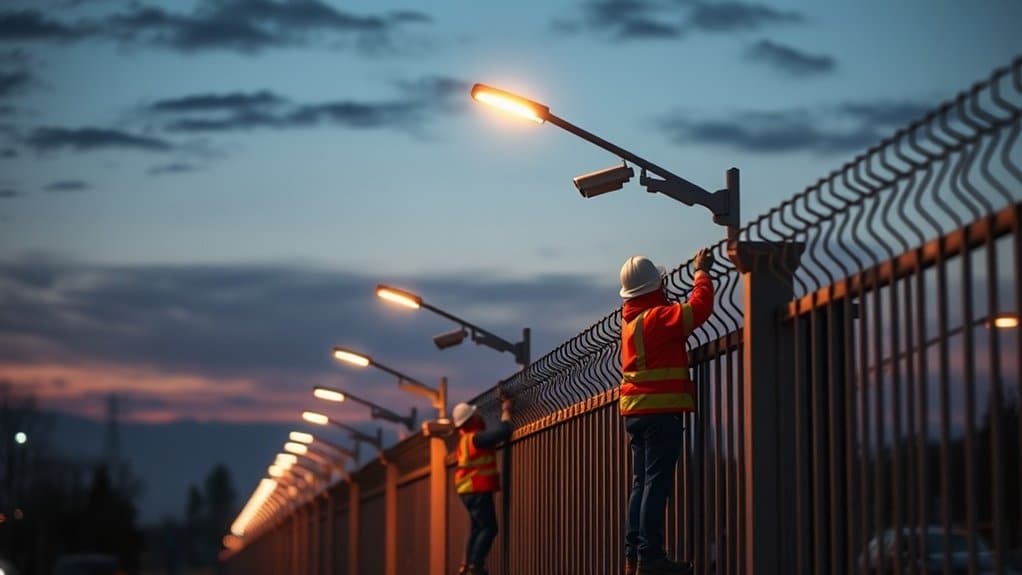
When installing lights along your commercial fence, pay attention to where they shine. Key spots like gates and corners should be prioritized to boost visibility and security. Additionally, consider placing lights along the top of your fence to create a sleek, clean line that enhances visual appeal while providing broader coverage for lighting.
Lighting Angle Considerations
When lighting commercial fence lines, it’s crucial to consider lighting angles for better visibility, security, and safety. Narrow beam angles (20°–40°) concentrate light on specific areas, enhancing detection, while wide beam angles (60°–120°) spread light too thinly, reducing intensity. Position lights at the same height as the fence and angle them slightly downward to minimize glare and ensure overlapping beams. This overlap eliminates dark spots and guarantees even lighting. Additionally, adjust your fixtures according to seasonal sun paths to avoid glare. Understanding light exposure is essential for selecting the right lighting to enhance the effectiveness of fence line security.
Key Locations for Installation
Effective lighting along commercial fences significantly boosts security and visibility.
Start by placing lights on top of the fence to cast light downward and improve camera visibility. Pay special attention to corners and gates, using bright fixtures to ensure these access points are well-lit.
For pathways next to the fence, space lights evenly for consistent illumination, helping to deter intruders. Also, install lights on the opposite side of the fence to reduce glare while increasing visibility.
When using post-top fixtures, angle them away from the fence to minimize direct glare. These smart placements create a safer environment and enhance the effectiveness of your security measures.
Understanding Local Electrical Codes
Before installing lighting and cameras on commercial fence lines, check local electrical regulations.
Understand the permit process and compliance requirements to ensure your project meets safety standards.
Familiarizing yourself with these codes can help you avoid costly mistakes and ensure a smooth installation.
Researching Local Regulations
When installing lighting and cameras along commercial fence lines, it’s crucial to understand local electrical codes to ensure compliance and safety.
Research local ordinances to identify specific requirements for your lighting and electric fence systems. For example, electric fences must often meet IEC standards and adhere to zoning laws regarding their placement.
Your outdoor lighting may also need a photometric analysis to comply with municipal guidelines on light distribution. Pay attention to restrictions on fixture types and placements, as certain bulbs might be banned to reduce light pollution.
Doing thorough research will help you meet safety standards and avoid legal issues.
Permit Application Process
Understanding the permit application process is crucial for your lighting and camera installations along commercial fence lines to meet local electrical codes.
Here are the main points to consider:
- Many areas now offer online permit applications via specific websites.
- Create an account to submit plans, applications, and pay fees easily.
- Your permit documentation should clearly outline the type of installation and service size.
- Choose an electrical inspection agency when you submit your application.
- Inspections are mandatory to ensure everything complies with the code before you can use the installations.
Compliance Checklist Requirements
To ensure your lighting and camera setups along commercial fence lines comply with local electrical codes, follow this concise checklist. It covers both the National Electrical Code (NEC) and relevant local amendments, making your installation smoother and more compliant.
| Requirement | NEC Standard | Local Amendment |
|---|---|---|
| Minimum Conductor Size | No. 12 AWG for lighting | Varies by application |
| Conduit Type | Rigid/EMT for fixtures | Specific local types |
| Dedicated Circuits | Required for signage | May need lockable switches |
Choosing Between Low Voltage and Line Voltage Lighting
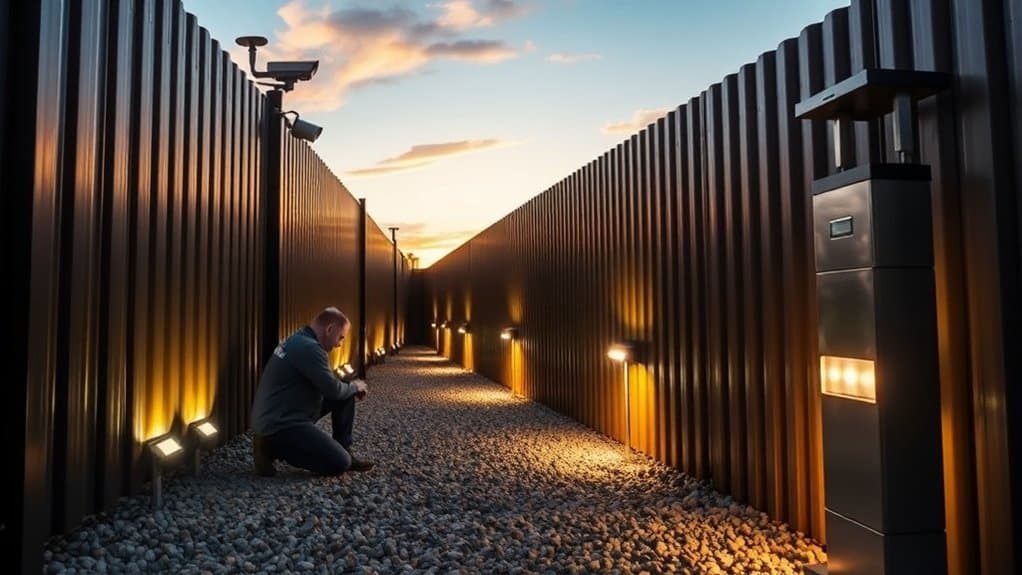
When selecting lighting for your commercial fence line, consider the pros and cons of low voltage versus line voltage systems:
– Low Voltage: Safer, with a reduced risk of shock, and more energy-efficient.
These systems are typically easier to install, making them great for DIY projects. They also offer design flexibility, perfect for adding decorative touches.
– Line Voltage: While they provide brighter light suitable for large areas, they come with higher installation costs and require licensed electricians due to safety concerns.
Additionally, they generate more heat, which can be a drawback.
Ultimately, choose the system that best fits your needs, whether that’s safety, cost, or aesthetics.
Incorporating Automation for Energy Efficiency
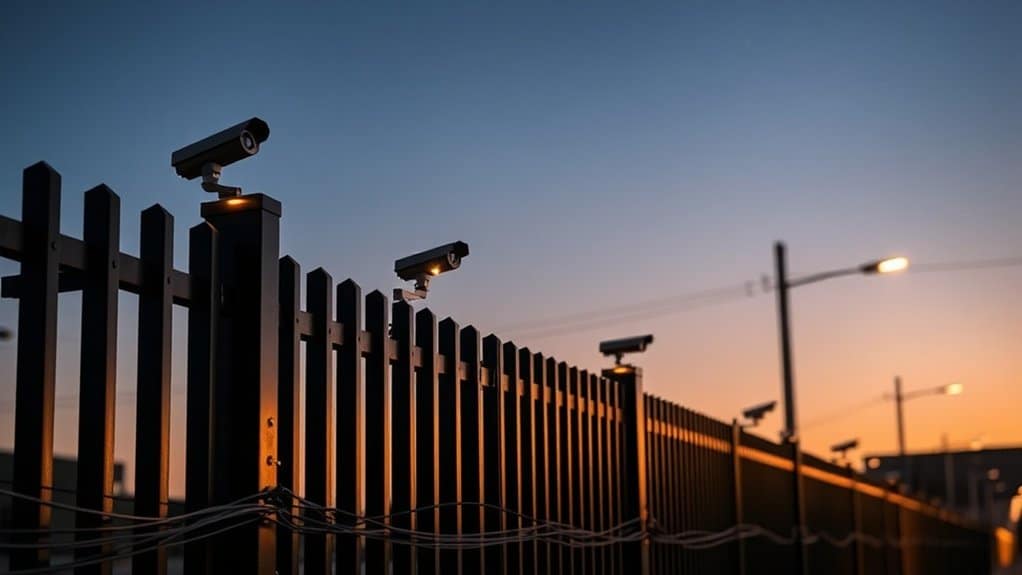
As commercial properties focus on energy efficiency, automating lighting and camera systems is crucial. Smart solutions can cut energy use while maintaining security.
| Automation Feature | Benefits |
|---|---|
| Photocells | Adjust lights based on natural daylight |
| Motion Sensors | Turn on lights when movement is detected |
| Programmable Timers | Set lighting schedules to match occupancy |
| Remote Monitoring | Control lighting through mobile apps |
These features not only save energy but also enhance convenience and security.
Best Practices for Wiring and Cable Installation
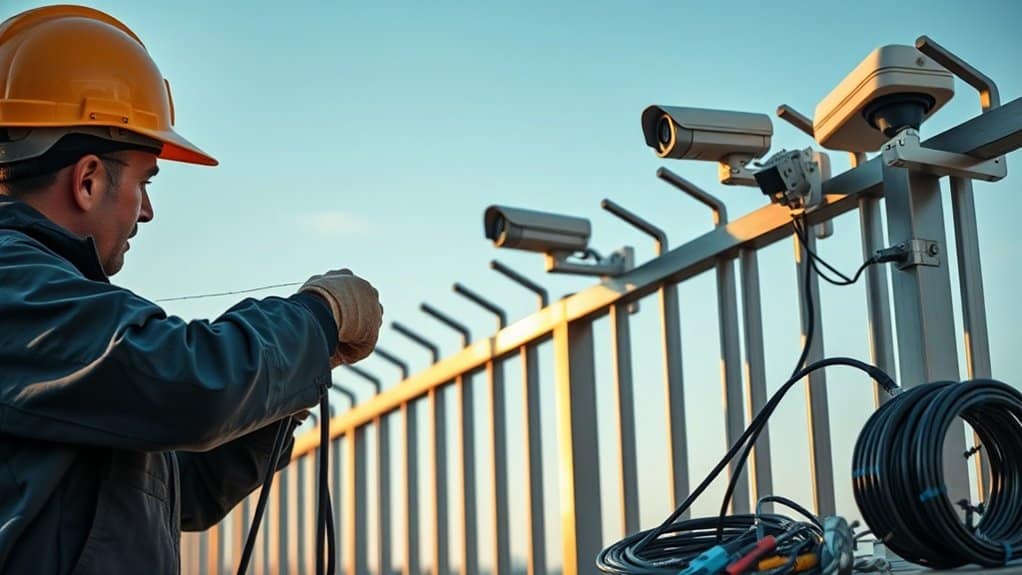
When installing wiring and cables, using proper cable trenching techniques is crucial for durability and protection.
Choose connectors that suit your project’s needs to ensure reliable connections.
Following these best practices will help maintain the integrity and functionality of your lighting and camera systems along commercial fence lines.
Cable Trenching Techniques
Effective cable trenching techniques are crucial for reliable wiring and cable installations.
Start by digging trenches that are typically 18 to 24 inches deep, depending on local codes and the type of terrain. A soil analysis can help determine the best method for your project.
- Clearly map and mark the cable path to steer clear of existing utilities.
- Use appropriate equipment for your trench size—mini-excavators work well for smaller jobs.
- For micro-trenching, consider diamond circular saws to reduce disruption.
- Ensure trench bottoms are solid, with “bell holes” at joints for easier connections.
- Prioritize safety, especially with trenches deeper than five feet.
Connector Selection Criteria
Choosing the right connectors for wiring and cable installations is crucial for system reliability and safety. Start by ensuring connectors match in voltage, current ratings, and wire gauge. It’s wise to overspecify capacity to prevent overheating.
Consider environmental factors—if you’re in a humid or extreme temperature area, go for corrosion-resistant materials like stainless steel. Make sure the number of contacts matches your cables, and avoid connecting multiple wires to a single contact.
For outdoor installations, waterproof connectors are a must.
Lastly, stick to industry standards and local electrical codes to ensure safety in your commercial fence projects. This careful selection boosts both performance and durability.
Mounting Fixtures for Optimal Performance
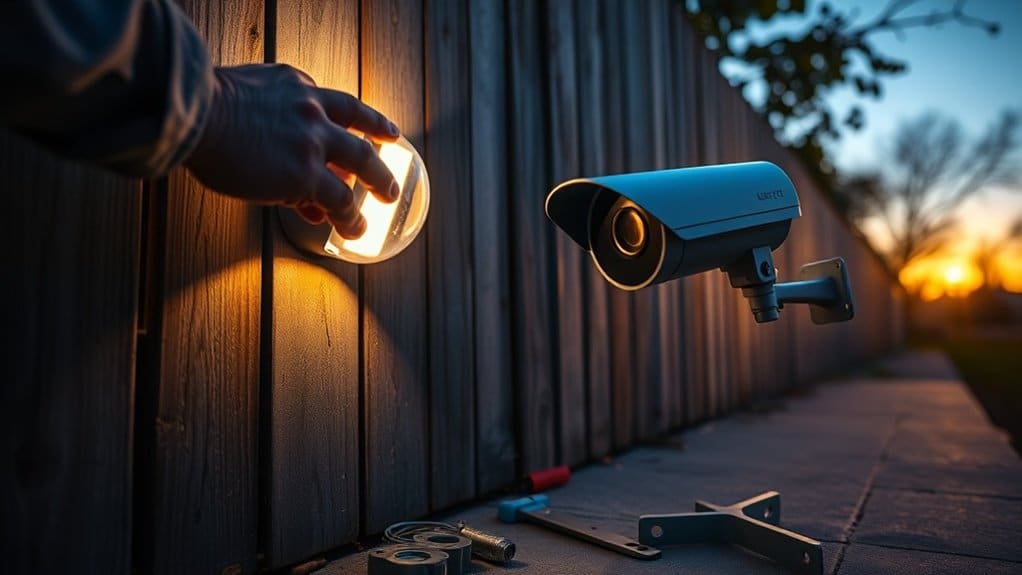
To ensure mounted fixtures perform well along commercial fence lines, it’s crucial to focus on their placement and installation. Here are some key tips:
- Choose locations with clear views to enhance visibility.
- Install fixtures at higher points to prevent tampering.
- Angle lighting to reduce glare that could obstruct camera views.
- Opt for weather-resistant fixtures with an IP65 rating or higher for longevity.
- Regularly check mounts to keep them in the best position.
Selecting the Right Lighting Types and Features
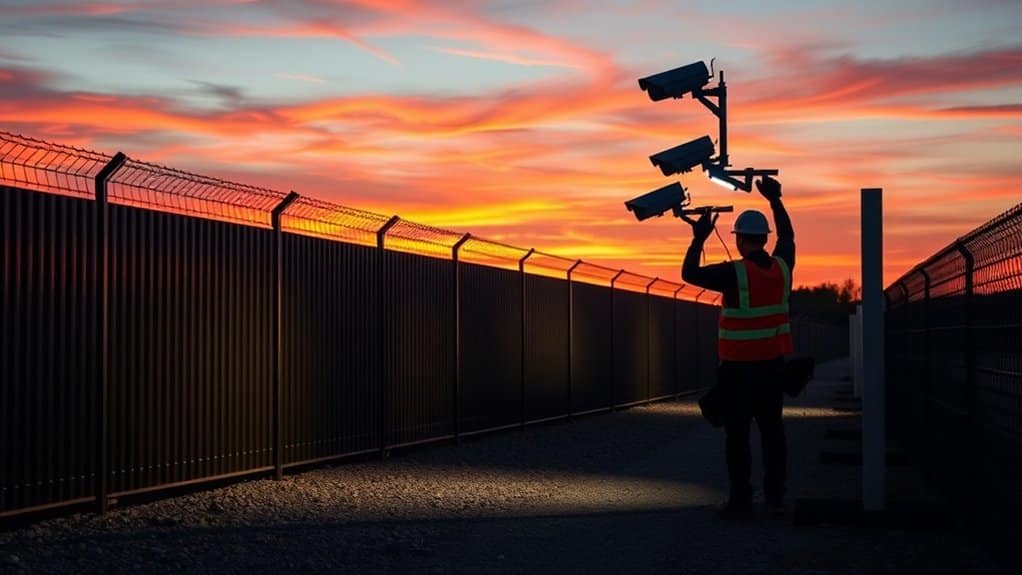
When selecting lighting for commercial fence lines, it’s important to balance functionality with aesthetic appeal. Here’s a quick look at your options:
| Lighting Type | Key Features | Aesthetic Appeal |
|---|---|---|
| Solar Lights | Eco-friendly, easy installation | Soft, natural glow |
| LED Lights | Energy-efficient, versatile styles | Sleek, modern designs |
| Motion-Activated Lights | Boosts security, energy-saving | Simple and practical |
Choose fixtures that combine durability and style for lasting use. For example, LED lights offer high brightness and various designs, while solar lights are low-maintenance. Focus on energy efficiency to cut costs and enhance your property’s look.
Ensuring Safety and Compliance Standards
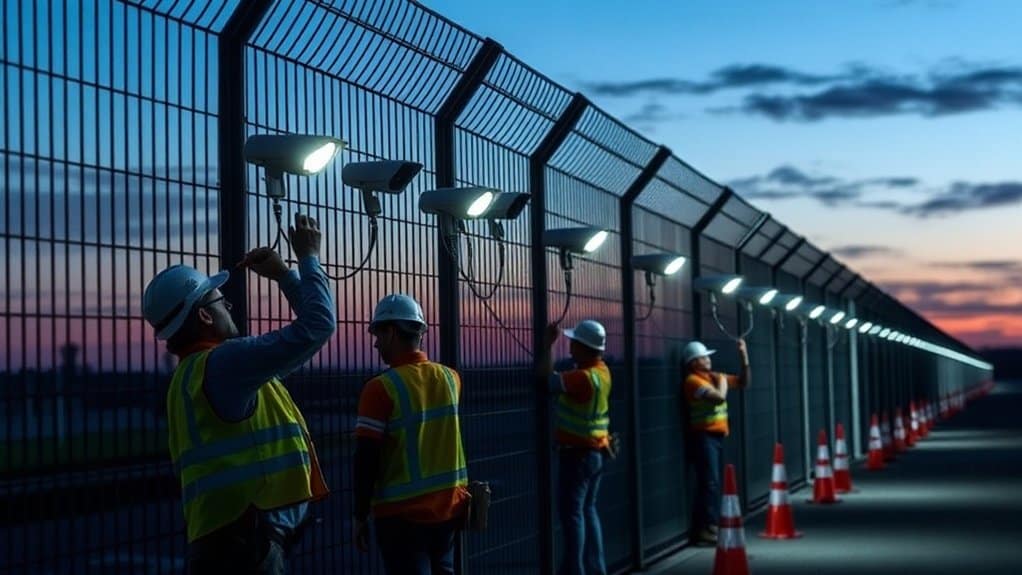
Ensuring safety and compliance with lighting along commercial fence lines is crucial. Poor installations can result in legal problems and safety risks.
Here are key points to follow:
- Aim lights away from neighboring properties to reduce glare.
- Keep maximum light intensity at property lines to 0.3 foot-candles.
- Ensure fixture heights are within building regulations.
- Use occupancy sensors to save energy.
- Comply with electrical safety codes by securing fixtures and using weatherproof materials.
Regular Maintenance and Inspection Procedures
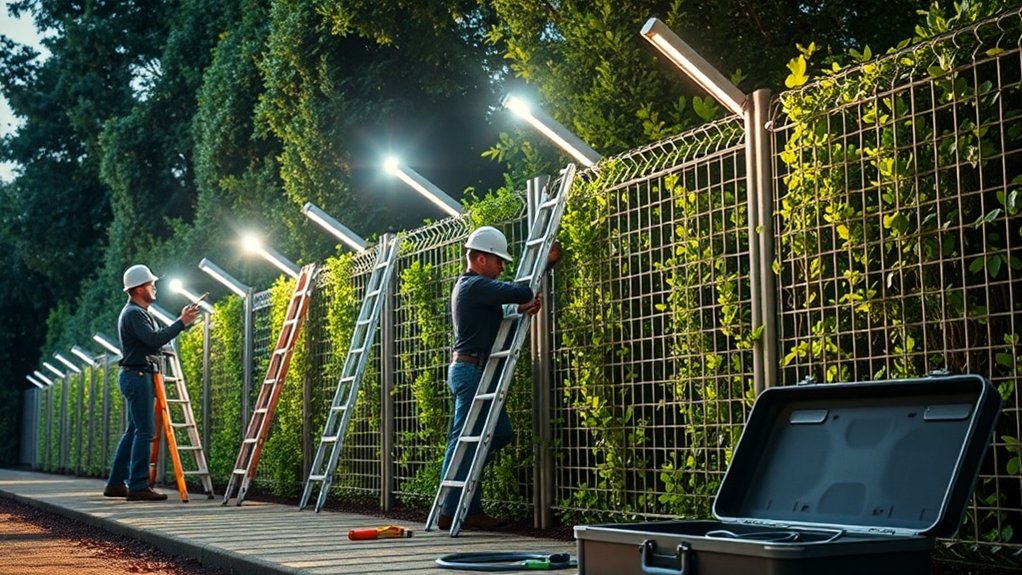
Regular maintenance and inspections are crucial for keeping your lighting and camera systems along commercial fence lines in top shape. Conduct monthly visual checks to spot any damage, ensure everything is securely mounted, and confirm camera angles are correct. Always follow safety protocols to prevent equipment failures.
Every three months, clean camera lenses and lighting fixtures, especially in dusty areas, to maintain clarity and performance. Regularly check power cables and connectors for wear, and test backup power to prevent outages.
Consider using monitoring software for real-time alerts on system performance and keep detailed maintenance records.
It’s also a good idea to schedule professional inspections once a year to catch any issues that routine checks might miss, ensuring your systems are reliable and efficient.
Troubleshooting Common Lighting and Camera Issues
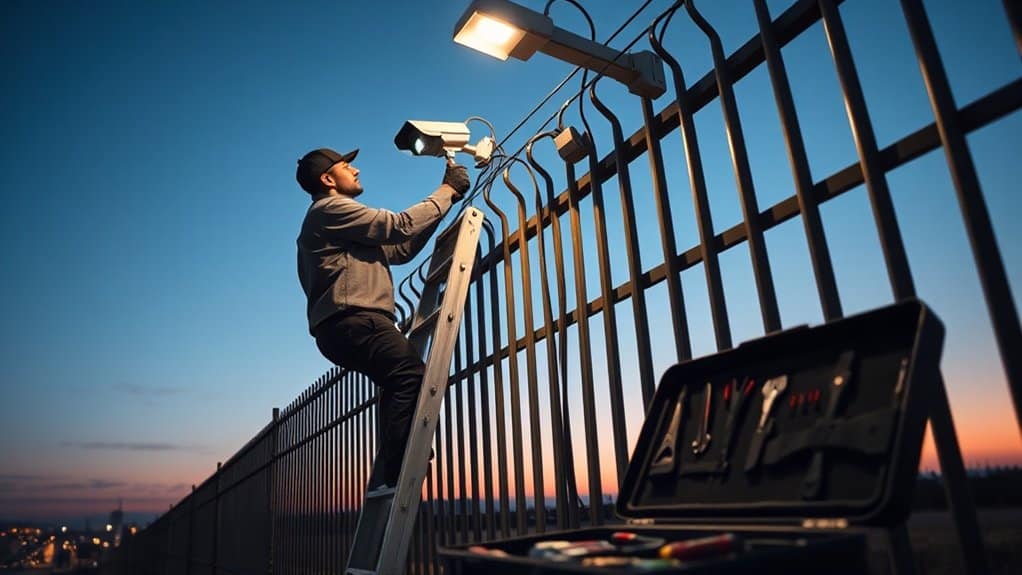
Lighting and camera systems along commercial fence lines can run into problems despite proper maintenance.
Here are some straightforward troubleshooting steps to keep everything running smoothly:
- Check Connectivity: Ensure your cameras are connected properly. Reconfigure settings if IP addresses change.
- Inspect Cables: Look for any tangles, kinks, or frays in the cables that could disrupt signals.
- Adjust Lighting: Make sure the lighting is set to reduce glare, which improves camera image quality.
- Secure Connectors: Double-check that all connectors are tight to avoid intermittent issues.
- Test Access: Try accessing the cameras from both local and remote locations to pinpoint connectivity problems.
These steps can help ensure your lighting and camera systems function effectively.
Frequently Asked Questions
What Is the Lifespan of Low Voltage LED Lights?
Low voltage LED lights usually last between 25,000 and 100,000 hours, depending on their quality and how they’re used. Choosing higher quality LEDs can ensure they last longer and save energy, making them a smart investment for your lighting needs.
How Do I Choose the Right Camera for My Security Needs?
When selecting a security camera, prioritize key features such as resolution and night vision. For example, if you need to monitor a large area, opt for a higher resolution camera for clearer images. If you want to keep an eye on your property at night, ensure it has good night vision capabilities. Matching these features to your specific needs will help you achieve effective and reliable surveillance.
Can I Install Lighting and Cameras Myself?
Yes, you can install lighting and cameras yourself, but prioritize safety. Know your local codes, use low voltage for lighting, and reach out to pros for complicated setups. Proper installation is key to avoiding hazards and ensuring everything works correctly.
What Are the Best Practices for Protecting Outdoor Cameras?
To protect outdoor cameras, choose sturdy housing and reliable weatherproofing. Opt for vandal-resistant materials and ensure tight seals to keep moisture out. Look for models designed for extreme conditions to enhance their durability and lifespan. For example, cameras with an IP67 rating are great for resisting dust and water.
How Often Should I Replace My Camera Batteries?
Replace your camera batteries every 12 to 18 months to keep your gear performing well. Regular maintenance can extend your camera’s life and prevent unexpected issues. For example, if you’re shooting in extreme temperatures, fresh batteries will help ensure your equipment runs smoothly.
Conclusion
When installing lighting and cameras along commercial fence lines, plan carefully. Think about power sources, camera placement, and local regulations. This not only boosts security but also creates a welcoming environment. Regular maintenance is key to ensuring everything works smoothly and saves you from future issues. In short, you’re enhancing safety and efficiency for everyone involved.