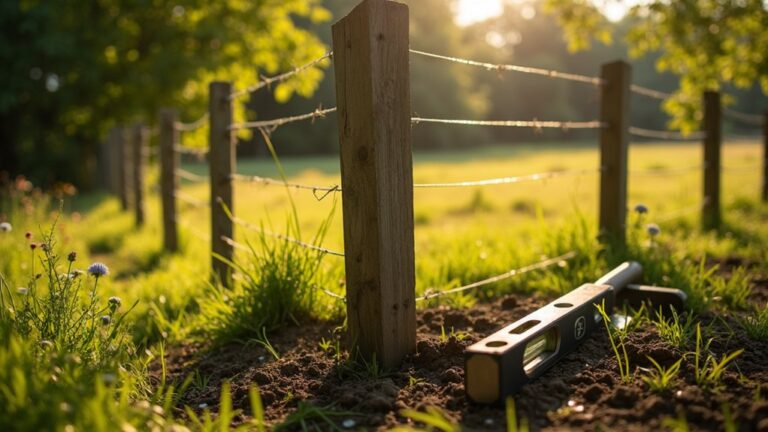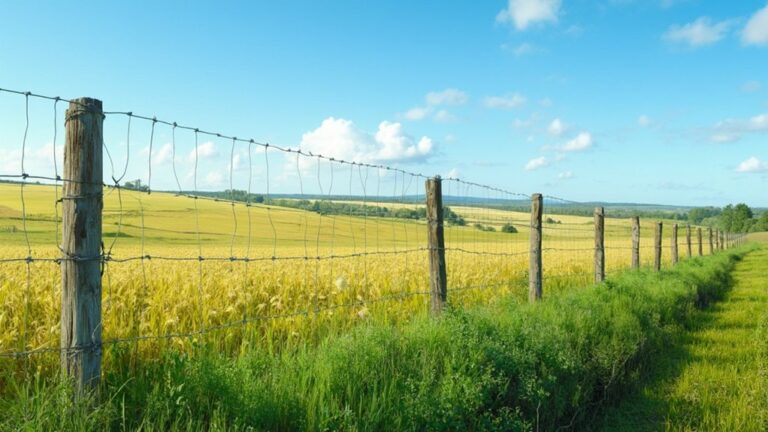

Proper fence placement on agricultural land is crucial for defining boundaries and reducing disputes. It safeguards livestock from predators and keeps wildlife from damaging crops. Good fencing aids pasture management by controlling grazing and promoting sustainable practices. Using a combination of temporary and permanent fencing offers flexibility and security. By considering these factors, you can make smart decisions that significantly impact your farming success. There’s much more to learn about optimizing your fencing strategy.
Key Takeaways
- Proper fence placement marks property lines, helping avoid neighbor disputes and providing legal protection for farmland.
- Strategically placed fences create smaller paddocks, improving grazing rotation and pasture management.
- Good fences shield crops from wildlife, boosting yields and farm profits.
- Aligning fences with natural features can save on materials and enhance durability against the elements.
- Regular maintenance of fences ensures they last longer and effectively protect livestock and crops.
Defining Property Boundaries to Prevent Disputes

Defining property boundaries is crucial for avoiding disputes on agricultural land. It all starts with understanding the legal framework. Boundaries are established through legal surveys, not just existing fences, which can be misleading. For example, a fence mightn’t represent the official boundary, leading to confusion.
If neighbors have long recognized a fence line, the doctrine of practical location may apply, but differences between surveyed lines and physical markers can still cause disputes. The doctrine of practical location allows for the possibility that an old fence can be considered the legal boundary if both parties have acted in accordance with it over time. Additionally, understanding the importance of property lines can help prevent misunderstandings when installing new fences.
When conflicts arise, mediation is often a cost-effective way to resolve issues while maintaining good neighborly relations. If that doesn’t work, legal action—like a quiet title lawsuit—may be necessary to clarify the boundaries in court.
Accurate surveys and proper documentation are essential for effectively resolving these matters.
Protecting Livestock and Reducing Losses

To protect livestock and reduce losses, effective fencing is crucial for any farm. Well-designed fences not only deter predators but also reduce stress on animals.
Here are key benefits of proper fencing:
- Electric fences can cut sheep predation losses by up to 90%.
- Chain-link corrals can lower predator attacks by 94% in the short term. Chain-link corrals have been shown to be particularly effective in reducing predation risk, especially in areas like Tanzania.
- Taller fences are more effective against larger predators, providing enhanced protection for livestock.
- Using guardian animals alongside fencing boosts overall protection.
- Investing in quality fencing can save you from costly losses in the long run.
Preventing Crop Damage From Intrusion

To prevent crop damage from wildlife, install strong barriers based on where wildlife typically moves. Choose the right fencing material and design, especially for valuable crops, to ensure long-lasting protection. Regularly maintain your fences to boost their effectiveness and lifespan, safeguarding your crop investment. Additionally, consider that high-tensile woven wire fencing can provide over 20 years of effective deer depredation prevention when properly installed. Incorporating proper installation techniques enhances overall performance, ensuring that your fencing remains effective against wildlife intrusion.
Effective Barrier Solutions
Effective barrier solutions are crucial for protecting agricultural crops from various intruders. Here are some solid options to consider:
- Aluminum fencing: It’s rust-resistant and requires minimal upkeep.
- High tensile wire: Strong and durable for long-lasting protection.
- Electric fencing: Acts as both a psychological and physical deterrent.
- Dense mesh: Keeps out small pests effectively.
- Chain link: Versatile and budget-friendly, suitable for different heights.
Each option has its own advantages, tailored to your specific needs, ensuring your crops stay safe from wildlife and other threats.
Don’t forget to perform regular maintenance and inspections to keep your barriers effective.
Strategic Placement Techniques
To protect your crops from animals, use strategic placement techniques.
Start by assessing the land to find natural barriers and weak spots. Place fences along the land’s contours to follow animal movement and limit their approach. Create buffer zones between crops and fences to reduce trampling.
Trim vegetation near fences for better visibility and to eliminate hiding spots for animals. Consider using multiple barriers, like electrified wires and woven fencing, to deter different sizes of animals.
Ensure that fence posts are securely placed and reinforced to withstand pressure. These strategies will help keep your crops safe.
Maintenance for Longevity
Maintaining your fence is crucial to protect your crops from animals and ensure the fence lasts longer.
Here are some straightforward tips:
- Check monthly for loose wires or broken posts.
- Fix any damage right away to avoid bigger issues.
- Trim vegetation around the fence to prevent moisture build-up.
- Adjust wire tension with the seasons to adapt to temperature changes.
- Keep a log of your maintenance to stay ahead of repairs.
Regular upkeep will save you time and resources in the long run.
Enhancing Pasture Management and Sustainability

To improve pasture management and sustainability, a solid fencing plan is crucial. By splitting your land into smaller paddocks, you can rotate grazing effectively, allowing each area to rest and recover. This prevents overgrazing and keeps your grass healthy, which in turn boosts grazing efficiency.
A consistent grazing schedule ensures even forage use, helping your livestock get the right nutrients. Good fencing also protects against soil degradation and promotes a variety of plant species, enhancing biodiversity.
Plus, it keeps your animals safe from wandering into dangerous areas. In short, a smart fencing layout maximizes forage use and significantly benefits your pasture’s health and productivity.
Managing Water Access Points Effectively

Managing water access points effectively is vital for your livestock’s health and sustainable farming. Here are key steps to consider:
- Map your water sources to spot issues.
- Check for leaks or blockages that could limit water access.
- Protect your water sources from livestock damage.
- Test water quality regularly to ensure it’s safe.
- Align inspections with peak irrigation times.
By following these practices, you’ll not only maintain water quality but also boost your farm’s productivity.
Keep these strategies in mind to ensure your water access points support both your livestock and your agricultural goals.
Understanding Different Types of Fencing

When choosing fencing for your agricultural land, it’s important to understand the different types available to ensure effective livestock management and boundary security. Here’s a quick overview of common fencing options:
| Fencing Type | Key Features | Best For |
|---|---|---|
| Field Fencing | Durable and flexible, suitable for various livestock | Sheep, goats, cattle |
| Barbed Wire Fencing | Budget-friendly, discourages escape | Perimeter security |
| Woven Wire Fencing | Varying mesh sizes for safety | Horses, smaller animals |
| Hog Panels | Sturdy, no tension needed | Hogs, larger livestock |
| Electric Fencing | Easy to move and set up | Rotational grazing |
Selecting the right fencing material is essential for keeping your livestock safe and managing your property effectively. Think about your specific needs when making your choice.
Factors Influencing Material Selection

Choosing the right fencing material for your agricultural land is crucial for ensuring durability and cost-effectiveness. Here are the main factors to keep in mind:
- Durability: Look for materials that can withstand harsh weather. For example, galvanized steel or vinyl is often more resilient than wood.
- Soil Type: The ground conditions can affect how well your fence stays anchored. Sandy soil might require different installation techniques than clay soil.
- Livestock Needs: Different animals have unique requirements. For instance, barbed wire may work for cattle, but a solid fence is better for sheep.
- Maintenance: Consider how much upkeep you’re willing to do. Wooden fences might need regular treatment, while vinyl is usually low-maintenance.
- Installation Costs: While initial expenses can vary, think about the long-term savings from durability and maintenance.
Strategies for Optimal Fence Placement

To optimize fence placement on your agricultural land, consider these practical strategies.
First, align your fences to clearly mark property boundaries, which helps prevent disputes and ensures smooth movement between fields and livestock areas.
Place fences near natural features to save on materials and ensure they withstand weather conditions.
Avoid rocky terrain to make installation and maintenance easier.
Position gates at corners to allow for easy access for machinery.
Lastly, choose durable materials that protect livestock and crops, reducing stress on animals.
This straightforward approach will support your farming operations for the long run.
The Role of Temporary vs. Permanent Fencing

Understanding temporary vs. permanent fencing is crucial for effective land management. Each type has its own unique advantages and drawbacks.
- Temporary fencing offers flexibility and lower costs, making it great for short-term needs. For example, electric polywire can be quickly set up for rotational grazing.
- Permanent fencing, on the other hand, involves higher initial costs and is less adaptable. While it provides durability and long-term security, it can limit grazing options.
Choosing the right fencing depends on your specific needs and long-term goals. Weighing immediate benefits against potential challenges can significantly improve your land management strategies.
Economic Benefits of Investing in Fencing

Investing in fencing offers clear economic benefits, primarily through better crop protection and livestock security.
For example, good fencing can significantly reduce wildlife damage, which helps increase the value of high-value crops. It also enhances livestock management, protects against theft, and leads to greater profitability on your farm.
In short, quality fencing is a smart investment for any agricultural operation.
Increased Crop Protection
Effective fencing on agricultural land provides essential economic benefits by protecting crops from wildlife and other threats. Investing in proper fencing not only secures your crops but also enhances your financial returns.
Here are the key advantages:
- Prevents wildlife damage, such as from deer, ensuring better yields.
- Safeguards perennial crops for future harvests.
- Reduces crop insurance costs by lowering loss risks.
- Supports sustainable farming through improved wildlife management.
- Boosts overall farm profitability by minimizing damage.
As the agricultural fencing market grows, investing in fencing is a smart move for immediate crop protection and long-term financial sustainability.
Enhanced Livestock Security
Ensuring the security of your livestock is crucial for their safety and your financial health. Good fencing minimizes the chances of animals escaping, which can lead to expensive losses.
Durable materials like steel pipe not only cut down maintenance costs but also protect against predators and theft. Effective fencing helps you separate sick animals to prevent disease spread, safeguarding your herd.
Additionally, a well-designed fence layout simplifies herd management, improving workflow and reducing labor. Investing in quality fencing not only secures your livestock but also boosts your farm’s value, making it more appealing to buyers and investors.
Maintenance Practices for Longevity

To ensure your agricultural fence lasts, regular inspections are key.
Here are some simple maintenance tips:
- Check monthly for loose wires and damaged posts.
- Test gates and latches to ensure they work properly.
- Clear away debris and trim any nearby plants.
- Fix broken parts right away to avoid bigger problems.
- Treat wooden areas with preservatives to prevent rot.
These practices will help you avoid costly repairs and keep your fence in good shape.
Sustainable Approaches in Fence Management

Sustainable fence management can boost the lifespan of your fencing and support environmental health on agricultural land.
Using materials like recycled plastic posts or sustainably sourced wood reduces waste and lowers your carbon footprint.
Consider living fences made of native shrubs and thorny bushes to create natural barriers that enhance biodiversity and prevent soil erosion.
Technologies like virtual fencing let you monitor livestock in real time, improving pasture management and reducing landscape fragmentation.
These strategies not only benefit your land’s health but also align your farming practices with conservation and sustainability goals.
Frequently Asked Questions
How Do Local Regulations Affect Fence Placement Decisions?
Local regulations and zoning laws play a crucial role in fence placement. They determine how close you can build to property lines, the maximum height allowed, and the types of materials you can use. For instance, if your neighbor has a beautiful view, zoning laws might restrict tall fences to preserve it. Understanding these rules is essential to ensure your fence complies with local standards and doesn’t disrupt neighboring properties.
What Are the Best Practices for Fence Marking?
For effective fence marking, focus on visibility to avoid boundary disputes. Use clear markers that are spaced evenly, like bright flags or painted posts, so they’re easy to spot. Regularly check and maintain these markers to ensure they remain functional and visible for everyone who approaches the fence.
Can Fencing Impact Soil Health and Erosion?
Yes, fencing can significantly improve soil health and reduce erosion. By keeping livestock out of certain areas, it allows plants to regrow, boosts soil organic matter, and lowers erosion risks. This not only enhances soil quality but also supports a healthier ecosystem on your land.
How Does Wildlife Movement Influence Fence Placement?
Wildlife movement is key in designing effective fences. By studying animal paths and behaviors, you can place fences to reduce disruption. For example, if deer frequently cross a certain area, position your fence to allow their movement while still protecting your crops. This approach balances the needs of wildlife and your agricultural goals, ensuring both can thrive.
What Technology Can Assist in Monitoring Fence Integrity?
Think of your farm as a secure fortress. Using drones and smart sensors, you can monitor your fence’s condition in real-time. These technologies quickly alert you to any breaches, helping keep your livestock safe and your farm running efficiently.
Conclusion
Proper fence placement is essential for any agricultural operation. It defines property lines, protects livestock and crops, and contributes to a sustainable future. Think of fencing as a protective barrier that helps your farm thrive while keeping unwanted intruders out. With thoughtful planning and regular upkeep, you can enhance your farm’s productivity and resilience for years to come.