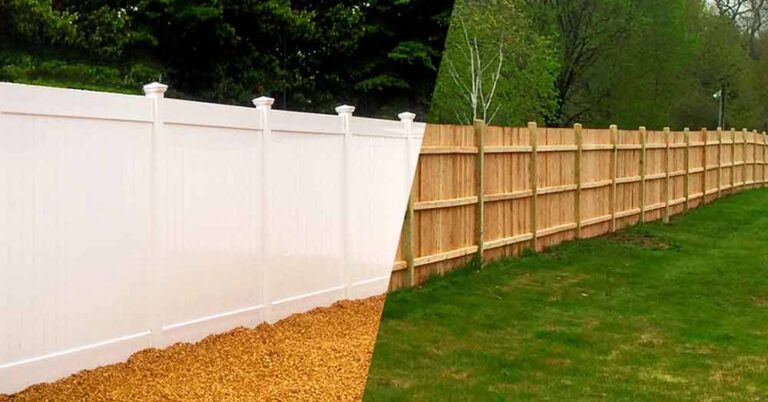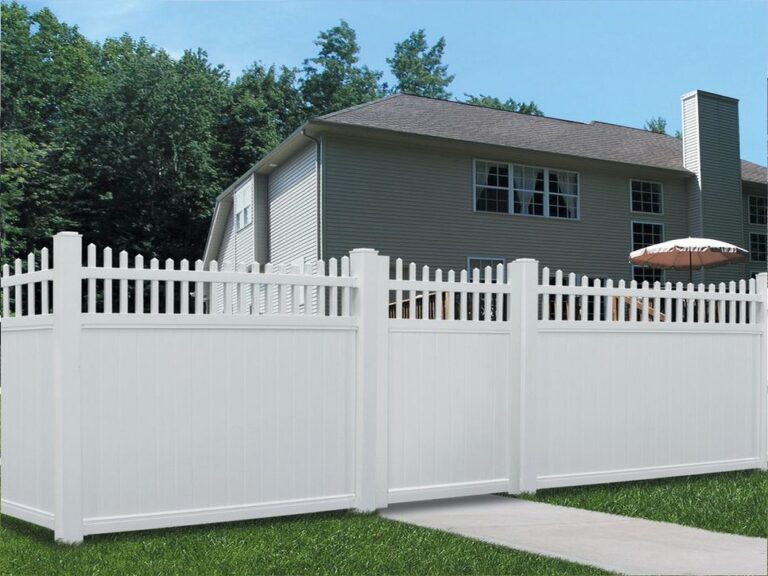

Integrating privacy slats into PVC panels boosts both privacy and aesthetics. Start by measuring your panels and choosing rigid PVC for compatibility. Use mechanical fasteners to securely attach the slats, marking positions carefully for a tight fit. Seal any gaps to weatherproof your installation and prolong its lifespan. With the right patterns and textures, you can achieve a striking look. Follow these straightforward steps for an effective installation that enhances your space.
Key Takeaways
- Carefully measure your existing PVC panel dimensions to ensure the new privacy slats fit snugly.
- Choose rigid PVC slats that match your panel’s mesh size for added strength.
- Pre-drill holes in both the panels and slats to avoid cracking during installation.
- Use mechanical fasteners or adhesive to attach the slats securely for durability.
- Seal any gaps between slats and panels with the right sealants to boost privacy and keep out debris.
Planning and Layout Considerations
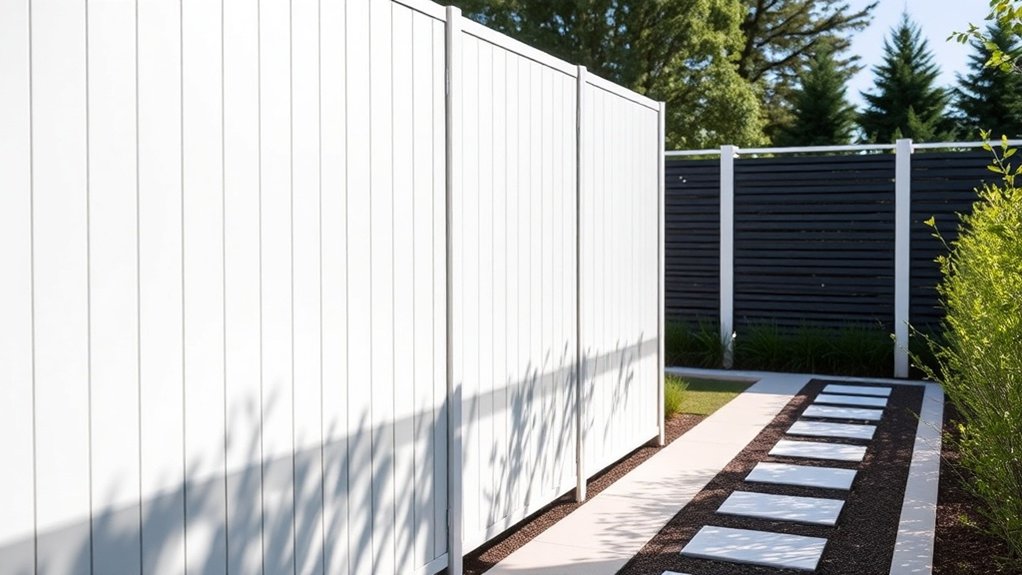
When planning your fence installation, start with precise measurements of your PVC panels to ensure you order the right number of privacy slats. Accurate sizing helps prevent waste and keeps costs down. Use manufacturer sizing charts to find the exact number of slats needed, as panel dimensions can vary by brand. Additionally, consider that a full privacy slat top PVC fence provides maximum backyard privacy while maintaining a stylish appearance. PVC fences are durable and long-lasting, which adds to the overall value of your investment. Adjust spacing to manage visibility while allowing airflow and light. Mixing colors and textures can enhance the fence’s appearance and ensure it complements your property. Finally, plan the layout carefully for a seamless look that boosts both privacy and style in your outdoor space.
Assessing Compatibility and Materials
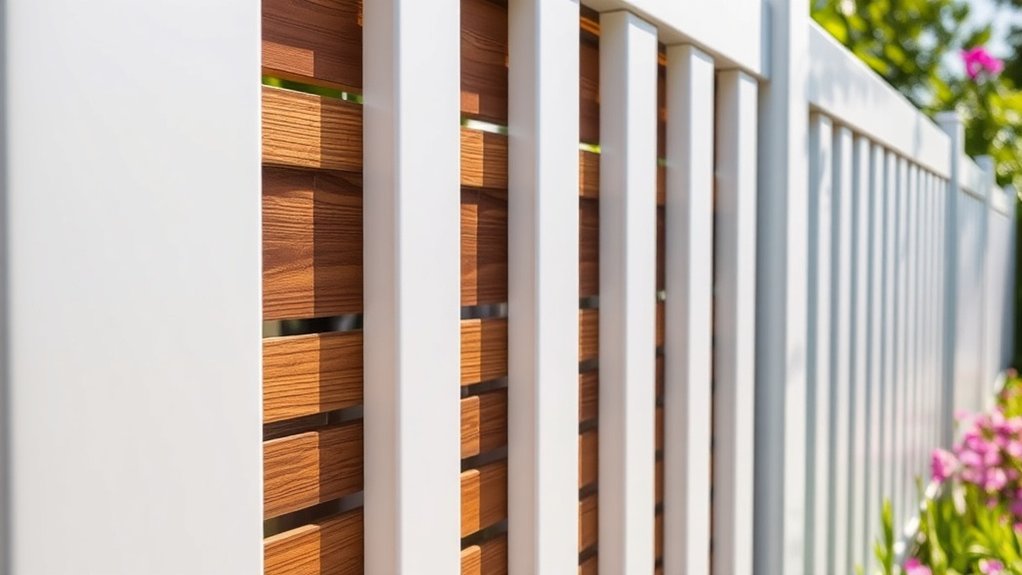
To ensure a successful installation of privacy slats with your PVC panels, start by checking the material. Rigid PVC and high-density polyethylene are great options for their durability and weather resistance. Additionally, consider that rigid slats offer quick installation which can save you time during the setup process. Make sure to match the slat types with your panel’s mesh size, which is usually 3 1/2” x 5” for chain link systems. Also, consider local environmental factors like wind load and terrain when selecting slats to ensure they can handle the conditions. Look for slats with double-wall construction for better privacy and strength. Moreover, selecting slats made from recyclable materials can enhance the eco-friendliness of your fencing solution.
Tools and Preparation Steps

To integrate privacy slats into your PVC panels, you’ll need the right tools and careful preparation. Start with essential tools: a hammer drill, spirit level, measuring tape, and angle grinder for accurate cuts.
Make a checklist to streamline your workflow—this should include clearing the fence line and marking where the base plates will go. If your surface isn’t even, use shims, and remember to pre-drill holes to avoid cracking the PVC. Additionally, consider adding PVC Slatwall bundles to enhance the overall look and functionality of your installation. PVC fences are known for their longevity and resistance to various environmental factors, making them a practical choice for homeowners.
Lay out all your materials, including slats and hardware, to ensure you have everything on hand. Always measure twice before cutting to minimize waste and ensure a good fit.
With these steps, you’ll be well on your way to a successful installation.
Measuring and Marking Slat Positions
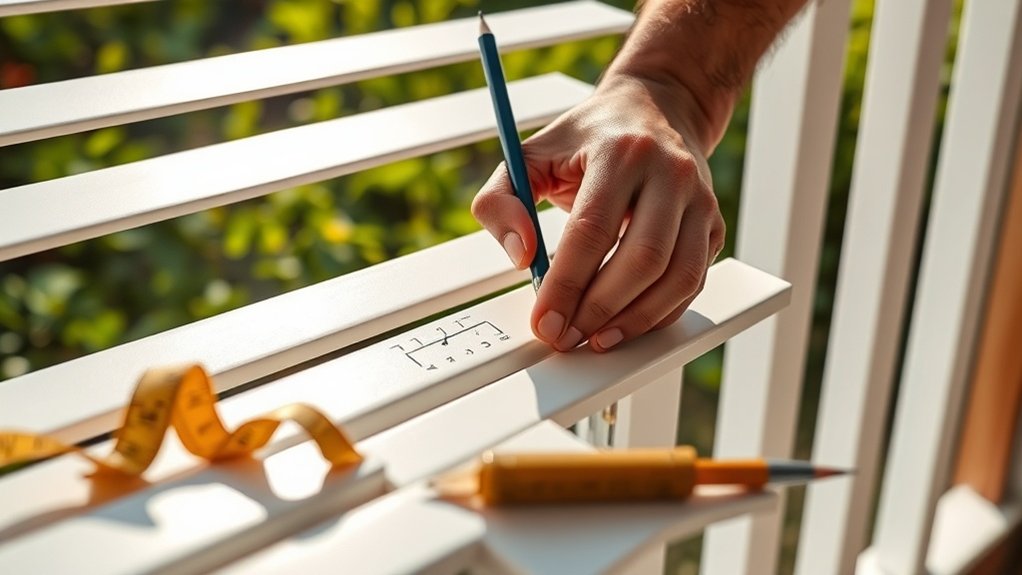
Measuring and Marking Slat Positions
To seamlessly integrate privacy slats into your PVC panels, follow these clear steps:
- Measure the wall’s height and width in multiple spots, accounting for any obstacles.
- Use graph paper or digital tools to map out slat spacing, typically 2 to 4 inches apart.
- Mark the planned positions on the back of each panel. Use a straight edge for clean lines.
Make sure to double-check your measurements for accuracy.
Adjust as needed around seams and fixtures to keep a cohesive look.
Installation Methods for Privacy Slats
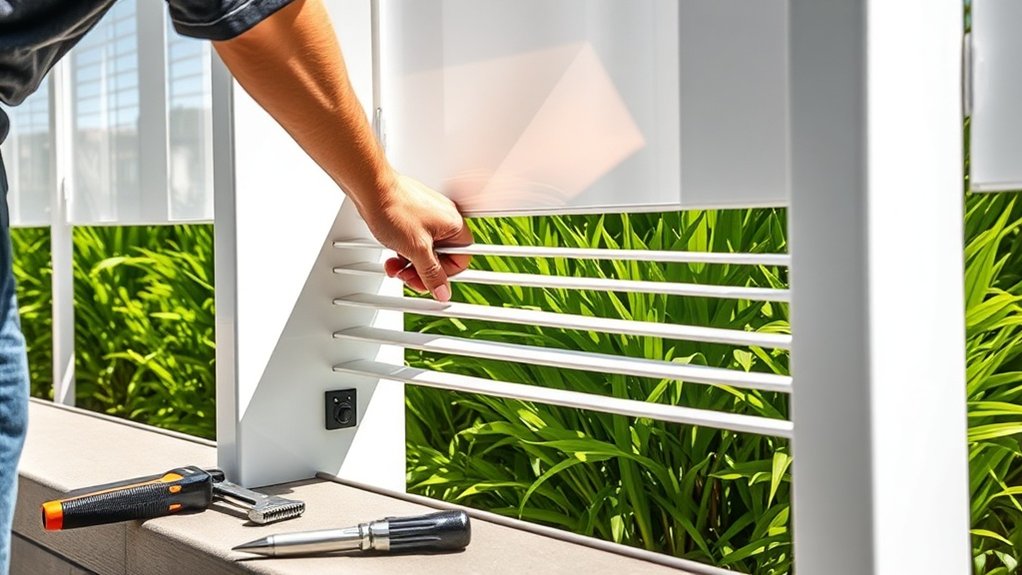
When installing privacy slats, choose reliable attachment methods for strength and stability.
A mix of adhesive and mechanical fasteners works well, reducing the chance of slippage.
Apply adhesive sparingly—too much can create messy edges, so aim for a neat finish.
Attachment Techniques Overview
Choosing the right attachment techniques is crucial for the durability and stability of PVC panels with privacy slats. Here are some effective methods to consider for your fencing project:
- Mechanical Fastening: Secure with screws and anchors, using edge channels to hold slats firmly in posts.
- Rail and Slot System: Position slat panels between top and bottom rails to lock them in place and prevent sagging.
- Panel Alignment: Use string lines and spirit levels to ensure panels are straight and properly aligned for a clean installation.
These methods can significantly improve your fencing project’s performance.
Adhesive Application Tips
For a strong bond with privacy slats, use adhesive specifically for PVC panels.
Apply adhesive in a zigzag pattern on the back of the panel for even coverage and less waste. Press firmly from the center outward for 4-30 seconds to remove air bubbles, but use gentle pressure on strip locations to avoid damage.
Opt for high-strength wood adhesives or two-part epoxy based on your needs.
Make sure to clean the surfaces well and wipe away any excess adhesive with a damp cloth.
Check alignment with a spirit level regularly for a professional-looking installation.
Securing Slats With Fasteners

To ensure your PVC slats are securely fastened, follow these key tips:
- Select the Right Fasteners: Use stainless steel screws for durability and corrosion resistance. If you’re near the coast, aluminum screws are a good choice. Avoid using nails or staples, as they can damage the slats.
- Fastener Placement: Position screws in the center of the flange slots, keeping them no more than 24 inches apart for optimal support.
- Tightening: Don’t over-tighten the screws. Leave some room for expansion and contraction to avoid warping.
Using Adhesives for Enhanced Stability
After securing your PVC slats with fasteners, using adhesive can greatly enhance their stability.
Choosing the right adhesive is crucial for lasting performance, especially in different environments. For areas prone to moisture, opt for solvent-based adhesives for strong, durable bonds. In low-humidity settings, acrylic-based adhesives are great for quick-drying on lightweight panels. Hybrid polymer adhesives offer a balance of flexibility and strength.
When applying adhesive, use a zigzag pattern to maximize contact and reduce slippage. Always clean surfaces thoroughly for the best adhesion.
Finishing Touches for a Clean Look
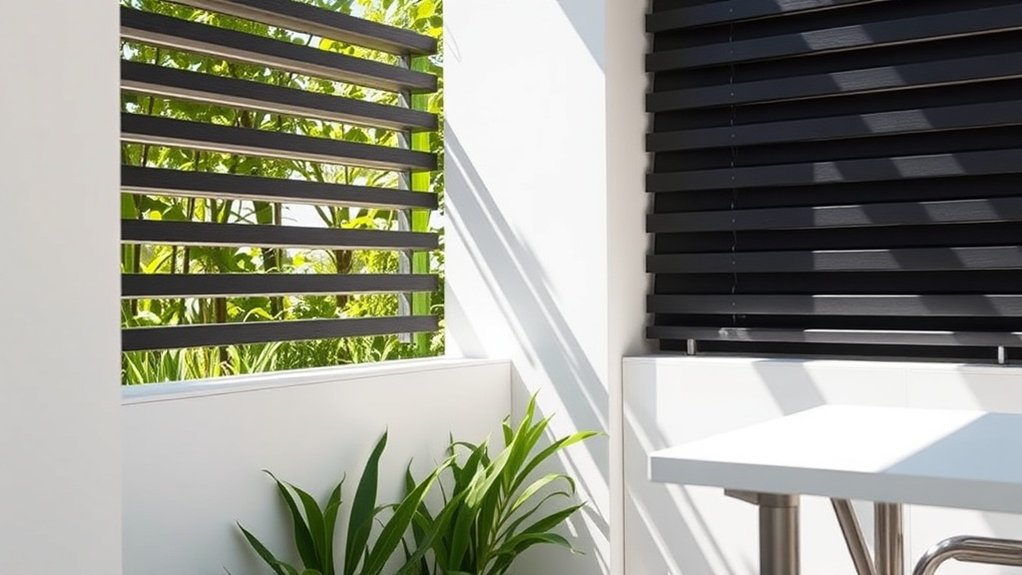
For a polished finish, start by trimming any excess material for a clean edge.
Seal gaps to keep out debris and boost durability.
Finally, smooth rough edges for a seamless look that enhances your design.
Trim Excess Material
Trimming excess material from PVC panels improves both appearance and fit, ensuring better structural integrity. Here’s how to do it effectively:
- Use the Right Tools: A quality circular saw blade makes clean cuts, while a utility knife is great for smaller adjustments.
- Trim Before Installation: Always cut the panels before installing them to keep everything aligned and prevent slippage.
- Finish Edges: After installation, add corner trims or edge profiles to hide raw edges and enhance the look.
Seal Gaps Effectively
After trimming your PVC panels, it’s crucial to seal any gaps for a neat finish.
Choose sealants like silicone or acrylic latex made for PVC. For larger gaps, use foam backer rods to reduce sealant use and improve durability. A quality caulking gun makes it easier to apply a smooth, even bead of sealant.
If gaps are uneven, consider using vinyl filler strips or decorative screens for a seamless appearance.
Remember to let the sealant cure completely before proceeding with any further work to ensure a strong, weather-resistant bond.
Smooth Rough Edges
To achieve a polished look for your PVC panels, it’s essential to smooth out any rough edges from cutting. Follow these three straightforward steps:
- Sanding: Begin with 120-grit sandpaper for jagged edges, then move to 220-400 grit for a finer finish. Always sand in one direction to prevent new scratches.
- Edge Treatment: Use end caps or decorative trim to hide rough edges and improve the overall look.
- Protective Coating: Apply a PVC-compatible sealant or clear coat to protect against moisture and keep the color vibrant.
Make sure to wear safety gear while working, and check the smoothness with your fingertip.
These steps will ensure your panels look sleek and professionally finished.
Sealing Gaps for Weatherproofing
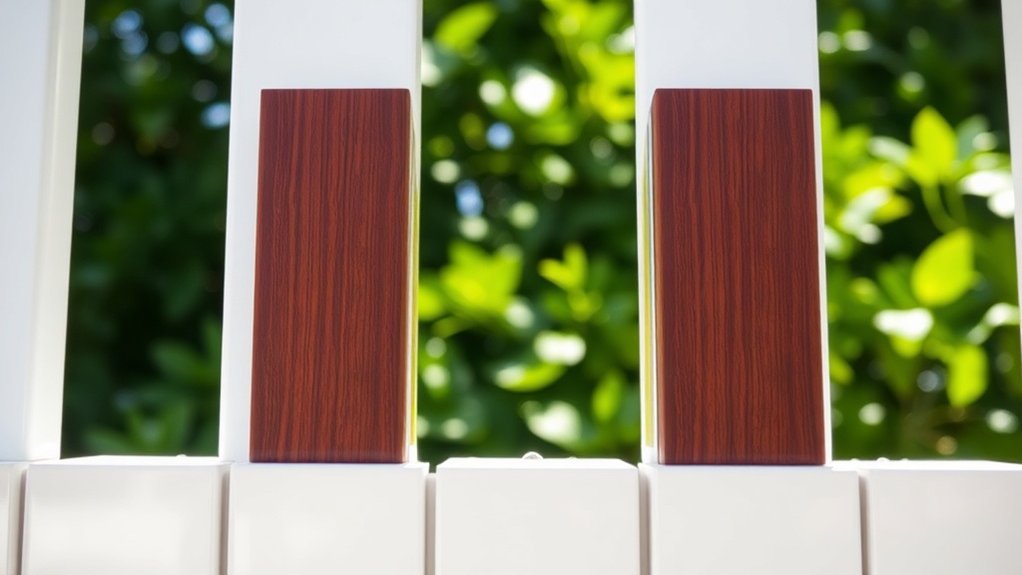
To weatherproof PVC panels effectively, sealing gaps is crucial to prevent moisture intrusion and extend the life of your installation.
Start by choosing high-quality silicone or polyurethane sealants for strong, flexible bonds. Apply the sealant along panel edges and seams, using masking tape for clean lines.
For larger gaps, use backer strips to ensure proper sealing. Remember to pre-drill holes for mechanical fixings to prevent cracking, and leave a slight gap for movement.
Always clean and dry the surfaces before applying sealants. By focusing on these steps, you’ll create a solid moisture-resistant barrier that improves the durability of your PVC panel installation.
Maintenance Tips for Longevity
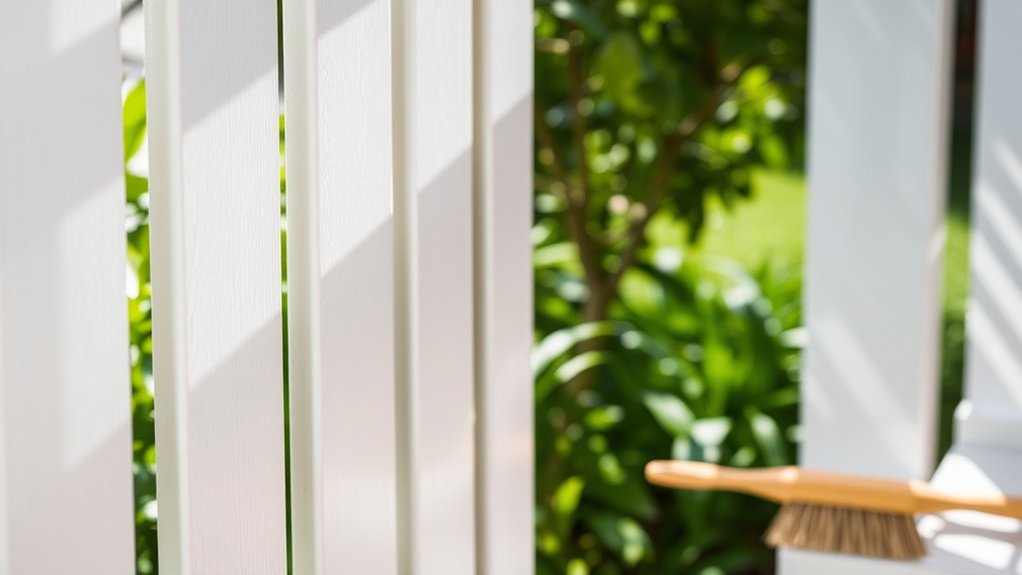
To keep your PVC panels in top shape and extend their lifespan, follow these simple maintenance tips:
- Regular Cleaning: Wipe down your panels with a soft cloth and mild soap once a month to prevent dirt buildup. Rinse well to avoid streaks.
- Check for Damage: Frequently look for cracks or loose parts. Catching these issues early can save you from bigger problems later.
- Trim Surrounding Plants: Regularly cut back nearby vegetation to reduce moisture buildup and protect your panels from structural damage.
Addressing Common Installation Challenges
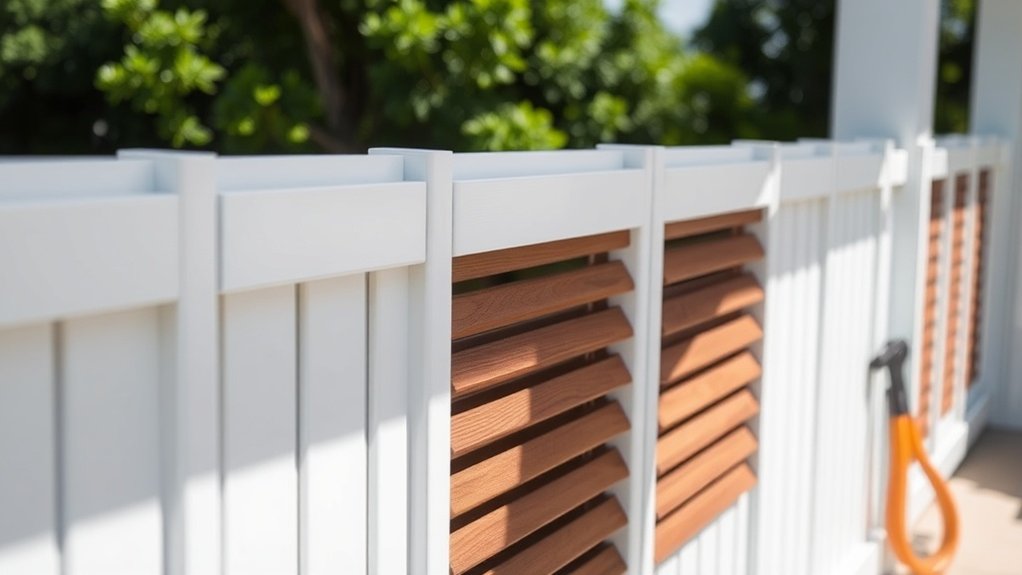
Installing PVC panels can be tricky, but tackling challenges early on can make the process smoother and ensure a lasting result.
First, check your concrete surface; if it’s uneven, use shims to level it out. For accurate slat alignment, use string lines between end plates during installation.
When adding mid rails, carefully place them over the infill panels to prevent sticking. The top rail can be the hardest part, so double-check that the slats fit together well.
Finally, use quality adhesives to secure the panels and seal any gaps to keep moisture out. Following these steps will improve the durability and performance of your PVC panels.
Enhancing Aesthetic Appeal With Patterns
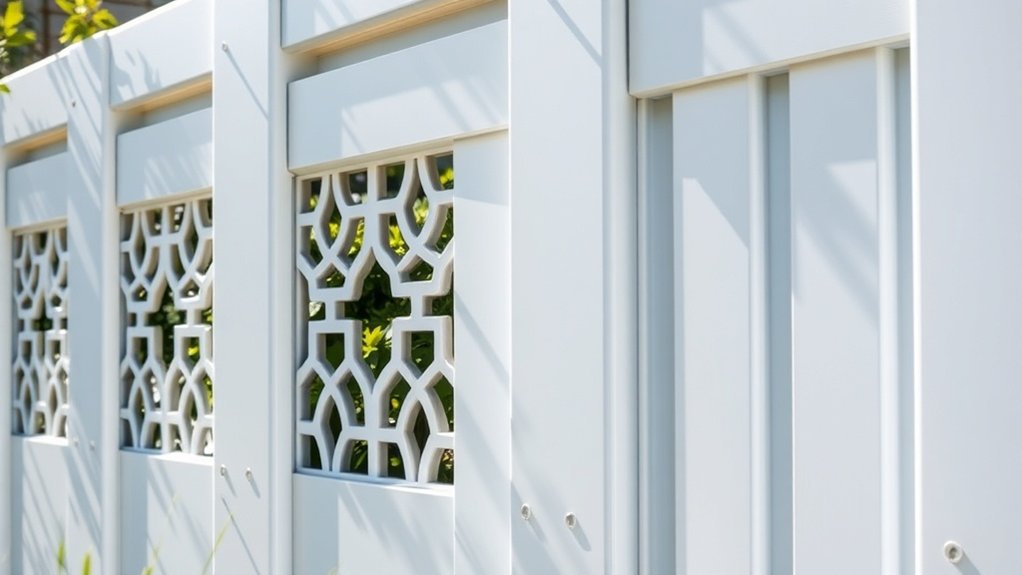
When choosing patterns for your PVC panels, think about how they can elevate your space. The right design boosts visual appeal and lets you customize according to your style.
For example, pairing geometric patterns with solid colors can create a striking yet harmonious look. Mixing different patterns can also add character while ensuring everything works together functionally.
Pattern Selection Considerations
Choosing the right patterns for integrating privacy slats into PVC panels can significantly enhance your space’s look. Here are some key considerations:
- Geometric Designs: Bold shapes like hexagons or chevrons can serve as striking focal points, especially in modern settings. Ensure they complement your existing decor.
- Natural Textures: Consider wood-grain or stone-like finishes. These options create a calming atmosphere that works well with both rustic and contemporary styles.
- 3D Patterns: Panels with grooves or wavy designs add depth and visual interest, helping to improve the perception of space.
Visual Impact of Patterns
The patterns used for privacy slats in PVC panels not only improve aesthetics but also affect the overall feel of a space.
For instance, vertical patterns can make a room feel taller, while horizontal designs can make it look wider. Diagonal or geometric patterns add a sense of movement, drawing the eye across surfaces. Repeating patterns create a sense of rhythm and cohesion.
When selecting patterns, consider their scale; large designs can dominate a wall, while smaller ones add subtle texture. Patterns also interact with light, casting shadows that add depth.
Customization for Unique Spaces
Customization for Unique Spaces
Customizing PVC privacy slats can transform your environment to reflect your personal style while enhancing its visual appeal. Here are three effective options:
- Pattern Variety: Select from geometric designs, nature-inspired cutouts, or 3D shapes like Wavy and Flower Circle to add character to your space.
- Color Harmony: Choose slat colors that complement your room’s decor for a unified look that enhances existing elements.
- Tailored Sizing: Adjust slat sizes to fit unusual spaces or retrofit old panels for a seamless fit.
These customizations not only ensure privacy but also inject artistic flair into your surroundings.
Frequently Asked Questions
Can Privacy Slats Be Painted or Stained After Installation?
Yes, privacy slats can be painted or stained after installation. To ensure a lasting finish, clean the slats well, choose the right paint or stain, and apply it evenly. For example, if you opt for a water-based stain, it’s easy to clean up and dries quickly. Following these steps will help maintain the slats’ appearance and durability.
Are Privacy Slats Available in Different Colors and Textures?
Privacy slats are available in over ten colors and various textures, such as smooth and embossed finishes. This variety allows you to customize your fence to match your personal style easily.
How Do I Remove Slats Without Damaging PVC Panels?
To remove slats from PVC panels without causing damage, use gentle prying techniques and apply steady pressure. You can also heat the adhesive slightly to reduce stress on the panels, helping to keep them intact.
Can I Install Privacy Slats in Winter Conditions?
Yes, you can install privacy slats in winter, but avoid freezing temperatures to ensure they last. Try to schedule the installation during milder days to prevent brittleness in vinyl. This will help ensure a better performance and longer life for your slats.
What Is the Expected Lifespan of Privacy Slats?
Privacy slats typically last between 15 to 30 years. To ensure they endure, regularly clean them and steer clear of harsh chemicals. This simple maintenance keeps them looking good and working effectively.
Conclusion
Integrating privacy slats into your PVC panels boosts security and promotes sustainability. This combination offers both functionality and style, transforming a basic fence into an attractive feature for your outdoor area. With regular maintenance, these slats can last for years, making them a smart and appealing investment.