When looking at vinyl and PVC fencing, you can expect costs to range from $15 to $50 per linear foot, based on quality and style. Don’t forget to factor in installation, which typically adds another $5 to $15 per linear foot. Pricing will also vary with fence height, installation complexity, and local labor rates. Remember, opting for premium materials or special finishes can significantly increase your total cost. If you’re curious about specific features that might sway your decision, there’s plenty more to consider!
Key Takeaways
Vinyl fencing typically costs between $15 to $25 per linear foot for standard options, while premium choices can go from $30 to $50 per linear foot. Installation adds another $5 to $15 per linear foot, with average total installation costs around $4,142.
If you’re looking for privacy, expect to pay between $25 to $60 per linear foot, depending on the style and height you choose. Keep in mind that local labor rates and site conditions, like terrain, can impact costs significantly.
Be aware that rising demand and supply chain issues may lead to price increases in the vinyl fencing market.
Understanding Vinyl and PVC Fence Pricing

When considering vinyl and PVC fencing, it’s important to understand the pricing.
Standard vinyl typically costs between $15 to $25 per linear foot, while premium options can range from $30 to $50. Choosing colors like tan or clay may add 10-15% to your budget, and special finishes can double the cost. Installation generally adds another $5 to $15 per linear foot. Vinyl fencing typically has a longer lifespan and durability, which can justify its higher initial costs. Additionally, the aesthetic versatility of vinyl fencing allows for custom designs that can enhance your property’s appearance.
Whether you’re going for a simple ranch-style fence or a decorative privacy option, knowing these costs helps you budget effectively.
Factors Influencing Cost

When considering vinyl and PVC fencing, several factors will impact your overall cost. Key elements include the fence’s height and style, the quality of materials, and the complexity of installation. For example, a taller, decorative fence will typically cost more than a simple, shorter one. Understanding these factors will help you make smart choices and stick to your budget. Additionally, the installation cost for a 100-foot vinyl fence can range significantly, influencing your overall project expenses. The durability of vinyl fences is another important consideration that can affect long-term value and maintenance costs.
Fence Height Impact
When considering vinyl and PVC fencing, remember that fence height significantly affects both material and installation costs. Taller fences use more material, which drives up the price.
For example, a 6-foot privacy fence starts around $30 per linear foot, while an 8-foot fence can cost about $85. Installation becomes more complex and may require additional labor, leading to higher rates. Accurate planning can help you better understand the implications of height on your overall budget. Additionally, local ordinances may dictate specific height restrictions, which could affect your choices.
Although taller fences can boost your property value and enhance privacy, check local regulations, as they might require permits that can further increase expenses.
Finding a balance between height, budget, and compliance is essential for a successful fencing project.
Material Quality Differences
When choosing vinyl or PVC fencing, understanding material quality is key. Virgin lead-free PVC is the best choice, as it’s more durable than mixed or recycled materials.
Look for fences with effective additives like UV inhibitors and impact modifiers; these help prevent fading and cracking. Thicker panels provide better protection, while co-extruded options are stronger due to their layered design.
Established brands typically offer better manufacturing processes for consistent quality. By considering these factors, you can select a fence that lasts longer and looks great.
Installation Complexity Factors
Installing vinyl or PVC fencing can be tricky, depending on factors like terrain, weather, and local regulations.
These can all impact your installation costs. Here are three important aspects to consider:
- Terrain: If your yard is uneven or has rocky soil, it will require extra work and techniques to ensure the fence is straight, which can raise costs.
- Weather: Extreme heat or humidity can slow down installation and affect things like concrete setting times, potentially leading to delays.
- Local Regulations: Getting the necessary permits and marking utility lines can take time and may require additional expenses if you need to adjust your plans.
Comparing Vinyl Fencing to Other Materials

When comparing vinyl fencing to other materials, consider cost, durability, maintenance, and appearance.
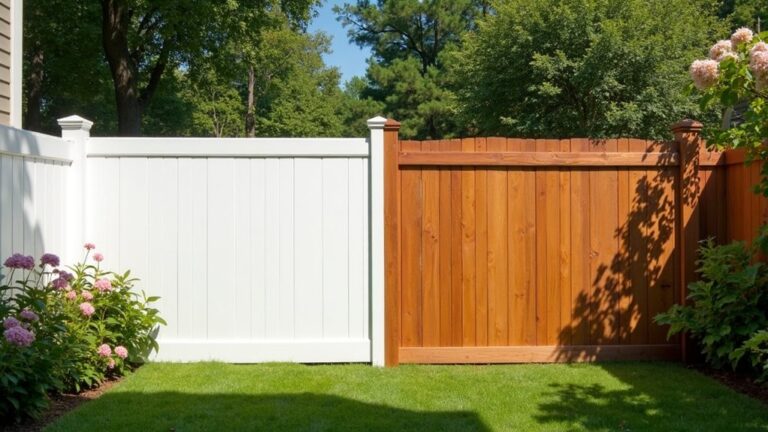
Vinyl lasts 20–30 years with little upkeep, while wood only lasts 10–20 years and needs regular care.
Vinyl maintains a consistent look without rotting or warping, unlike wood.
Aluminum and chain link fences provide less privacy and may get dents or rust.
Composite can resemble wood, but vinyl resists fading and weather damage better.
Breakdown of Installation Costs

When planning your vinyl or PVC fence installation, it’s important to understand the cost breakdown.
Consider both material and labor costs, which can vary depending on the size and complexity of your project. For example, a small, straightforward fence may cost less to install than a larger, more intricate design.
Additionally, the installation methods you choose can affect both the total cost and how long the fence lasts.
Take the time to weigh your options carefully.
Labor Cost Factors
Understanding the labor costs for vinyl and PVC fence installation is crucial for budgeting. Here are three key factors to consider:
- Labor Cost Range: Typically, you’ll pay between $5 to $10 per linear foot. If the installation conditions are tricky, costs can rise to $15.
- Regional Pricing: Labor rates differ significantly based on your location, with higher rates in areas with a higher cost of living.
- Site Conditions: If your yard is uneven or has difficult ground, expect higher labor charges. Conversely, a flat yard will keep your costs down.
Keep these factors in mind to help manage your project budget effectively.
Material Expenses Overview
To budget for your vinyl or PVC fencing project, it’s crucial to understand the material costs involved.
Standard-grade vinyl generally costs between $10 and $30 per linear foot, while premium options range from $30 to $50.
For privacy fencing, expect to pay between $30 and $60 per linear foot.
Adding decorative elements and hardware can increase costs to $60 to $78 per linear foot for premium designs.
Keep in mind that posts and panels typically make up 40 to 60 percent of your total project cost, so plan your budget accordingly.
Installation Techniques Impact
When planning your vinyl or PVC fencing installation, consider how different techniques can affect costs. Your chosen methods can influence labor efficiency and overall expenses.
Here are three important factors to keep in mind:
- Labor Complexity: Tasks like digging post holes can vary in cost depending on your terrain. For example, rocky ground may require more time and effort.
- Equipment Use: Renting tools like augers can increase costs and may need extra help for operation.
- Gate Installation: Adding gates or custom features raises both material and labor costs, so factor this into your budget.
Quality and Durability of Materials

Choosing the right vinyl or PVC fencing is crucial for quality and durability. Go for virgin vinyl, which is more resistant to weather and wear.
Look for products using co-extrusion technology, as this adds strength and helps prevent warping or cracking. USA-made options often have better quality control compared to imports.
Thicker vinyl panels offer more stability, and additives like titanium dioxide improve UV protection, stopping discoloration and brittleness.
With the right formulation, premium vinyl can last 20–30 years with little upkeep, making it a smart investment.
Always remember, the material quality affects how long and well your fence performs.
Current Trends in Vinyl Fence Pricing

Understanding the current pricing trends for vinyl fencing is crucial as demand increases. Here’s a straightforward breakdown:
- Average Costs: In 2025, expect to pay about $4,142 for an installed vinyl fence, with most homeowners spending between $2,326 and $5,965.
- Cost Per Linear Foot: Standard vinyl fences range from $15 to $40 per linear foot installed, while privacy fences typically cost between $25 and $60.
- Regional Variations: Prices can differ significantly based on your location due to local labor rates and site conditions.
Frequently Asked Questions
How Long Does Vinyl Fencing Typically Last?
Vinyl fencing generally lasts 20 to 30 years, making it a smart investment. With good care and quality materials, it can outlast wood and chain link fences, all while requiring less maintenance.
Can I Install Vinyl Fencing Myself?
Yes, you can install vinyl fencing yourself! Think of it like putting together a puzzle; with the right tips and DIY guidance, you can assemble a sturdy and attractive fence that improves your yard.
Are There Color Options Available for Vinyl Fencing?
Yes, there are many color options for vinyl fencing! You can choose from classic white, modern gray, or even wood-grain finishes, giving you the flexibility to enhance your property’s look while reflecting your personal style.
What Maintenance Is Required for Vinyl Fences?
To maintain your vinyl fence, think of it like a canvas that needs regular care. Clean it often by rinsing it off and scrubbing with mild detergent. Check for any damage to ensure it stays durable and looks great. Simple steps like these can keep your fence vibrant for years.
Do Vinyl Fences Come With Warranties?
Yes, vinyl fences usually come with warranties that cover material and workmanship defects. Many also offer installation guarantees, protecting you from issues if the installation follows the manufacturer’s guidelines.
Conclusion
When considering vinyl or PVC fencing, it’s important to balance costs with quality and durability. Think of it like choosing a smartphone over a flip phone; the right fence can boost your property’s value and curb appeal. Keep in mind that installation and material quality significantly affect pricing. By researching your options, you can make a smart investment in a long-lasting fence.