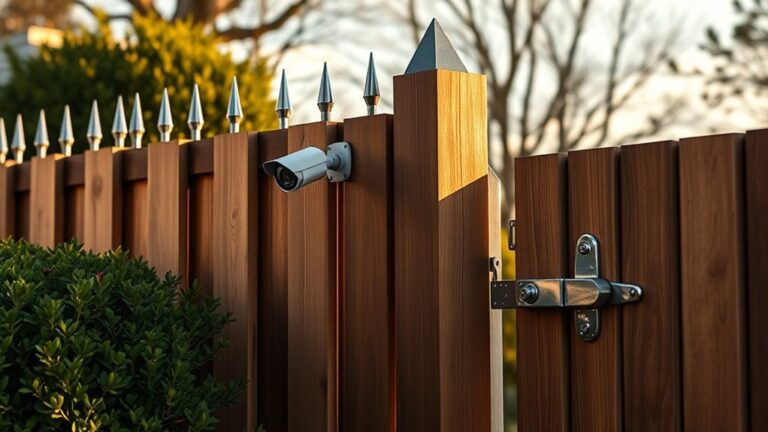
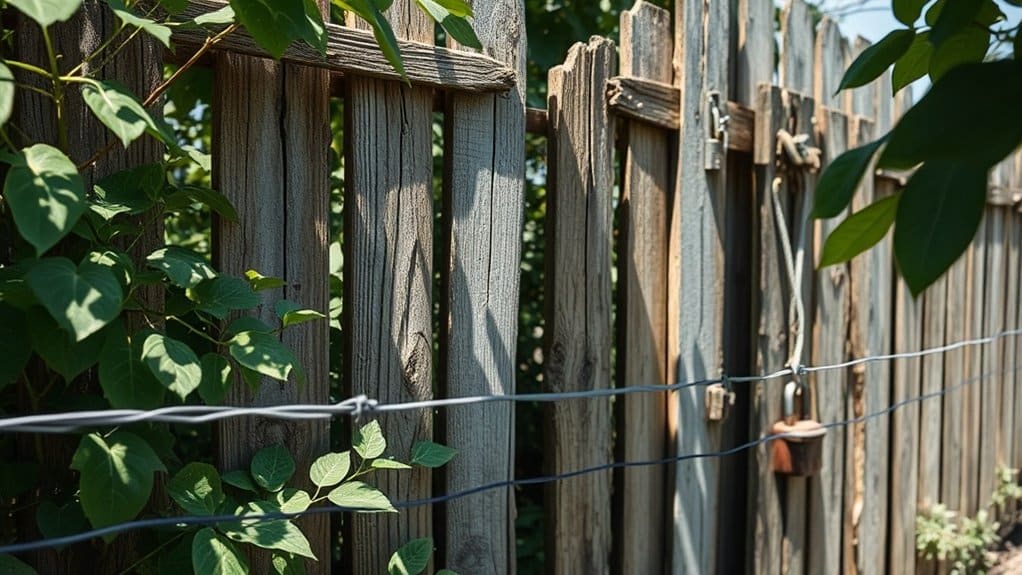
Common weak points in fence security include poor risk assessments that leave vulnerabilities open and unreliable intrusion detection systems prone to false alarms from weather or wildlife. Structural issues like rot from moisture or damage from pests can also weaken fences. To improve security, ensure proper design and installation to eliminate gaps, conduct regular inspections to identify problems early, and use quality materials for fittings. Strengthening access control measures is also crucial. By addressing these issues, you can significantly enhance your fence security.
Key Takeaways
- Perform regular risk assessments to spot weaknesses like gaps, weak materials, and environmental threats that could compromise fence security.
- Inspect and maintain fences routinely to catch issues like wood decay or pest damage before they lead to security breaches.
- Use high-quality materials and follow installation guidelines to eliminate gaps that could allow unauthorized access.
- Fine-tune intrusion detection systems to minimize false alarms triggered by environmental factors.
- Work with security experts to create customized security plans and integrate advanced technologies for better protection against new threats.
Inadequate Risk Assessment and Vulnerability Identification
When starting a fencing project, it’s crucial not to skip a thorough risk assessment. Failing to do so can leave your site vulnerable to issues like burglary, vandalism, and natural disasters.
Conduct site-specific assessments to identify potential threats. For example, if criminal activity occurs, it could lead to severe consequences like flooding or power outages. Additionally, understanding the security ratings of fencing can help in selecting the most effective solutions for your site. The integration of smart technology can also enhance the detection of potential threats and improve overall site security.
If your organization doesn’t have updated risk assessments, hiring contractors for detailed evaluations is a smart move.
Also, take into account your site’s unique operational requirements to identify specific threats and establish appropriate security measures.
Ignoring these steps can compromise your perimeter security and expose your organization to avoidable risks.
False Alarm Issues in Intrusion Detection Systems
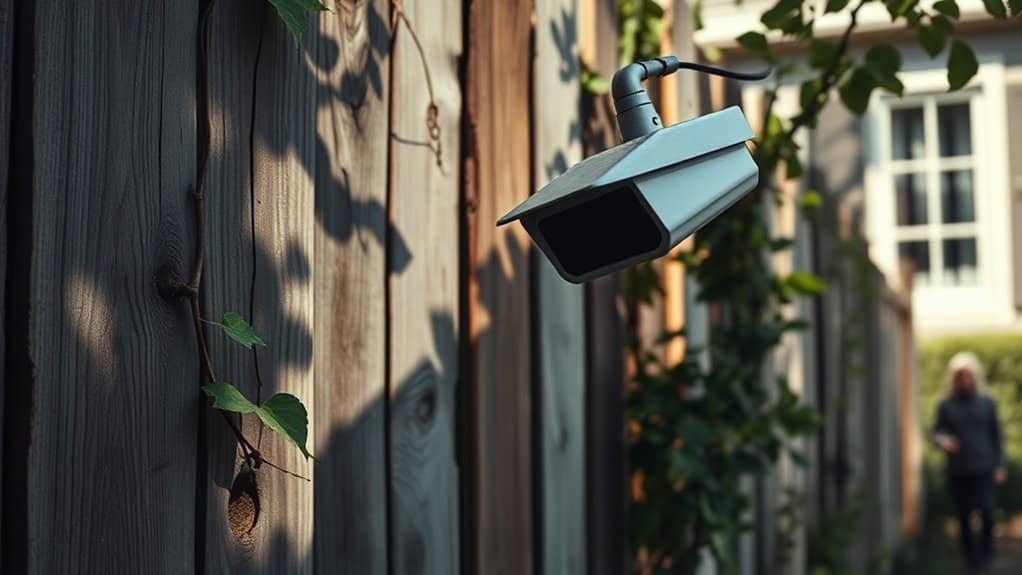
When setting up intrusion detection systems, environmental factors can significantly affect their reliability. For example, wind, rain, and wildlife can trigger false alarms, leading to unnecessary responses. It’s crucial to adjust the sensor sensitivity; too sensitive, and you’ll get constant alerts; just right, and you’ll improve accuracy while reducing alarm fatigue. Implementing intelligent detection algorithms can also help differentiate between genuine threats and benign disturbances, further reducing false alarms.
Environmental Disturbance Factors
Environmental factors can enhance security systems but often lead to false alarms in intrusion detection. For instance, strong winds and heavy rain can cause vibrations or moisture issues that trigger alerts. Additionally, soil type can affect sensor efficiency, as sandy soils may reduce seismic sensor performance.
Seasonal vegetation growth may block signals, while wildlife like birds or small mammals can mimic intrusions. Overgrown shrubs touching fences can repeatedly activate sensors, causing frustration. Regular maintenance, such as trimming plants and adjusting sensor placements, is crucial to reduce these problems. Additionally, being mindful of temperature changes and air pressure can improve system reliability, minimizing false alarms and ensuring effective security.
Sensor Sensitivity Adjustments
Environmental disturbances can hinder the effectiveness of intrusion detection systems, making sensor sensitivity adjustments essential for reliable security. High sensitivity can lead to false alarms from minor movements, like small animals.
To find the right balance, calibrate sensors based on the fence type—chain-link fences need lower sensitivity than rigid ones. Adjusting sensitivity for different areas accommodates mixed fence types.
Regular testing in real conditions helps confirm sensor performance and prevents ineffective adjustments. Additionally, ensure sensors are properly placed and address structural issues, like loose panels, to improve accuracy.
Structural Deterioration and Material Failure
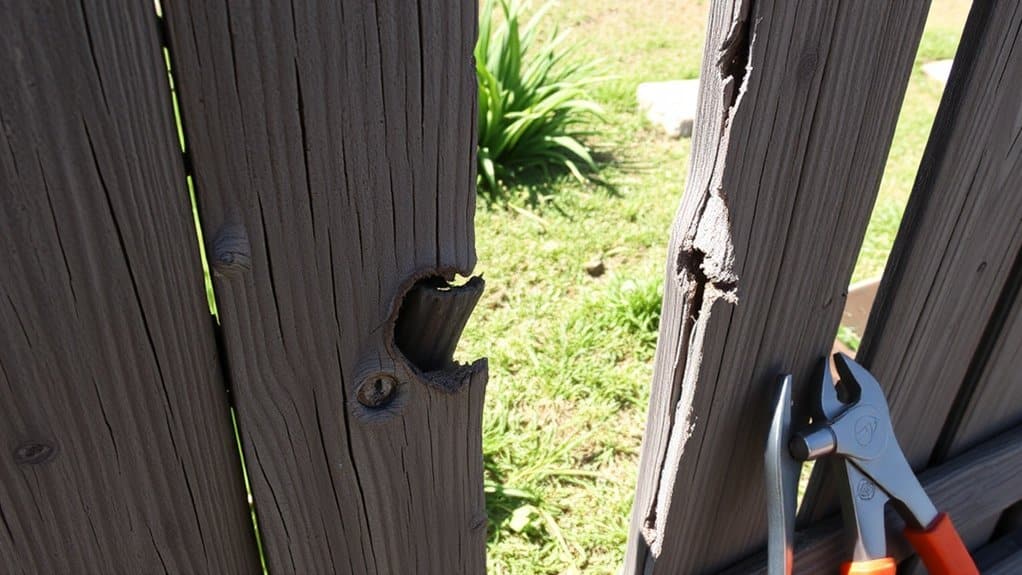
Structural deterioration and material failure can quietly weaken your fence, often going unnoticed until it’s too late. For instance, wood exposed to moisture can decay, leading to fungal growth that weakens support. Additionally, pests like termites can damage wooden fences, making early detection vital. Regular maintenance, such as proper sealing, can significantly enhance the durability of wooden fences.
| Type of Damage | Signs to Look For | Recommended Action |
|---|---|---|
| Wood Decay | Soft spots, discoloration | Inspect and replace affected areas |
| Insect Damage | Small holes, sawdust | Apply pesticide and monitor |
| Metal Corrosion | Red-brown staining | Treat corrosion and repaint |
| Cracking/Brittleness | Visible cracks | Replace damaged sections |
| Moisture Damage | Greenish-black patches | Apply water-resistant sealant |
Regular inspections and proactive measures can significantly extend your fence’s life and ensure its security.
Poor Design and Installation Flaws
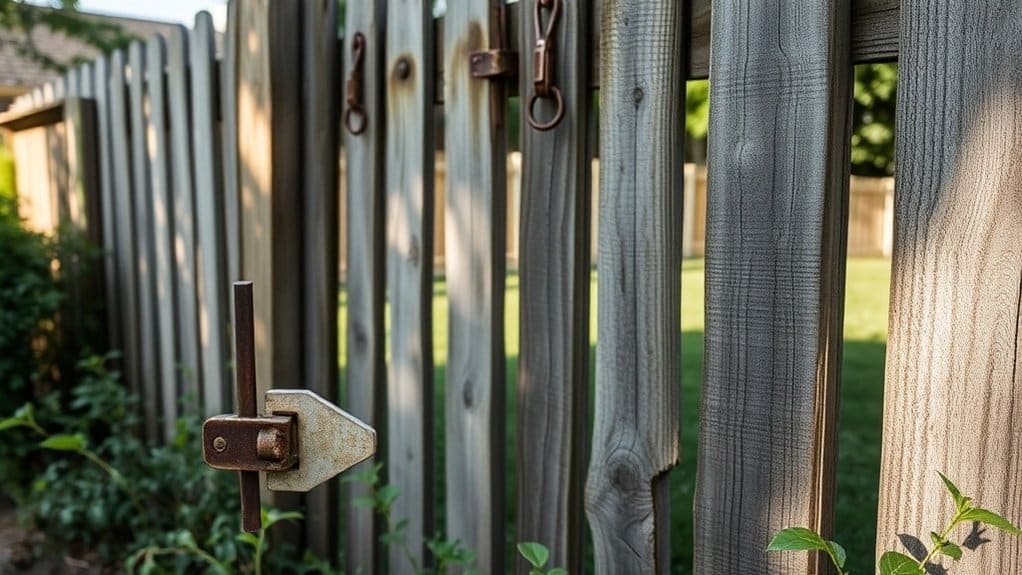
Poor design and installation flaws can seriously weaken fence security. Issues like gaps that don’t meet standards, uneven ground, and low-quality materials create vulnerabilities that may not be obvious at first. Fixing these problems early on boosts security and ensures your investment lasts longer. Additionally, ensuring proper installation techniques can significantly enhance the overall strength and durability of your fence.
Inadequate Gap Compliance
Inadequate gap compliance in fence design can lead to serious security risks. Security fences should have gaps of less than four inches to prevent unauthorized access.
Often, noncompliance happens due to poor site adaptation or lack of planning. For example, if gaps are too wide, it becomes easier for intruders to slip through. Installation issues, like misaligned gates, can make these problems worse.
To reduce risks, it’s crucial to incorporate compliance measures in the design phase and ensure all components function well together. Regular evaluations based on the specific site conditions, such as terrain and plants, are also vital for maintaining security and preventing breaches.
Poor Grading Issues
Poor grading can seriously weaken your fence security. If the ground isn’t level, you might end up with gaps under the fence or panels that don’t line up, making it easier for intruders to get in.
Proper soil compaction is crucial; if the posts aren’t stable, they can shift or tilt, compromising the entire structure.
Also, if drainage isn’t managed well, water can pool and cause rot or corrosion. Regularly check for any gaps that form over time and make sure your fence height matches the ground level.
Fixing these grading issues is vital to keeping your property secure.
Weak Material Choices
Choosing the right materials for your fence is crucial since weak materials can undermine its security and durability. Here’s a quick look at common materials:
| Material Type | Strengths | Weaknesses |
|---|---|---|
| Untreated Wood | Budget-friendly | Prone to rot |
| Low-Grade Metal | Durable | Vulnerable to rust |
| Composite | Weather-resistant | Higher initial cost |
To ensure your fence lasts, opt for high-quality materials like treated timber or galvanized metal. Investing in stronger materials now can save you from expensive repairs down the line, keeping your fence secure and functional.
Inadequate Maintenance and Inspection Programs
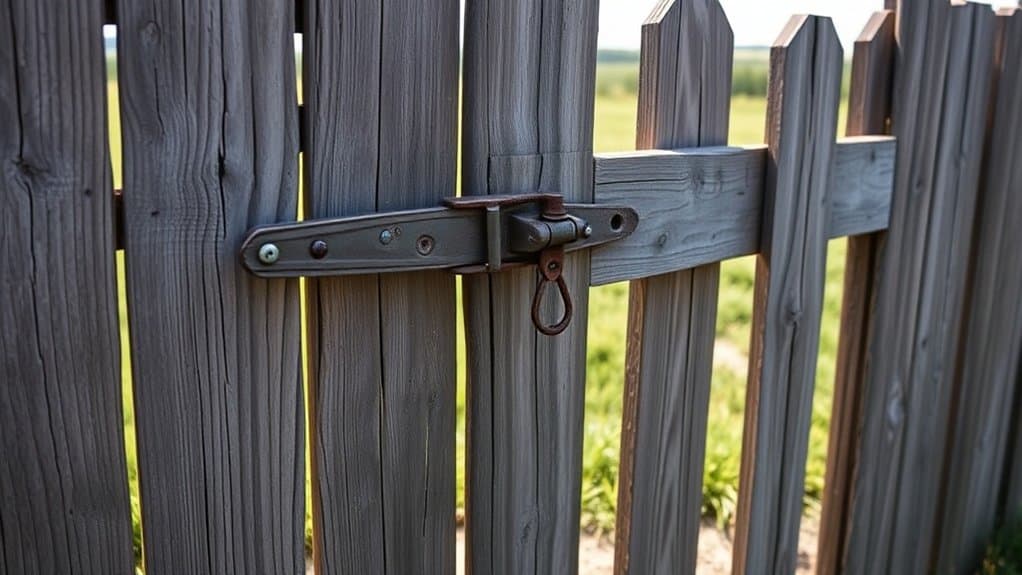
Neglecting regular maintenance and inspection of your fence can lead to security risks.
To keep your fence strong and secure, follow these three essential steps:
- Quarterly Inspections: Check for leaning posts, loose panels, and overall stability.
- Prompt Repairs: Fix any damage right away—replace rusty hardware and repair sagging sections.
- Regular Cleaning: Clean wooden fences to remove dirt and apply treatments to protect against moisture and UV damage.
Vulnerable Fixings and Access Control Weaknesses
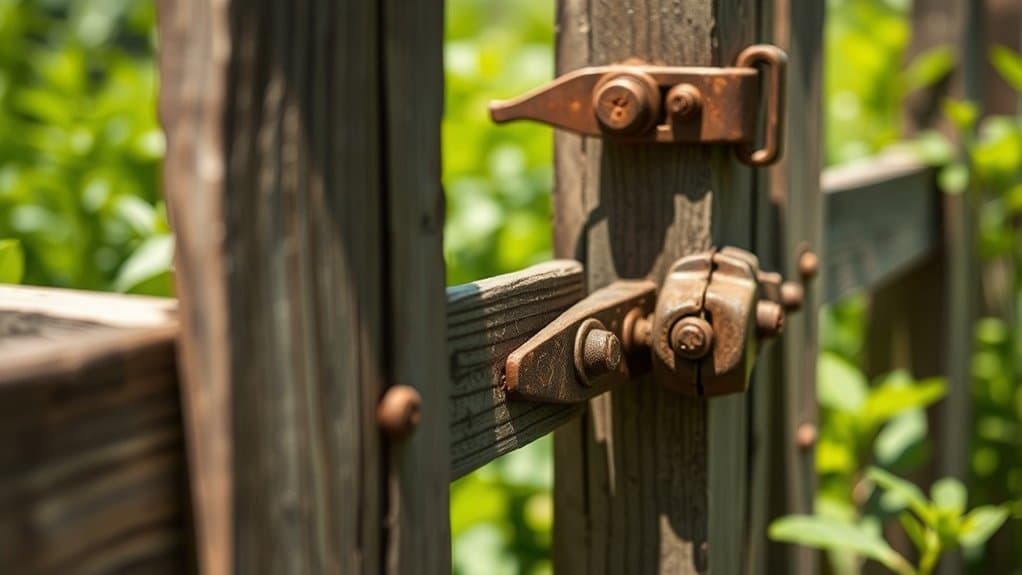
Maintaining your fence is important, but don’t overlook the fixings and access control systems that protect it. Weak fixings like standard bolts can be easily tampered with. Use tamper-resistant bolts or welded joints to enhance security.
Gates and entry points are often the most vulnerable; if locks are inadequate, they can be bypassed quickly. Ensure your access control systems work well with surveillance and alarms for quick breach detection.
Regular audits and updates are crucial to keep these systems effective against new threats and to secure your perimeter properly.
Environmental Factors Affecting Security
Environmental factors can significantly influence your fence’s security. Here are three crucial points to consider:
1. Weather Effects: Heavy rain can weaken the fence’s foundation, while strong winds may compromise its stability.
Snow buildup adds extra weight, increasing the risk of damage.
2. Corrosion Issues: If your fence is near saltwater or industrial areas, it may corrode faster.
Opting for coated materials can help protect against this wear.
3. Soil and Drainage: Poor drainage can cause moisture buildup, leading to wood rot and instability.
Proper installation and drainage solutions can help prevent these issues.
Enhancing Perimeter Security With Expert Consultation
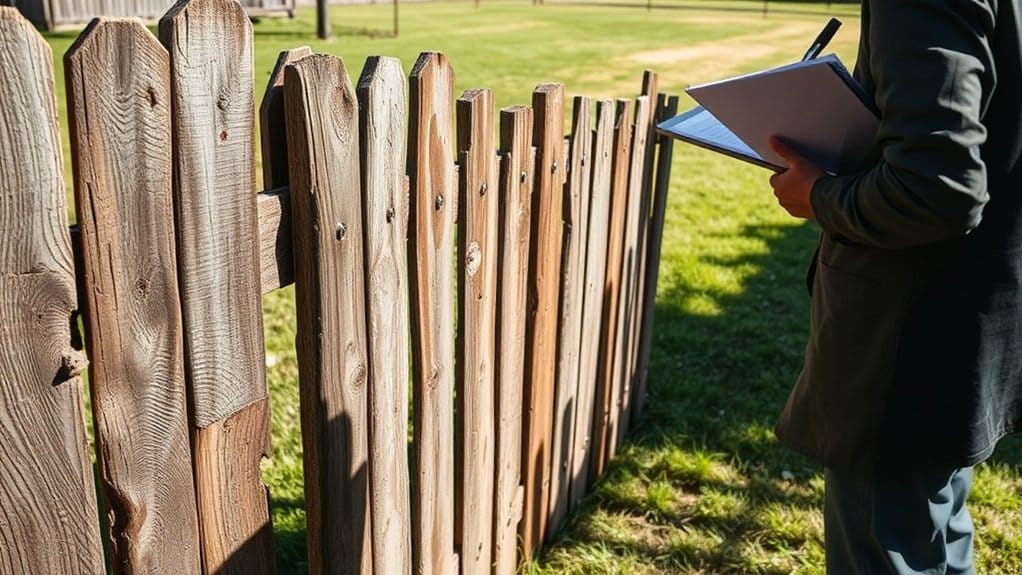
To enhance perimeter security, it’s important to go beyond just installing basic fencing. Hiring security consultants can help you identify specific vulnerabilities and provide tailored recommendations.
They’ll assess your current setup, pinpoint weaknesses, and suggest strategic improvements to eliminate hiding spots and climbing aids. Adding advanced technologies like tamper detection and surveillance cameras can significantly boost your security.
Analyzing traffic flow can also help direct access through controlled points, strengthening your defenses. Overall, consulting with experts ensures that your perimeter security is strong and specifically designed to tackle your unique threats.
Frequently Asked Questions
What Types of Fences Provide the Best Security for Residential Properties?
For optimal security, choose privacy fences paired with security gates. Privacy fences act as a barrier to deter intruders while looking good, and security gates control who enters your property. Together, they create a strong defense at your home’s entry points.
How Often Should I Replace My Perimeter Fencing?
Did you know your perimeter fencing can last anywhere from 6 to 30 years? The lifespan depends on the material used. For example, wood fences may need replacing sooner than vinyl or metal ones. Regular maintenance can extend your fence’s life and keep it secure and effective.
What Are the Best Materials for Durable Fence Construction?
For a durable fence, consider these materials:
- Metal: Offers strength and long-lasting durability, ideal for security.
- Composite: Low maintenance and visually appealing, perfect for those who want a stylish look without the upkeep.
- Wood: Provides a natural aesthetic but requires regular maintenance.
Each material has its advantages, so think about your specific needs when choosing between wood and metal.
How Can I Reinforce My Existing Fence for Better Security?
To strengthen your existing fence, try adding metal brackets, diagonal bracing, and concrete footings. These upgrades boost stability and make it harder for intruders to get in, significantly enhancing your fence’s security and durability.
Are There Legal Regulations Regarding Fence Height and Security Features?
Yes, there are regulations about fence height and security features. Local laws differ by zone, so it’s important to check your area’s specific height limits. For example, residential zones might allow fences up to 6 feet, while commercial areas could have different standards. Ensuring your fence meets these regulations can help you avoid fines or legal issues.
Conclusion
To protect your property, it’s important to address weak points in fence security. Nearly 30% of property crimes happen due to easy access through vulnerable fences. To improve your security, conduct risk assessments, upgrade alarm systems, and choose high-quality materials. Regular maintenance and consulting with experts can also strengthen your defenses. Don’t leave your safety up to chance—take action now!