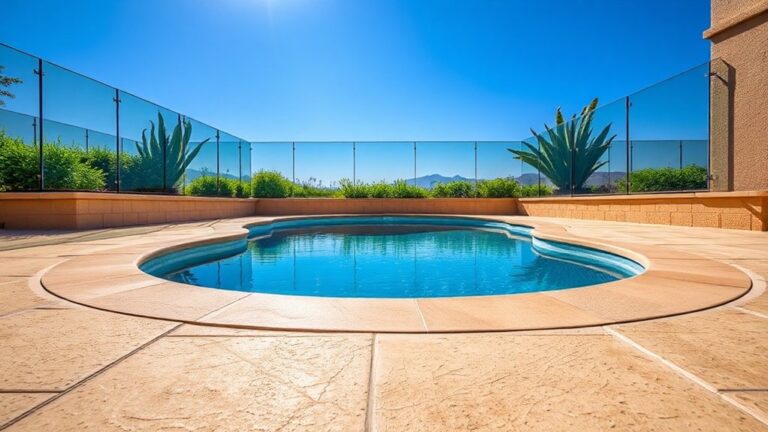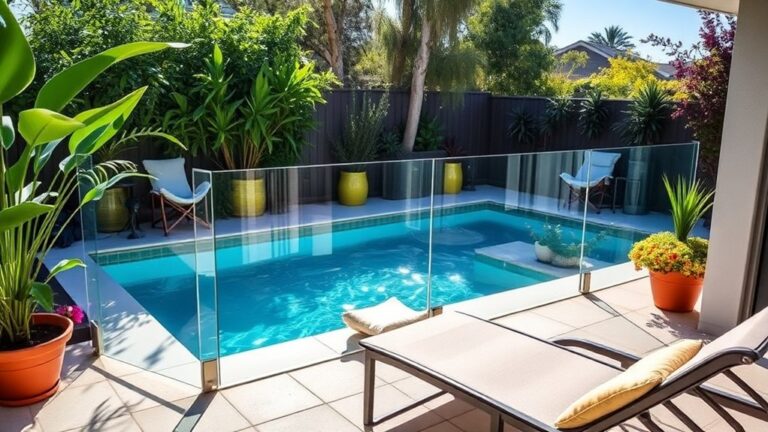

When installing pool fencing, consider height restrictions, usually a minimum of 1200mm for safety. If your property is listed or in a conservation area, stricter standards may apply. Ensure your fence meets boundary regulations, maintaining required distances from property lines. Don’t forget local planning approvals, especially if your fence is over 2 meters tall. Understanding these rules is crucial to avoid penalties.
Key Takeaways
- Check local rules for pool fence height, usually at least 1200mm (4 feet) for safety.
- Confirm boundary regulations to prevent encroachment and ensure proper distance from property lines.
- If your fence is over 2 meters tall, see if you need planning approval, as local rules can vary.
- Prepare a thorough application that includes site plans, fence design, materials, and specifications. Make sure all documents are included.
- Be mindful of application fees, typically between £200 and £500, and expect a decision within 8 to 12 weeks, allowing for possible delays.
Understanding Fencing Height Restrictions

When installing pool fencing, it’s essential to know the height restrictions set by regulations to ensure safety. Most places require a minimum fence height of 1200mm (4 feet), though this can vary by country—like in the U.S., Australia, Canada, and Europe. Countries like Australia and Canada have a minimum height set at 1200mm (4 feet) to enhance safety measures. In Florida, compliance with these safety regulations is crucial for child safety and to avoid fines. Your pool fence should be designed to be non-climbable, featuring vertical bars and secure gates. While you may want a fence that looks good, remember that taller fences offer better security and deter climbing. Understanding these height restrictions is key to creating a safe environment for your family.
Fencing Requirements for Listed Properties and Conservation Areas
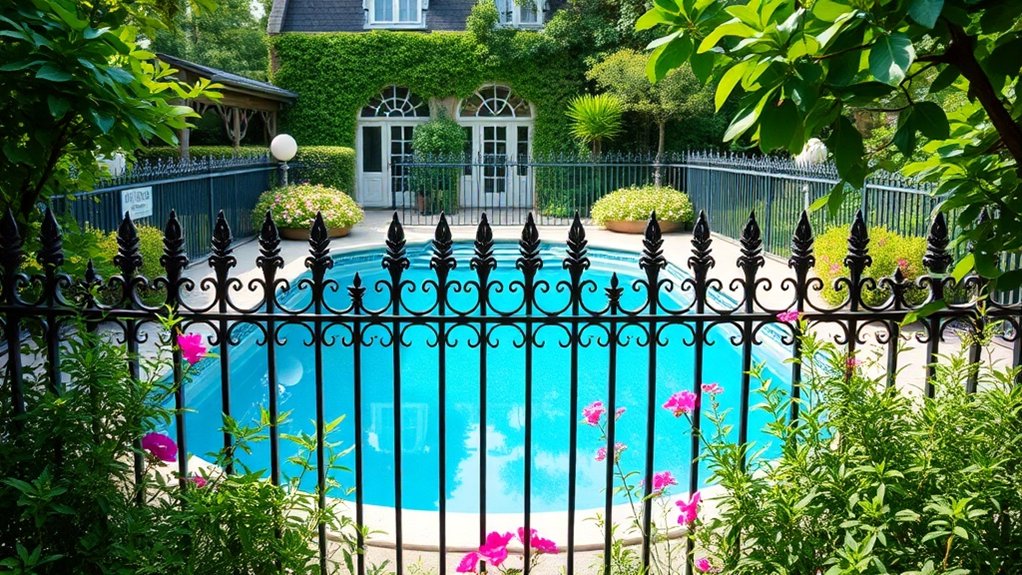
When planning pool fencing for listed properties or conservation areas, you must follow specific height and material regulations. These rules ensure your fencing matches the historical or aesthetic value of the location. For example, using traditional materials like wrought iron or wood can help maintain the area’s character. Be aware that failing to comply can lead to penalties, so it’s crucial to familiarize yourself with these guidelines before you start. Additionally, ensure that your pool fencing adheres to the minimum fence height requirement of 153 cm (60 inches) to meet safety regulations.
Height Restrictions Overview
Understanding height restrictions for pool fencing in listed properties and conservation areas is crucial.
Typically, you can have a fence up to 2 metres high without needing planning permission. However, if it’s next to a public road or pathway, that limit drops to 1 metre.
For any fencing around listed buildings, you must get permission, no matter the height. Furthermore, planning permission is required for fences exceeding these height limits.
Conservation areas can have even stricter rules, so your fence design must match the local style.
Always check with your Local Planning Authority (LPA) before starting, as ignoring these rules could lead to enforcement actions, like having to take down or lower your fence.
Material and Design Regulations
To ensure your pool fencing meets regulations, it’s important that the materials and design match the character of nearby listed properties and conservation areas.
Use traditional materials like timber, wrought iron, or stone. If you want to use modern materials, they must closely resemble these styles.
Your design should reflect original features and maintain the historic integrity of the area, without distracting from nearby buildings.
Be ready to provide detailed drawings and material samples, as local authorities may have specific requirements.
Following these regulations helps preserve local heritage and enhances your property’s appeal. Additionally, incorporating wrought iron fences can enhance the security and aesthetic appeal of your pool area while adhering to traditional design standards.
Boundary and Location Regulations for Pool Fencing

When installing pool fencing, it’s crucial to follow public land encroachment rules to avoid legal issues. Make sure to check boundary distance regulations, as they specify how far your fence must be from property lines. For example, if the rule states your fence must be at least 5 feet from the boundary, be sure to measure accordingly. Talking with your neighbors about shared boundaries can also help prevent disputes and ensure everyone understands the fencing requirements for your pool. Additionally, consulting local regulations on minimum fence height requirements can provide essential guidelines to ensure safety and compliance.
Public Land Encroachment Rules
Understanding public land encroachment rules is crucial for ensuring your pool fencing meets local regulations and avoids costly penalties. Unauthorized encroachment can result in fines and the requirement to remove the fence.
Here’s a quick overview of what you need to know:
| Factor | Details |
|---|---|
| Encroachment Permit | Required for any fence affecting public property. |
| Setback Requirements | Must be at least 20 feet from flood control levees. |
| Professional Survey | Often necessary to confirm your property boundaries. |
| Local Authority Consultation | Check local codes and any specific permit conditions. |
| Safety Compliance | Ensure fencing doesn’t block access to utilities or sight lines. |
Boundary Distance Compliance
Boundary distance compliance is crucial for pool fencing to ensure safety and meet local regulations.
Check that your pool fence is at least 60 inches high from the outside and that the bottom clearance is no more than two inches to stop small children from crawling under.
Also, make sure that openings in the fence are small enough that a 4-inch diameter sphere can’t pass through.
Following these guidelines helps keep kids safe and ensures you follow local laws, reducing the risk of accidents.
Shared Boundary Consultation Requirements
To ensure compliance with shared boundary consultation requirements when installing a pool fence, follow these steps:
- Notify your neighbors 10–14 days in advance about the fence’s location, height, and materials.
- If the fence is on the property line, get written consent, as this is often needed for permits.
- Include maintenance responsibilities in your consent agreement to prevent disputes later.
- Consider hiring a professional for a boundary survey to confirm property lines, as some areas require this for permit applications.
Safety and Building Regulations for Pool Fencing

In the UK, there’s no national law requiring domestic pools to have fencing, but local regulations often apply. It’s essential to follow these rules to ensure safety and avoid legal issues. Here’s a quick breakdown of the key requirements for pool fencing:
| Requirement | Details | Importance |
|---|---|---|
| Fence Height | At least 1.2 meters | Prevents children from accessing the pool |
| Gate Specifications | Must be self-closing and latching | Increases safety by keeping the area secure |
| Maintenance Practices | Conduct regular inspections | Ensures ongoing compliance and safety |
Adhering to these guidelines is crucial for protecting children and maintaining legal compliance.
Permitted Development Rights and Their Limitations
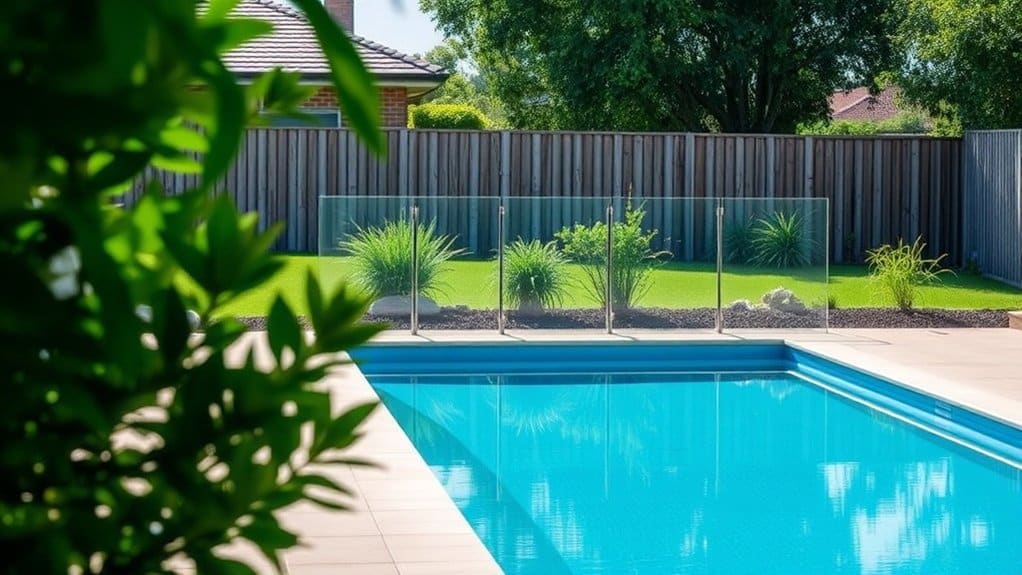
Understanding permitted development rights (PDR) for pool fencing is essential, as these rules affect your ability to install a pool or its enclosure without formal planning permission.
Here are some important points to consider:
- Pools must be located within your property’s boundary and can’t be placed in front gardens.
- Local authorities may interpret rules differently, particularly in conservation areas.
- Fencing taller than 2 meters usually needs planning approval.
- Major engineering works typically don’t fall under PDR.
Always check local policies, as Article 4 directions can limit PDR rights.
Ignoring these regulations can lead to fines or forced removal of your pool or fencing, so it’s crucial to stay updated on any restrictions that may apply to you.
Application Process and Required Documentation

When planning to install pool fencing, it’s crucial to understand the application process and required documents.
Start by checking your local council’s website for guidelines specific to your area. You’ll generally need to submit a site plan showing where the fence will go, along with detailed drawings of its height, materials, and design.
Be ready to include product specifications and photos of the current site. Applications are typically submitted online, with fees ranging from £200 to £500 based on complexity.
Expect a decision within 8 to 12 weeks, but be aware that delays can happen if more information is needed or if there are objections.
Ensure all your documents are complete to avoid any issues.
Frequently Asked Questions
Can I Use Any Materials for My Pool Fencing?
Not all materials are suitable for pool fencing. Choose options like vinyl, aluminum, or glass that are durable and comply with local safety regulations. This ensures your swimming area is both safe and compliant.
What Are the Penalties for Not Obtaining Planning Permission?
Failing to obtain planning permission can lead to hefty fines from local councils, legal issues, and the required removal of your structure, like a fence. These penalties can escalate and may also lower your property’s resale value. It’s crucial to check permissions before starting any construction to avoid these complications.
How Can I Find My Local Fencing Regulations?
To find your local fencing regulations, visit your local government’s website for zoning codes and safety standards. You can also contact your building department directly for specific requirements, as these can differ by area. For example, some neighborhoods might have height restrictions or design guidelines for fences.
Can I Appeal a Denied Planning Permission Application?
Yes, you can appeal a denied planning permission application. To do so, submit your appeal within the designated timeframe. Clearly address the reasons for the denial, providing supporting evidence or alternative solutions to strengthen your case. This approach can enhance your chances of a successful appeal.
Is There a Time Limit for Completing the Fencing Project?
There’s no strict deadline for finishing your fencing project, but delays could lead to compliance problems. For example, if your local council has specific regulations, it’s wise to check with them to avoid any issues.
Conclusion
In summary, navigating planning permission for pool fencing requires knowing height limits, safety laws, and specific location requirements. For example, about 85% of local authorities enforce safety standards to avoid accidents. By understanding these rules and the application process, you can ensure your pool area is safe and compliant. This knowledge can help you avoid expensive modifications or fines later.