
For high-wind areas, choose vinyl fence designs with slatted panels to let wind pass through, reducing pressure. Use reinforced, thicker vinyl for added strength. Ensure posts are set deep in solid concrete footings, ideally 18” to 36” deep, for stability. Add horizontal and diagonal braces for extra durability. Semi-private styles not only look appealing but also help minimize wind load. Want to know more about installation and maintenance? There’s plenty to learn!
Key Takeaways
- Choose slatted vinyl fence designs to let wind pass through, which helps reduce pressure and improves stability in windy areas.
- Opt for reinforced vinyl and thicker posts for better durability against strong winds and weather.
- Set posts at least 3 feet deep in concrete for a solid foundation that can handle high wind loads.
- Add horizontal and diagonal bracing to evenly distribute wind pressure and strengthen the fence.
- Select vinyl fences with UV inhibitors and moisture resistance for lasting performance, especially in coastal or humid climates.
Understanding Wind Resistance in Vinyl Fences
When choosing a vinyl fence, it’s important to consider its wind resistance, especially in windy areas. Most vinyl fences can handle winds up to 70 mph, but this depends on their design and how well they’re installed. Flexible, high-quality vinyl can bend without breaking, helping it manage wind pressure. Solid panels can catch the wind like sails, which can increase stress on the fence, while slatted designs allow airflow, reducing that pressure. Proper installation is key; deep-set posts and added reinforcements can greatly enhance stability. Additionally, high-quality vinyl is more effective in withstanding strong winds, making it a wise choice for those in gusty regions. Regular maintenance is also crucial, as it helps preserve the fence’s wind resistance and ensures it remains durable over time, protecting your investment against the elements. Furthermore, the durability of vinyl fences means that they will maintain their structural integrity over time, making them an excellent choice for high-wind areas.
Key Design Features for Enhanced Durability
To make your vinyl fence more durable, focus on key design features. Use thicker, UV-stabilized posts and deeper concrete footings for better strength. Additionally, consider using vinyl materials that are mono-extruded for enhanced UV protection against sun damage. The exceptional durability of vinyl fences ensures they withstand harsh weather conditions effectively.
Keep post spacing to about 6–8 feet to minimize wind pressure on panels. Opt for semi-transparent designs with slats for improved wind flow, or add built-in vents to solid panels for added resilience. Choose heavy-duty stainless steel fasteners for solid connections, as they perform better than snap-on systems in high winds.
Don’t forget to prepare the soil and ensure proper drainage to prevent erosion at the footings. Lastly, make sure there’s access for regular maintenance to keep your fence in top shape against the elements.
Ideal Materials for High-Wind Areas
When choosing materials for a vinyl fence in high-wind areas, opt for strong composite materials that offer both strength and flexibility. Reinforced vinyl enhances stability, while corrosion-resistant options ensure long-lasting performance against bad weather. This smart selection not only increases your fence’s durability but also protects your investment for years. Additionally, understanding wind load is essential to ensure that the chosen materials can withstand the pressures exerted by strong winds.
High-Performance Composite Materials
High-performance composite materials are an excellent choice for fencing in high-wind areas due to their strength and appealing look.
Here are some key benefits:
- Moisture Resistance: Unlike traditional wood, composites resist rot and swelling.
- Wind Performance: They can endure wind speeds up to 130 mph when reinforced.
- UV Protection: Specialized coatings prevent fading from sun exposure.
- Biological Resilience: Composites are resistant to termites and fungi, ensuring durability.
These features enhance the lifespan of your fence and lower maintenance efforts, making composites a wise investment for tough conditions. Additionally, using materials like PVC can further increase the durability of fences in high-wind areas, ensuring they withstand extreme weather conditions.
Reinforced Vinyl Structures
Reinforced vinyl structures are ideal for fencing in high-wind areas. They combine strength and flexibility, thanks to an internal framework of steel or aluminum that gives them solid structural integrity while allowing some give.
This design helps evenly distribute wind loads, reducing stress and the risk of damage. The posts are reinforced and securely anchored with heavy-duty inserts for added stability, minimizing vibrations.
By optimizing post spacing and using deep concrete footings, these fences can better withstand strong lateral forces. Choosing vinyl products with structural additives further enhances their rigidity and durability.
Corrosion-Resistant Options
When choosing fencing materials for windy areas, it’s important to pick corrosion-resistant options that can handle tough conditions.
Here are some solid choices:
- Vinyl-Coated Metals: These metals resist moisture, offering strong protection against rust.
- PVC Vinyl: This synthetic material is stable and won’t rot or get damaged by insects.
- Multi-Layer Co-Extruded Vinyl: Designed for durability, it resists impact and UV rays, making it ideal for high winds.
- Enhanced Resins: Quality resins boost weather resistance, ensuring your fence lasts longer.
Opting for these materials will keep your fence safe from corrosion and strong against mechanical stress, giving you confidence in difficult weather.
Construction Techniques to Maximize Stability
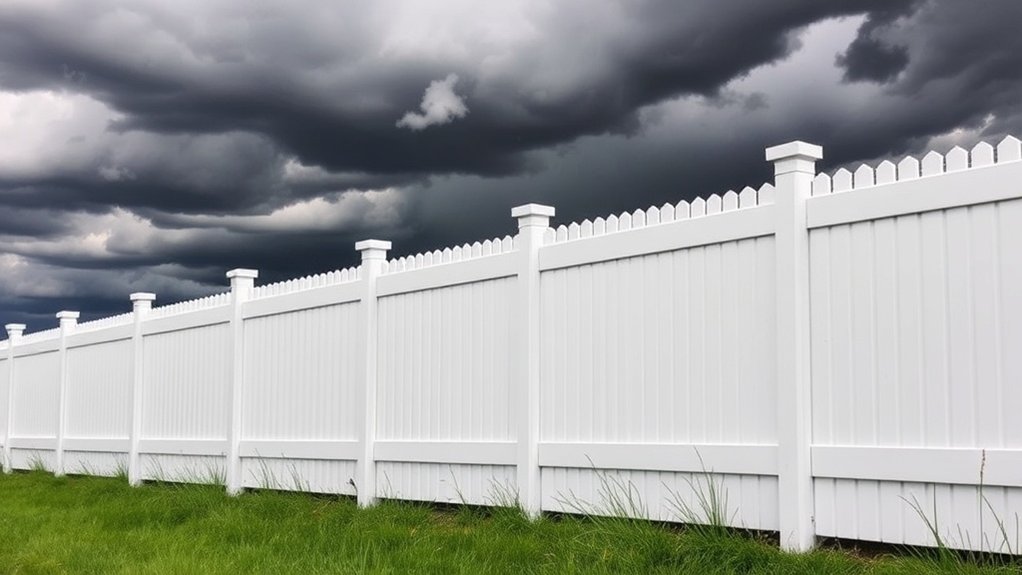
To ensure your vinyl fence withstands harsh weather, prioritize strong post installation and solid concrete footings.
Flexible panel spacing helps manage wind pressure while keeping the structure stable.
These techniques boost both stability and durability, ensuring your fence lasts for years.
Reinforced Post Installation
To ensure your vinyl fence remains stable in high winds, follow these key installation tips:
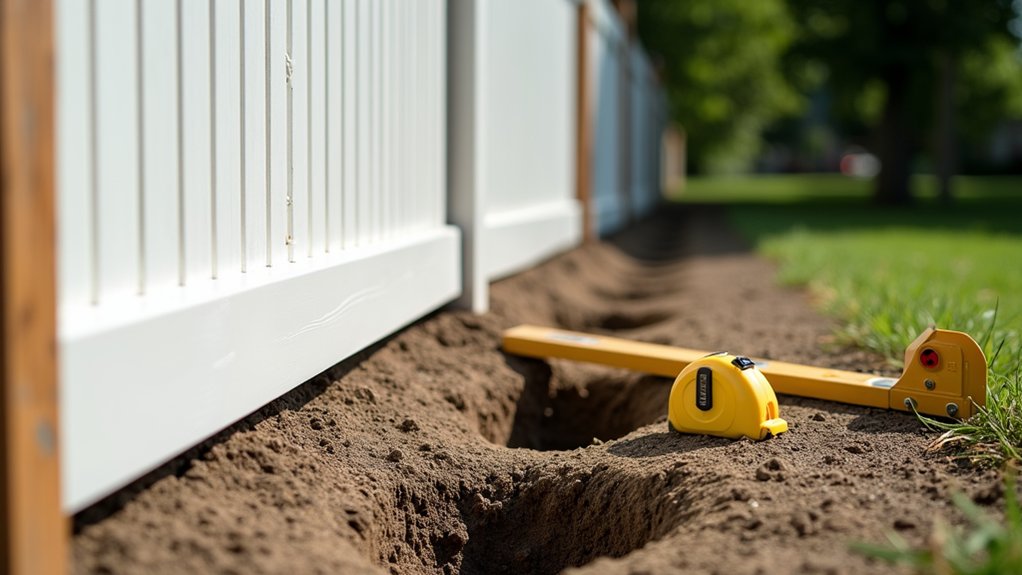
- Post Depth: Dig holes 18” to 36” deep, depending on your local frost lines and expected wind loads.
- Internal Reinforcement: Place rebar in the concrete to strengthen the posts against bending.
- Structural Support: Add steel or aluminum channels inside the posts for extra durability during storms.
- Bracing Techniques: Use diagonal braces to keep posts straight while the concrete sets.
These methods will help keep your fence secure and standing tall, no matter the weather.
Concrete Footing Anchoring
To build a sturdy vinyl fence, it’s crucial to securely anchor your concrete footings for maximum stability. Start by drilling holes using a masonry bit, ensuring they are the right depth and width. Add a gravel base for effective drainage and frost protection. Use galvanized steel anchors, and consider applying epoxy for extra stability.
| Technique | Description |
|---|---|
| Concrete Curing | Allow time for concrete to cure for optimal strength. |
| Anchoring Methods | Use anchors or epoxy for a firm hold. |
| Water Drainage | Add gravel to prevent water accumulation. |
| Alignment and Securing | Dry-fit the posts to ensure they are plumb before finalizing. |
Flexible Panel Spacing
Securing your concrete footings is crucial for a sturdy vinyl fence, but flexible panel spacing is key for wind resistance.
Here are some simple tips to enhance stability:
- Keep gap widths consistent (3-4 inches) to allow air to flow through.
- Consider dual-sided designs like shadowbox for better looks and airflow.
- Use strong fasteners to prevent shifting and maintain effective gaps.
- Regularly check for any distortions that might affect your spacing.
These steps can help ensure your fence stands strong against the elements.
Best Installation Practices for Wind Resistance
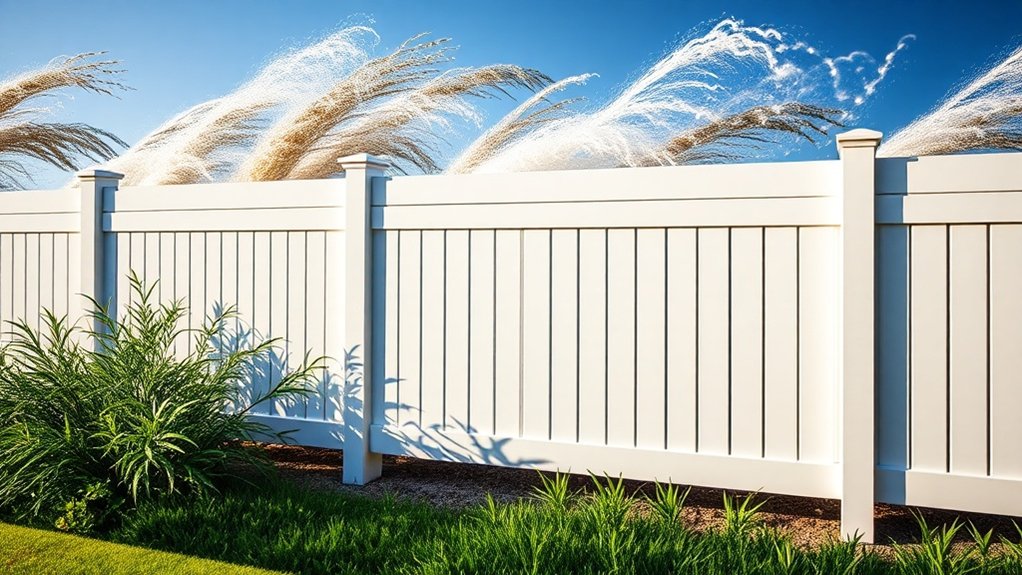
To ensure your vinyl fence withstands strong winds, follow these installation tips:
- Post Depth: Set your posts at least 2 to 3 feet deep in concrete for stability.
- Material Choice: Use thicker materials like 4×4 or 6×6 pressure-treated wood or metal for added durability.
- Post Spacing: Keep posts spaced 4 to 6 feet apart to evenly distribute wind pressure.
- Bracing: Add horizontal and diagonal bracing for extra rigidity, securing them with heavy-duty fasteners.
- Regular Maintenance: Check for loose panels or damage and clear debris to maintain airflow around the fence.
Environmental Considerations for Coastal Regions
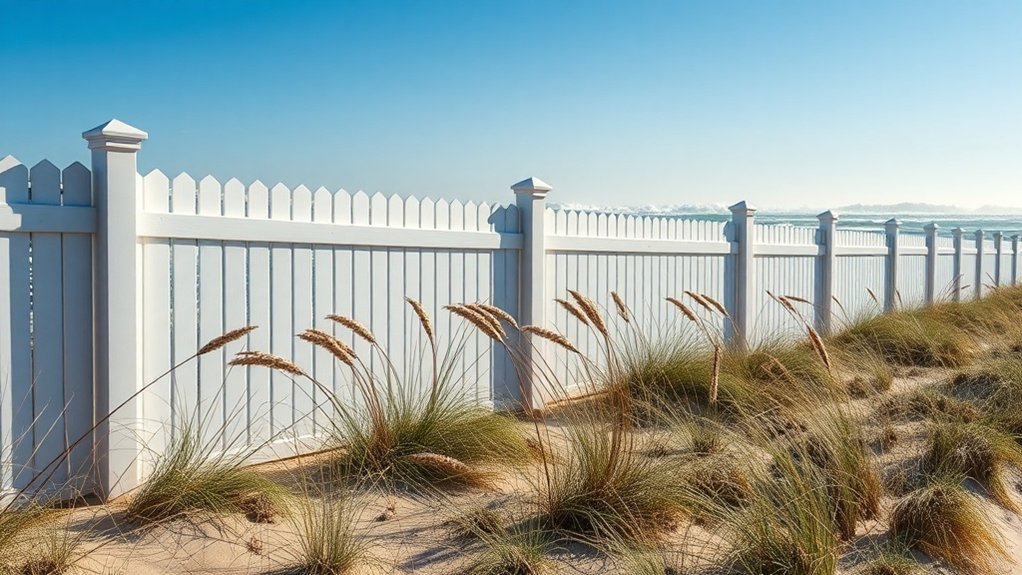
As a coastal homeowner, your fencing choices are influenced by environmental challenges like saltwater corrosion and humidity.
Here are key factors to consider:
- Saltwater Resistance: Vinyl fences withstand saltwater corrosion, while metal fences can rust.
- Moisture Tolerance: Vinyl’s non-porous surface resists damage from humidity, mold, and pests.
- UV Protection: Vinyl is designed with UV inhibitors to prevent fading from strong sunlight.
- Low Maintenance: Vinyl fences only need occasional cleaning, making them easy to care for.
Opting for vinyl fencing offers durability and sustainability, allowing you to enjoy your coastal home without frequent repairs.
It’s a practical choice for tough coastal conditions.
Evaluating Fence Height and Wind Pressure
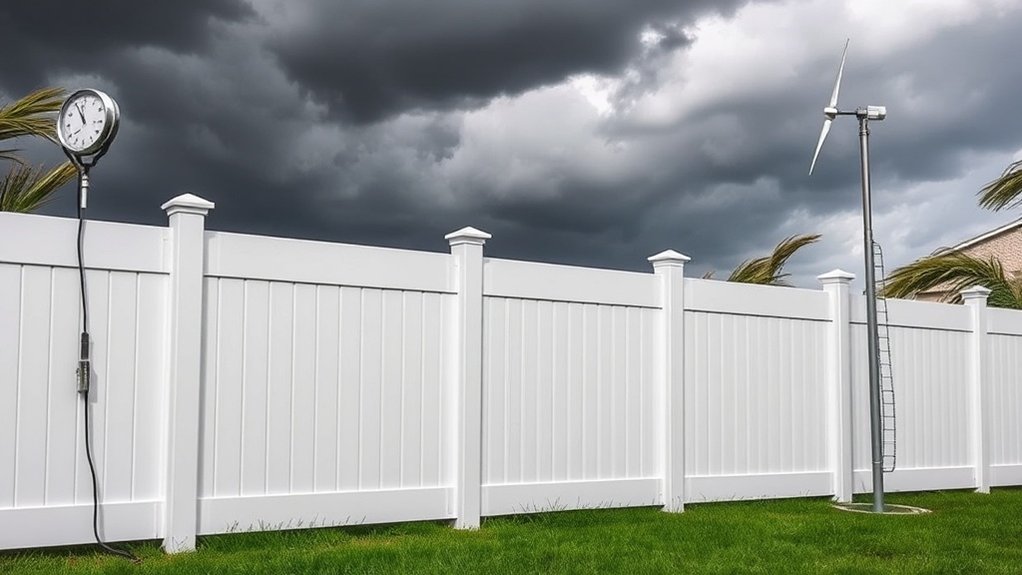
When assessing fence height and wind pressure, it’s crucial to know that taller fences, like 6-foot ones, experience much more wind load than shorter fences, like 4-foot ones. This added pressure can compromise their stability.
To improve durability, consider shorter fences or reinforce taller options. While taller fences provide better privacy, they require deeper posts and stronger anchors to resist wind.
Fences designed with gaps can help reduce wind load by allowing air to flow through. Balancing structural strength with aesthetic appeal will ensure your fence holds up in windy conditions while fitting your budget.
Benefits of Semi-Private and Picket Designs
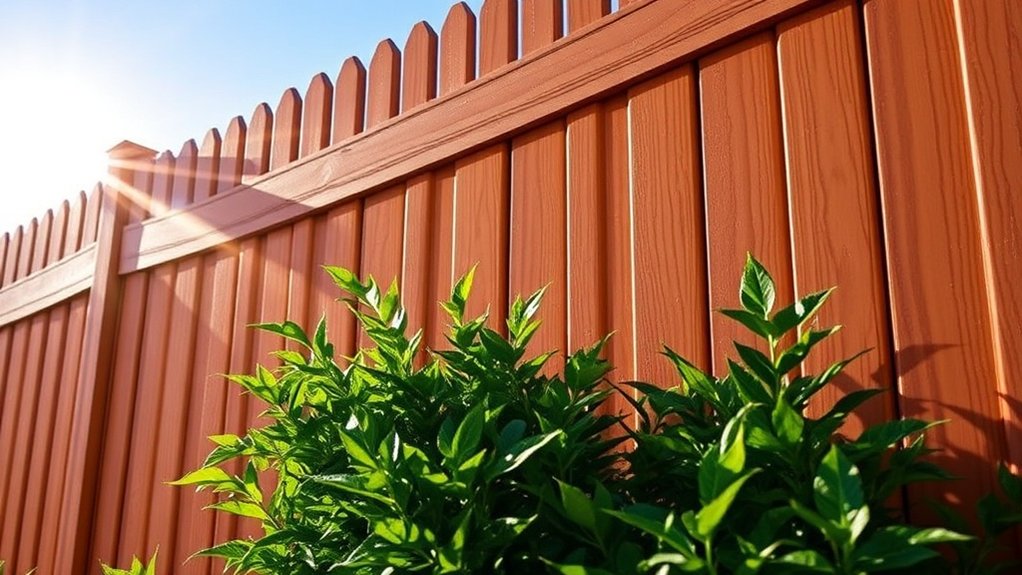
Once you’ve confirmed your fence can handle wind pressures with the right height and design, consider the benefits of semi-private and picket vinyl fencing.
Here are some key advantages:
- Durability: These designs resist warping, buckling, and splitting, ensuring they last.
- Low Maintenance: They require minimal upkeep—just occasional cleaning with soap and water.
- Picket Appeal: With a classic look available in various colors, they can enhance your home’s curb appeal.
- Cost-Effective: Their lower initial costs and minimal maintenance translate to savings over time.
Importance of Reinforcements in High-Wind Zones
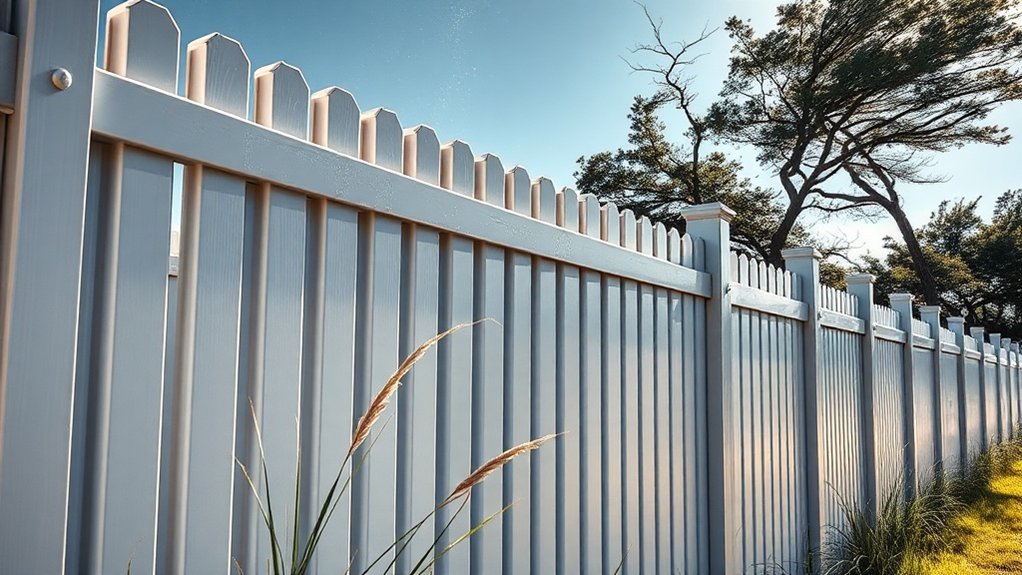
When considering a vinyl fence, it’s important to think about reinforcements, especially in areas prone to high winds.
For stability, install posts at least 3 feet deep and use concrete for added strength. Adding aluminum inserts to vinyl posts can help them endure winds up to 130 mph.
Moreover, using horizontal bracing at the top and bottom of the fence helps spread wind pressure evenly, which reduces stress on connections.
Warranty Options and Longevity of Vinyl Fences
When choosing a vinyl fence, it’s essential to consider the warranty options available. Here are four crucial points to keep in mind:
- Coverage Duration: Warranties typically range from 5 years to a limited lifetime, varying by manufacturer.
- Registration: Make sure to register your warranty, usually within 30 days, to ensure your coverage.
- Transferability: Many warranties can be transferred to future homeowners, which can boost your property’s value.
- Exclusions: Pay attention to exclusions like weather damage, labor costs, and normal wear and tear.
Being aware of these factors will help you select a vinyl fence that meets your needs and ensures long-lasting value.
Routine Maintenance for Optimal Performance
To keep your vinyl fence in top shape, regular maintenance is key. Start with routine inspections to spot any cracks or warping early.
Use a garden hose or low-pressure power washer for gentle cleaning to remove dirt and mildew without causing damage. For stubborn stains, a mild detergent works well—just steer clear of abrasive tools.
Check screws and post foundations yearly to ensure stability, especially after storms. Clear away debris and plants near the fence to avoid moisture buildup.
Lastly, applying UV-resistant protectants can help maintain color and flexibility. Follow these tips to ensure your vinyl fence stays strong against harsh weather.
Frequently Asked Questions
How Do Vinyl Fences Compare to Wood Fences in High Winds?
In high winds, vinyl fences are stronger than wood fences. Vinyl can bend without breaking and returns to its original shape, while wood can warp and deteriorate. This durability makes vinyl a more sustainable choice, as it holds up better and requires less maintenance over time.
What Color Options Are Available for Wind-Resistant Vinyl Fences?
Wind-resistant vinyl fences come in a variety of colors, including classic whites and tans, as well as bold blacks and grays. These options not only look great but are also designed to last against the elements.
Can I Paint My Vinyl Fence for Enhanced Durability?
You can paint your vinyl fence, but it can make maintenance tricky. Paint may not stick well, which could void any warranties and require more frequent touch-ups. This could end up reducing durability instead of improving it.
Are There Specific Brands Known for High-Wind Vinyl Fence Performance?
For high-wind performance, look at brands like Ashland and Rainier. They offer sturdy designs and impressive ratings, ensuring durability even in strong gusts. These make great choices for reliable vinyl fencing in tough conditions.
How Do I Know if My Vinyl Fence Is Properly Installed?
To ensure your vinyl fence is properly installed, use an installation checklist. Verify that each post is aligned and stable, and make sure the concrete has cured properly. A well-constructed, level fence will stand strong against wind and weather.
Conclusion
If you think a flimsy vinyl fence can handle hurricane-force winds, think again. Instead, choose sturdy designs and proper installation techniques to ensure your fence stays strong against high winds. Your fence should secure your yard, not become a flying hazard. Prioritize durability to keep those strong gusts at bay!

Why choose vinyl and PVC fences for low-maintenance needs? Discover their unmatched durability and the secrets to effortless upkeep that Read more
Learn the essential steps for installing a vinyl fence and discover crucial tips that will ensure your project is a Read more

Navigate the pros and cons of vinyl and wood fencing to discover which option best suits your property’s needs—your ideal Read more


